
Your Best bedroom furniture sets baby Choices

An empty nursery has a way of making everything feel real at once. You stand in the doorway, picture the crib, imagine late-night feedings, wonder where the dresser should go, and then realize there are far more decisions packed into bedroom furniture sets baby shopping than initially anticipated.
Around Bellefontaine and Logan County, we've watched that moment play out for generations. Since 1946, families have come in with paint swatches, rough room sketches, and a lot of good questions. The same concerns come up every time. Will it fit? Is it safe? Will we outgrow it too fast? Can we make it work without overspending?
Those are the right questions.
A nursery set isn't just a short-term purchase. The baby and children's furniture market is defined for ages 0 to 14 according to Statista's U.S. baby and children's furniture market overview, which is why early choices about quality and convertibility matter so much. A crib and dresser often become the starting point for a room that changes as your child grows.
That's why style comes last in my advice, not first. A beautiful room is wonderful, but the practical sequence works better every time. Start with layout. Move to safety. Then think about convertible function, materials, and budget. When families follow that order, they usually end up with a room that feels calmer, works better day to day, and holds up longer.
Welcoming Your Little One Home
You open the nursery door with a tape measure in one hand and a phone full of saved inspiration in the other. The photos all look calm and finished. Your room feels smaller, busier, and a lot more real.
That gap catches many first-time parents off guard. A nursery has to work at 2 a.m., during quick diaper changes, and through the fast shift from newborn needs to toddler routines. Good nursery planning starts with daily function, not a matching photo set.
After decades in a family-owned furniture store, I can tell you the first nursery purchase feels different from almost any other room in the house. Parents are making decisions with a deadline, a budget, and a strong instinct to get things right. The best guidance lowers the pressure. Start with what keeps the room safe and workable. Then choose pieces that can stay useful as your child grows. Style comes later, once the foundation is right.
What makes nursery buying different
Nursery furniture has a short window for some families and a long life in the home for others. That is why the smart buy is rarely the fullest set on the floor. In many rooms, a crib and a dresser give parents what they need at the start without crowding the space or spending money too early on pieces that may not earn their keep.
A long-established local store can make the process less stressful. Staff who help families furnish real homes every day tend to ask better questions. How wide is the wall? Will the dresser double as a changing station? Do you want this crib to convert later, or would you rather keep the upfront cost lower? Those trade-offs matter more than having every coordinating piece on the floor.
For many expecting parents, the biggest relief comes from having a clear order to follow.
The order that works
The nursery sets that hold up best over time usually come from a simple sequence:
- Start with layout: Measure the room, note windows and door swing, and make sure the furniture will support how you will use the space. A quick guide to measuring furniture for your room can help you avoid expensive fit problems.
- Put safety next: A crib is not just another piece of furniture. It needs to meet current safety requirements and leave enough clear space around it.
- Look for long-term function: Convertible cribs, roomy dressers, and practical storage often give better value than extra accent pieces.
- Finish with style and budget: Once the room works, it is much easier to choose the wood tone, hardware, and textiles that make it feel like home.
That approach has served families well for generations. A nursery should feel warm, but it also needs to be calm to use, easy to move through, and flexible enough to grow with your family.
First Things First Measuring Your Nursery Space
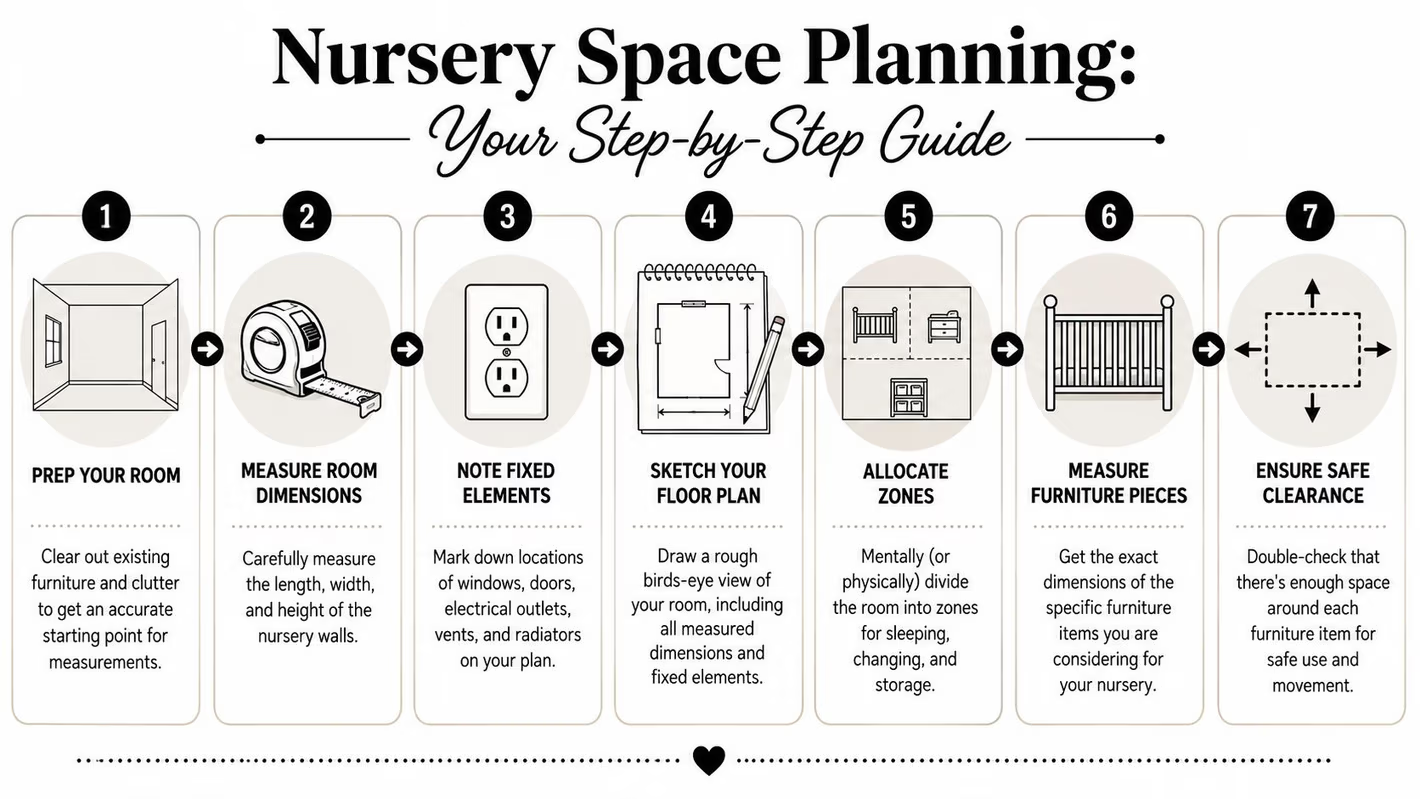
You get home with a crib, a dresser, and a glider, then realize the door clips the dresser drawer and the chair blocks the closet. That is the nursery mistake I see most often, and it is expensive to fix after delivery.
The room has to work before the furniture can look good. For first-time parents, that usually means slowing down long enough to measure the space, mark the fixed obstacles, and decide how you will move through the room during real routines like diaper changes, middle-of-the-night feedings, and quick clothing changes.
Build the room on paper first
Start with a simple sketch. Include wall lengths, window placement, the closet opening, door swing, vents, and outlets. It does not need to be pretty. It needs to be accurate.
Then map the room by use, not by matching pieces:
- Sleep zone: Place the crib where you can reach it comfortably and where foot traffic will not keep disturbing rest.
- Change zone: Set the dresser or changing surface where diapers, wipes, and clothes are easy to grab without twisting or stepping around other furniture.
- Comfort zone: If you want a glider or rocker, leave enough space to sit, stand, and move around it without bumping a wall or blocking a drawer.
- Storage zone: Use shelves, baskets, or a small chest only if they support daily routines and do not tighten the walkway.
Parents often forget the small things that affect placement. A baseboard vent, a low window, or a radiator can take a good-looking wall out of consideration fast. If you want a practical measuring refresher before you shop, this guide on how to measure furniture before delivery walks through the basics clearly.
What to check before you buy
A nursery set can look balanced online and still fit poorly in an actual room. The goal is clear movement, usable storage, and enough open space to care for your baby without working around the furniture.
Use this checklist before you commit:
| Area to check | What matters |
|---|---|
| Door swing | Make sure the door opens fully without striking the crib, dresser, or chair |
| Drawer clearance | Check that drawers can open all the way without blocking your path |
| Crib access | Leave room to reach in comfortably and make the bed without awkward angles |
| Chair space | Confirm a glider or rocker can move properly and still leave walking room |
| Closet use | Keep everyday storage easy to access, especially one-handed |
| Mattress fit planning | If you are still comparing crib options, navigating crib mattress safety can help you understand sizing and fit questions before purchase |
One practical trade-off comes up in almost every nursery. A larger set may give you more storage, but it can also crowd the room and make nighttime care harder. In many homes, a crib and a well-sized dresser do the job better than a full matching collection.
Good nursery planning is usually quiet and simple. You notice it at 2 a.m. when you can open a drawer, reach the crib, and sit down with the baby without squeezing past furniture. That is the kind of layout that holds up.
Decoding Safety Standards for Your Peace of Mind
The crib is the one piece where “close enough” isn't acceptable. Parents don't need more anxiety, but they do need clarity. Safety standards exist to take the guesswork out of what belongs in a nursery and what doesn't.
The core rule is straightforward. The U.S. CPSC mandates that cribs meet federal safety standard 16 CFR 1219/1220, and guidance tied to nursery set shopping also stresses that the safest set often comes down to a compliant crib and dresser, while add-ons like bumpers can increase risk, as summarized on Wayfair's nursery furniture sets page discussing CPSC guidance.

What safe buying looks like
A safe nursery set starts with the crib, but it doesn't end there. You want the whole setup to support safe daily use.
Look for these basics:
- A compliant crib: The product should clearly indicate it meets current federal requirements.
- Fixed, sturdy construction: Baby Boudoir's nursery guidance points to fixed sides, properly spaced bars, and a sturdy frame as core crib features.
- A practical companion piece: A dresser usually adds real function because it stores clothing and can often support changing needs.
- Fewer unnecessary extras: Decorative pieces that crowd the room can create inconvenience without adding value.
The safest nursery often feels a little simpler than the showroom display.
That's one point many style-first guides skip. Parents may assume the fullest package is the safest because everything matches. Often the opposite is true. The room works better when every piece earns its place.
What to skip without regret
Some nursery extras look comforting in photos but don't improve safety or function. Crib bumpers are the clearest example. Current guidance says to avoid them. Loose bedding and products that don't fit the sleep space properly also deserve real caution.
For parents comparing mattresses, this resource on navigating crib mattress safety is worth reading because it helps translate the mattress side of the decision into plain language.
If you're also thinking ahead to stain resistance, easy-clean upholstery, and durable surfaces for family life, this article on choosing kid-friendly and pet-friendly furniture adds useful perspective beyond the nursery itself.
Beyond the Crib The Value of Convertible Furniture
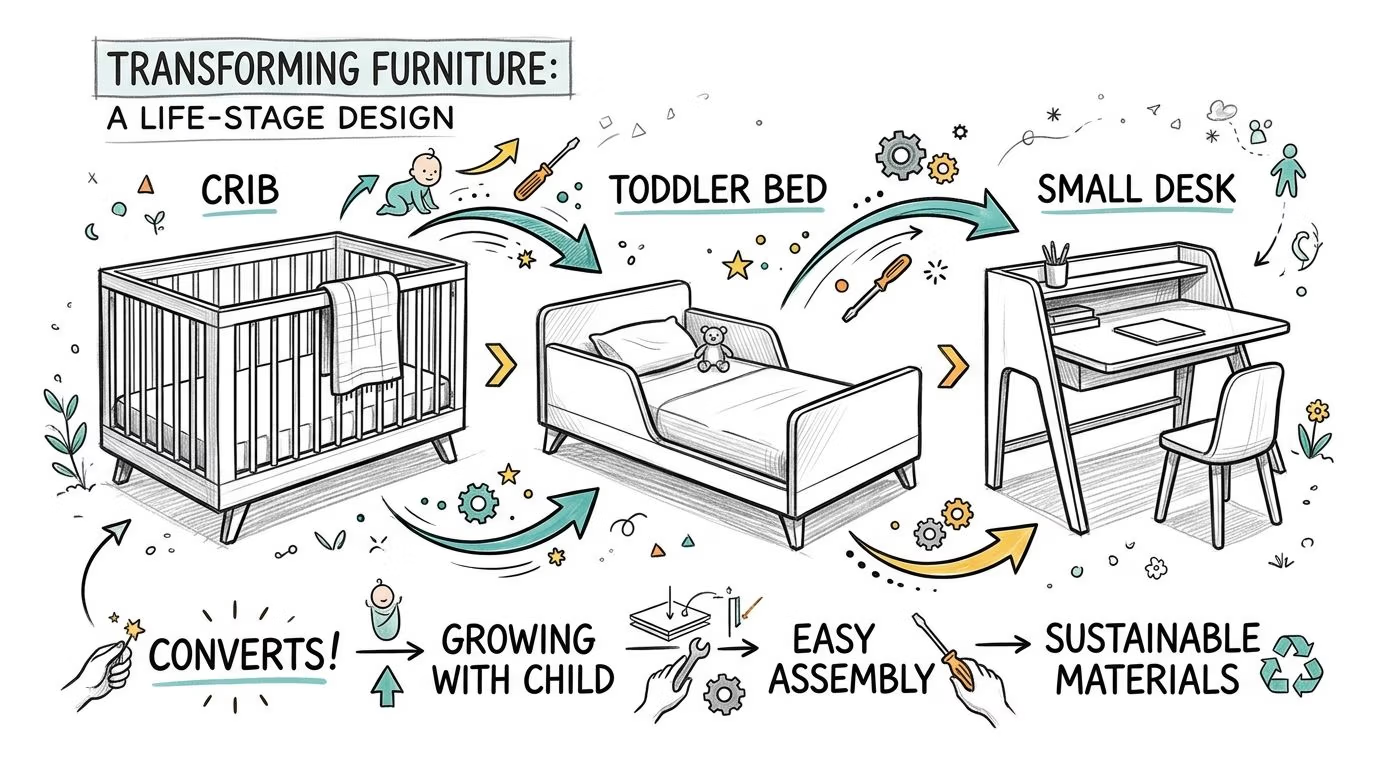
You bring the baby home, settle into a routine, and then the room starts changing faster than you expected. Diapers give way to pajamas in bigger sizes. A crib becomes a toddler bed. The storage you thought was generous suddenly has to hold books, toys, and extra bedding too. That is why I tell parents to judge nursery furniture by how it will work in two or three years, not just how it looks on delivery day.
Why convertibility matters
Convertible furniture earns its value by reducing replacement cycles. A crib that changes into the next sleep stage can save you from buying another bed too soon, and a dresser with the right proportions can move from nursery duty to a child's bedroom without looking out of place.
The benefit is practical, not decorative. Fewer furniture swaps mean fewer disruptions, fewer delivery headaches, and less chance of ending up with pieces that no longer fit the room.
Still, convertibility is not automatically a good deal.
Some products add extra features that sound useful on a sales tag but rarely get used at home. I usually recommend parents focus on the pieces with a clear second life:
- Convertible cribs: Best for families who want to spread out costs and keep the room more consistent through the toddler years.
- Dressers that work beyond babyhood: Wide, well-built dressers often outlast the nursery better than specialty changing units.
- Flexible storage pieces: Open shelving, bookcases, or compact cabinets can start with diapers and blankets, then shift to toys and school supplies later.
How to judge long-term value
In the store, I ask parents to stop and picture the room at age three, not age three weeks. That simple shift usually leads to better choices.
Use these questions:
- Will you use this piece after the baby stage ends?
- Will it still fit once the room layout changes?
- Are the conversion parts easy to get later, or do you need to buy them now?
- Does the furniture still make sense if a second child uses it down the road?
That third question matters more than many parents realize. Some cribs convert beautifully on paper, but the guardrail or bed kit is sold separately and can be hard to find later. If you are already planning ahead, this cot to bed transition guide gives a helpful look at what that next stage involves.
I also encourage families to use the same logic they would use in any small room. Articles on choosing multi-functional furniture for modern homes apply well here because nursery space has to work hard every day.
A final trade-off is budget. If the choice is between an average-quality convertible set and a better-built crib plus dresser, I would usually put the money into construction quality first. Furniture that lasts through one stage well is often a smarter buy than furniture that promises five stages and does none of them especially well.
Understanding Materials and Healthy Finishes
Once the layout works and the crib checks out, materials deserve close attention. Parents usually notice color first, but the finish, surface quality, and material choice affect daily life more than people think.
Leading retailers now frame nursery sets around coordinated safety compliance, including Greenguard Gold certified mattresses and furniture verified to be below federal heavy-metal and lead limits, which is why material quality should carry as much weight as style when comparing options, as reflected on Target's nursery furniture category page.

Materials affect more than appearance
Parents often ask whether solid wood is always the answer. Not necessarily. What matters most is understanding what you're buying and whether the product is transparent about its compliance and finish quality.
Here's the practical breakdown:
- Solid wood: Often appreciated for durability, repair potential, and a more substantial feel.
- Composite materials: Can still be suitable, but buyers should pay closer attention to finish quality and compliance details.
- Painted surfaces: Need to hold up to wiping, handling, and normal nursery wear without quickly looking tired.
- Low-emission choices: These matter because infants spend long periods close to furniture in a relatively enclosed room.
Healthy nursery furniture should clean easily, wear well, and give you confidence about what's in the finish, not just what color it is.
What to ask in the store
If you're shopping in person or online, ask for plain answers to these points:
| Question | Why it matters |
|---|---|
| Is there certification or compliance information available? | This helps separate marketing language from documented standards |
| How does the finish hold up to cleaning? | Nursery furniture gets wiped down often |
| Will the dresser and crib age well together? | Matching today should still make sense later |
| Is the surface easy to maintain? | Convenience matters in a room you'll use every day |
For a broader read on healthier children's spaces, Ocodile's non-toxic furniture advice offers helpful questions to keep in mind while comparing options.
And because many nurseries include a glider, rocker, or upholstered bench, this guide to upholstery materials and how they perform can help when you're balancing softness, cleanability, and long-term wear.
Bringing Your Dream Nursery Home with Tangers
A lot of parents reach this point after weeks of saving photos, comparing finishes, and wondering which set will make the room feel complete. The better question is simpler. Will these pieces fit your space, support safe daily use, and still make sense once your baby is no longer in a crib?
That order matters. Families usually make better nursery decisions when they start with the room itself, then choose the core furniture, then compare how long each piece can serve them. Style still matters, but it works best after the practical choices are settled.
Why coordinated sets still make sense
A coordinated nursery set can save time and remove some guesswork, especially for first-time parents who want a crib and dresser that work well together from day one. In the store, I often see relief on a parent's face when they realize they do not have to build the room piece by piece if a set already meets their needs.
But a set is only a good buy if the pieces earn their place. Some rooms need a full collection. Others work better with a crib, a dresser that can double as a changing station, and one comfortable chair. Buying fewer, better-fitting pieces usually serves a family longer than forcing a full bundle into a tight room.
What local families usually ask about
Around Bellefontaine, the questions tend to be practical:
- Can we get good value without rushing the decision? Nursery furniture is one of many new expenses, so parents want pieces that will last beyond the first year.
- Do we need financing, or can we stage the purchase? Sometimes it makes sense to buy the core pieces now and add storage or seating later.
- Will delivery and setup be handled properly? That matters late in pregnancy, and it matters if you want the room assembled correctly the first time.
- If something needs service later, who do we call? A local store with in-house support gives families a clearer path than a one-time online order.
Parents who want help sorting through room size, traffic flow, and furniture scale can use design services for nursery planning and furniture selection. That kind of planning is useful when a nursery has to share space with a guest room, fit into an older home, or leave enough open floor area for everyday movement.
Tanger's Furniture is one option local families use when they want to compare bedroom collections in person, ask direct questions, and arrange delivery without turning the purchase into an impersonal checkout process. After 80 years in a family-owned furniture store, one lesson holds up. The nursery that works best is usually the one planned in the right sequence. Layout and safety first, then durability and flexibility, then the finish and look that make it feel like home.
Visit Tanger's Furniture to see custom options in person at our Bellefontaine showroom or browse collections online to start your journey. If you have a specific design question, contact our design staff for guidance, ask about flexible financing and our Low Price Promise, and let our delivery and service team handle the heavy lifting. For exclusive offers and helpful ideas for every room in the house, join our Love Your Home Club.