How To Furnish A Small Office: Expert Tips

That small office usually starts the same way. There’s an empty corner, a spare bedroom that has turned into a storage room, or a modest commercial suite with good intentions and no real plan yet. You know it needs to work hard, but you also don’t want it to feel cramped, cheap, or temporary.
Around Bellefontaine and Logan County, we see both sides of this every day. A homeowner needs a quiet spot for remote work. A local business owner needs a front office, back office, or compact team space that looks professional without wasting a foot of floor space. The good news is that how to furnish a small office isn’t about squeezing in as much furniture as possible. It’s about choosing fewer, better pieces and placing them with purpose.
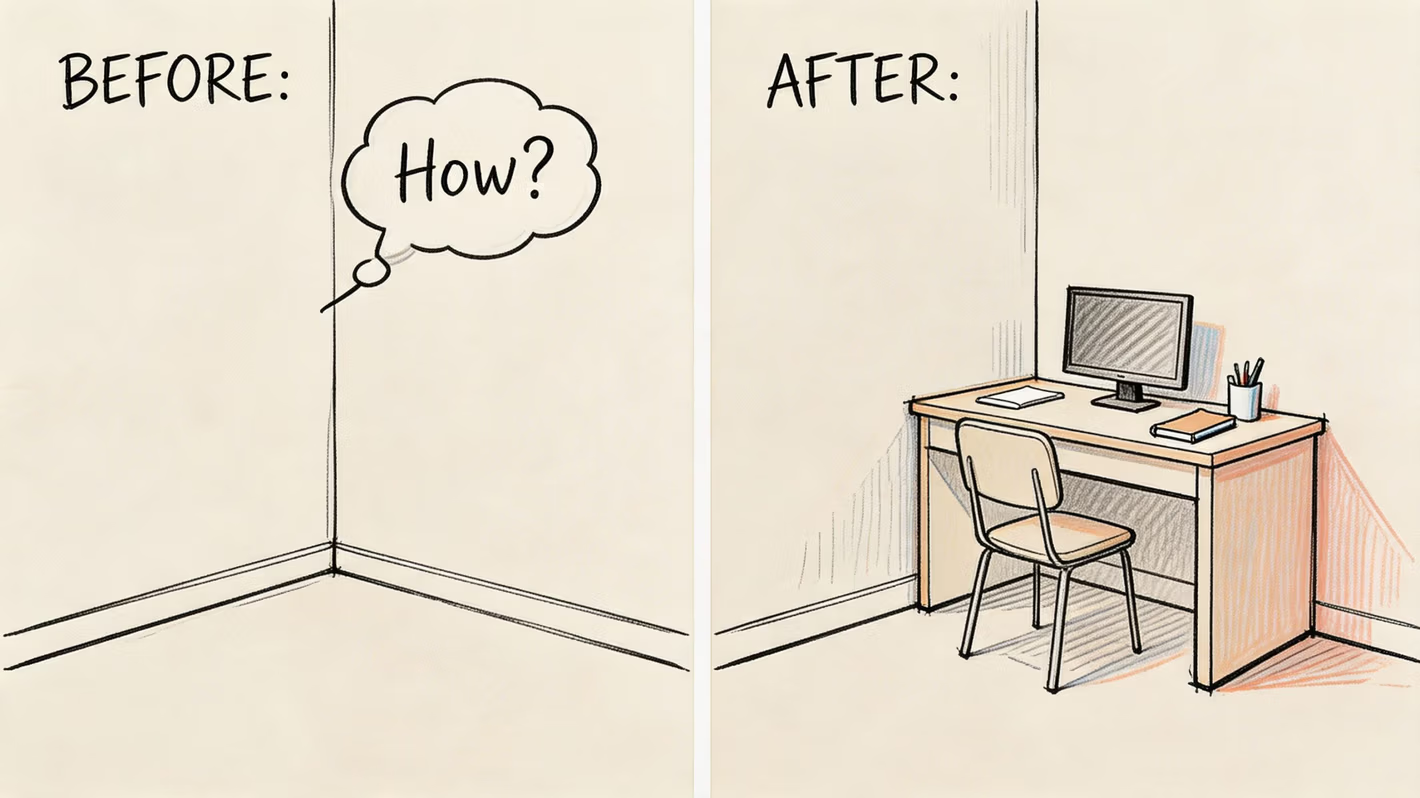
From Empty Corner to Command Center
A small office can feel limiting at first. In practice, it often becomes easier to furnish than a large one because every decision matters. That forces clarity. You stop buying “just in case” pieces and start choosing furniture that earns its spot.
Since 2019, smaller office footprints have become more common, with demand for spaces ranging from 10,000 to 20,000 square feet increasing by 7%, while demand for larger offices fell sharply, according to Density’s look at smaller office space trends. The takeaway for a home office or a compact business suite is simple. Compact, multifunctional furniture works better than oversized statement pieces.
What that looks like in real life
A spare bedroom office usually goes wrong in one of two ways. People either under-furnish it with random leftovers that never support a real workday, or they over-furnish it with a full executive setup that swallows the room.
A better approach is more balanced:
- Use one main work surface that fits the wall and your actual tasks.
- Add storage with a second job, such as a credenza that also holds a printer.
- Leave walking room open so the space feels calm instead of crowded.
- Treat the office like part of the home, not an afterthought, especially if it’s visible from a living area.
For readers gathering visual ideas before they buy, these aiStager home office insights offer a useful way to think about layout, mood, and what makes a workspace feel intentional.
A small office works best when the room supports your routine, not when it tries to imitate a larger space.
That’s also why space planning matters before you shop. Whether you’re furnishing a home office nook or a compact professional suite, the room should tell you what belongs there. Once you start with that mindset, an awkward corner can become a command center that feels organized, welcoming, and easy to use every day.
Start with a Plan and a Tape Measure
Most small office mistakes happen before a single piece of furniture arrives. The problem isn’t style. It’s scale.
A desk that looks slim online can block a doorway in person. A storage cabinet can cover the one outlet you need. A chair can fit under the desk but still leave no room to move. That’s why planning comes first.
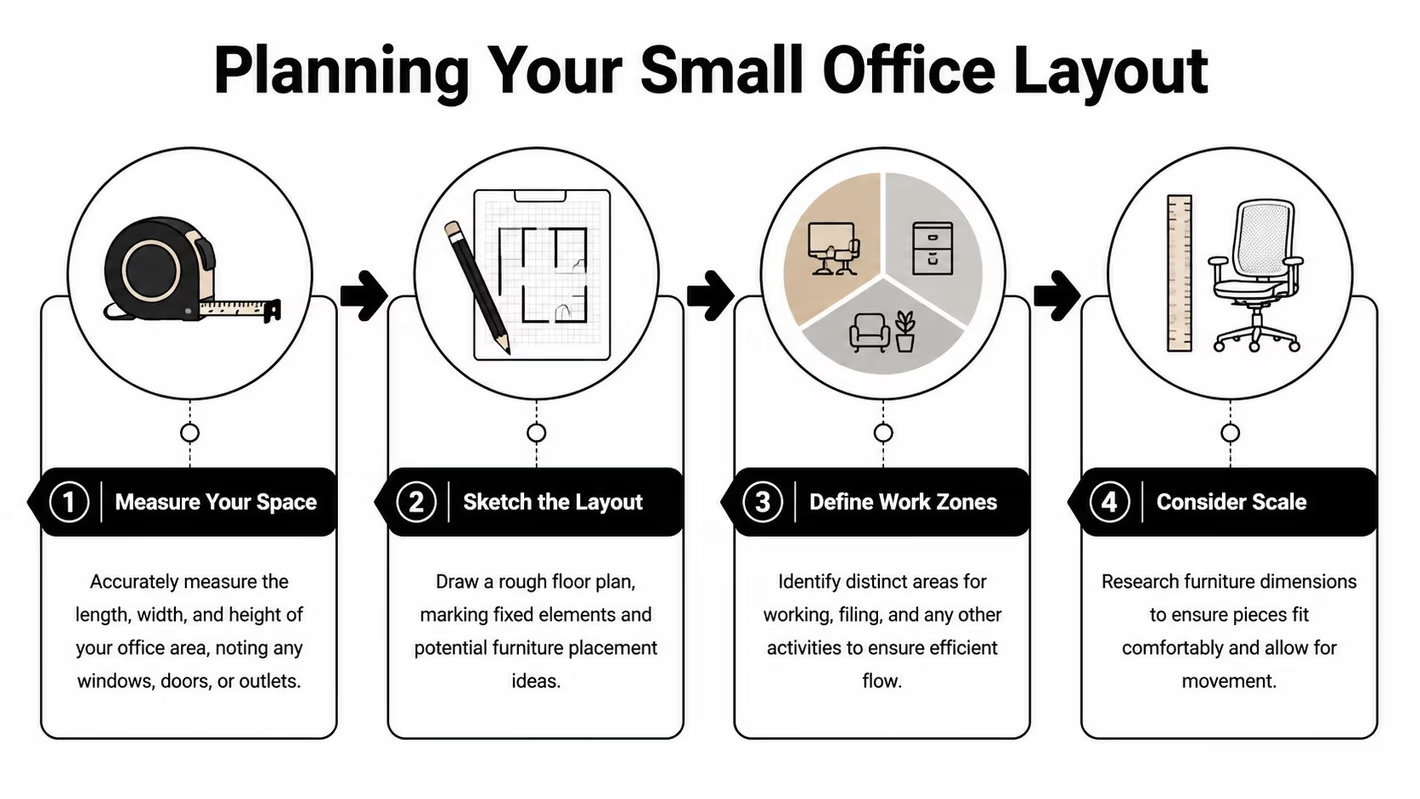
Measure the room like you’re solving a puzzle
Start with the hard limits:
- Measure length, width, and height of the room or office corner.
- Mark every fixed element including doors, windows, vents, outlets, and baseboard heaters.
- Note where natural light falls during the hours you work.
- Check swing space for doors, drawers, and chair movement.
If you’re working in a tight footprint, this guide on how to measure furniture helps prevent the classic mistake of buying for appearance instead of fit.
Put it on paper before you put it in the room
A rough sketch is better than guessing, but a scaled plan is better than a rough sketch. According to Grooms Inc. on office space planning, a detailed space assessment matters, desks in tight spaces should be at least 24 inches deep, vertical storage can reclaim 20% to 30% of floor area, and office setup success rates rise to 90% with professional CAD planning versus 55% with hand-drawn sketches alone.
That sounds technical, but the lesson is practical. When the room is small, inches count.
Practical rule: If you can’t show where the chair pulls back, where the cords go, and where the file storage sits, the plan isn’t finished yet.
Define work zones, even in one room
A small office still needs structure. The best layouts usually separate tasks, even when the divisions are subtle.
| Zone | What belongs there | What to avoid |
|---|---|---|
| Main work zone | Desk, chair, monitor, task light | Decorative pieces that eat desk depth |
| Storage zone | Files, supplies, printer, paper | Deep cabinets near walk paths |
| Support zone | Charging, trash, shredder, bag drop | Loose cords and stacked boxes |
For a homeowner, that zoning might mean keeping the work wall distinct from the rest of a bedroom. For a business owner, it might mean separating the workstation from guest seating or filing.
For larger home projects and small business layouts, professional planning can help test combinations before anything is ordered. Tanger’s Furniture offers CAD-based space planning through its commercial office services for small-to-medium office projects, which is useful when a room needs executive seating, task chairs, storage, and circulation to fit together cleanly.
Choose Smart Multi-Functional Furniture
The fastest way to make a small office feel smaller is to fill it with single-purpose furniture. A desk that only holds a laptop. A cabinet that only stores paper. A side chair that rarely gets used but still takes up floor space every day.
Small rooms need furniture that does more than one job.
Buy fewer pieces that work harder
A smart small office usually includes pieces like these:
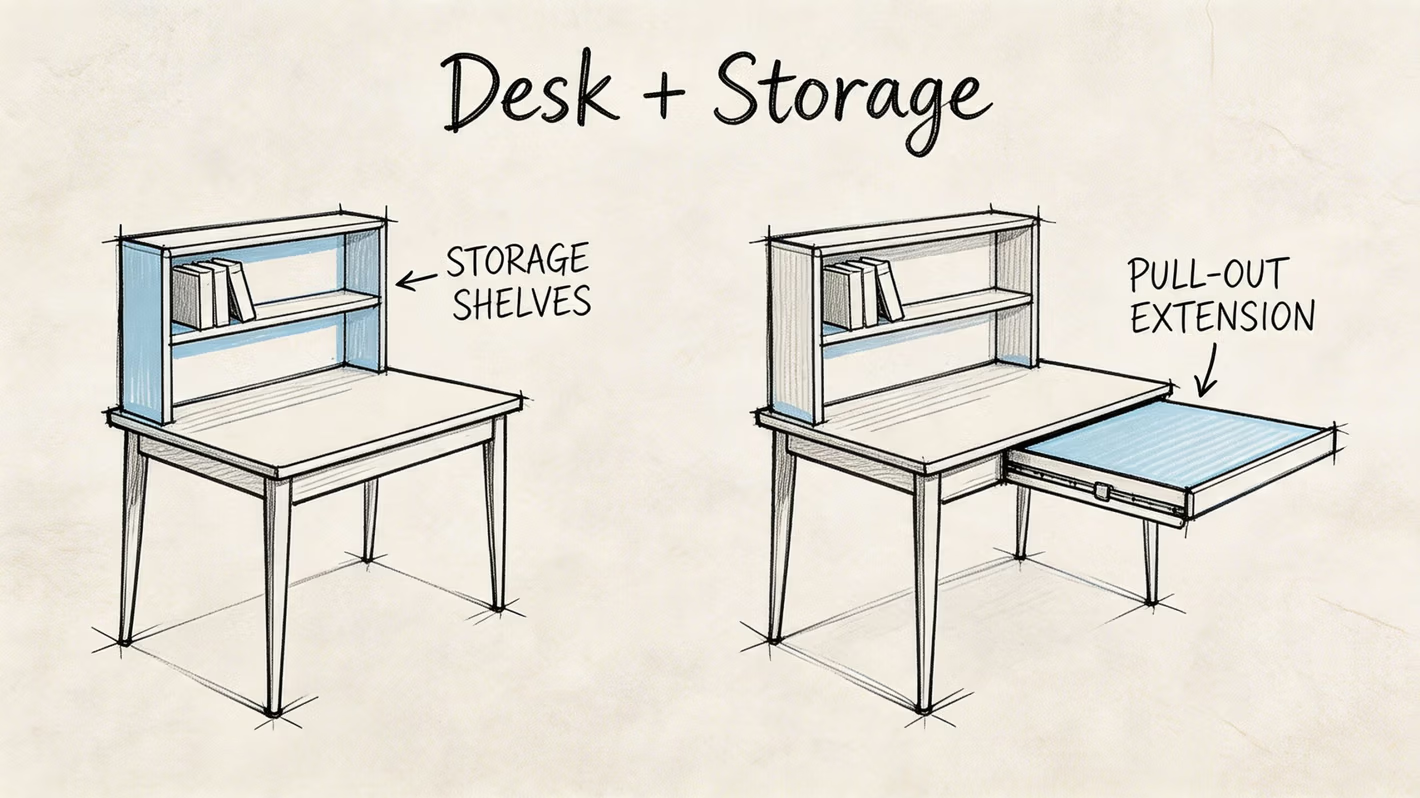
- Desk with built-in storage so you don’t need a separate file pedestal.
- Bookcase that acts as a room divider in a bedroom or open-plan living area.
- Storage bench or ottoman that holds supplies and offers extra seating.
- Drop-leaf or pull-out surface for paperwork days without committing to a larger desk full time.
- Narrow console-style desk when the room doubles as a guest space or hallway workspace.
That’s where customization matters. Modular lines and custom-order options let you adjust dimensions, finishes, and configurations so the furniture fits the room instead of forcing the room to adapt. When you’re choosing a workstation for a niche, alcove, or awkward wall, that flexibility matters more than showroom trends.
Small home offices need sharper boundaries
A lot of remote workers aren’t working from a dedicated room. According to OfficeMoods’ summary of a 2025 Stanford finding, 42% of U.S. remote workers lack a dedicated home office. For shared spaces like closet offices or bedroom corners, the same source notes that a minimum desk depth of 20 inches helps prevent cramping.
That’s a useful line to remember. In very tight setups, people often focus on width and forget depth. A desk that’s too shallow may fit the room, but it won’t feel comfortable once a monitor, keyboard, notebook, and lamp are all competing for the same surface.
What works better than the obvious choice
In a compact room, visual bulk matters almost as much as physical size. Open-leg desks usually feel lighter than heavy pedestal desks. Wall-mounted shelves often beat floor bookcases. Light from windows or overhead fixtures can make a room feel less boxed in, which is why this guide on how to expand small spaces with light is worth a look when you’re planning both furniture and placement.
A simple decision guide helps:
- Choose open bases when you want the room to feel airier.
- Choose closed storage when clutter is your main problem.
- Choose rolling pieces when the office has to convert back to living space.
- Choose modular furniture when your business or work routine may change.
For more ideas on layouts and pieces that pull double duty, this guide to multifunctional home office furniture is a strong starting point.
Prioritize Your Well-being with Ergonomic Seating
If the desk is the centerpiece of a small office, the chair is the daily test of whether the room works. A good chair disappears into the routine. A bad one reminds you it’s there every hour.
What to look for in an ergonomic chair
The important features aren’t flashy. They’re adjustable.
A chair should let your body settle into a working position without strain. According to Glenwood Office on office design, chairs with a 16-inch to 21-inch seat height range and desks at an adjustable height can lead to a 40% reduction in fatigue and a 22% uplift in productivity. The same source says ergonomic planning can also cut absenteeism by 12% under WELL building standards.
That’s why the chair deserves a serious share of the budget.
Look for these basics:
- Seat height adjustment so feet can rest comfortably and knees don’t sit too high.
- Lumbar support that meets the lower back instead of leaving a gap.
- Adjustable arms that support the shoulders without pushing them upward.
- A seat that isn’t too deep for the user, especially in compact workstations.
- A base that rolls smoothly on the actual flooring in the room.
The wrong chair doesn’t just make you uncomfortable. It changes how long you can focus, how you sit, and how the rest of the office performs.
Match the chair to the person, not just the room
Local shopping still has an edge. Sitting in the chair matters. Two models can look nearly identical online and feel completely different after thirty minutes.
For readers comparing options, this resource on finding the best ergonomic office chairs for back pain breaks down what to pay attention to before you buy.
Homeowners often need a chair that blends with nearby décor. Business owners usually care more about durability, cleanability, and all-day support across multiple users. Both are valid. The best choice is the one that holds up to your actual work pattern, not the one with the most features on a tag.
Conquer Clutter with Vertical Storage Solutions
Floor space disappears fast in a small office. Storage is usually the reason. A lateral file, extra side table, or oversized bookcase can eat up the walking area and make the room feel blocked off.
The fix is to stop thinking outward and start thinking upward.
Use the wall before you use more floor
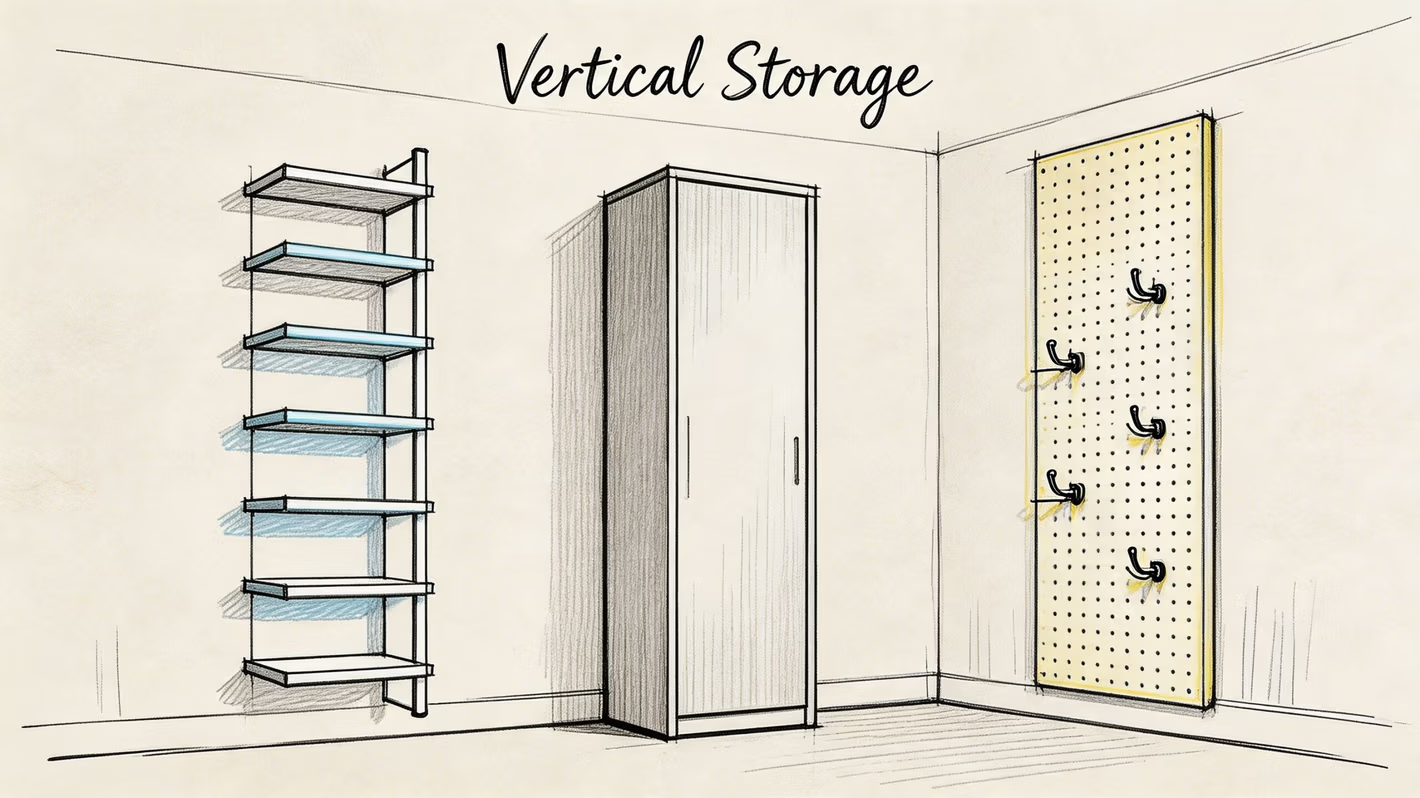
Vertical storage works because it keeps the footprint smaller while preserving function. In practical terms, that can mean:
- Floating shelves above the desk for books, binders, and display items.
- Tall narrow cabinets instead of low, wide units.
- Pegboards or rail systems for tools, supplies, and accessories.
- Wall-mounted mail sorters to keep paper from spreading across the desktop.
- A bookcase with adjustable shelves so storage changes as your work changes.
A customizable piece can be especially useful here. If the ceiling height, baseboards, or wall width are unusual, made-to-order dimensions often solve a problem that standard case goods can’t.
Keep what you touch close, and what you archive high
The best storage plans aren’t based on category alone. They’re based on frequency.
Put everyday items within arm’s reach. Store backup supplies, old files, and seasonal materials higher up. That keeps the work zone cleaner and helps the room feel larger the moment you walk in.
A buildable case piece can help if you need a custom fit. This office storage bookcase option shows how flexible shelving can adapt better than fixed-size storage in tight rooms.
Storage should support the workday quietly. If it interrupts movement, blocks light, or turns the desk into a drop zone, it’s the wrong storage plan.
Set the Mood with Lighting and Finishes
A small office can function well and still feel cold. That usually comes down to lighting and surface choices.
Layer the light instead of relying on one source
The most usable small offices have more than one kind of light. Overhead light handles the room. A desk lamp handles focused work. Softer accent lighting can make the office feel less clinical at the start or end of the day.
A few simple choices improve the mood fast:
- Place the desk near natural light when possible, but avoid direct glare on a screen.
- Add a focused task lamp for paperwork and late-day work.
- Choose shades and finishes that bounce light gently instead of absorbing it.
- Use wall-mounted or compact lamps when desk surface is limited.
In home offices, softer lighting helps the room blend with the rest of the house. In commercial spaces, clean and even light helps the office feel organized and ready for visitors.
Finishes shape how the room feels
The office becomes personal. Wood tones warm up a hard-working room. Upholstery softens it. Metal details can sharpen the look if the room is aiming for a more modern profile.
The key is restraint. In a small office, fewer finish changes usually look better than many competing ones. A consistent palette keeps the room from feeling busy.
This is also where custom order options earn their place. With Smith Brothers of Berne and Flexsteel, shoppers can explore finish and upholstery choices that help an office coordinate with nearby living spaces or a business’s existing look. That matters when the office shares a bedroom, sits off a main living area, or needs to reflect a polished brand image without feeling generic.
A good office shouldn’t feel separate from the rest of your home. It should feel like it belongs there. The same goes for a professional office. It should feel considered, not assembled from leftovers.
Budgeting for Quality and Making it Happen
Budget matters in every office project. The trick is knowing where to save and where not to.
Spend where daily use is highest
If you’re deciding how to furnish a small office on a sensible budget, put your money into the pieces that carry the workload:
- Chair first, because you use it the most.
- Desk second, because stability and surface size affect every task.
- Storage third, because organization determines whether the room stays functional.
The market itself reflects that priority. The Grand View Research analysis of the U.S. office furniture market says the market was valued at USD 17.43 billion in 2025 and is projected to reach USD 25.82 billion by 2033, with seating accounting for over 27% of the market. That reinforces something furniture buyers already feel in practice. Durable chairs and desks are worth buying carefully.
Cheap can get expensive fast
Flat-pack furniture has its place, but in a small office, weakness shows up quickly. Wobbly desks feel worse in tight rooms. Shallow drawers jam. Thin materials chip at the corners. If a piece has to be replaced early, the lower upfront price stops looking like a deal.
That’s why value isn’t just sticker price. It’s durability, repairability, and whether the furniture still works a few years from now. Tanger’s Low Price Promise helps reassure shoppers who want lasting quality without overspending, and flexible financing options can make a full office project more manageable for homeowners and small businesses alike.
For local families, office shoppers, and even readers coming in for other needs like Bellefontaine furniture, custom sofas Ohio projects, a mattress store Logan County stop, or Speed Queen laundry, the same principle applies. Buy with a longer view.
Your Productive Oasis Awaits
The best small offices don’t happen by accident. They come together when the plan is clear, the furniture fits the room, the chair supports the body, the storage climbs the wall instead of swallowing the floor, and the finishes make the space feel like a place you want to spend time in.
That approach works in a home office, a shared bedroom corner, a small downtown suite, or a growing local business. Good furnishing isn’t about filling the room. It’s about making the room work.
Local delivery and setup help take the strain out of the process, and in-house service support matters long after the furniture is in place. That kind of follow-through can make a small office project feel much easier from start to finish.
Visit the showroom in Bellefontaine to see custom options in person or browse Tanger's Furniture collections online to start your journey. Have a specific design question? Contact the design staff today or join the Love Your Home Club for expert tips, exclusive offers, and helpful inspiration delivered to your inbox.