Best Living Room Furniture Sets: A Bellefontaine Guide


A lot of people start the same way. They stand in the middle of the living room, look at an old sofa that’s seen better days, glance at a phone full of inspiration photos, and realize they have no idea what to buy first. Size, color, fabric, layout, budget. It gets overwhelming fast.
That’s especially true when you’re not just shopping for a sofa. You’re trying to build a room where your family can relax, host friends, watch movies, read, nap, and live everyday life. The best living room furniture sets aren’t just attractive. They make your home work better.
Families around Bellefontaine and Logan County have been sorting through those same questions for generations. With roots going back to 1946 and design experience serving local homes since 1964, the guidance that matters most usually isn’t flashy. It’s calm, practical help from someone who listens first.
That matters because this isn’t a small decision. The living room furniture market reached about $180 billion in 2023, and 68% of U.S. homeowners prioritize multifunctional furniture sets to make better use of their space, according to Povison’s living room furniture review. People aren’t just filling rooms anymore. They’re trying to make smarter, longer-lasting choices.
Finding Your Perfect Living Room The Tanger's Way
Start with real life, not a trend board
A young family might want a sectional for movie nights. A retired couple may want firmer cushions and easier walkways. A renter in an older Logan County home may need pieces that can handle tight corners, narrow rooms, or a staircase that seems determined to fight every delivery.
Those are all different problems. That’s why the phrase “best living room furniture sets” can be misleading if it sounds like there’s one right answer for everyone. There isn’t.
The right set fits your life first. Then it fits your room. Then it fits your style.
Practical rule: If a furniture set looks good online but doesn’t match how you actually use your room, it isn’t the right set.
What local shoppers usually want
Shoppers who walk into a furniture store aren’t asking for the same thing. They’re usually trying to solve one of these issues:
- More seating: They need room for family gatherings without making the space feel crowded.
- Better flow: The current arrangement blocks walkways, windows, or a fireplace.
- Stronger materials: The old cushions sag, the frame creaks, or the fabric shows every spill.
- A more finished look: They want the room to feel pulled together instead of pieced together.
- Flexibility: They need furniture that can adapt if they move, remodel, or change the room later.
That’s why a no-pressure approach matters. Big-box shopping can feel like you’re choosing between what’s in stock and what ships the fastest. A hometown furniture experience should feel different. It should help you slow down, ask better questions, and avoid expensive mistakes.
Love your home, don’t just furnish it
A living room set should support the way your household lives. That includes busy family rooms, quiet sitting rooms, and even professional spaces where clients or guests spend time. Good furniture planning isn’t just for homes. The same thinking applies to reception areas, waiting rooms, and office lounges.
For Bellefontaine shoppers, that also means looking beyond the tag and asking a few simple questions:
- Will this still feel comfortable a few years from now?
- Can I clean it without stress?
- Does it fit the room I have, not the room I wish I had?
- If my needs change, can the layout change too?
When you answer those questions early, furniture shopping gets simpler. You stop chasing a perfect photo and start building a room you’ll enjoy living in.
First Things First Sizing Up Your Space and Style
Saturday afternoon in Bellefontaine often goes like this. A family finds a sofa they love, gets it home, and then learns the room feels tighter, the walkway to the hallway disappears, or the chaise points straight into the fireplace. The good news is that these problems are usually easy to prevent when you start with the room instead of the furniture.
That is how we help local shoppers approach it at Tanger’s. Before you choose colors, arms, or cushion depth, get clear on two things. How the room needs to function, and how much space it can comfortably give.
Measure before you browse
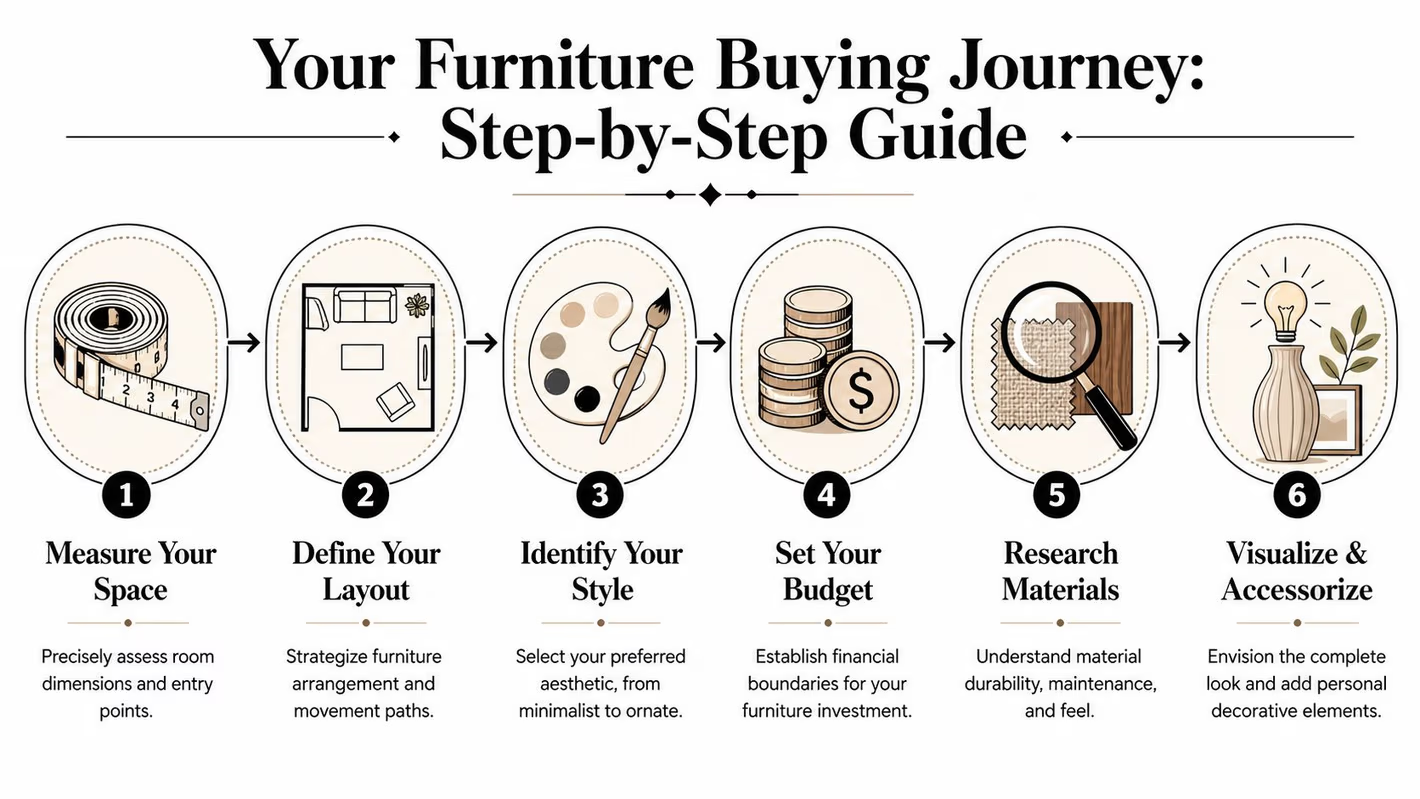
Start with the full room size, wall to wall. Then measure the details that cause trouble later: door openings, stair turns, hallways, windows, floor vents, and the distance between focal points such as a TV wall and fireplace. If you want a practical starting point, this guide on how to measure furniture for your home walks through the process clearly.
One more step helps even more. Mark the room on paper and note anything unusual, like a narrow pass-through, an angled wall, a large radiator, or a window that sits lower than usual. Many Logan County homes have one feature like that, and it can change which set works.
A simple measuring routine
Use this order so nothing gets missed:
- Measure the room: Record wall lengths, then note bump-outs, angled corners, built-ins, and fireplaces.
- Measure how furniture gets in: Front door, interior doors, hallways, stairways, and tight turns all matter.
- Choose the room’s main job: TV watching, conversation, family lounging, reading, or a mix.
- Map the walking paths: Leave enough open space so people can move naturally without turning sideways around furniture.
- Tape out the footprint: Painter’s tape on the floor shows the actual size better than a product photo ever will.
Painter’s tape works like a dress rehearsal for the room. It shows, fast, whether a coffee table sits too close, whether a recliner needs more clearance, or whether two full sofas make less sense than a sofa and two chairs.
Match the layout to the room
Room shape matters as much as room size. A square room, a long narrow room, and a room with two openings will each want a different setup, even if the square footage is similar.
Here is the plain-language version:
- An L-shaped sectional usually fits well when you want to use a corner and keep the center of the room open.
- A U-shaped sectional often suits larger, more open rooms where the seating area can form its own gathering zone.
- A sofa with separate chairs or a loveseat often works better in rooms with multiple doorways, awkward angles, or more than one focal point.
For Bellefontaine and Logan County homeowners, that last point matters a lot. Older homes and remodeled spaces rarely behave like perfect rectangles. A local showroom team can help you adjust the plan so the furniture fits the room you have, not the one in a catalog photo.
A good layout should feel easy to live with every day.
Style gets easier once you look for patterns
Many shoppers say they do not know their style. Usually, they know more than they think. They just need a few clues to sort it out.
Look at the photos you save. If you keep choosing soft fabrics, rounded arms, and warm neutral colors, you probably want a relaxed, comfort-first room. If you prefer structured shapes, visible wood, and cleaner lines, your taste may be more classic, transitional, or modern. If your favorites mix both, that is normal. Many of the most welcoming living rooms do.
It also helps to view the room as a whole. Furniture, rugs, lighting, and window coverings all affect the mood. If you are planning those pieces together, this guide to best living room window treatments can help you connect seating choices with privacy, natural light, and softness.
Bring phone photos. Save fabric ideas. Screenshot rooms you return to again and again. You do not need designer terms to make a smart choice. You just need enough visual direction for a local expert to help shape the room around your home, your habits, and the quirks of your space.
The Heart of Quality What Makes Furniture Last
A sofa can feel wonderful for five minutes in a showroom and frustrating six months later at home. Bellefontaine families run into this all the time. The fabric still looks nice, but the seat sinks in the favorite spot, the arm starts to wobble, or the cushions lose their shape. Lasting quality comes from what is built underneath the surface.
The easiest way to judge a living room set is to look at it in layers. Start with the frame. Then check the seat support and cushions. Finish with the fabric. If those three parts are made well, you usually end up with furniture that stays comfortable and looks good through everyday family use.
What to ask about the frame
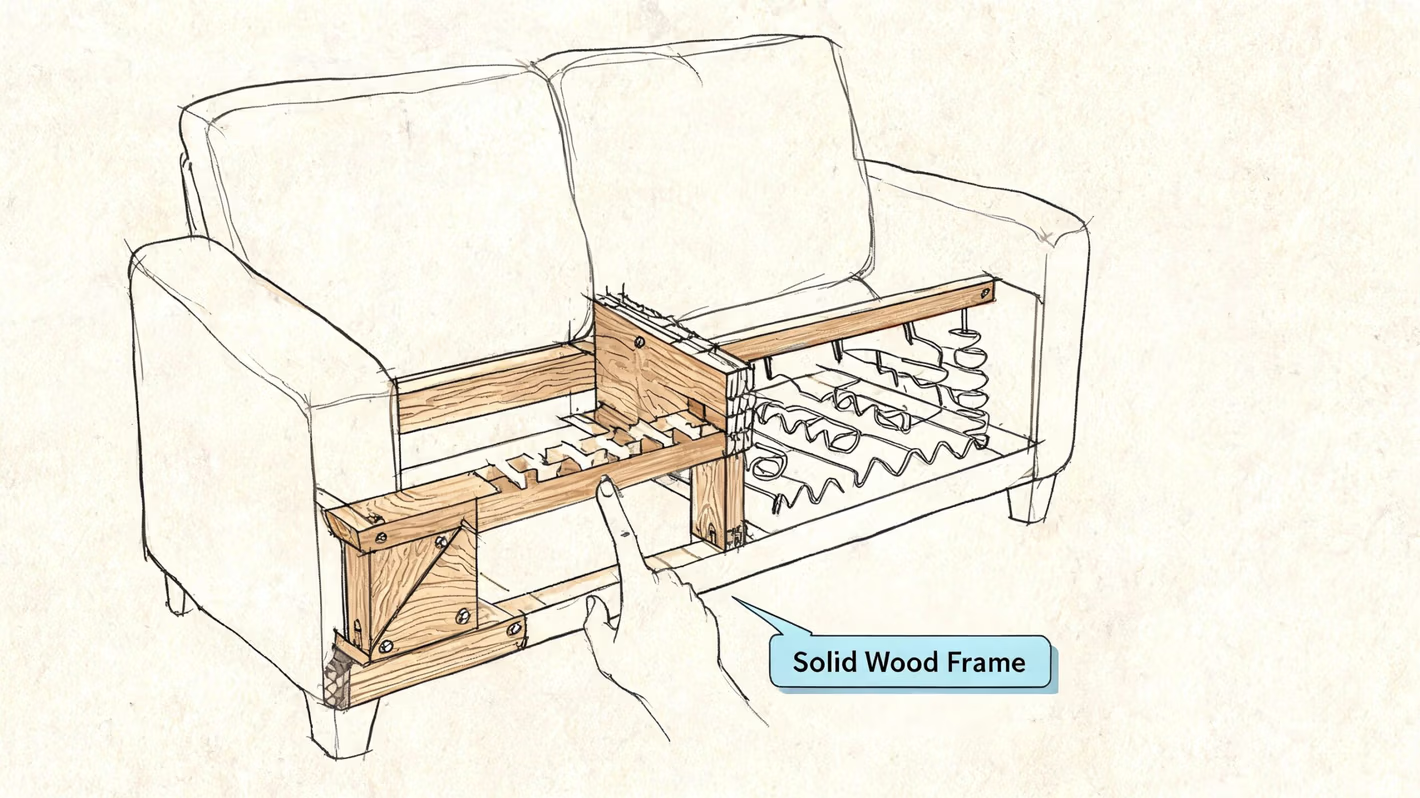
The frame works like the house framing behind your drywall. You do not admire it every day, but it determines whether everything else stays square, steady, and dependable.
Solid hardwood and other well-built kiln-dried frames tend to hold up better because they resist shifting and warping over time. Reinforced joints matter too. If the corners and connection points are weak, the piece can loosen long before the fabric shows much wear.
In the showroom, ask a few plain questions:
- What is the frame made from
- How are the joints connected and reinforced
- Does the piece feel solid when you sit down and stand up
- Do you notice any wobble, twisting, or flexing
A clear answer usually signals a better-built piece. A vague answer is useful too.
Seat support and cushions tell you how long comfort will stay
A lot of shoppers press the top of a cushion and stop there. That only tells you how the first second feels.
Real comfort depends on what is under the cushion and inside it. Good seat support helps the cushion carry weight evenly. Better cushion cores keep their shape longer and recover after repeated use. In a busy Logan County home, that matters because everybody tends to claim the same seat night after night.
Sit all the way back. Stay there for a minute. Stand up and look at the cushion again. A good seat should feel supportive across the full sitting area, not extra soft in the center and weak near the front edge.
If you want a practical reference point for durability, this guide on how long furniture should last explains what to expect from different construction levels over time.
Fabric has to match the way your room is lived in
Fabric choice is often where families feel stuck, especially if the room has kids, pets, snacks, sunlight, or all four. Color matters, but daily behavior matters more.
A tight weave often handles wear differently than a loose, textured one. Some fabrics release pet hair more easily. Some show every crumb. Some feel cozy at first but are harder to maintain than they look. If pet hair is part of your daily routine, That Blanket Co's fabric advice gives a helpful overview of fabrics that tend to be easier to live with.
Here is a simple in-store test:
- Rub the fabric: Notice whether it feels smooth, textured, stiff, or slippery.
- Look closely at the weave: Tighter weaves often wear and clean differently.
- Ask how it is cleaned: The right answer should fit your real routine, not an ideal one.
- Sit in everyday clothes: A fabric that snags, slides, or feels sticky will keep bothering you.
A quick quality filter for the showroom
If you want to narrow choices without getting buried in furniture jargon, use this checklist:
| What to Check | Why It Matters |
|---|---|
| Stable, well-built frame | Helps the piece stay square and steady over time |
| Reinforced joints | Reduces loosening at stress points |
| Strong seat support | Helps prevent sagging and uneven wear |
| Resilient cushions | Keeps comfort and shape longer |
| Durable, cleanable fabric | Makes everyday living easier |
The best living room furniture sets last because the structure, support, and upholstery work together. That is especially important in real Bellefontaine homes, where furniture has to fit your room, your routines, and the people who use it every day.
Making It Yours The Power of Custom Furniture
A living room can look close on paper and still feel wrong once it lands in your house. A sofa may match the wall color but crowd the walkway. A sectional may fit the measurements but feel too heavy for the room. In homes around Bellefontaine and Logan County, that “almost right” feeling is often what sends shoppers back to the drawing board.
Custom furniture gives you more control from the start. Instead of forcing your room to accept a preset combination, you shape the piece around the way your home works. That matters in real houses with odd corners, older floor plans, family traffic patterns, and existing pieces you want to keep.
Why custom feels easier than people expect
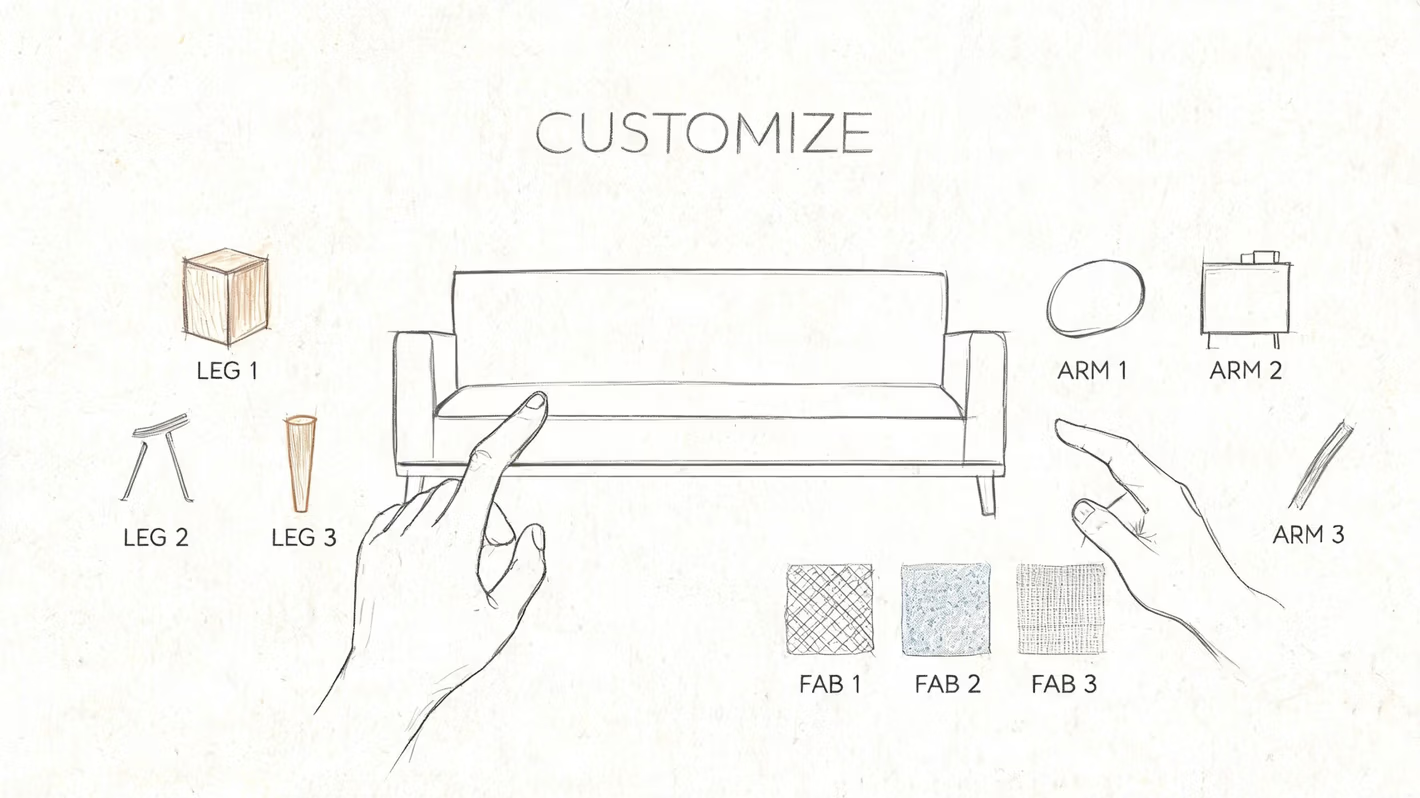
Many shoppers hear “custom” and assume it means starting with a blank sheet of paper. In most cases, it is much simpler than that. You begin with a proven sofa, loveseat, chair, or sectional frame, then choose the details that change how it looks, fits, and lives in your home.
Crate & Barrel’s living room collections page reflects that broader shift toward personalized finishes and configurations. The appeal is easy to understand. Few living rooms start empty. You may already have wood floors with warm undertones, a grandfather clock, a favorite rug, or a coffee table you plan to keep. Custom options help the new furniture belong with those pieces instead of fighting them.
What “custom” usually means in a showroom
Custom furniture works like ordering a meal your way from a trusted menu. The foundation is already solid. You are choosing the version that suits your household.
That often includes:
- Fabric: Performance fabrics, textured neutrals, patterns, and easier-clean options
- Wood finish: A tone that makes sense with your tables, trim, or flooring
- Arm style: A cleaner track arm, a softer rolled arm, or something in between
- Leg style and height: Details that affect both look and scale
- Configuration: Sofa length, sectional layout, chaise side, ottomans, and companion pieces
- Seat comfort: A firmer, more supportive sit or a softer, sink-in feel
If you want to see how that process works in plain English, this guide to custom furniture made simple walks through it clearly.
Why local guidance matters
Online swatches and room planners can help, but they only go so far. Fabric colors shift under different light. Arm styles that look slim on a screen can feel bulky in person. Cushion comfort is even harder to judge from a product page.
That is why many Logan County shoppers still want a local expert to walk them through the trade-offs. At Tanger's Furniture, custom-order options from brands like Flexsteel and Smith Brothers of Berne let shoppers compare fabrics, finishes, and configurations side by side. That kind of hands-on process is often the difference between buying something that merely fits and choosing something your family still enjoys years later.
When custom makes the most sense
Custom choices tend to pay off most when the room has a specific problem to solve.
- An awkward floor plan: Standard sets can waste space or block natural movement
- A busy household: The right fabric and seat construction can better match daily wear
- Existing pieces you want to keep: Custom finishes and shapes help old and new pieces relate to each other
- A work or waiting area: Business settings often need particular dimensions, fabrics, or visual tone
- A long-term mindset: Careful choices reduce the chance of settling for something that feels “good enough”
The goal is not to make furniture shopping more complicated. The goal is to remove expensive guesswork. For many Bellefontaine families, custom furniture is the clearest path to a living room that fits the home, supports daily life, and feels uniquely theirs.
Real Solutions for Real Logan County Homes
Some of the most useful living room advice never appears in generic roundup articles. That’s because real homes around Logan County don’t always behave like showroom boxes. Rooms can be narrow, open to another space, built around a fireplace, or shaped by older architecture that wasn’t designed for today’s oversized seating.
That’s where layout judgment matters more than trend chasing.
Awkward rooms need flexible thinking
As many as 30% to 40% of U.S. homes have non-traditional layouts, and most furniture guides don’t address them well, according to Complete Closet Design’s article on awkward living rooms. Their main takeaway is practical: modular or custom-order sets are often the best answer for narrow spaces, angled walls, and rooms with challenging proportions.
That’s especially relevant in older homes, upstairs apartments, and renovated spaces around Bellefontaine where no two floor plans feel quite the same.
Here’s how that plays out in everyday decisions:
- Narrow room: Use a smaller-scale sofa or sectional that doesn’t dominate the long wall.
- Angled wall: Float the seating group slightly instead of forcing everything flat against the perimeter.
- Multiple focal points: Choose separate pieces so you can pivot the layout.
- Open-concept room: Use the back of a sectional or sofa to help define the living zone.
A starting point by room size
This isn’t a rulebook. It’s a planning shortcut.
| Room Size (Approx.) | Best For | Suggested Furniture Configuration |
|---|---|---|
| Small | Apartment, condo, den, compact family room | Apartment sofa or loveseat with one chair and a smaller-scale table |
| Medium | Everyday living room with one main focal point | L-shaped sectional or sofa with two chairs |
| Large | Open family room, frequent entertaining | U-shaped sectional or sofa plus loveseat and accent seating |
| Awkward layout | Older homes, angled walls, narrow spaces | Modular seating or custom-order pieces with flexible placement |
If you want a fuller planning guide for these decisions, this resource on how to choose living room furniture can help you sort through scale, layout, and use.
Three common local scenarios
A generic article might stop at “buy a sectional.” Real homes need more detail than that.
The smaller family room
You may think you need a full sofa, loveseat, and chair set to make the room feel complete. Often, that’s exactly what makes it feel crowded. In a tighter room, a loveseat with one comfortable chair can create better balance and leave cleaner walking paths.
The long, narrow room
This is one of the hardest layouts. People tend to push all furniture against the walls, which can make the room feel even more like a hallway. A better answer is often a scaled sofa with a chair angled toward it, or modular seating that can shift as needed.
The older home with quirks
Radiators, slanted ceilings, offset windows, and unusual corners all affect placement. In those rooms, the best living room furniture sets are rarely the most packaged ones. Flexible pieces usually win because they give you more control.
If the room is unusual, avoid forcing a standard layout just because it looks familiar.
These same rules help business spaces too
The same planning principles work for professional settings. Reception seating, office lounges, and waiting areas also need strong materials, clear flow, and smart sizing. Business owners often need durable upholstery, easier maintenance, and layouts that feel welcoming without wasting space.
That’s where commercial space planning comes in. The goal isn’t just to fill a room. It’s to create a space that works well for staff, clients, and daily traffic.
Your Showroom Visit Checklist and Final Steps
Walking into a showroom is easier when you’ve done a little prep. You don’t need to arrive with every answer. You just want enough information to make the visit productive.
What to bring with you
These items make a major difference:
- Room measurements: Include walls, windows, doors, and any tight delivery points.
- A few photos: Wide shots help more than close-ups.
- Inspiration images: Even a handful of saved screenshots can reveal your preferences.
- Notes on daily use: Kids, pets, guests, naps, reading, TV watching, all of that matters.
- A rough budget range: This helps narrow options without pressure.
If delivery access is part of your concern, reviewing a local furniture delivery service overview ahead of time can help you think through stairs, hallways, setup, and what happens after the sale.
What to test in person
Don’t just sit for five seconds and stand back up. Use the piece the way you’d use it at home.
Try this:
- Sit all the way back: Notice whether the depth feels relaxing or awkward.
- Use the arm: Some people want a soft lounging arm. Others need a firmer perch.
- Stand up naturally: This tells you a lot about seat height and support.
- Check multiple cushions: Comfort should feel consistent across the piece.
- Touch several fabrics: Visual appeal matters, but feel matters every day.
Keep the decision grounded
A showroom visit should reduce stress, not create it. The smartest shoppers usually compare options through a few steady questions:
- Does it fit the room well?
- Does it feel comfortable in the way I sit?
- Does the construction match how heavily we’ll use it?
- Can I live with this fabric and color for years, not just this weekend?
This is also where value matters. A Low Price Promise can give shoppers peace of mind that they’re buying carefully, not overpaying. Financing matters too, especially for families furnishing a main room, replacing several pieces at once, or planning a larger home update. Flexible payment options can make a thoughtful purchase feel much more manageable.
Don’t forget the service side
Furniture shopping doesn’t end when you say yes to the set. Delivery, setup, and follow-up support matter just as much.
Good local service means somebody handles the heavy lifting, places the furniture correctly, and gives you a clear path if anything needs attention later. That’s one of the biggest differences between buying furniture and enjoying the process.
Frequently Asked Questions About Furniture Shopping
How do I know if I should buy a full set or separate pieces
Start with your room shape and how you use it. A full set can create a coordinated look quickly, but separate pieces often work better in rooms with multiple walkways, unusual angles, or more than one focal point. If you’re unsure, bring room photos and let the layout guide the choice.
Is financing available for living room furniture
Yes. Many shoppers use financing when they’re furnishing a main living area, combining several pieces, or choosing custom options. That can be helpful for budget-conscious families who want better materials without trying to do the whole project at once.
What should I expect from delivery and setup
A strong delivery experience should include careful handling, placement in the room, and help with the heavy lifting you don’t want to manage yourself. Local follow-up service matters too, especially if you ever need adjustments or assistance after the furniture is in place.
Can I get help with more than just living room furniture
Yes. Many local shoppers are also looking for a mattress store Logan County residents can rely on, or they’re updating other parts of the home at the same time. Some stores also help with related home needs such as Speed Queen laundry appliances, which makes it easier to handle multiple projects in one place.
Do the same ideas apply to offices and waiting rooms
They do. Commercial spaces still need comfort, durability, smart traffic flow, and finishes that fit the setting. The difference is that professional spaces often need more structured planning and materials chosen for heavier everyday use.
What if I’m worried about making the wrong choice
That’s normal. The best way to avoid mistakes is to bring measurements, photos, and a clear picture of how the room is used. Furniture shopping gets much easier when you focus on fit, comfort, materials, and layout before color trends.
Visit Tanger's Furniture to see custom options in person or browse collections online to start your journey. If you have a specific design question, contact the design staff or join the Love Your Home Club for exclusive offers, helpful inspiration, and practical tips for creating a home you’ll love.