Mattress Foundation Types Worth Knowing in 2026


You've spent weeks comparing mattresses, chosen the right firmness, and finally brought the new bed home. Then the old foundation goes underneath it because it still looks usable. Months later, the mattress feels uneven, the center seems softer, and the warranty terms suddenly matter more than the comfort reviews ever did.
That situation is common because shoppers focus on the mattress and treat the support beneath it as furniture rather than part of the sleep system. Mattress foundation types affect support, height, airflow, motion, and long-term fit. The right choice depends on the mattress construction, the sleeper's weight, the bedroom frame, and the manufacturer's requirements.
A practical foundation guide also helps a homeowner protect a larger investment, whether the bedroom is in Bellefontaine, elsewhere in Logan County, or part of a professional lodging or residential project. The same careful approach Tanger's Furniture brings to custom sofas in Ohio, bedroom furnishings, and commercial office planning applies here: understand the structure first, then choose the finish and style.
Why the Foundation Under Your Mattress Deserves More Attention
A foundation does more than lift a mattress off the floor. It holds the sleeper's weight, keeps the mattress plane level, manages some impact and movement, and determines how high the finished bed sits. A good support surface lets the mattress perform as designed. A poor match can change the feel before the materials themselves have worn out.
The frame and foundation aren't automatically the same thing. A decorative bed frame may surround or hold a separate foundation, while a platform bed includes its own support deck or slats. A metal frame may offer perimeter support but still require a foundation in the middle. Confusing those roles is one of the easiest ways to create an unstable setup.
The moment the mistake becomes obvious
Consider a buyer who places a foam mattress on an older spring-based support. At first, the bed feels comfortable. Over time, the flexible base may not provide the uniformly firm surface the foam requires, and the sleeper begins noticing a dip rather than a deliberate comfort layer.
That buyer didn't necessarily choose a poor mattress. The foundation changed the mattress's working conditions. A premium mattress can't correct a bowed surface, broken slat, missing center support, or unsuitable flex beneath it.
Practical rule: The mattress and its foundation should be treated as one system, not two unrelated purchases.
The history explains some of the confusion. Box springs emerged in the late 18th century and became a standard mattress companion before bed-in-a-box products began around 2004. By the 1950s, box springs had become the default bedroom setup in North America, while modern foundations increasingly use rigid slats or solid decks instead of coils, as this history of box springs and modern foundations explains.
A better starting question
Instead of asking whether a box spring or platform is more popular, shoppers should ask:
- What is inside the mattress? Foam, latex, hybrid, and innerspring constructions respond differently to flex.
- How much support does the frame provide? Slat spacing, rails, and center legs matter more than appearance.
- What feel is wanted? A spring foundation can add some give, while a rigid base creates a steadier surface.
- What does the warranty require? The manufacturer's support rules should settle questions about spacing and compatibility.
A foundation can also influence the bedroom's practical layout. Bed height affects getting in and out, visual proportion, under-bed storage, and clearance for cleaning. This is why sleep comfort deserves attention alongside the broader way a bedroom supports rest and mood, a relationship discussed in Tanger's guidance on how a mattress affects mood and mental health.
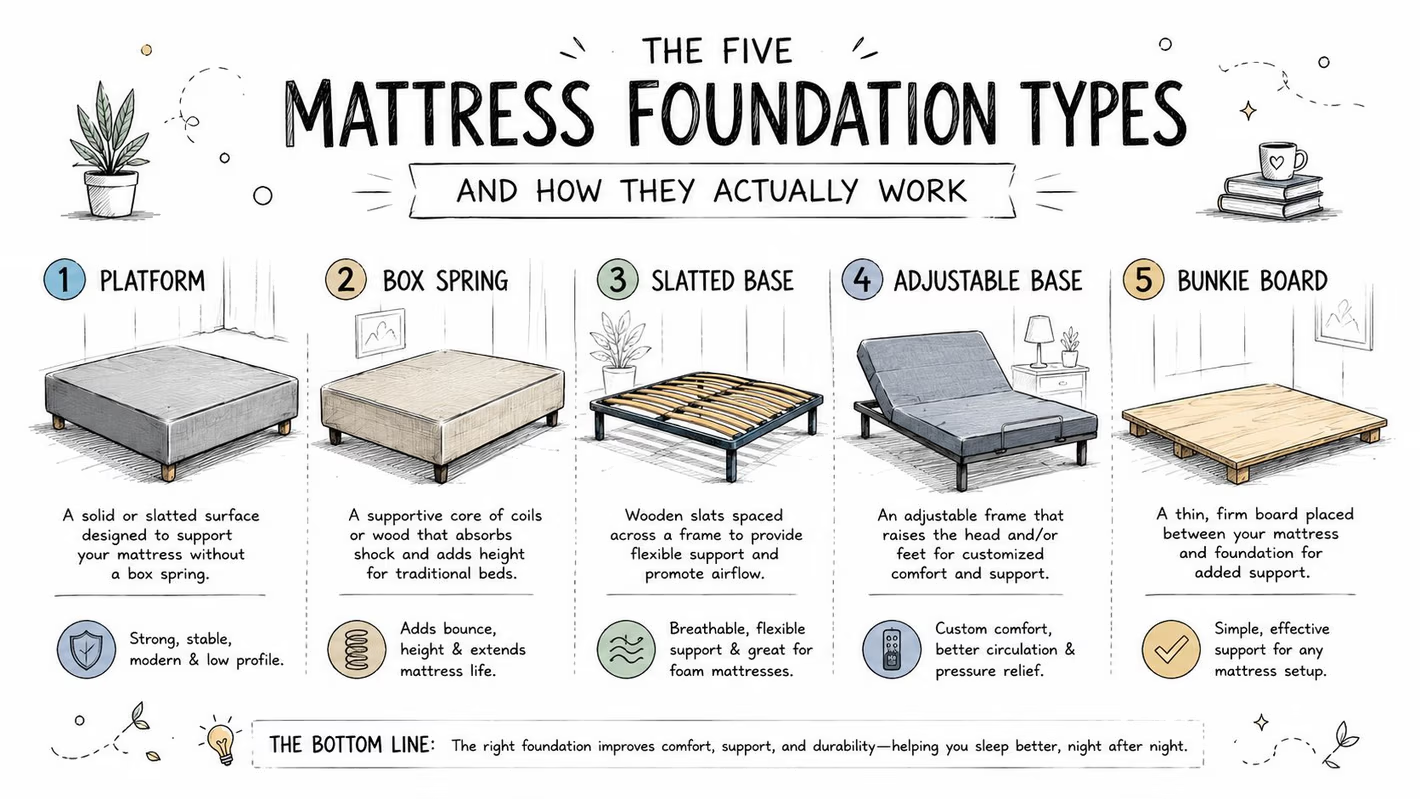
The Five Mattress Foundation Types and How They Work
From the showroom, foundation styles can look interchangeable. Under a sleeper, they are not. The deciding factors are how much the support flexes, whether it leaves gaps, whether it moves with a motor, and whether its dimensions meet the mattress warranty requirements. Choose the foundation for the mattress, sleeper weight, and bedroom setup, not for appearance alone.
Traditional box spring
A traditional box spring usually combines a wooden frame with steel coils. The coils absorb some shock, add height, and allow air to circulate through the base. This construction was designed for traditional innerspring mattresses, whose internal coil systems can work with a responsive foundation.
The spring layer changes the bed's feel. It adds movement and some bounce, which can suit an innerspring mattress but often works poorly beneath foam or latex that needs an even, stable plane. The difference between needing a box spring and using another foundation is easiest to understand after identifying the mattress construction.
Check the warranty before reusing an older box spring. A foundation that flexes too much can affect comfort and may fail the manufacturer's support conditions.
Platform foundation
A platform foundation supports the mattress directly on a solid deck, rigid surface, or integrated plank structure. If its support system meets the mattress manufacturer's requirements, it removes the need for a separate box spring.
Platforms usually create a clean, lower profile, though the final bed height depends on both the platform and mattress. A solid deck supplies continuous support. A platform with built-in slats depends on spacing, rail strength, and the center structure underneath.
Choose a platform when you want a stable base with fewer separate components. Confirm that its surface will not trap excess moisture and that its support pattern suits the mattress.
Slatted base
A slatted base places horizontal wood or metal members across a frame. Fixed slats feel firm, while flexible slats provide some give. The open spaces improve ventilation, but they also determine whether the mattress stays supported instead of dipping between the slats.
For foam, latex, and many hybrid mattresses, tight spacing of about 2 to 3 inches or less helps reduce localized deflection, according to this foundation guide covering slat spacing and support geometry. Treat that as a general reference. The mattress manufacturer's exact spacing requirement controls the warranty.
Inspect the center rail and legs as carefully as the slats. Wide gaps or weak center support can create uneven pressure and shorten the useful life of the mattress.
Adjustable base
An adjustable base uses motors to raise the head, foot, or both sections of the mattress. It serves as both foundation and frame, so a separate box spring generally does not belong beneath it.
This option suits sleepers who read or rest in raised positions and couples with different positioning preferences. The mattress must be explicitly compatible with adjustment. The room also needs clearance for movement, cords, and access to the controls.
Modern rigid foundation
A modern rigid foundation commonly uses a low-profile wood or metal grid, solid deck, or rigid slat system. Unlike a traditional box spring, it has no moving coil layer intended to absorb pressure from the mattress.
Foam, latex, and hybrid mattresses commonly need this stable support. Rigid foundations can be modular, easier to move, and available in different heights. The frame still needs adequate center support and correct dimensions, and the base must match the mattress warranty rules.
Comparing Mattress Foundation Types Side by Side
The quickest way to narrow the choice is to compare how each foundation behaves under the sleeper. Cost varies by construction, size, material, and features, so the table uses broad qualitative ranges rather than pretending every product fits one price point.
| Foundation Type | Feel | Height | Airflow | Cost Range | Best Mattress Match |
|---|---|---|---|---|---|
| Traditional box spring | Springy, with some give | Medium to high | Open and breathable | Moderate | Traditional innerspring |
| Platform foundation | Firm and stable | Low to medium | Depends on deck or slats | Low to moderate | Foam, latex, hybrid, and compatible innerspring |
| Slatted base | Firm to slightly flexible | Low to medium | Good when gaps are appropriate | Low to moderate | Foam, latex, hybrid, and compatible innerspring |
| Adjustable base | Positionable, with no traditional bounce | Varies with frame and legs | Depends on the base design | Moderate to high | Compatible foam and hybrid mattresses |
| Modern rigid foundation | Firm, even, and quiet | Low to medium | Depends on solid or open construction | Moderate | Foam, latex, hybrid, and many innersprings |
The most important row isn't cost. It's the match between the mattress and the support behavior. A traditional box spring can over-flex beneath a heavy memory foam mattress, while a slatted foundation with wide gaps can let foam dip between the slats. The result may be altered comfort, uneven wear, or a warranty problem.
What the comparison means in a bedroom
A box spring is a sensible choice when the mattress is a compatible innerspring and the sleeper wants extra height or a more responsive feel. A platform or rigid foundation is the safer default for most modern foam, latex, and hybrid beds because it limits unwanted movement under the mattress.
A slatted base earns consideration when airflow and lighter construction matter. It isn't automatically suitable just because it has many slats. The spacing, slat strength, center rail, and center legs determine whether the base properly supports the mattress.
An adjustable base solves a different problem. It changes positioning rather than holding the mattress up. That can be valuable for reading, relaxing, or shared sleeping preferences, but it costs more and requires careful mattress compatibility.
For a thin support layer under an existing frame, shoppers can review the role of Tanger's twin-size bunkie boards, while still checking the full-size frame structure and the mattress warranty.
Matching a Foundation to Your Mattress Construction
The mattress construction should decide the foundation category before style enters the conversation. A foundation that feels acceptable in an empty bedroom may perform poorly once the mattress, sleepers, bedding, and daily movement load the structure.
The safest process starts with the manufacturer's requirements. Independent guidance generally points memory foam and latex toward firm, flat support or slats no more than about 3 inches apart, while innerspring mattresses remain the main category that fits traditional box springs well, as explained in this guide to foundation compatibility by mattress type.
| Mattress Type | Best Foundation Match | Max Slat Gap | Center Support Required |
|---|---|---|---|
| Foam | Solid platform, rigid foundation, or closely spaced slats | About 3 inches or less, unless the manufacturer specifies tighter spacing | Yes when required by the frame and mattress |
| Latex | Rigid foundation or strong, closely spaced slats | About 3 inches or less, unless specified otherwise | Yes, with a sturdy center structure |
| Hybrid | Rigid platform, modern foundation, or approved slats | Follow the mattress warranty, with tight spacing commonly preferred | Usually important for larger sizes |
| Traditional innerspring | Compatible box spring or rigid foundation | Follow the mattress requirements | Required where the frame design calls for it |
Foam needs a continuous support plane
Memory foam responds to pressure across the surface. Wide gaps can allow portions of the mattress to settle between slats, creating localized deflection instead of even support. A solid platform, rigid foundation, or closely spaced slats keeps the foam supported across its working area.
A bunkie board can help create a flatter layer over an existing frame, but it doesn't remove the need to inspect the frame underneath. If the rails bow or the center bar lacks a leg, the board inherits the same structural weakness.
Latex and hybrids need strength, not just firmness
Latex can be heavy, so the foundation needs more than a firm surface. It needs a frame that stays square, strong slats, and real center support that reaches the floor. Hybrid mattresses also need consistent support because their foam comfort layers sit over a coil unit that can respond poorly to uneven loading.
Queen and king setups deserve particular attention. A middle support bar with a center leg helps prevent the center of the foundation from slowly dropping, especially on carpet where a bar can appear supported without transferring weight reliably to the floor.
Warranty check: Slat spacing and center support are not decorative details. They can determine whether a manufacturer treats a sagging claim as covered or excluded.
Hidden Trade-Offs Most Buyers Miss
The phrase “universal foundation” can hide important limits. A base may fit the mattress dimensions while still failing the support test because the slats are too far apart, the deck flexes excessively, or the center structure doesn't reach the floor.
Plywood is a familiar quick fix. A sheet across an older frame can feel solid at first, but unsupported spans may bow, and moisture can collect beneath a nearly closed mattress surface. The mattress then follows the shape of the improvised support rather than receiving the level plane it needs.
Low-cost fixes have conditions
Bunkie boards save height and can correct modest spacing problems, but they aren't magic reinforcement. A board that lacks adequate thickness or sits on weak rails may compress or bend under a heavy foam or latex mattress.
Slats create a different risk. Open space improves ventilation, yet gaps that exceed the mattress requirements allow foam edges and lower layers to settle between supports. That can affect feel and may create a warranty exclusion even when the frame looks sturdy from the outside.
A metal frame can fail as well. If its center bar rests on carpet without a proper leg reaching the floor, the bar may act like a slow cantilever. The problem may not appear during assembly, but repeated loading can leave the mattress unsupported at the center.

Inspect before assuming the frame is adequate
- Measure the gaps: Confirm the actual distance between slats rather than estimating by sight.
- Check the center: Look for a center rail and legs that make firm contact with the floor.
- Test for movement: Push the frame at the corners and middle. Excessive rocking or flex deserves attention.
- Look for bowing: Inspect rails, slats, and plywood for visible deflection before placing the mattress.
- Assess airflow: A solid sheet can limit ventilation, so the room's humidity and the mattress design should be considered.
- Confirm dimensions: The foundation should match the mattress exactly. Standard mattress sizes include Twin at 38 by 74 inches, Twin XL at 38 by 80 inches, Full at 54 by 75 inches, Queen at 60 by 80 inches, King at 76 by 80 inches, and California King at 72 by 84 inches, according to this mattress foundation sizing guide.
An adjustable base introduces another trade-off. It can offer positioning that a fixed foundation can't, but the frame, mattress, power access, and room layout must all work together. Tanger's discussion of adjustable base benefits and comfort considerations provides a useful starting point before measuring the bedroom.
Choosing a Foundation for Real Bedroom Situations
A foundation decision becomes easier when it starts with the room rather than the product label. A renter, a guest-room owner, and a primary-bedroom couple may need completely different support systems even if they own similar mattresses.
The renter who moves often
A renter may prioritize a lightweight, foldable metal foundation that assembles quickly and fits through narrow doors. A modular design makes repeated moves more manageable, but lighter construction can transmit more movement and may require careful center support.
Recommended choice: a foldable platform or rigid modular foundation that matches the mattress requirements.
Trade-off to accept: portability may come with less mass and a livelier feel than a heavy fixed platform.
The occasional guest room
A guest room benefits from a low-profile platform or rigid foundation that keeps the bed visually intentional. It can make a daybed-style arrangement feel finished without adding unnecessary height to a room used intermittently.
Recommended choice: a low platform or modern rigid foundation with dependable support and simple access for cleaning.
Trade-off to accept: a lower bed can reduce under-bed storage and may feel less traditional.
The primary bedroom refresh
A couple replacing an aging setup may want more than a new mattress. An adjustable base can change head and foot positioning for reading or resting, and it may suit partners with different comfort habits. The mattress must be compatible, and the bedroom needs enough clearance for the moving sections.
Recommended choice: a compatible mattress paired with an adjustable base when positioning matters.
Trade-off to accept: the system costs more and introduces motors, controls, and electrical planning.
The RV or tight sleeper space
An RV or compact room rewards a low-height foundation that preserves headroom and keeps the sleeping area easy to move around in. A lighter mattress and a firm, properly supported base can make the space feel less crowded.
Recommended choice: a low-profile rigid or slatted foundation sized precisely for the mattress and frame.
Trade-off to accept: lower height can reduce storage and make the bed less convenient for some sleepers to access.
For local homeowners, Tanger's Furniture can discuss mattress foundations alongside bedroom collections, while its custom-order process allows selected furnishings to be personalized through options from Smith Brothers of Berne and Flexsteel. The principle remains the same: the structure should fit the household, not just the showroom floor.
Making a Confident Decision Without the Sales Pitch
A confident purchase doesn't require the most elaborate foundation. It requires the correct support geometry, a compatible mattress, and a setup that works in the actual bedroom.
Use these checkpoints before ordering:
- Confirm the warranty rules. Check the mattress manufacturer's permitted slat spacing, solid-deck requirements, and center-support language.
- Measure the route. Doorways, stairwells, elevators, and tight turns can determine whether a rigid foundation arrives assembled or needs a modular design.
- Choose the movement deliberately. Decide whether head-to-toe adjustability solves a real need or whether a stable fixed base is more appropriate.
- Match the sleeper habits. Partners who move often may prefer less transfer, while a sleeper seeking bounce may appreciate an approved spring foundation.
- Budget for the entire system. The foundation, frame, delivery, and setup belong in the same decision as the mattress. A cheap base can become expensive if it shortens mattress life or creates a warranty dispute.
The foundation category is no longer a minor accessory. The International Sleep Products Association tracks mattresses and several foundation categories together, including traditional stationary foundations, motion foundations, and foundations with legs or foldable legs. A 2026 market projection estimates the U.S. mattress bases market at USD 2.18 billion in 2026, rising from USD 2.02 billion in 2025 and reaching a projected USD 3.01 billion by 2031, with a projected 6.67% CAGR, as reported in industry sales data from the International Sleep Products Association. The market's range of support systems reflects a real shift from one default setup toward more specialized needs.

A local showroom can make the decision more concrete. Tanger's Furniture offers mattress and foundation solutions, flexible financing for larger projects, a Low Price Promise, local delivery, and in-house service requests. Its Commercial Office division also supports business owners with space planning and durable furnishings, while residential shoppers can explore bedroom pieces, custom sofas in Ohio, and other home essentials in one place. Even shoppers comparing a mattress store in Logan County can ask the same practical questions about support, delivery clearance, and service after setup.
Visit Tanger's Furniture to see mattress foundation options and compatible bedroom furnishings in person at the Bellefontaine showroom, or browse the collections online to start the journey. Flexible financing, the Low Price Promise, local delivery, and service support help families handle the heavy lifting, while joining the Love Your Home Club gives shoppers access to exclusive offers and expert tips.