
Best Mattress for Back Sleepers: Support, Firmness, and Fit

A back sleeper can do everything “right” and still wake with a stiff lower back. The mattress may feel supportive in the showroom, yet allow the hips to settle too far overnight. Or it may feel impressively firm at first, while leaving the lumbar area unsupported and the shoulders under unnecessary pressure.
Choosing a mattress for back sleepers takes more than searching for the word “firm.” Body weight, nighttime movement, mattress construction, pillow height, and the foundation underneath all affect how the spine rests. A practical guide to helping back pain with the right mattress can provide useful background, but the final decision still needs to fit the individual sleeper.
The most reliable approach starts with medium-firm support, then adjusts from there. A local showroom also gives shoppers something an online description can't provide, the chance to lie down, change positions, compare materials, and ask questions without pressure.
Why Back Sleepers Struggle to Find the Right Mattress
A common morning scene starts with a sleeper sitting on the edge of the bed, rubbing the lower back before heading into the day. The night seemed long enough, but the body doesn't feel rested. The mattress was advertised as supportive, yet the hips may have dropped too far into the surface, or the lower back may have been left hovering above it.
Back sleeping places the head, shoulders, hips, and heels across the mattress in a different pattern than side or stomach sleeping. A bed that feels comfortable for a side sleeper may allow too much midsection sinkage for a back sleeper. A very firm surface can create a different problem by refusing to cushion the natural curves of the body.
The relationship between sleep posture and overall comfort deserves attention, and this bed comfort and health connection offers helpful context for readers examining how position affects the body. The important point is simple: a mattress should respond to the sleeper, not just carry a firmness label.
Why generic advice misses the mark
“Buy the firmest mattress available” sounds decisive, but it isn't good guidance for every back sleeper. Lighter people may experience a firm mattress as much harder than an average-weight shopper does. Heavier sleepers may feel a medium mattress soften more under the hips, especially when the support core doesn't offer enough resistance.
Nighttime movement complicates the choice further. Someone who begins on the back but spends part of the night on the side needs lumbar support without sacrificing enough cushioning at the shoulder and hip.
A thoughtful mattress search should answer four questions:
- How does the surface support the lumbar curve?
- Does the sleeper prefer a buoyant, contouring, or balanced feel?
- Will body weight or movement change the mattress response?
- Can the shopper test the bed and receive dependable delivery and service?
That process works for a first-time homebuyer, a homeowner replacing an older bed, and a budget-conscious family trying to protect a major household purchase. In Bellefontaine and Logan County, local guidance adds practical value because the buying experience can include delivery, setup, financing, and service after the sale.
How Spinal Alignment Shapes Mattress Choice
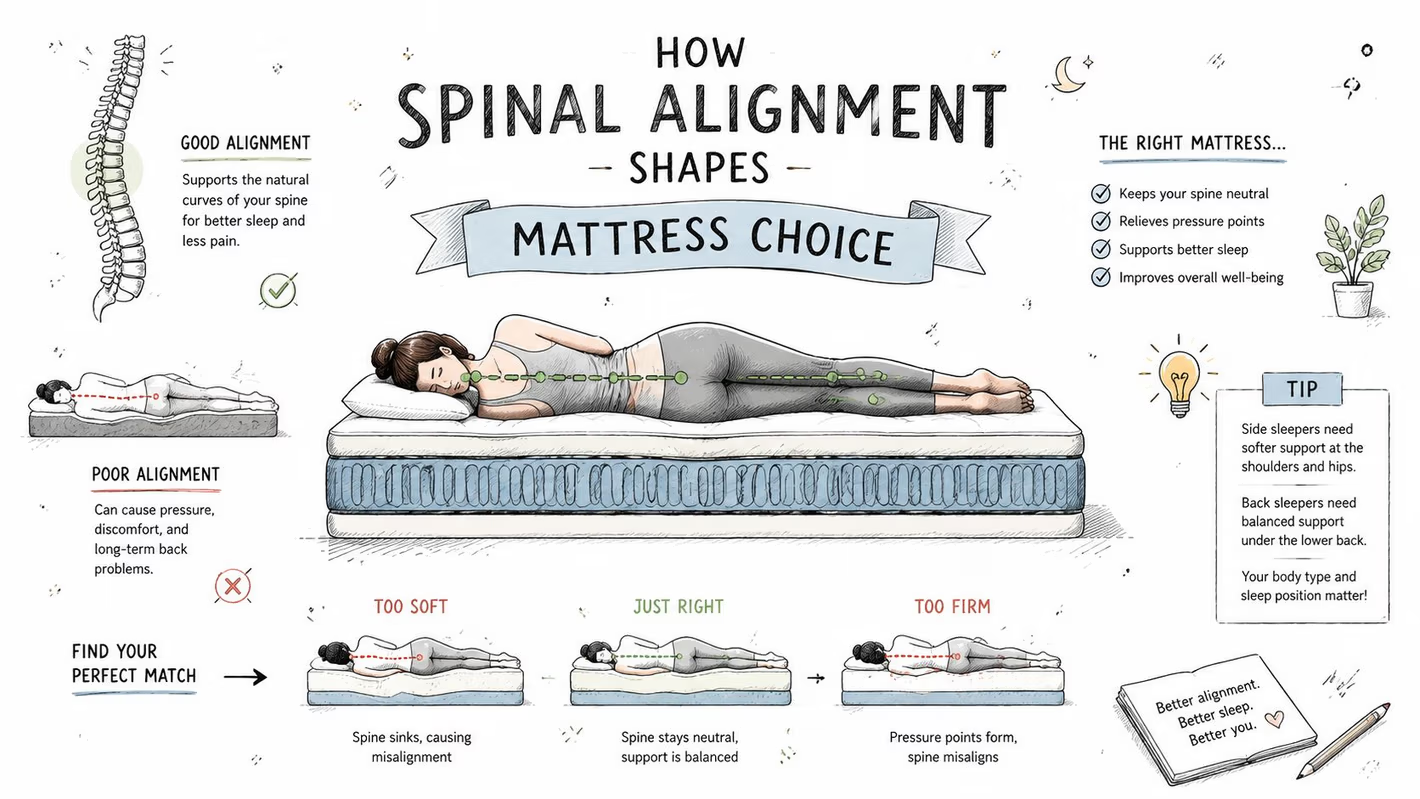
A back sleeper's spine isn't meant to rest like a perfectly straight board. It has natural curves, and the mattress needs to support those curves without forcing the body into an exaggerated position.
Think of the surface as a hammock with limits. If it stretches too far, the hips drop and the lower back bends out of position. If it behaves like a rigid plank, the mattress may leave a gap beneath the lumbar area and create pressure at the shoulders, hips, or upper back.
Three contact points matter most
When testing a mattress, the hips should settle slightly, the shoulders should receive comfortable cushioning, and the lower back should remain supported. The surface doesn't need to feel flat. It needs to prevent the heavier middle of the body from sinking away from the rest of the spine.
A too-soft mattress can let the pelvis drop into the comfort layers. That position may pull the lumbar area into a strained curve. A too-firm mattress can press against the upper back and hips while failing to fill the space under the lower back. The middle range exists to balance those competing needs.
Surface geometry matters
Firmness describes the overall impression, but it doesn't tell the full story. Two mattresses with a similar rating can feel very different if one uses uniform foam and the other uses targeted support zones. The second design may provide more resistance beneath the midsection while allowing gentler cushioning near the shoulders.
This is why shoppers should describe the experience in physical terms rather than relying on labels:
- Too soft: the hips sink, the body feels folded, or rolling over takes effort.
- Too firm: the shoulders and hips feel pushed upward, or the lumbar area feels unsupported.
- Well balanced: the lower back stays in contact, the hips settle modestly, and the body can relax.
Readers who want additional guidance on comfortable positioning can consult this sleep posture guide. For shoppers comparing options by build and support needs, Tanger's mattress guidance by body type offers another useful starting point.
The Firmness Range Backed by Clinical Evidence
Medium-firm support is the right place for most back sleepers to begin. A 2021 systematic review concluded that medium-firm mattresses promote comfort, sleep quality, and spinal alignment, while a 2022 NCBI review found that medium-firm mattresses may reduce back pain and improve sleep quality compared with firmer mattresses, as reported in the clinical review of mattress firmness and sleep outcomes.
More recent clinical analysis published in 2025 also found better sleep-quality outcomes on a medium-firm mattress, including sleep duration, efficiency, and latency, while supporting sleep-architecture measures. The evidence doesn't point to a single universal bed. It points to a useful starting range, usually 5 to 7 on a 10-point firmness scale.
That range works mechanically because the surface gives enough for the hips and shoulders to settle slightly, while the support core resists excessive lumbar sagging. Body weight shifts where a sleeper should begin within that band.
A practical firmness target
| Weight Category | Firmness Range (1-10) | Key Support Need |
|---|---|---|
| Lighter back sleepers | 5 to 6 | Enough surface cushioning for the body to settle without feeling hard |
| Average-weight back sleepers | 6 to 7 | Balanced contouring and resistance beneath the hips |
| Heavier back sleepers | 7 to 8 | Stronger resistance to excess midsection sinkage |
These ranges are starting points, not guarantees. Consumer guidance commonly places back sleepers around 5 to 7, while some guidance for sleepers needing additional support narrows the target toward the firmer end. A mattress firmness guide can help shoppers understand the terminology before visiting a showroom.
Movement changes the pressure map
A pure back sleeper can prioritize steady lumbar contact. A combination sleeper needs a more adaptable surface. When the body rotates onto the side, the shoulder and hip need more room to sink, while back sleeping demands stronger support under the midsection.
Zoned support, air-adjustable systems, and custom designs show promise for people whose needs don't fit one firmness label. A 2026 orthopedic literature review covering 47 studies found the strongest overall evidence favored medium-firm mattresses for pressure distribution, reduced morning stiffness, better sleep quality, and lower back-pain intensity, while noting that personalized designs could outperform one-size-fits-all recommendations for some sleepers, as discussed in the back-sleeper mattress evidence review.
The practical recommendation is clear. Start near medium-firm, then move softer for lighter sleepers or more side-sleeping, and firmer for heavier sleepers or pronounced hip sinkage.
Comparing Innerspring, Memory Foam, and Hybrid Designs
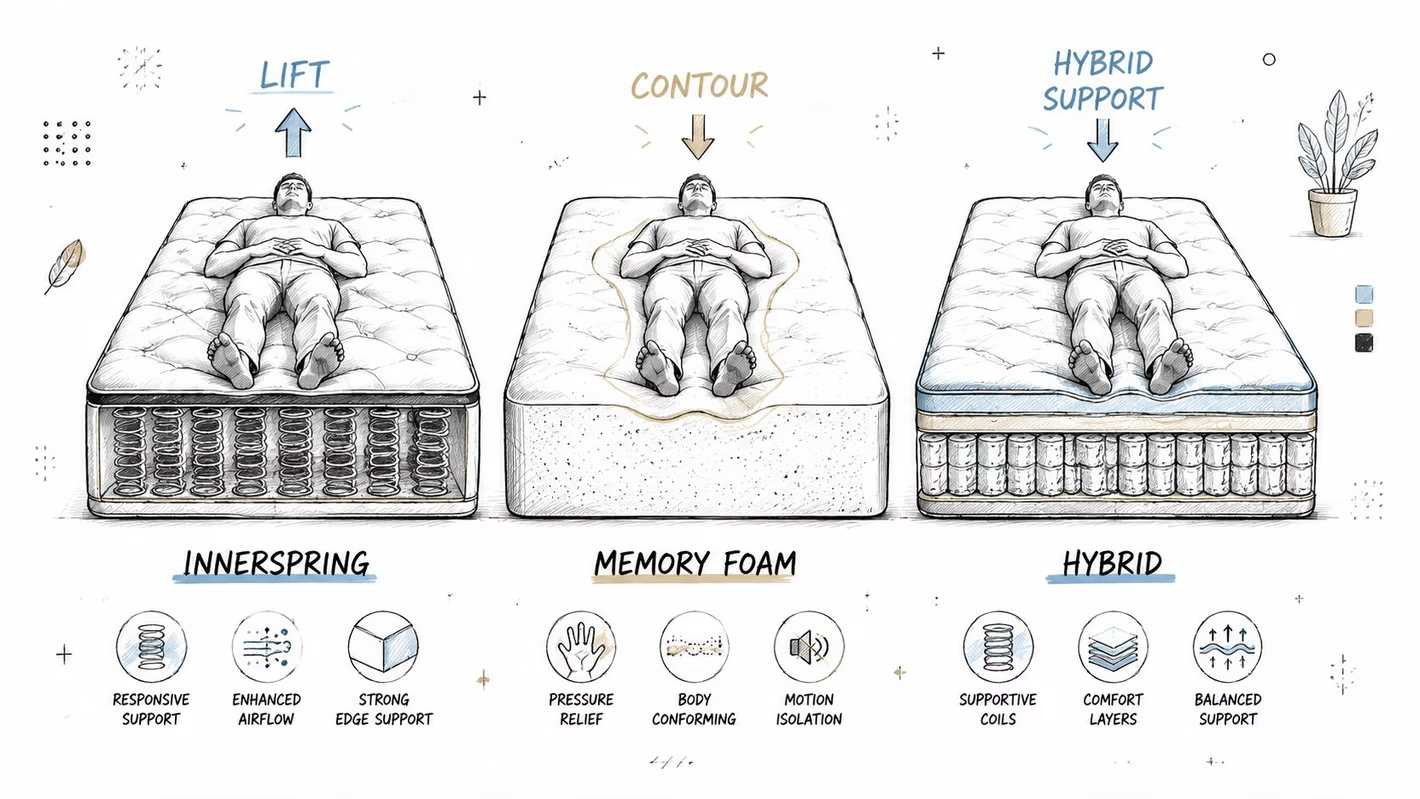
Construction determines how a mattress delivers its firmness. A label such as “medium-firm” only describes the feel at the surface. The support core, comfort layers, airflow, responsiveness, and edge structure decide how that feel behaves through the night.
Innerspring designs
Traditional innerspring mattresses provide a lifted, responsive feel. The coil structure can promote airflow and make position changes easy, which suits back sleepers who dislike the sensation of sinking into foam.
The trade-off is contouring. Depending on the comfort padding, an innerspring may not cushion the lumbar region and hips as closely as a foam-based design. Shoppers who prefer a classic mattress feel should still check whether the surface maintains lower-back contact.
Memory foam designs
Memory foam conforms closely to the body's shape. That contouring can cushion the shoulders, hips, and lower back, while the material generally limits movement across the surface, a feature many couples appreciate.
The concern is excessive sinkage or slower repositioning. A back sleeper should avoid a foam mattress that lets the pelvis settle too far. The best option in this category combines contouring comfort with enough underlying resistance.
For a more detailed construction comparison, Tanger's guide to memory foam versus innerspring mattresses can help shoppers identify which feel matches their habits.
Hybrid designs
Hybrids combine a coil support system with foam or other cushioning layers. That combination often gives back sleepers a useful middle ground, responsive support underneath with pressure relief above. Coils can also help with airflow and edge stability, while comfort layers reduce the abrupt feel of a traditional spring surface.
| Construction | Main strength | Main trade-off | Often suits |
|---|---|---|---|
| Innerspring | Lift, airflow, and easy movement | Less close contouring | Back sleepers who prefer a traditional feel |
| Memory foam | Pressure relief and motion isolation | May feel less responsive | Sleepers who like close body contouring |
| Hybrid | Balance of support, cushioning, and airflow | Feel varies widely by design | Combination sleepers and couples |
Heavier back sleepers should focus less on the category name and more on resistance beneath the hips, durable support materials, and stable edges. Lighter sleepers may prefer more cushioning because they don't compress the comfort layers as much. No construction wins automatically. The right design is the one that keeps the lumbar area supported while matching the sleeper's preferred response.
How to Test a Mattress In-Store Like a Pro
A showroom test becomes useful when it follows a repeatable routine. Sitting on the edge or pressing a hand into the surface only reveals a small part of the experience. The body needs time in its normal sleeping position.
Start with the real sleep setup
Shoppers should bring the pillow used at home, or choose a showroom pillow with a similar height. A pillow that's too tall can make a supportive mattress feel wrong by pushing the head and neck forward.
Lie flat on the back first. Keep the legs relaxed and notice whether the lower back feels supported without a hard ridge pressing into it. The hips should settle slightly, but they shouldn't feel trapped in a deep pocket.
Practical rule: A mattress should feel supportive after the body relaxes, not only during the first few seconds of contact.
Use the same checks on every finalist
Compare two or three mattresses with the same method. Changing pillows, positions, or test times makes the differences harder to judge.
- Lumbar contact: Slide a hand beneath the lower back. A small natural space is normal, but a large unsupported gap suggests the surface may be too firm or flat.
- Hip stability: Notice whether the pelvis drops noticeably lower than the chest and legs. Excessive sinkage can disturb the natural spinal curve.
- Pressure response: Stay in position long enough to notice pressure around the shoulders, hips, and lower back. A mattress that feels pleasant immediately may become uncomfortable after the body settles.
- Movement: Roll from the back to the side and return. The mattress should allow repositioning without a struggle.
- Edge support: Sit near the edge, then lie close to it. Stable edges matter for dressing, getting up, and using the full sleep surface.
- Partner disturbance: If the bed will be shared, have one person change positions while the other remains still. Observe how much movement travels across the surface.
The shopper shouldn't feel embarrassed about taking the test seriously. A mattress is a daily-use purchase, and careful comparison protects both comfort and budget.
Pairing Your Mattress with the Right Foundation and Pillow
A mattress doesn't work alone. The foundation controls the support beneath it, while the pillow affects the head and neck. An excellent mattress can feel disappointing when either companion is mismatched.
Choose a compatible foundation
A platform foundation may offer a firm, stable base. A box spring can provide a different kind of support and responsiveness. An adjustable base allows the sleeper to change the upper-body or leg position, which some back sleepers find useful for comfort.
The foundation must match the mattress design and warranty requirements. A worn or poorly matched base can create uneven support, allowing the mattress to flex in places where it shouldn't. Before reusing an existing foundation, shoppers should check its condition and confirm compatibility with the new mattress.
Match pillow height to posture
Back sleepers generally need enough loft to support the neck without pushing the chin toward the chest. The correct height depends on shoulder width, mattress softness, head shape, and personal comfort.
A softer mattress may allow the shoulders to settle farther into the surface, reducing the pillow height required. A firmer bed may leave the shoulders higher, calling for a different loft. Tanger's guide to choosing the perfect pillow provides a practical way to compare these variables.
A useful sleep-system checklist includes:
- Foundation fit: Confirm that the base supports the mattress construction.
- Neck position: Check that the head remains comfortably aligned with the chest and spine.
- Knee comfort: A small cushion beneath the knees may help some back sleepers relax the lower body.
- Shared-bed needs: Consider motion control and edge stability when two people use the mattress.
- Adjustment options: Explore an adjustable base when changing elevation is part of the sleeper's comfort routine.
The mattress remains the main decision, but these supporting pieces determine whether the whole bed feels coherent.
Choosing a Local Mattress Store with Real Support
Online research can narrow the field, but a local mattress store in Logan County can answer questions that product descriptions can't. Shoppers can test the surface, compare constructions side by side, and receive guidance based on sleep position, body weight, and movement habits.
That support matters after the purchase as well. A dependable local retailer can coordinate delivery, handle the heavy lifting, set up the sleep system, and provide an in-house path for service requests. Tanger's Furniture has served the Bellefontaine community through family-owned roots, with furniture history reaching back to 1946 and design staff serving customers since 1964.
Value extends beyond the mattress tag
Budget-conscious families shouldn't have to choose between quality and manageable payments. Flexible financing options are available for any project, and Tanger's Low Price Promise is designed to reinforce value without turning the showroom visit into a negotiation.
The same consultative approach applies to the rest of the home. Customers can explore Living Room furnishings, custom sofas in Ohio, bedroom pieces, and practical household needs such as Speed Queen laundry. Select furniture from Smith Brothers of Berne and Flexsteel can be customized through custom fabrics, finishes, and configurations. Businesses can also use the Commercial Office division for durable office furniture, space planning, and professional layouts.
A mattress purchase should feel manageable, informed, and supported from selection through delivery. Local service makes that process more personal, while the showroom makes the fit easier to judge before the decision is final.
The Love Your Home Club gives local customers another way to stay connected through exclusive offers and helpful home guidance. Joining the club is a practical next step for anyone planning a bedroom refresh or a larger furnishing project.
Visit Tanger's Furniture in Bellefontaine to test mattress options, compare support levels, and discuss delivery and flexible financing for the project. Customers with a specific design question can contact the design staff or join the Love Your Home Club for expert tips and exclusive offers delivered to the inbox.