
Fabric Swatches for Furniture: Your 2026 Selection Guide


You found the perfect sofa online. The navy blue fabric looked rich and calm on the screen, but after delivery, it reads almost black beside the flooring and turns dull under the living room lamps. That disappointment is avoidable.
Fabric swatches for furniture give shoppers a practical way to check color, texture, and performance before committing to a custom piece. Screens vary, room lighting changes throughout the day, and nearby walls or floors can shift the way a fabric appears. A small sample won't answer every question, but testing it in the actual room answers far more than a product photo can.
Why Fabric Swatches Matter More Than You Think
A fabric swatch is a cut piece from the same upholstery material used on the finished item. One retailer describes its samples as 15 cm by 12 cm, giving customers a manageable way to judge color and texture before ordering custom furniture (fabric swatch guide). That small piece becomes a direct comparison tool between the fabric, the furniture, and the room where the finished item will live.
Online images remain useful for narrowing the field, but they can't reproduce a room's window direction, lamp temperature, wall color, or surrounding finishes. A blue fabric may appear crisp in a photograph and softer at home. Velvet, bouclé, linen blends, and washed linen can show especially noticeable shifts in depth, sheen, and texture as light changes.
Swatches reduce uncertainty
Swatchbooks have served the textile trade for at least 300 years. A museum archive documents bound and unbound textile samples dating from about 1700 to 1925, while a digitized collection includes more than 1,900 fabric samples from five swatchbooks dated 1837 to 1923 (historical swatchbook reference).
These books helped manufacturers, agents, and merchants record and promote new designs at home and abroad. Fabric shops also kept swatchbooks so customers could select exact patterns and lengths before ordering. The purpose remains familiar today, reducing uncertainty before a purchase that affects the whole room.
Practical rule: A screen can suggest a color. A swatch placed in the room can reveal whether that color belongs there.
The sample deserves a real test
A confident custom sofa decision starts with a short list, not an enormous pile of fabric. Three to five candidates are enough to compare distinct directions without losing track of what works.
The right question isn't “Is this fabric attractive?” It's whether the material looks right beside the actual rug, flooring, paint, wood tones, and natural light. That standard helps residential buyers choose upholstery for longevity and style, while families can weigh appearance against cleaning exposure and daily use.
For Bellefontaine homeowners, a showroom visit also adds something a website can't provide: the ability to touch the fabric, compare textures side by side, and discuss how a customizable piece from brands such as Flexsteel or Smith Brothers of Berne can be customized to the home.
Where to Get Fabric Swatches for Your Project
There are two sensible ways to gather samples, visiting a showroom or requesting them online. Neither is automatically better. The right choice depends on whether the project needs immediate tactile guidance or convenient home testing.
| Option | Main advantage | Limitation |
|---|---|---|
| Showroom visit | Immediate access to many colors, textures, and furniture frames | Store lighting may not match the home |
| Online request | Samples arrive where they'll be evaluated | Shipping time and sample availability vary |
The showroom route
A showroom gives shoppers immediate access to fabric books and finished furniture. Sitting on a frame while holding a swatch makes it easier to judge scale, texture, cushion contrast, and how the material behaves when draped over a curve.
This route suits anyone who feels uncertain about texture or configuration. A design specialist can help narrow choices based on the room, seating habits, and desired maintenance level without turning the appointment into a sales pitch. Tanger's Furniture has served the Bellefontaine area with family-owned roots, and its design staff has supported customers since 1964, while the business traces its heritage to 1946.
The limitation is obvious. Store lighting offers only one setting, so an in-person decision still deserves a home test whenever possible. Customers should ask whether a take-home sample is available before finalizing a custom order.
The online route
Online swatch requests make it easier to compare samples against the home's exact finishes. Programs differ, but one made-to-order retailer allows up to five free fabric samples mailed to the home, while another offers up to 10 free swatches from more than 125 styles (sample program details).
Shipping timing, available colors, and sample sizes vary by program. Buyers should confirm those details before building a project schedule, especially when a sofa, sectional, or commercial seating order is tied to a renovation deadline.
For shoppers beginning with customization, the custom-order furniture guide can help clarify what to prepare before contacting a design team. A short list of room photos, finish samples, measurements, and preferred fabric qualities makes the conversation more productive.
How to Test Fabric Swatches in Your Home
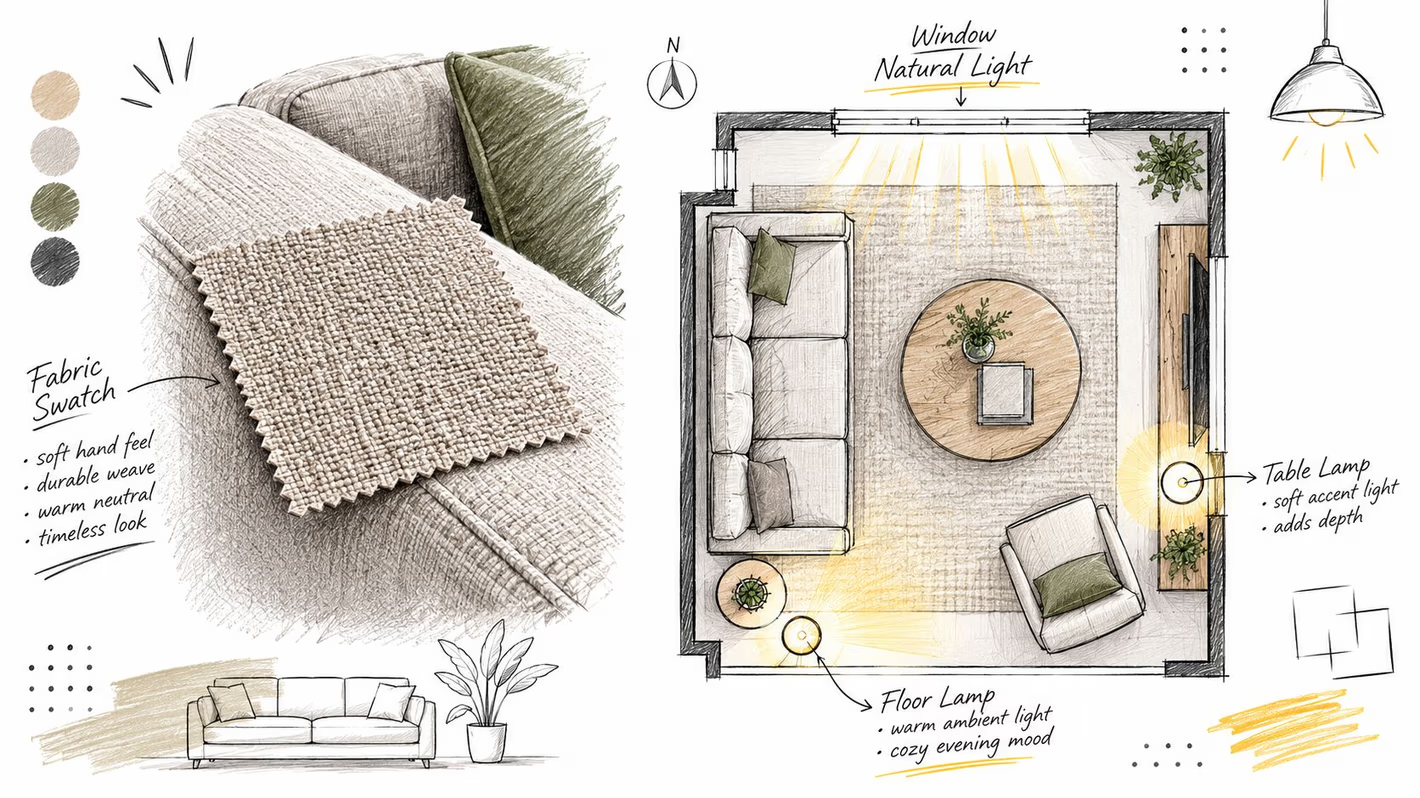
A swatch should spend time in the room before the order is placed. Store lighting is controlled and flattering, while a home exposes the material to changing daylight, lamps, nearby finishes, and the visual scale of the furniture.
A repeatable home workflow
Shortlist three to five candidates. Choose meaningful alternatives, such as a warm neutral, a cooler neutral, a deeper color, and a textured option. Too many similar samples make comparison harder.
Order color variations when needed. A single fabric family may contain several shades that look close online but behave differently beside the room's flooring and walls.
Place each swatch on the actual sofa or chair location. Drape the sample over the seat, arm, or back where possible. A fabric can read differently when it bends, catches light, or sits beside a large solid surface.
Observe the sample in morning, midday, evening, and artificial light. Keep it in place for at least one full day, ideally two, and photograph each stage (upholstery swatch testing workflow).
Compare texture and drape side by side. Texture affects perceived depth, while drape reveals whether the material feels relaxed, structured, bulky, or too flat for the furniture style.
Run simple field checks after visual review. A water-drop blot test can screen for absorbency, and a light rub test can reveal loose fibers. These checks aren't substitutes for formal testing, but they can identify obvious concerns before yardage is ordered.
Record what changes
Photos help prevent memory from favoring the first attractive sample. The same fabric may look brighter in morning sun, richer in the afternoon, and muted under evening lamps. A quick note beside each photo can record whether the material feels too yellow, too gray, too shiny, or too dark.
For shoppers comparing online imagery, a true-to-color fabric shop guide offers useful context on why digital color can differ from physical material. The most reliable decision still comes from viewing the actual swatch in the room where the furniture will be used.
Tanger's guidance on putting a living room in the best light can also support the evaluation. The goal isn't to find a fabric that looks identical in every condition. The goal is to choose one that remains appealing across the room's normal lighting.
Understanding Fabric Performance and Durability Specs
Color starts the conversation, but performance determines whether the upholstery fits the household. Double rubs measure resistance to repeated abrasion, making the figure useful when comparing fabrics for a formal room, a busy family room, or a commercial waiting area.
A published upholstery testing example described a durability range of 68,000 to 82,000 double rubs, with a sample mean of 74,283 double rubs and a sample standard deviation of 4,676 double rubs across 25 one-yard samples (upholstery durability testing reference). The same example notes that a range-divided-by-four estimate produces a midpoint-based standard deviation of 3,500 double rubs. Those figures illustrate why a labeled range and tested sample results aren't always identical.
Match the rating to the room
Industry references commonly use durability tiers of 3,000 double rubs for light-duty, 9,000 for medium-duty, and 15,000 for heavy-duty woven upholstery. Other benchmark frameworks place general contract upholstery at 15,000 Wyzenbeek double rubs or 20,000 Martindale cycles, and heavy-duty upholstery at 30,000 Wyzenbeek or 40,000 Martindale cycles (ACT performance specifications).
| Room Type | Traffic Level | Recommended Double Rubs | Best Fabric Types |
|---|---|---|---|
| Formal sitting room | Light | 3,000 | Decorative woven upholstery |
| Everyday living room | Medium | 9,000 | Durable woven fabrics and practical blends |
| Family room or active seating area | Heavy | 15,000 or more | Heavy-duty woven upholstery |
| Commercial waiting area | Contract use | 15,000 or more, with applicable contract benchmarks | Commercial-grade performance textiles |
These are benchmarks, not guarantees of a specific service life. A fabric's fit depends on seating frequency, cleaning exposure, construction, and how the furniture is used. A rarely used accent chair doesn't need the same performance class as the main family-room sofa.
Look beyond abrasion
Colorfastness testing matters because upholstery can fail through fading or chemical exposure even when the surface remains intact. Industry specifications address resistance to water, solvent, light, ozone, and burnt-gas fumes (ACT performance specifications).
Customers should ask which tests apply to the selected fabric and what cleaning method the manufacturer permits. For a home with children, pets, frequent entertaining, or strong sunlight, technical performance deserves equal attention with color. Tanger's upholstery materials guide can help shoppers prepare those questions before selecting yardage.
Coordinating Fabric with Your Room's Lighting and Finishes
A fabric doesn't exist by itself. It sits beside paint, flooring, rugs, window coverings, wood, metal, and neighboring furniture, and every surrounding surface affects how the upholstery reads.
North-facing daylight can make colors feel cooler, while strong southern exposure can intensify warmth and brightness. Warm lamps can pull beige, cream, and taupe toward yellow, while cooler artificial lighting may make certain neutrals appear sharper or more blue. The swatch test matters because the room's exact conditions matter more than a generic lighting label.
Start with the fixed elements
Place the swatch beside the finishes that won't change. A gray sofa may pair beautifully with a cool floor but look flat against a blue-gray wall. A warm neutral may connect a wood floor and existing chairs, yet become too yellow beside bright white trim.
The safest approach is to select a lead fabric first, then coordinate supporting colors and textures around it. This keeps the room from becoming a collection of unrelated samples. The expert color palette guide can help organize those relationships before a custom order is placed.
Texture makes lighting more important
Trend coverage for 2026 points toward tactile materials such as bouclé, velvet, linen blends, and washed linen, which can appear lighter, deeper, or more muted depending on lighting and surrounding finishes (2026 texture and pattern coverage). That makes a physical sample particularly valuable for made-to-order furniture.
A velvet may show a directional sheen when brushed one way. A bouclé may create a soft, irregular surface that changes at different angles. Linen blends can reveal slubs and subtle shifts that a flat product image conceals. Those aren't defects, but they should suit the room's character.
For a cohesive result, compare the swatch with the rug, floor, wall, and adjacent pieces at the same time. A fabric that looks ordinary alone may become the right choice when it ties the room together.
Ready to Start Your Custom Furniture Journey
A sound decision follows four moves: request a manageable group of swatches, test them in the actual room, review performance specifications, and compare the finalists with existing finishes. That process gives homeowners more control without requiring a professional design background.
Customization also solves problems that ready-made furniture can't. Select pieces from Smith Brothers of Berne and Flexsteel can be customized by fabric, finish, and configuration, allowing the sofa or chair to suit the room rather than forcing the room to accommodate a fixed option. Tanger's custom furniture process supports that decision-making with showroom guidance and practical questions.
Commercial buyers can use the same method for office seating, conference rooms, and waiting areas. Tanger's Commercial Office division provides space planning, including layouts and complete CAD drawings, along with durable furniture solutions for professional environments.
Local service matters after the fabric decision, too. Tanger's delivery team handles setup, and its in-house service request process helps customers address issues after installation. Flexible financing options are available for any project, and the Low Price Promise supports value-conscious families who want quality without abandoning a practical budget.
Visit Tanger's Furniture in Bellefontaine to compare custom fabric options in person, or browse the collections online and begin with a short swatch list. Customers with specific design questions can contact the design staff, and joining the Love Your Home Club provides access to exclusive offers and expert tips delivered to the inbox.