Living Room Decor Minimalist: A Bellefontaine Guide


The room looks busy before anyone even sits down. A basket of blankets is spilling over, the side table has become a holding spot for mail, chargers, and remotes, and the sofa that once felt comfortable now feels like it's shrinking under everything around it. That's the moment many households in Bellefontaine and across Logan County decide they want something calmer.
A good minimalist living room doesn't look empty. It looks settled. It supports family movie nights, everyday conversation, and the kind of quiet that makes a home easier to enjoy. That's why this approach keeps showing up for first-time homeowners, long-time residents updating a farmhouse or ranch, and even small businesses trying to make a reception area feel polished without feeling stiff.
From Cluttered to Calm The Minimalist Mindset
Many people start with the same concern. They like the clean look of minimalist rooms online, but they don't want a space that feels cold, formal, or impossible to live in. That's a fair concern, especially in a family room where people put their feet up, bring in laundry baskets, and leave a book on the arm of the chair.
Minimalism works best when it's treated as a decision filter, not a decorating rulebook. If a piece earns its place through comfort, function, or meaning, it stays. If it only fills space, it usually creates more stress than value.
A lot of homeowners already lean this way. Nearly three in five Americans, or 60%, describe their home décor style as minimalist, which shows that clean lines and calm layouts have become a lasting preference rather than a passing fad, according to this report on American décor preferences.
A calm room usually comes from fewer decisions competing for attention, not from removing every sign of life.
That matters in a small-town home just as much as it does anywhere else. People here want rooms that hold up to daily use and still feel welcoming when neighbors stop by. A practical version of living room decor minimalist design does exactly that. It cuts visual noise while keeping the room usable.
For readers who like the minimalist idea but still want personality, this guide to personalizing minimalist spaces without clutter is a helpful next step. It reinforces an important point. The goal isn't to own less for the sake of it. The goal is to make room for what matters and enjoy the home more.
Your Blueprint for Calm Planning the Layout
The biggest mistake in minimalist rooms happens before furniture ever arrives. People buy a sofa because they love the shape, then add a chair, then a table, and by the end the room feels tighter than it did before. Minimalist design falls apart fast when the layout isn't planned.
A stronger process starts with a tape measure, a sketch, and one focal point. That might be a fireplace, a window, or the wall where the media setup belongs. The room needs one visual anchor so everything else can support it instead of competing with it.

Measure first and style second
The most useful minimalist rooms are planned by proportion, not impulse. Projects that calculate proportion before selecting style have an 85% success rate in achieving a natural feel, and leaving 36 to 48 inches of walking space around seating can make rooms feel up to 30% larger, based on this minimalist layout guide.
That advice lines up with what good design teams have practiced for decades. Since 1964, trained furniture designers have relied on room flow first because scale errors are expensive and hard to hide.
A simple planning order works well:
- Mark the focal point. Decide where the eye should land first.
- Map the largest piece. In most homes, that's the sofa or storage wall.
- Protect walking space. Keep the main traffic path open before placing tables or accent chairs.
- Add supporting pieces last. Rugs, lighting, curtains, and art should finish the room, not dictate it.
Negative space does real work
Negative space isn't wasted space. It's what keeps a room from feeling crowded. In a living room, that often means resisting the urge to put something in every corner.
Practical rule: If a piece doesn't improve comfort, storage, or balance, the room may be stronger without it.
This applies in homes and in professional settings. A waiting room, office lounge, or reception area benefits from the same discipline. Clear paths, scaled seating, and a visible focal point make the space feel more composed and easier to use. For anyone thinking through those details, space planning for home and office layouts offers a useful framework.
The Heart of the Home Choosing Essential Furniture
Minimalist rooms don't need a lot of furniture. They need the right furniture. That's an important difference, especially for homeowners who are tired of replacing pieces that looked decent for a year and then started sagging, wobbling, or dating the room.
The strongest minimalist spaces follow a simple principle. Buy fewer pieces, but buy pieces with enough quality and flexibility to stay relevant for a long time. In practical terms, that usually means a well-built sofa, one or two chairs with clean profiles, a table that fits the room instead of dominating it, and storage that hides the everyday mess.
Why custom matters in a minimalist room
In a fuller, more layered style, one slightly wrong piece can get lost. In minimalist design, every item stands out. If the arm shape is too bulky, the wood tone is off, or the fabric feels too slick for family use, the room won't feel resolved.
That's where customization becomes valuable, especially for shoppers looking for custom sofas Ohio families can live with for years. A true custom order experience allows the customer to choose from over 100 fabric options and 50+ finishes on select pieces from Flexsteel, making it easier to match a specific minimalist vision while keeping durability in view, as shown in this custom upholstery overview.

When discussing durable custom seating, it's worth looking at quality standards from Flexsteel and Smith Brothers of Berne. Both are well suited to the minimalist idea of keeping a piece longer because the frame, tailoring, and comfort are built for repeat use.
What earns a place in the room
A minimalist living room usually works better when each piece has a clear job.
- The sofa sets the tone. Pick the best seat in the room first. A clean-lined sofa with durable upholstery does more for the space than several smaller fillers.
- Accent chairs should relieve, not crowd. Open arms, visible legs, and sensible scale keep the room airy.
- Storage needs to disappear visually. Media consoles and cabinets should look clean from across the room and work hard up close.
- Tables should support real use. The right coffee table gives the room a center without blocking movement.
For households furnishing from scratch, this sofa buying guide for the living room helps narrow the decision. For shoppers browsing broader categories of Bellefontaine furniture, living room collections are also worth reviewing before settling on a floor plan.
Value matters too
Minimalism isn't about paying more for less. It's about spending more carefully. A budget-conscious family may do better with one custom sofa and one versatile chair than a full package of pieces that don't fit the room or the household.
That's where a Low Price Promise and flexible financing options make sense. They give families room to choose quality without forcing the whole project into one payment. The same thinking often applies in adjacent purchases as well. A household updating the main living space may also be comparing a mattress store Logan County shoppers trust for long-term comfort or replacing utility staples like Speed Queen laundry equipment that has to perform every day.
Creating Warmth with Color and Texture
A minimalist room turns cold when the palette is flat and the surfaces all feel hard. Clean lines alone won't make a room comfortable. Warmth comes from what the eye sees and what the hand wants to touch.
That's why warm minimalism has become such a useful direction for family homes. It keeps the quiet look of minimal design but softens it with texture, earth-toned neutrals, and materials that feel lived in instead of clinical.
Build the room with touch, not just color
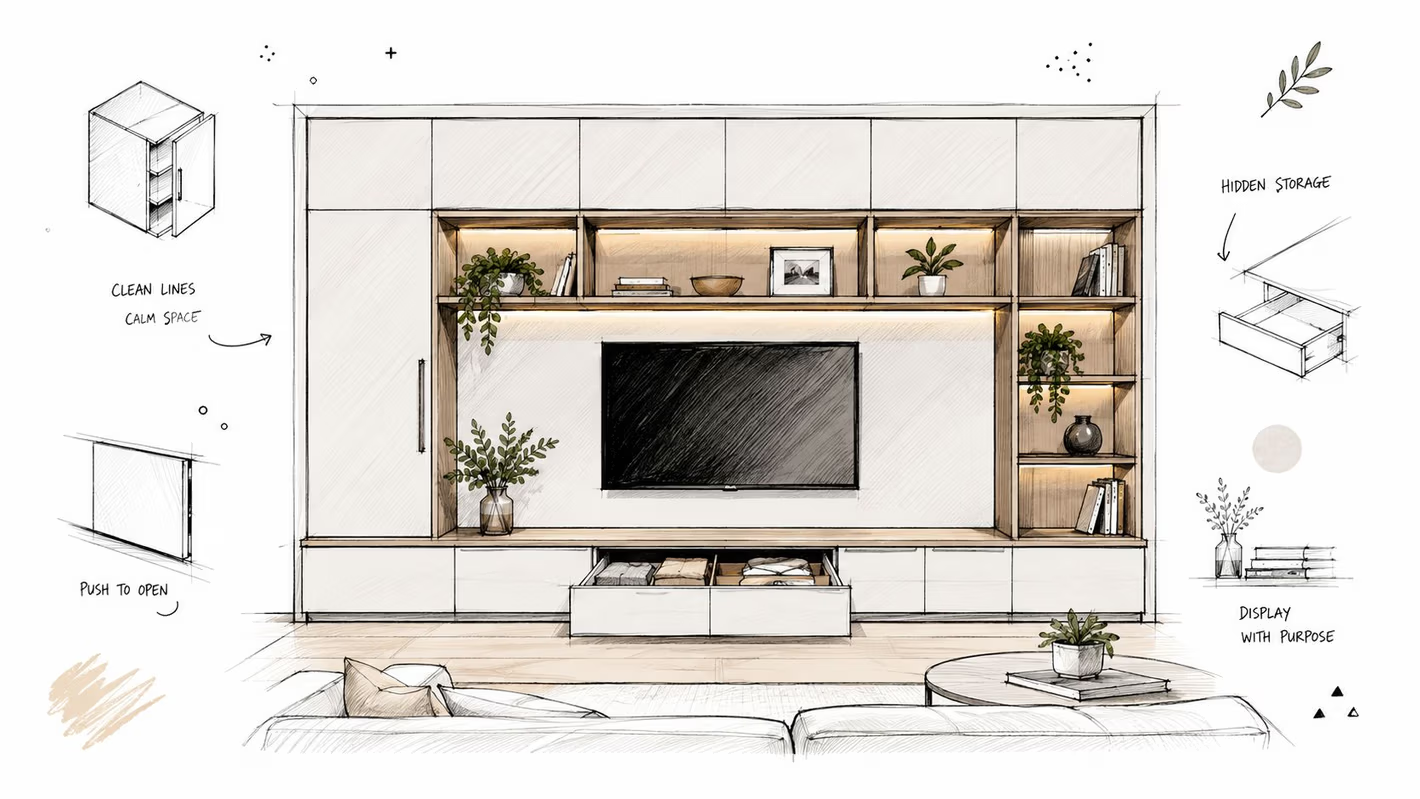
Warm minimalism uses layered textures like bouclé, wool, and raw fibers to prevent a sterile feel, and durable custom-textured fabrics from brands like Smith Brothers or Flexsteel help preserve a minimalist silhouette while standing up to daily family use, as discussed in this warm minimalist living room trend piece.
That's the sweet spot. The room still looks clean, but it doesn't feel sharp or untouchable.
A dependable combination often includes:
- A soft neutral base such as oatmeal, sand, mushroom, or warm gray
- One grounded wood tone to bring in natural depth
- A textured upholstery fabric that reads quiet from a distance but feels rich up close
- A natural fiber rug or soft pile rug that reduces visual hardness
- One or two tactile accents such as a knitted throw or a linen pillow
Soft texture does what extra decor often tries and fails to do. It makes the room feel finished without adding clutter.
Keep the palette steady
The best warm minimalist rooms don't jump between too many finishes. If the sofa is textured, the table can be simpler. If the rug has visible weave, the pillows can stay restrained.
That restraint is what keeps living room decor minimalist in a family setting from sliding back into visual noise. The room feels friendly because materials are working hard, not because accessories are piled on.
Smart Storage and Intentional Styling
Storage and styling decide whether a minimalist room holds up after the first week. A pretty room can still fail if blankets, toys, remotes, and charging cords never have a home. The answer isn't adding more décor. It's choosing hidden function and then styling lightly.
Storage that supports everyday life
A good minimalist room usually includes at least one of these:
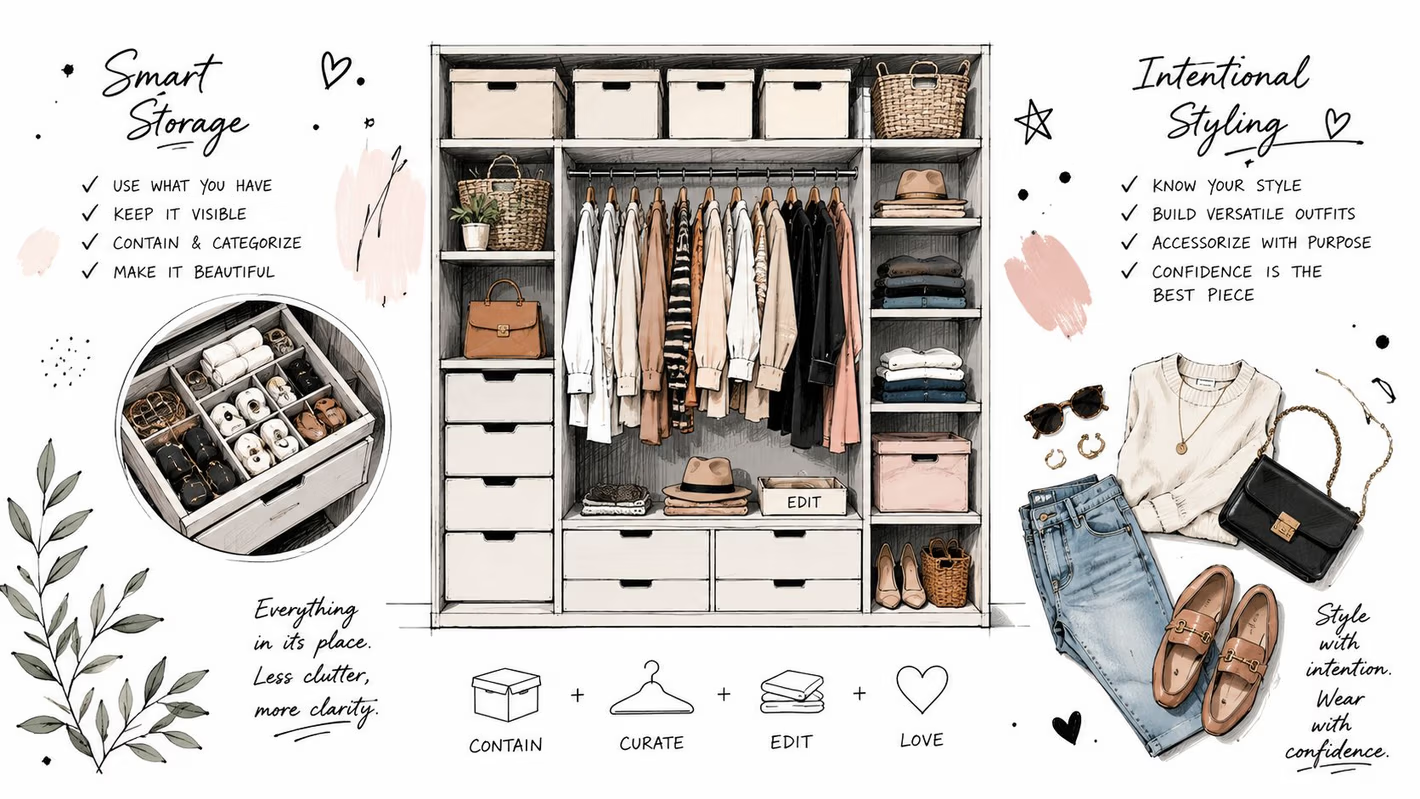
- A sleek media console with closed storage for cables, manuals, and small electronics
- An ottoman with interior storage for throws, games, or kids' items
- Built-ins or fitted shelving when the room has awkward corners or unusual architecture
- A cabinet that works vertically so floor space stays more open
Rooms with odd angles need special care. In those spaces, built-in storage often works better than trying to force standard pieces into dead corners. It keeps the architecture from becoming visual clutter.
Style with a light hand
Minimalist styling works best when the room has one main neutral, a supporting tone, and a controlled accent. Designers use the 60-30-10 color rule to reduce cluttered perception, and texture-less minimalist rooms are 45% more likely to be described as cold or sterile by occupants. Low-profile geometric lighting also helps avoid visual mass, according to this minimalist lighting and color guide.
A simple styling checklist keeps things honest:
| Area | Better choice | Usually weaker choice |
|---|---|---|
| Coffee table | One tray and one organic element | Several small decorative objects |
| Wall art | One larger meaningful piece | Multiple small fillers |
| Shelves | Open space mixed with a few useful items | Every shelf packed edge to edge |
| Lighting | Low-profile fixtures with soft layering | Oversized lamps with heavy visual weight |
For shelf balance, decorating shelves without creating visual clutter gives practical guidance that fits this style well.
Plants are one of the easiest ways to keep a minimalist room from feeling flat. A single sculptural cactus or grouped succulents can add life without reading messy. For arrangements that stay clean and architectural, homeowners can browse The Cactus Outlet's ideas and adapt them to a console, shelf, or side table.
Leave a little emptiness on purpose. That breathing room is part of the design, not a sign that something's missing.
Your Local Partner in Minimalist Design
A well-planned minimalist living room has less to do with trend chasing and more to do with making thoughtful choices that fit real life in Bellefontaine and Logan County. The room should welcome family, stand up to daily use, and still feel calm at the end of a busy day.
That kind of result usually comes from steady guidance, not pressure. Family-owned stores with deep local roots understand that better than most. A business that started in 1946 and has offered design support since 1964 tends to see the full picture. Comfort, scale, durability, budget, delivery, and long-term service all matter.
That local reliability also matters for professional spaces. A business owner furnishing a waiting room, office, or meeting space needs more than good-looking furniture. They need planning help, durable materials, and a team that can handle logistics. For those projects, local furniture expertise near Bellefontaine can be more useful than a one-size-fits-all ordering process.
The best part is that support doesn't stop after selection. Local delivery handles the heavy lifting, and in-house service requests make it easier to get help if something needs attention later. That's a practical advantage for residential buyers, budget-conscious families using financing, and commercial clients who can't afford avoidable downtime.
Visit Tanger's Furniture to see custom options in person at the Bellefontaine showroom or browse collections online to start the journey. Flexible financing is available for any project, the Low Price Promise helps protect value, and the team handles delivery and service so the process feels manageable from start to finish. Have a specific design question or a commercial layout to discuss? Contact the design staff today, explore Commercial Office solutions, or join the Love Your Home Club for exclusive offers and expert tips delivered to your inbox.