Customizable Living Room Furniture: A Local Buyer’s Guide

A living room can feel almost right and still frustrate everyone who uses it. The sofa may block the doorway, the chaise may point into the busiest walkway, or the fabric may show every mark from a child or pet. A first-time buyer often discovers these problems only after the furniture arrives.
Customizable living room furniture gives Bellefontaine and Logan County households a better way to choose. Instead of forcing a room to accept a catalog piece, shoppers can match the sofa, sectional, chair, fabric, finish, and layout to the home already in front of them. Tanger's Furniture has served the community since 1946, with design experience dating to 1964, and its showroom offers a no-pressure place to make those decisions with real measurements and materials in hand.
Why Your Living Room Deserves Furniture That Actually Fits
A sofa can have the right advertised width and still be wrong for the room. Door openings, stair turns, window placement, traffic lanes, and the relationship between the sofa arms and nearby tables all affect whether a piece feels comfortable. An open floor plan creates another common problem, a small sectional can disappear in the space while a larger one can close off the kitchen or dining area.
Start with the room, not the catalog
Before choosing upholstery or decorative details, measure the wall where the piece will sit. Then measure the entry route, including doorways, hallways, stair landings, and turns. Tanger's furniture measuring guide helps buyers record the information needed for a more confident showroom conversation.
A useful room sketch should include:
- Fixed features: Mark windows, radiators, vents, outlets, fireplaces, and doors.
- Movement paths: Identify the routes used to reach the kitchen, hallway, television, and exterior doors.
- Existing pieces: Note what will stay, including rugs, tables, lamps, and media consoles.
- Household demands: Record whether the room handles pets, children, overnight guests, or frequent entertaining.
The practical minimum for a clear traffic route is about 36 inches, while 42 inches generally feels more comfortable, according to expert modular seating guidance. That space matters more than squeezing in an extra seat. A beautiful sectional that forces people to walk sideways through the room isn't a successful customization.
Fit also means comfort
Seat depth, cushion firmness, arm height, and back style should reflect the people who use the room. A deep, soft sofa may suit movie nights, while a shallower seat can support upright conversation and make standing easier. In rooms with ceilings under about 2.5 meters, sofa arms above roughly 28 inches can make the space feel compressed, as the same layout guidance explains.
That's why custom sofas Ohio households choose should be judged room by room. Smith Brothers and Flexsteel options can help shoppers move beyond an out-of-the-box compromise, whether the need is a compact chair, a family sectional, a reclining sofa, or an accent piece that completes the arrangement.
How Custom Living Room Furniture Became Mainstream
Customization once meant a one-off commission handled by a craftsperson at a local workbench. The buyer selected nearly every detail, but the process could involve extended waiting, limited production capacity, and a price suited to a small audience.
Modern upholstery changed that equation. Standardized frames, repeatable component sizes, and modular construction made it possible to offer custom seating without building every piece from scratch. Consumers could choose from coordinated frame designs, upholstery families, leg treatments, and sectional components while manufacturers retained an efficient production process.
From artisan orders to modular systems
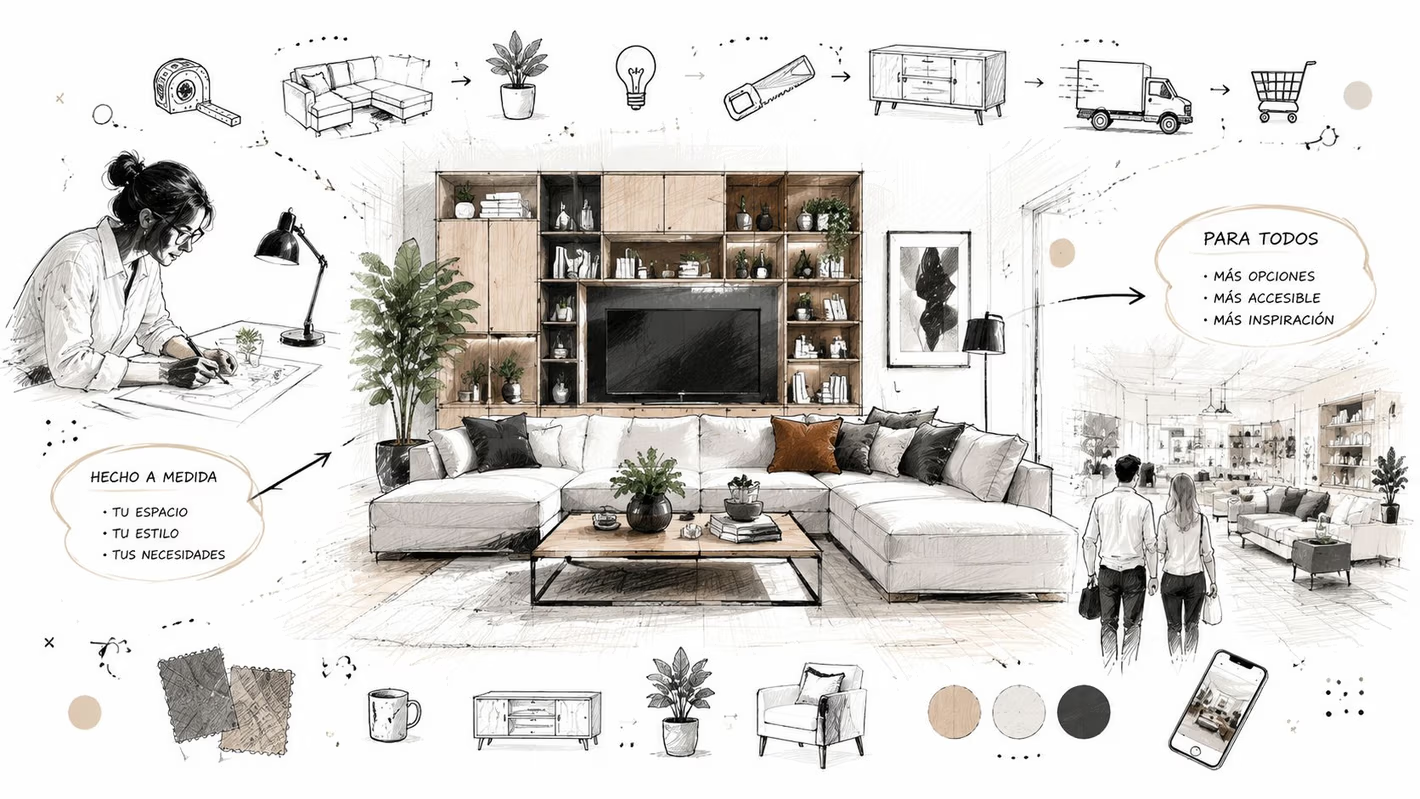
Postwar urbanization increased demand for adaptable furniture that could work in smaller homes and apartments. Modular seating answered that need because households could arrange components in an L shape, a straight line, or separate seats as rooms changed.
Current market data shows how far the category has expanded. One estimate placed the customizable furniture market at USD 54.16 billion in 2025, projected to reach USD 59.73 billion in 2026 and USD 112.48 billion by 2032, with an 11.00% CAGR according to this market estimate. A separate estimate valued the global custom furniture market at USD 38.78 billion in 2026 and projected USD 66.49 billion by 2033, with a 9.4% CAGR, showing that customization has become a substantial commercial category rather than a luxury side offering.
Living rooms sit at the center of that movement. Customized living room furniture represented 38.0% of the customized furniture market in 2024, while individual consumers represented 55.0% of end-user demand in the same year, based on the market information summarized by this modular furniture market report. A separate estimate placed living room furniture at 27.6% of modular furniture revenue in 2025.
What buyers can access today
The modern buyer can select performance upholstery, leather or leather-match materials, wood stains, metal accents, arm profiles, skirt treatments, sleeper mechanisms, and chaise direction. Those choices used to require a designer's involvement. Now, a local showroom can make them understandable and manageable for a first-time homeowner.
Tanger's design staff can help Bellefontaine shoppers compare those selections in person. The living room trends guide can provide inspiration, but the final decision should follow the room's measurements, the household's habits, and the buyer's budget.
Fabrics, Finishes, and Configurations You Can Tailor
Three decisions shape most customizable living room furniture: fabric, finish, and configuration. Each solves a different problem. Fabric affects daily maintenance and wear, finish controls the visual character, and configuration determines how people move, sit, sleep, and gather.
Fabric choices should follow household behavior
Performance weaves make sense for pet households, active families, and primary seating that receives constant use. Leather offers a distinct hand feel and can suit buyers who want a material that develops character, while leather-match options can provide a coordinated appearance across selected surfaces. Microfiber remains a practical family-friendly category because its smooth surface is easy to maintain, and natural-fiber blends can bring a softer, more textured look.
Abrasion ratings help buyers compare upholstery more intelligently. Industry guidance commonly treats roughly 15,000 to 25,000 Martindale cycles as standard residential performance, while 30,000 cycles or more is better suited to primary family-room sofas and heavy-use recliners. Commercial-grade upholstery is typically associated with 50,000 cycles or more, according to Schumacher's abrasion guidance.
A rub count isn't a complete durability forecast. Cleaning instructions, seam construction, cushion design, sunlight, and actual household use also matter. Tanger's upholstery materials guide gives shoppers useful vocabulary before they compare swatches.
Finish choices establish the room's personality
Wood leg stains can make a sofa feel warmer, lighter, more traditional, or more modern. Metal accents add definition, while nailhead trim introduces a detailed look that works well in classic and transitional rooms. Skirts create a grounded, formal appearance, while casual skirts soften the piece and expose less of the frame.
Configuration handles the functional decisions:
- Arms: Track, rolled, flared, and transitional profiles change both appearance and usable seating width.
- Chaise placement: A left or right chaise should follow the room's circulation rather than the buyer's favorite showroom arrangement.
- Modules: Separate components can support future rearrangement after a move or room change.
- Sleep function: Sleeper mechanisms add overnight capacity but require attention to clearance and mattress comfort.
- Seat depth: Deeper seating supports relaxed lounging, while a shallower envelope favors upright sitting.
| Customization Levers at a Glance | Common Options | What It Solves |
|---|---|---|
| Fabric | Performance weave, leather, leather-match, microfiber, natural-fiber blend | Maintenance, tactile preference, and wear concerns |
| Finish | Wood stain, metal accent, nailhead trim, skirt treatment | Coordination with existing furniture and design style |
| Configuration | Arm style, chaise side, modules, sleeper, seat depth | Room geometry, circulation, lounging, and overnight use |
For additional visual context on durable sofa styles for life, buyers can compare how different silhouettes support long-term use. The strongest custom sofas Ohio buyers select combine the three levers instead of treating fabric as the only meaningful choice.
The Custom Order Experience at Tanger's
Custom ordering should feel deliberate, not mysterious. In Tanger's Bellefontaine showroom, the process begins when shoppers identify the customizable icon on eligible sofas, sectionals, chairs, and ottomans.
Five decisions happen before the order
First, the buyer identifies the basic piece and sits on it. The design specialist then pulls a swatch card and places the material beside the buyer's existing décor. Showroom lighting can't reproduce every home, but comparing multiple swatches in person reveals differences in texture, undertone, sheen, and scale that a screen hides.
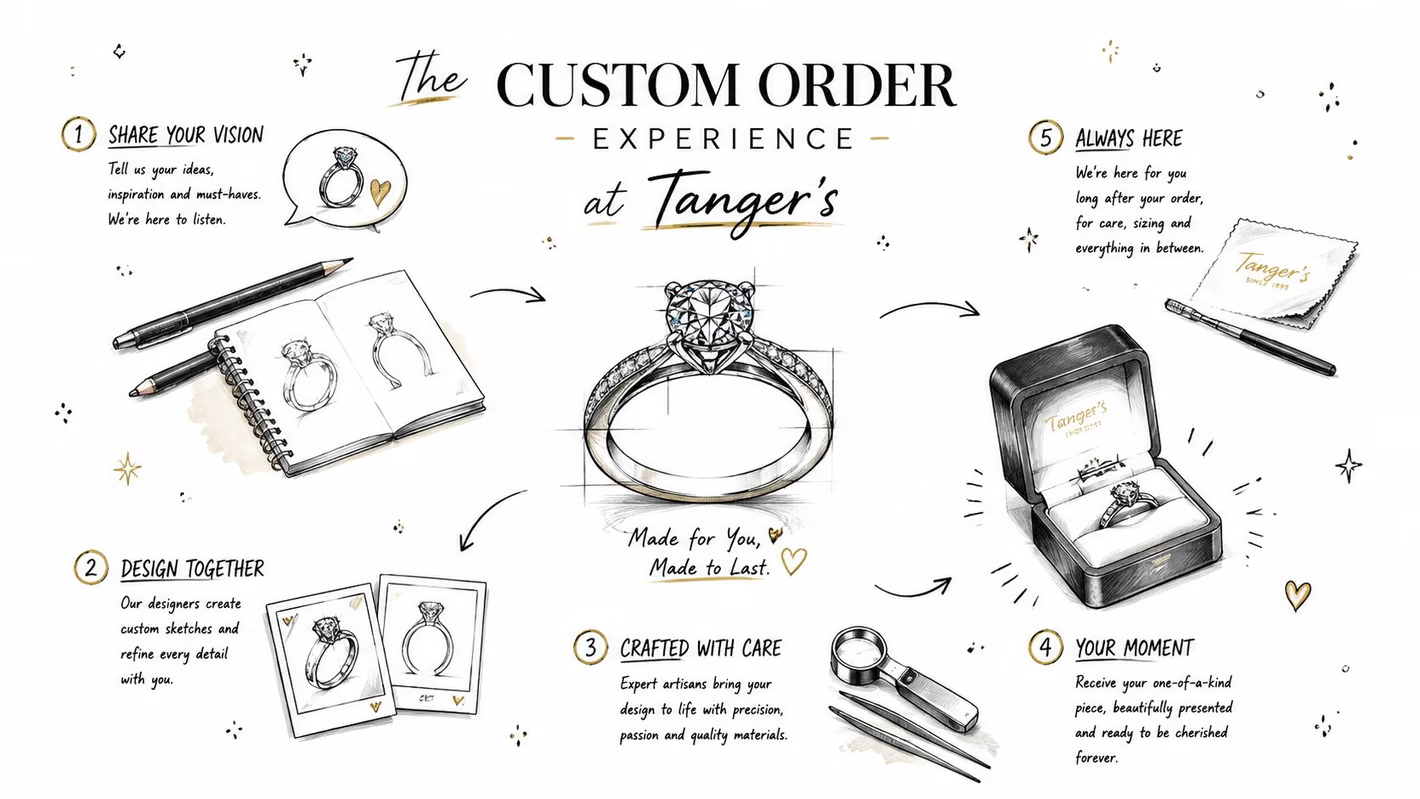
The order form captures the details that determine whether the finished piece feels right:
- Body and size: The selected sofa, sectional, chair, or ottoman.
- Comfort profile: Seat depth, arm height, cushion feel, and back style.
- Material: Fabric, leather, leather-match, or another available upholstery.
- Appearance: Leg style, wood finish, metal details, and skirt treatment.
- Configuration: Chaise side, sectional arm, modular arrangement, or sleeper mechanism.
Pets, children, and traffic patterns affect the fabric recommendation. A household with a dog that climbs onto the sectional needs different practical guidance from a formal sitting room used mainly for guests. The right material is the one that matches the actual routine, not the one that looks most impressive under showroom lights.
The paperwork deserves patience
Before the build sheet goes forward, the chaise side, arm configuration, sleeper mechanism, dimensions, fabric, and finish should be reviewed line by line. Lead times and deposit requirements should be discussed clearly, along with what the buyer is approving and what options may affect return eligibility.
Tanger's custom order guidance gives shoppers a useful starting point. The order should be placed only after every selection on paper matches the buyer's understanding. Nothing about the process needs to be rushed, especially when the piece will anchor the room for years.
Choosing the Right Custom Sofa for Your Space
A useful sofa decision comes down to size, function, and style. Those three filters prevent buyers from choosing a beautiful piece that fails at the doorway, works poorly for the household, or clashes with furniture already owned.
Size determines whether the room stays usable
Measure the wall, but don't stop there. Check the full seat envelope, including arms, back cushions, chaise extension, recliner movement, and any table that must sit nearby. Measure doorway clearances and turning points, then mark the intended footprint on the floor with painter's tape.
A sectional can open a room when the chaise points toward unused space. It can also close the room when the chaise cuts across the main walking route. A linear sofa may preserve circulation in a narrow living room, while a modular arrangement can offer more flexibility after a move.
Function decides which features earn their space
A family that watches movies every evening may value a deep sectional, soft cushions, and a chaise. A household that hosts conversation-focused gatherings may prefer firmer seats, supportive backs, and arms that make sitting and standing easier. A room that doubles as guest space may justify a sleeper, provided the open bed has adequate clearance.
Reclining modules can improve movie-night comfort, but they require space behind and in front of the sofa. Loose cushions offer a relaxed look and can be adjusted, while tight backs need less daily repositioning. Each advantage comes with a maintenance or space trade-off.
Style should support the home, not chase a trend
Fabric, legs, pillows, and arms should work together. A transitional room can handle a silhouette with a subtle wood stain. A modern farmhouse setting may suit a casual skirt or textured performance weave. A classic room may benefit from rolled arms and nailhead trim, provided those details don't overwhelm existing pieces.
| Custom Sofa Decision Matrix | What to Measure or Define | Custom Options It Unlocks |
|---|---|---|
| Size | Wall, doorway, traffic lane, ceiling, and seat envelope | Sofa length, sectional components, arm width, chaise scale |
| Function | Lounging, entertaining, children, pets, reclining, or guests | Cushion feel, sleeper, recliner module, chaise, fabric performance |
| Style | Existing colors, wood tones, metal finishes, and room character | Upholstery, legs, arms, skirts, trim, pillows, and accents |
For buyers comparing construction and planning considerations, this custom sofa buyer's guide offers helpful background. The best showroom visit includes a room photo, a rough floor plan, wall dimensions, doorway measurements, and a clear budget. Tanger's staff can then help narrow choices without turning the appointment into a guessing game.
Why the Showroom Matters for Custom Pieces
A customizable sofa shouldn't be ordered from a screen alone. Online configurators can display colors and dimensions, but they can't show how a fabric reacts to the buyer's lighting, how an arm supports the elbow, or whether the cushion feels supportive after an extended sit.
The Bellefontaine showroom gives those decisions a physical reference point. Shoppers can hold fabric and leather samples against different pieces, compare seat depths, test arm heights, and sit in chairs or ottomans that may complete the final arrangement.

Comfort can't be reduced to a specification
A spec sheet can state a cushion fill, but it can't tell a shorter buyer whether the knees sit comfortably or a taller buyer whether the back support reaches the right place. The buyer needs to sit upright, lounge, shift positions, and stand up. Cushion firmness, pillow fill, and seat pitch become obvious through use.
The same applies to color. A neutral that looks cool on a backlit phone may appear warmer beside a wood floor or under a lamp. Swatches should be viewed alongside a photo of the room, existing rugs, and nearby finishes.
Showroom rule: If the household can't sit on the piece and test the material, the household doesn't have enough information to make the final choice.
Local accountability changes the experience
A local showroom keeps the conversation connected. The staff member who records the custom selections can explain the order, answer questions, coordinate delivery, and direct any later service request. Tanger's local delivery and in-house service process keep the heavy lifting, and figuratively, connected to the original purchase.
For first-time buyers, that continuity matters more than a fast online selection. One careful visit can prevent a wrong chaise direction, unsuitable fabric, or uncomfortable seat depth from becoming an expensive lesson.
Financing, Delivery, and Loving Your Home
The furniture decision continues after the order form is signed. Buyers need a clear plan for payment, communication, delivery access, room preparation, and service. Tanger's flexible payment options are available for any project, helping families and businesses manage a larger furnishing decision without sacrificing the quality or fit they need.
The furniture financing information can help buyers prepare questions about payment structures and approval details. Anyone weighing a furniture purchase against broader home work can also review how to compare home improvement loans, then choose the approach that fits the household budget.
Value includes what happens after purchase
Tanger's Low Price Promise keeps value part of the conversation rather than treating customization as an automatic reason to overspend. Buyers should compare the complete purchase, including the selected materials, configuration, delivery, protection choices, and service support.
The Love Your Home Club gives repeat shoppers another reason to stay connected. Members can receive exclusive offers and future savings opportunities, which can matter when a living room project expands into a bedroom, dining room, mattress, or Speed Queen laundry purchase.
Delivery needs a practical plan
Custom builds take weeks, not days, so buyers should ask for a realistic lead-time estimate before approving the order. Staff can communicate updates as the piece moves through production and prepare the delivery team for the home's access conditions.
Before delivery day, households should:
- Clear the route: Measure and open doorways, halls, stairways, and turning areas.
- Prepare the room: Remove existing furniture, floor coverings, lamps, and fragile décor.
- Plan the swap: Decide where old furniture will go before the delivery crew arrives.
- Protect the details: Secure pets and children while the crew carries and places the new piece.
Professional local delivery crews handle heavy furniture and help set up the purchase correctly. If an issue appears later, Tanger's service request process gives customers a direct way to report concerns or request maintenance. That support also extends the showroom's no-pressure philosophy beyond the sale.
A living room earns the name when the household can use it comfortably, keep it maintained, and enjoy how it fits the home. That's the practical meaning behind Tanger's Love Your Home philosophy.
Visit our showroom in Bellefontaine to see our custom options in person or browse our collections online to start your journey. Have a specific design question? Contact Tanger's design staff today or join the Love Your Home Club for expert tips delivered to your inbox.
Tanger's Furniture offers customizable sofas, sectionals, chairs, and accent pieces alongside local delivery, service support, financing options, and the Low Price Promise. Visit Tanger's Furniture in Bellefontaine to bring room measurements and a photo, test the options in person, and choose furniture that helps the household Love Their Home.