Cooling Gel Mattress Guide: How It Works for Hot Sleepers

At 2 a.m., a hot sleeper may flip the pillow to its cool side, push the covers away, and wonder whether the problem is summer, the bedroom, or the mattress itself. Waking sweaty night after night can make even a comfortable bed feel like the wrong purchase.
A cooling gel mattress may help, but it isn't a magic temperature-control system. Gel changes how a foam surface handles heat, and that distinction matters when shoppers compare mattresses, toppers, bedding, and room-cooling strategies. The right choice depends on sleep position, comfort preference, bedroom conditions, and the reason someone sleeps hot.
The Hot Sleeper's Dilemma
Some people naturally run warmer at night. Others notice heat after hormonal changes, during a medical issue, or when the bedroom holds too much warmth. A partner's body heat, heavy bedding, and a mattress that allows the sleeper to sink in can add to the problem.
The frustration is real, and it doesn't mean the sleeper has chosen poorly or failed to create a comfortable bedroom. A person can like the pressure relief of memory foam and still dislike waking up warm. Another sleeper may find that the mattress feels comfortable at bedtime but becomes less pleasant after hours of body contact.
The room matters as much as the bed
A mattress can't correct every source of nighttime heat. Before replacing it, households may want to check airflow, bedding weight, clothing, humidity, and the bedroom's temperature. Guidance on how Precision Air Solutions keeps homes cool can help homeowners review the broader indoor environment rather than treating the mattress as the only variable.
That broader view also helps families in Bellefontaine and Logan County make a calmer decision. A mattress store Logan County shoppers trust should make room for questions about comfort and support, not just repeat the word “cooling.”
No single answer fits every sleeper
A hot sleeper who wants contouring and motion isolation may prefer a gel-infused foam design. Someone who feels trapped in foam may prefer a more breathable construction, while another person may need a topper or lighter bedding instead of a new mattress.
A practical starting point is to review options for the best mattress for hot sleepers, then test how the surface feels in person. The aim isn't to promise a cold bed all night. It's to identify which part of the sleep environment needs attention first.
What Is a Cooling Gel Mattress
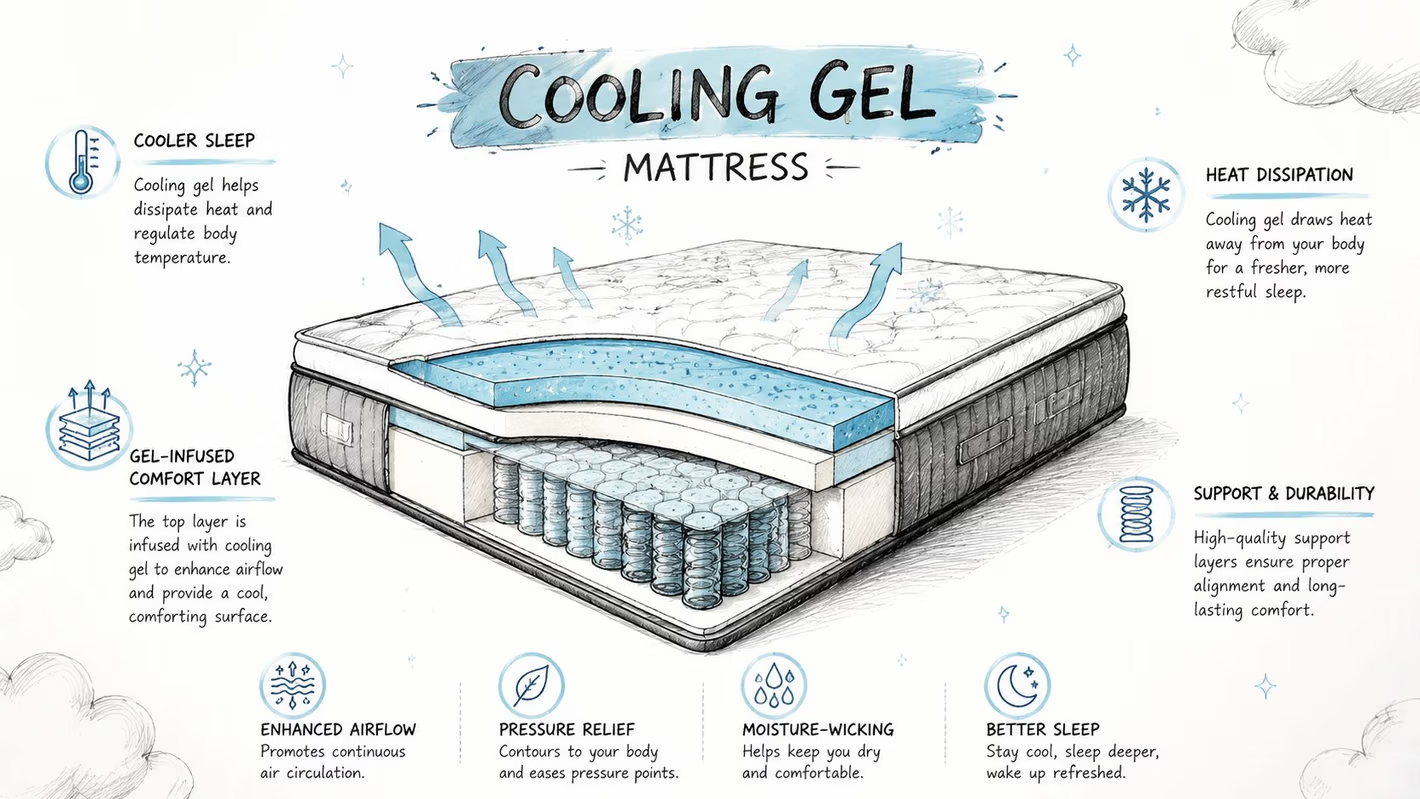
If your mattress feels comfortable at bedtime but warmer after hours of contact, gel may seem like an obvious answer. A cooling gel mattress is usually a memory foam mattress with gel added to one or more comfort layers. The foam still supplies contouring, pressure relief, and motion absorption. Gel changes how the foam receives and spreads body heat, but it does not create cold air or function like an active cooling appliance.
Heat can collect beneath the body in a low-conductivity foam layer. Gel helps distribute that warmth across a broader area, reducing the strength of a concentrated hot spot and giving heat more paths to move. The result is a change in heat management, not a promise that the surface stays cold all night.
The material science in plain language
Thermal conductivity describes how readily a material transfers heat. Flexible cellular foams generally have low conductivity, around 0.02–0.04 W/(m·K). Gel-enhanced materials can conduct heat substantially better. A review reported a polyurethane-matrix polymer hydrogel at 0.65 W/(m·K) and hybrid nano-filled gels reaching 2.18 W/(m·K), as detailed in this review of cooling gel mattress materials.
Those figures apply to the gel material, not automatically to the whole mattress. Gel is usually an additive within a foam system. Its role is to help move warmth laterally and away from the sleeper, rather than letting it remain concentrated directly under the body.
What shoppers are buying
The foam base still determines much of the feel. A deeper contouring mattress can cradle the hips and shoulders, while a firmer design keeps the sleeper nearer the surface. The cover, support core, and bedding also affect comfort across a full night.
A useful companion guide on what memory foam mattresses are explains the underlying material before gel is added. Readers considering clean-lined bedroom pieces can also browse minimalist bedroom furniture from Comfort Pure for design context, while judging cooling by the mattress construction itself.
The practical expectation is simple: gel may improve heat spreading and early comfort, but it does not supply continuous cold air. The surface can still warm as the foam and gel absorb heat over time.
How Gel Cools Your Sleep Surface
A sleeper may notice the difference during the first part of the night, when body heat begins collecting under the hips, shoulders, and back. Gel cooling relies on two related actions: absorbing some warmth and spreading it across the comfort layer. By reducing concentrated hot spots, gel can slow the surface's temperature rise.
Independent thermal testing summarized in industry reporting found that a gel-infused prototype stayed more than 5°F cooler at the surface after 4.5 hours than a comparable memory-foam-only model. The same testing recorded up to 113% greater heat transfer during the first hour, according to industry coverage of gel mattress thermal testing.
Why the early advantage matters
A mattress surface cannot remain at its starting temperature all night. Continued contact sends more warmth into the same area, so the gel and foam gradually absorb additional heat. Once the gel's available capacity is used, its cooling effect becomes weaker, and the mattress may feel more like conventional viscoelastic foam.
Consumer-facing testing commonly finds a modest difference, often around 1–3°F, with some models measuring approximately 2–5°F cooler than standard memory foam. These ranges come from consumer-facing testing of gel-infused foam. The practical conclusion is restrained: gel can slow warming, but it is not a permanent temperature-control system.
Practical rule: Treat gel as a comfort modifier, not as a substitute for a cool bedroom, breathable bedding, or medical care when night sweating has an underlying cause.
How phase-change materials differ
Gel and phase-change material, or PCM, manage heat through different mechanisms. PCM absorbs heat as body temperature rises and releases it as the sleeper cools, using a solid-to-liquid transition to store latent heat without immediately raising its own temperature. Mattress applications are often tuned to transition around 28–32°C, or 82–90°F, according to descriptions of PCM surface technology and PCM and gel cooling behavior.
PCM is not automatically the better choice. It responds to heat differently. Decide whether your priority is initial coolness, pressure relief, airflow, or a surface that changes its behavior as temperature shifts.
For questions about how construction affects feel, this guide to cooling gel mattresses from well-known brands can help organize a showroom conversation around cover feel, foam depth, and heat response.
Cooling Gel vs Memory Foam vs Alternatives
Gel-infused memory foam makes sense for sleepers who like a close, cushioned feel but want less initial heat buildup than conventional foam may provide. It isn't the only route to a more comfortable sleep surface. Innerspring, latex, hybrid, breathable bedding, and cooling toppers address heat in different ways.
A traditional memory foam mattress usually emphasizes contouring and motion isolation. Gel-infused foam keeps much of that feel while improving heat spreading. Innerspring and hybrid constructions can encourage more airflow through their support structure, while latex often feels more buoyant and less enveloping. PCM focuses on heat absorption and release at the surface.
| Option | Cooling Type | Best For | Sustained Effect | Price Range |
|---|---|---|---|---|
| Traditional memory foam | Foam contouring with limited heat movement | Sleepers who want a close, pressure-relieving feel | May weaken as body contact continues | Varies by construction |
| Gel-infused memory foam | Gel-assisted heat spreading | Moderate hot sleepers who like motion isolation | Strongest early, then may diminish | Varies by construction |
| PCM surface | Heat absorption and release through phase change | Sleepers who want temperature-responsive surface comfort | Depends on available phase-change capacity | Varies by construction |
| Innerspring or hybrid | Airflow through a more open support system | Sleepers who prefer lift and ventilation | Often more consistent airflow than dense foam | Varies by construction |
| Cooling topper or bedding | Changes the sleep surface without replacing the core | Shoppers testing a lower-commitment adjustment | Depends on the topper, cover, and room | Varies by construction |
The mattress may not be the first fix
A shopper with a sound mattress may get more benefit from breathable sheets, lighter covers, improved room ventilation, or a topper. A 2026 Loughborough University study found that a cooling mattress topper in overheated bedrooms increased total sleep time by 19 minutes and reduced time to fall asleep by 10 minutes, as reported by Loughborough University.
That result supports a system-based approach. The mattress, topper, bedding, and room conditions work together, so replacing the mattress alone may not solve a problem caused mainly by the bedroom.
Match the feel to the sleeper
A side sleeper may value foam's pressure relief around the shoulders and hips. A combination sleeper may prefer a more responsive surface that makes repositioning easier. Couples should consider motion isolation alongside temperature, since the coolest mattress still needs to accommodate two different comfort preferences.
For a more detailed construction comparison, shoppers can review memory foam versus innerspring before testing mattresses in person. The most useful comparison isn't "which is coolest?" It's "which construction provides the required cooling without sacrificing support, pressure relief, or ease of movement?"
Who Benefits Most From a Gel Mattress
A gel mattress may suit a moderate hot sleeper who likes the body-hugging comfort of memory foam but doesn't want the same degree of initial heat buildup. This person may wake warm occasionally rather than experience severe, persistent night sweating. Gel can offer a noticeable surface improvement without changing the basic foam feel.
Side sleepers are another possible match. Their shoulders and hips often need cushioning, and gel-infused foam can combine contouring with some heat-spreading assistance. Couples may also consider it when one partner sleeps warmer, although each person's support and firmness needs still matter.
A useful self-check
Before choosing gel, shoppers should ask:
- Sleep position: Does the sleeper stay mostly on the side, back, stomach, or move between positions?
- Preferred feel: Does the sleeper enjoy sinking into foam, or does that feeling create discomfort?
- Heat pattern: Is the issue mild warmth at the surface, or severe sweating that continues despite a comfortable room?
- Bedroom conditions: Does the room have reliable cooling and airflow?
- Partner needs: Can one mattress support two different body types and comfort preferences?
A sleeper who sinks into thick foam may surround the body with more heat, even if gel improves the surface response. Someone in an extremely hot climate without dependable air conditioning may need to address the room and bedding before expecting a mattress material to do all the work.
When another solution deserves priority
Severe night sweats linked to a medical or hormonal concern deserve medical attention rather than a product promise. A mattress can change comfort, but it can't diagnose or treat the reason a body overheats.
Shoppers who aren't sure how firmness, support, and body shape interact can use this guide to choose the right mattress for a body type. A consultative mattress store Logan County residents visit should let customers discuss these factors without pressure.
Tanger's Furniture provides local mattress and furniture guidance in Bellefontaine, including options for shoppers who want to test comfort before ordering. The same personalized approach can help residential customers, budget-conscious families, and businesses furnishing professional spaces through Commercial Office solutions. An office may not need a cooling gel mattress, but its users still benefit from durable, well-planned furnishings that fit the space.
Buying and Caring for Your Cooling Gel Mattress
Start with construction rather than the word “gel.” Shoppers should ask how the gel is integrated, whether the foam feels supportive at the preferred firmness, whether the cover feels breathable, and what the warranty says about the mattress's materials and expected use.
Testing matters because cooling claims don't reveal the whole experience. A showroom visit lets a sleeper lie in the usual position, check how easily the body moves, and notice whether the surface feels comfortably cushioned or too enclosing.
A practical care routine
- Ventilate the room: Air movement helps the whole sleep environment feel less stagnant.
- Use breathable bedding: Sheets and covers can affect surface comfort as much as the mattress layer beneath them.
- Rotate when appropriate: Follow the manufacturer's care guidance to distribute wear.
- Keep the surface clean: Use a suitable protector and follow the care instructions for the cover.
- Review the complete setup: If warmth continues, examine room temperature, bedding, and topper options before replacing the mattress again.
More guidance is available in these mattress care tips for keeping a bed cool and clean.
For Bellefontaine and Logan County families, Tanger's Furniture offers local delivery and setup, in-house service requests, flexible financing for larger projects, and a Low Price Promise focused on value. Custom-order capabilities through Flexsteel and Smith Brothers of Berne can also help shoppers tailor surrounding bedroom furniture rather than settling for an out-of-the-box room. The Love Your Home Club provides a way to receive exclusive offers and ongoing home guidance, while the showroom also supports broader needs such as living room furniture, Speed Queen laundry, and professional office planning.
Visit the Tanger's Furniture showroom in Bellefontaine to test cooling gel mattress options, compare comfort layers, and discuss a complete sleep setup without pressure. Flexible financing, local delivery, service support, custom furniture choices, and the Love Your Home Club give homeowners and businesses practical help from selection through setup, so customers can start building a home they love.