Office Furniture Services Inc: 2026 Guide for Your Business


A lot of business owners are sitting in the same spot right now. There's an office that no longer fits the team, a new space that still feels empty, or a collection of desks and chairs that grew one purchase at a time without any real plan behind it. The workday feels harder than it should. People can't find enough surface space, traffic flow is awkward, and the front office doesn't reflect the business very well.
That's where the idea behind Office Furniture Services Inc becomes useful. The phrase sounds simple, but clients don't just need furniture. They need help thinking through layout, daily workflow, delivery, setup, and what happens after installation when something needs adjustment or service.
For businesses in Bellefontaine and Logan County, that difference matters. The office furniture world is huge. The global office furniture market was valued at over $109 billion in 2025, with continued growth projected, according to Stellar Market Research's office furniture market report. With that many products and categories in play, a local guide often matters more than a longer catalog.
A practical starting point is learning what a full-service process should include before any order gets placed. That's why many owners begin with an office space planning guide for growing workplaces, then narrow down what kind of support they need.
Table of Contents
- Your Guide to Creating the Perfect Office Space
- Core Services Beyond Desks and Chairs
- The Project Journey From Vision to Installation
- Commercial Customization for a Unique Brand Identity
- The Local Advantage Over Big Box Providers
- Smart Budgeting With Financing and Price Guarantees
- Your Office Furniture Questions Answered
Your Guide to Creating the Perfect Office Space
A good office doesn't start with a desk. It starts with the way the business works.
A small accounting office may need quiet focus and room for files. A medical-adjacent front office may need easy-clean surfaces, dependable guest seating, and a check-in area that feels calm. A family business adding a few team members may need a better use of square footage so people stop working shoulder to shoulder.
That's why office furniture services are best understood as a process, not a product list. A business owner may begin by asking for a few new chairs, but the underlying issue could be circulation, privacy, storage, or reception flow. Once those needs are identified, furniture becomes a tool that supports the work instead of getting in the way.
The office should support the people inside it
An effective setup usually balances several things at once:
- Focus: Team members need room to work without constant interruption.
- Movement: Clients, staff, and deliveries should move through the space without bottlenecks.
- First impressions: Reception and meeting spaces should match the professionalism of the business.
- Flexibility: The layout should still make sense when staffing changes or departments shift.
Practical rule: If an office looks fine in photos but feels frustrating during a normal workday, the problem is usually planning, not furniture style.
This is also where a local, service-based approach helps. National catalogs often show polished room scenes, but they can't see the narrow doorway, the awkward corner, the daily paperwork pile, or the front desk that needs to welcome customers while hiding cables and supplies.
Small details create the biggest daily gains
Many owners get stuck because every piece seems important. In reality, the first wins often come from basic decisions made in the right order. Traffic path first. Workstation placement second. Storage third. Finish and color after that.
That same logic applies at home, too. Businesses and households both want rooms that work better, whether someone is shopping for Bellefontaine furniture, updating a lobby, comparing custom sofas Ohio options, replacing laundry equipment with Speed Queen laundry, or visiting a mattress store Logan County shoppers already trust. The common thread is simple. Good furniture should fit real life.
Core Services Beyond Desks and Chairs
Many people hear “office furniture services” and think of ordering desks, chairs, and maybe a conference table. A true service partner usually does much more than that.

Businesses that need a clearer picture of product categories often start by reviewing office furniture solutions for small business spaces. That early step helps sort out what belongs in a workspace and what only adds clutter.
Space planning comes first
Space planning is where confusion usually clears up. It answers practical questions before money gets tied up in the wrong pieces.
A planning conversation often looks at:
- Work zones: Who needs quiet concentration, who needs shared space, and who meets with customers.
- Storage needs: Paper files, supplies, technology, and personal items all need a home.
- Clearances: Chairs have to pull out, drawers have to open, and walkways have to stay usable.
- Future use: A layout should allow for changes without starting over.
Some providers also create CAD drawings so the owner can see the arrangement before installation. That matters because many layout mistakes don't show up until furniture is physically in the room.
What a full-service partner usually handles
Once the layout is set, services often expand well beyond selection.
- Workstation planning: This can include private desks, shared benching, cubicle systems, or hybrid combinations depending on workflow.
- Conference and meeting furniture: Tables, guest seating, presentation surfaces, and power access all affect how usable the room really is.
- Reception and waiting areas: These spaces need durable seating, approachable style, and enough room for traffic.
- Ergonomic seating guidance: Seat height, back support, arm placement, and adjustability affect comfort over the course of a full workday.
- Delivery coordination: Timing matters, especially when a business is trying to reduce downtime.
- Installation: Proper assembly and placement save time and prevent a room from becoming a puzzle on move-in day.
A business doesn't need the biggest catalog. It needs the right mix of planning, product knowledge, and follow-through.
Another point often gets overlooked. Office furniture services should also include what happens after installation. If something needs repair, adjustment, or a service request, that support shouldn't feel disconnected from the original purchase.
For that reason, the best office setup conversations usually sound less like shopping and more like problem-solving. The question isn't only “Which desk looks best?” It's “What kind of day is this office trying to support?”
The Project Journey From Vision to Installation
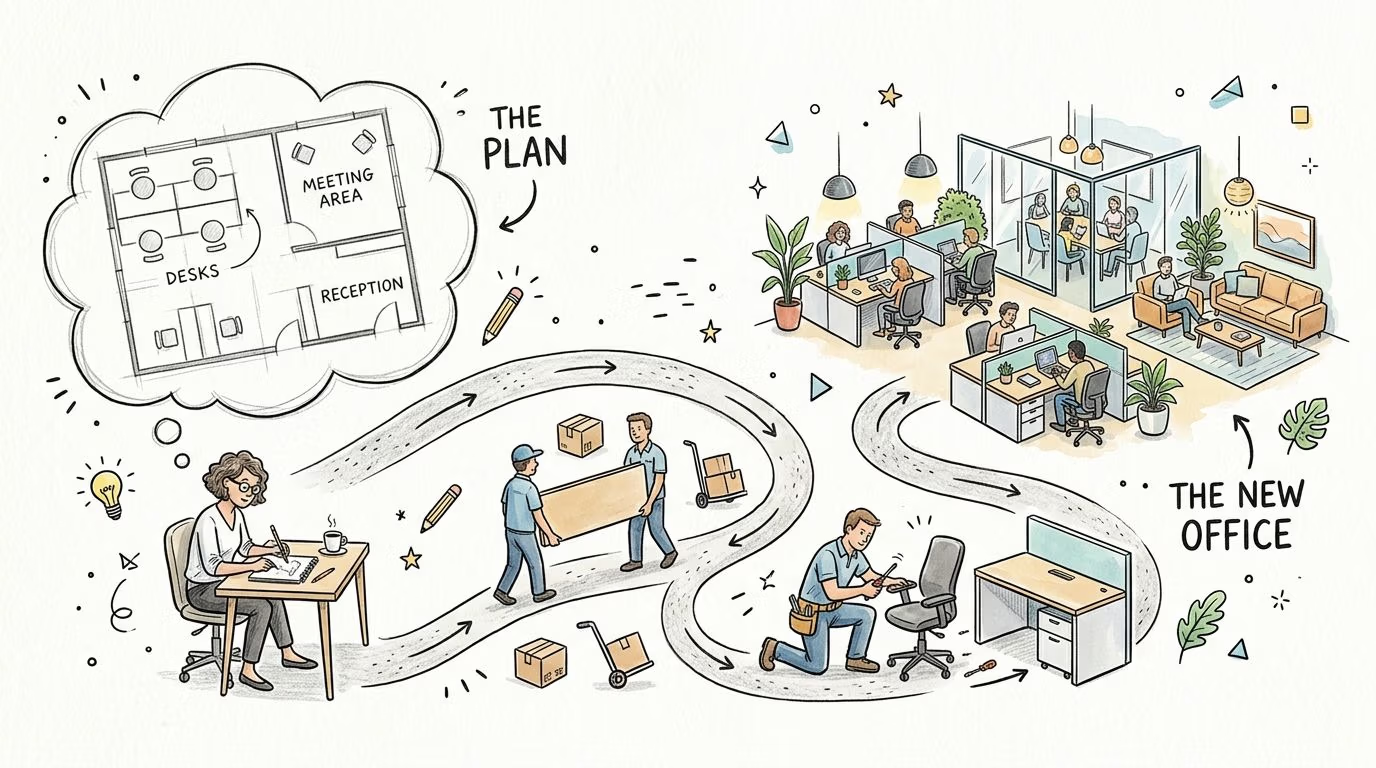
A furniture project feels more manageable when the steps are clear. Most business owners don't need a dramatic redesign story. They need to know what happens first, what decisions come next, and how much support they'll have when the furniture arrives.
The first conversation sets the tone
A good project usually starts with a no-pressure discussion about how the office functions today and what isn't working. Some businesses need a cleaner reception experience. Others need stronger task seating, a better conference room, or a more efficient floor plan after adding staff.
That early stage should feel collaborative. Tanger's commitment to professional design is not a new trend; their in-house design staff has been serving the Bellefontaine community and helping businesses with their layouts since 1964, providing decades of localized expertise. That kind of design history matters because most office problems are practical before they're visual.
Owners typically move through a few core decisions:
- Review the space: Measurements, doors, windows, outlets, and traffic paths all affect the plan.
- Identify priorities: Daily workflow, storage, privacy, comfort, and customer-facing areas get ranked.
- Choose layout direction: Open plan, private workstations, shared seating, or a blended approach.
- Select products and finishes: At this point, function and appearance finally meet.
The smoothest projects happen when layout decisions come before finish decisions.
From approval to move-in day
After the plan is approved, the value of a full-service partner becomes evident. Delivery timing, room sequencing, and installation details all need coordination so the office can keep operating as normally as possible.
That often includes:
- Scheduling around business hours: Some teams need a phased setup to limit interruption.
- Protecting existing areas: Flooring, walls, and entryways should be considered during delivery.
- Assembling and placing furniture correctly: That saves staff from handling heavy lifting or sorting parts.
- Checking the final fit: Chairs, storage, and tables need to work in real conditions, not just on paper.
Businesses planning a broader move may also need to think beyond furniture. For example, this guide on managing IT assets during an office move is a helpful reminder that screens, cables, old devices, and data-sensitive equipment need their own plan too.
For owners who want a clearer picture of setup support, office furniture installation services for business spaces show what a professional handoff can look like. Good installation isn't just assembly. It's the moment the office becomes usable.
Commercial Customization for a Unique Brand Identity
A lot of people hear the word “custom” and think of residential design first. They picture a sofa, a fabric book, and a living room. In commercial work, customization matters just as much. It shows up in different ways.
A front desk can shape the first impression of a business. A conference table can influence how people meet, spread out documents, and use technology. Guest seating can signal whether a company feels polished, welcoming, traditional, or modern.

Custom doesn't only mean residential
Commercial customization usually focuses on fit, performance, and consistency.
That may include:
- Reception choices: A business can choose finishes and dimensions that suit the room instead of forcing a standard unit into place.
- Conference solutions: Table size, shape, and seating count can match the way the team meets.
- Guest and lounge seating: Fabrics and frames can be selected for high-traffic areas where durability matters.
- Private office pieces: Storage, desk footprint, and return placement can support specific work habits.
Quality partnerships yield practical outcomes. Tanger's custom order program is grounded in partnerships with premier brands like Smith Brothers of Berne and Flexsteel, allowing for tangible tailoring of fabrics, finishes, and configurations rather than vague promises of customization.
That same thinking is familiar to shoppers looking at custom sofas Ohio families often consider for long-term use at home. The difference in a commercial setting is that every choice also has to stand up to repeat use, easier maintenance, and a broader mix of users.
Material and configuration choices shape daily use
Office customization isn't only about appearance. It affects performance.
Consider a few common examples:
| Space | Useful custom decision | Why it matters |
|---|---|---|
| Reception | Finish and footprint | Helps the desk fit the room and reflect the business identity |
| Conference room | Table shape and seating plan | Improves sightlines, movement, and meeting flow |
| Waiting area | Upholstery and cushion construction | Supports durability and easier upkeep |
| Private office | Storage mix and desk layout | Keeps daily tasks close at hand |
A custom piece earns its keep when it solves a room problem that a standard size can't.
For small-to-medium businesses, that's often the best reason to customize. The goal isn't luxury for its own sake. The goal is fewer compromises.
The Local Advantage Over Big Box Providers
Small and medium-sized businesses usually don't need a one-size-fits-all process. They need someone to notice what's different about their space and their day-to-day work.

What changes when the partner is local
A local full-service partner tends to work differently from a distant catalog or online-only seller.
The biggest differences often show up in the details:
- Accountability: The team delivering and installing is part of the same relationship, not a handoff.
- Familiarity with the area: Local businesses in Bellefontaine and Logan County often face similar building types, access points, and space constraints.
- Service after the sale: If something needs attention later, there's a clearer path for in-house service requests.
- A calmer buying experience: Owners can ask questions, compare options, and make decisions without feeling rushed.
A family-owned business often approaches the project with a longer view. The transaction matters, of course, but the ongoing relationship matters more. That's especially valuable when a business expects to update one office now and another later.
Why small-to-medium projects need attention too
Many business owners feel overlooked by larger systems. Their project matters to them, but it may not be large enough to command careful planning in a national process.
That gap is exactly where a local provider can shine. Tanger's Commercial Office division specializes in small-to-medium projects, offering services like full CAD drawings that are often reserved for much larger clients at national chains, ensuring every local business gets professional-grade planning.
For owners comparing options, commercial office furniture suppliers serving local businesses can help frame what support should look like before, during, and after installation.
Local reliability often looks simple from the outside. It's a returned phone call, a cleaner installation day, and service that doesn't disappear once the invoice is paid.
That's not flashy. It's just useful.
Smart Budgeting With Financing and Price Guarantees
Budget questions show up in almost every office project, and they should. Furniture affects cash flow, timing, and how much a business can improve at once.
The mistake many owners make is treating the project as a choice between “cheap now” and “expensive later.” A better way to think about it is this. What arrangement gives the business a usable office without creating avoidable strain on the budget?
A better way to think about office budgets
The strongest budgeting plans usually separate wants from operational needs. Ergonomic work chairs for daily use may belong in the must-have category. A secondary accent piece may not.
That's where financing can help. Like many trusted independent retailers, Tanger's uses a combination of a Low Price Promise and flexible financing plans to help local families and businesses manage larger investments, ensuring quality remains accessible. For readers who want outside context on financing structures, this overview of Noreast Capital equipment financing gives a useful look at how businesses often evaluate payment options.
A practical budget conversation usually includes:
- Immediate essentials: Workstations, task seating, storage, and reception basics.
- Phased additions: Pieces that can be added after the primary setup is complete.
- Durability value: Better construction can reduce the frustration of replacing short-term purchases.
- Cash flow comfort: Payment structure matters almost as much as total project cost.
What owners usually want to protect
Most business owners aren't only trying to spend less. They're trying to avoid waste.
A poor fit can cost time, reordering, staff frustration, and another round of setup. That's why a Low Price Promise works best when paired with planning and support. Value isn't only the lower number on paper. Value is getting the right solution the first time.
For businesses or households exploring payment flexibility, furniture financing options for larger projects make it easier to spread out investment while keeping standards high. The same practical mindset helps across categories, whether someone is refreshing an office, shopping for Bellefontaine furniture, or trying to balance comfort and value in a mattress store Logan County purchase.
Your Office Furniture Questions Answered
Business owners usually end up with a handful of practical questions once the planning starts. The answers below help clear up the most common ones.
Frequently Asked Questions
| Question | Our Approach |
|---|---|
| How long does an office furniture project take? | It depends on the room, the product mix, and whether the project includes custom pieces or phased installation. The clearest timeline usually comes after the layout and product selections are finalized. |
| Can existing furniture stay in the plan? | Yes, if the pieces still serve the space well. A thoughtful plan can often incorporate selected existing items while improving flow and function around them. |
| Is customization only for large offices? | No. Smaller businesses often benefit the most from customization because their rooms have less margin for sizing mistakes. |
| What matters most in a first office update? | Layout, daily comfort, and durability usually matter more than chasing a certain look. Once those are right, the room tends to feel better almost immediately. |
A few final points that help
A business doesn't need to solve everything in one meeting. It only needs a clear starting point.
The best office furniture services process usually combines three things:
- Planning that reflects real workflow
- Product choices that suit the space
- Delivery and service support that continue after installation
That's why the phrase Office Furniture Services Inc should mean more than buying furniture from a list. For a small-to-medium business, it should mean having a dependable local partner who can help shape a better workday from the front door to the back office.
Visit Tanger's Furniture showroom in Bellefontaine to see custom options in person or browse the collections online to start the journey. Businesses can explore professional planning support, local delivery, in-house service requests, and solutions that reflect a true Love Their Home philosophy across both home and office spaces. Flexible payment options are available for any project, backed by the Low Price Promise, so quality stays within reach. Have a specific design question? Contact the design staff today or join the Love Your Home Club for exclusive offers, expert tips, and practical inspiration delivered to the inbox.