What Is Memory Foam Mattress? a Complete Guide


A restless night usually starts the same way. Someone rolls over for the fifth time, flips the pillow to the cool side again, and starts wondering whether the mattress is the problem.
That question comes up often around Bellefontaine and across Logan County. Families want something that feels comfortable right away, but they also want a mattress that still supports them years later. First-time homebuyers want clear answers, not showroom jargon. Business owners furnishing guest spaces or apartments want durability without guesswork.
That's where a plain-English guide helps. With family-owned roots going back to 1946 and design help shaped by a history that reaches back to 1964, the goal has always been simple: help neighbors understand what they're buying so they can Love Their Home a little more, starting with better sleep. This article keeps that same no-pressure approach and answers the question many shoppers type into search bars every day: What is a memory foam mattress?
Table of Contents
- Your Journey to a Better Night's Sleep Starts Here
- What Is a Memory Foam Mattress Really Made Of
- The Real Pros and Cons of Sleeping on Memory Foam
- Navigating the Different Types of Memory Foam
- How to Choose the Right Memory Foam Mattress for You
- Memory Foam vs Other Mattresses and Why Local Matters
Your Journey to a Better Night's Sleep Starts Here
Why this mattress question matters
A mattress isn't just another household purchase. It affects how someone wakes up, how a guest room feels, and whether a bedroom becomes a place to recharge or a place to tolerate.
In a local furniture store, the pattern is familiar. One shopper says a mattress feels fine for an hour but not through the night. Another says a partner's movement keeps waking them up. A young family wants something supportive and practical. A budget-conscious couple wants quality sleep without stretching the monthly budget too far. Those are real home questions, not luxury questions.
For many of those shoppers, memory foam enters the conversation because it promises a softer, body-hugging feel. But that phrase can be confusing. Some people hear “soft” and think it must be unsupportive. Others hear “foam” and assume all foam mattresses feel the same. They don't.
A good mattress choice isn't about chasing trends. It's about finding the right support, feel, and fit for the way a household actually lives.
What shoppers usually want to know
Readers aren't asking for a chemistry lesson. They want practical answers:
- What does memory foam feel like when someone lies down for a full night, not just five minutes in a showroom?
- Does it sleep hot or stay comfortable?
- Will it last long enough to feel like a smart investment?
- Is it right for side sleepers, back sleepers, or lighter-weight sleepers?
- How does it compare with innerspring, latex, or hybrid designs?
Those questions matter in every kind of home. They also matter in professional spaces. A business owner furnishing an office guest suite, rental, or waiting area may care less about trend names and more about reliable performance, local delivery, and service after the sale. That practical mindset fits Bellefontaine and Logan County well.
A helpful mattress conversation should feel like a good showroom visit. Clear answers. No pressure. Room to compare options. Flexible payment choices if a project needs them. That same approach shows up across the store, whether someone is shopping for a mattress, Living Room furniture, Commercial Office solutions, or even dependable home essentials like Speed Queen laundry.
What Is a Memory Foam Mattress Really Made Of
From aircraft cushions to bedrooms
The short answer is simple. A memory foam mattress uses a type of foam that reacts to heat and pressure, then slowly returns to shape after weight is removed.
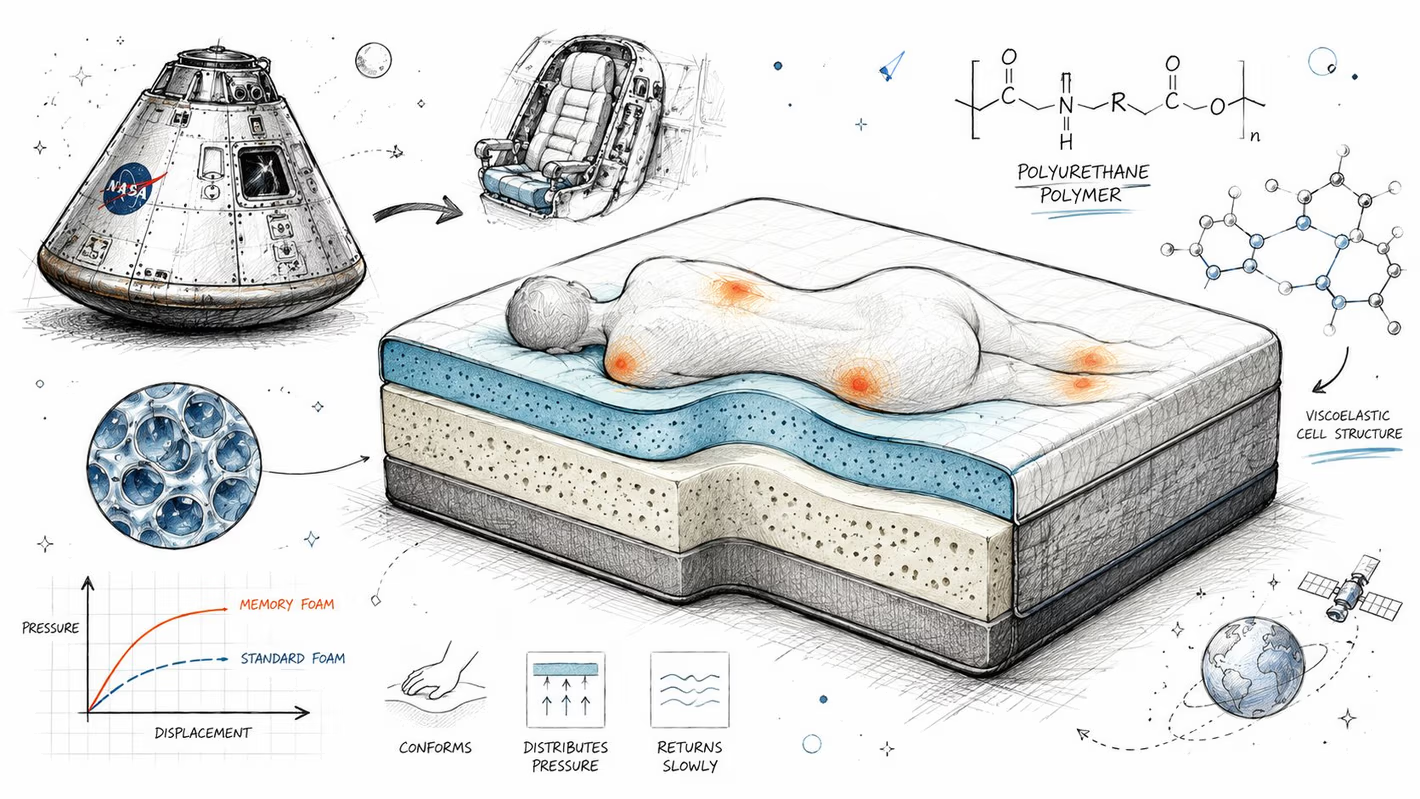
Its story starts in aerospace, not the bedroom. According to Foam Facts on when memory foam was invented, memory foam was invented in 1966 under a NASA contract to improve aircraft cushion safety. Originally called “temper foam,” this open-cell material was designed to absorb shock and evenly distribute weight by softening with body heat and slowly returning to its shape.
That history helps explain why the material feels so different from a basic foam pad. It wasn't created just to feel soft. It was created to manage force.
For shoppers who enjoy the backstory, this history of mattresses from straw mats to memory foam gives helpful context on how sleep surfaces evolved over time.
How the foam responds to the body
The easiest way to picture memory foam is to think about pressing a hand into bread dough and watching the shape rise back slowly instead of springing up at once. Memory foam does something similar, though in a much more controlled way.
Here's what happens in plain language:
- Body heat softens the material. The foam responds where the sleeper touches it.
- Pressure shapes the surface. Hips, shoulders, and other heavier points sink in more than lighter areas.
- The foam recovers slowly. Instead of bouncing back right away, it returns gradually.
That's why people often describe memory foam as a “hug” or “cradle.” It molds around the body rather than pushing back sharply.
Practical rule: Memory foam is less about bounce and more about contouring. Shoppers who want a floating, springy feel usually notice that difference right away.
This also explains why some households love it. A sleeper with sore shoulders may enjoy that cushioned contact. A couple may like that the surface absorbs movement instead of sending it across the bed. The material's basic job is to spread weight and soften pressure points, not create a lively, lifted feel.
The Real Pros and Cons of Sleeping on Memory Foam
Where memory foam shines
Memory foam has earned its place because many sleepers enjoy how it cushions the body and quiets motion. One person can shift position without the whole bed reacting the way a more spring-driven mattress might.
That feel can be appealing in a busy household. If someone wakes easily when a partner moves, the foam's motion-absorbing nature can make the bed feel calmer. Households often also like the pressure-relieving “sink” around shoulders and hips.
For readers comparing sleep comfort across the whole home, pet owners may also appreciate this outside look at advice on a healthier pet bed, since some of the same comfort questions come up for older dogs and pressure-sensitive joints.
Where shoppers need to be careful
Memory foam isn't perfect for everyone. A balanced view matters more than hype.
According to The Sleep Company's overview of memory foam drawbacks, a key drawback of traditional memory foam is heat retention due to its high density and thermal-softening mechanism. Another is its slow recovery time of 5-10 seconds, which creates excellent motion isolation but lacks the responsiveness of other mattress types. For infant safety, memory foam is not recommended due to suffocation risk and potential VOC off-gassing.
That last point deserves special care. Memory foam may be discussed for adult comfort, but it isn't recommended for babies.
| Memory Foam At a Glance | |
|---|---|
| Pros | Cons |
| Cushions pressure points | Traditional versions can retain heat |
| Absorbs movement well | Slow response can feel less easy to move on |
| Creates a close, body-conforming feel | Some new mattresses may have off-gassing odor |
| Can feel especially comfortable for couples who notice motion transfer | Not recommended for infant sleep |
A common source of confusion is this: a feature can also be a drawback. The same slow response that helps with motion isolation can make some sleepers feel “stuck” when turning over.
For anyone shopping because of aches or sleep posture concerns, this guide on finding the best mattress for back pain can help narrow the decision further.
Navigating the Different Types of Memory Foam

Walk through a mattress gallery and a lot of memory foam beds can start to sound the same. Then you lie down on two of them, and one feels warm and huggy while the other feels lighter, cooler, and easier to move on. That difference usually comes from the type of memory foam in the comfort layers.
Traditional memory foam
Traditional memory foam is the original version many shoppers picture first. It reacts to heat and pressure, softens where your body presses in, and creates that close, slow-responding cradle memory foam is known for.
A simple way to picture it is warm cookie dough versus springy bread. Traditional memory foam has more of that slow, molding quality. For sleepers who want strong contouring around the shoulders and hips, that can feel relaxing at the end of a long day.
In our Bellefontaine showroom, families often describe this style as the one that lets them “settle in” for the night.
Cooling and more breathable options
Mattress makers have adjusted the original formula to change how memory foam feels and how air moves through it. The names on the tag matter, but the goal is practical. Better temperature control, easier movement, and comfort that still gives pressure relief.
Here are the main versions you'll see:
- Gel-infused memory foam includes gel within the foam or in nearby comfort layers to help pull heat away from the body and create a cooler surface feel.
- Open-cell memory foam has a structure with more room for air to circulate, which can make the mattress feel less stuffy than older, dense foams.
- Plant-based memory foam replaces part of the petroleum-based ingredients with plant-derived content. Depending on the build, it may feel a bit more responsive and less heavy.
The label alone does not tell the whole story.
A mattress with gel foam can still sleep warm if the cover traps heat or the support layers do not allow much airflow. An open-cell design can feel quite different from one brand to another because layer thickness, density, and firmness all change the result. That is why our family-owned store has always encouraged people to test mattresses in person, ask questions, and compare the whole build instead of shopping by buzzword.
Some shoppers come in asking for memory foam, but after a few minutes of testing beds, they realize they want pressure relief without the deepest sink. Those sleepers often prefer a foam comfort layer paired with coils. If that sounds familiar, it helps to read about what a hybrid mattress is and how it differs.
Long-term ownership matters too. The foam type affects feel, but care affects lifespan. If you bring one home, it helps to learn about cleaning your memory foam mattress so the surface stays fresher and the materials hold up better over time.
For many Bellefontaine families, the best choice is not the foam with the fanciest name. It is the one that feels comfortable at bedtime, supports good sleep posture through the night, and still feels like a mattress you will enjoy living with years from now.
How to Choose the Right Memory Foam Mattress for You

What density and firmness really mean
Shoppers often mix up firmness and density, but they aren't the same thing.
Firmness is the immediate feel. Soft, medium, or firm describes what someone notices first when lying down. Density is more about how much material is packed into the foam, which often relates to durability and support character over time.
A helpful benchmark comes from Sleep Foundation's explanation of memory foam, which notes that a defining mechanical characteristic of memory foam mattresses is their slow recovery time, averaging 5-10 seconds after force removal. That delayed return is part of what creates the contouring effect people either love or dislike.
When shopping, it helps to think in layers:
- Surface feel matters for first impressions.
- Support underneath matters for spinal position through the night.
- Long-term hold matters after months and years of use.
Matching the mattress to the sleeper
Body weight changes how memory foam performs. That point gets overlooked far too often.
For lighter sleepers, softness can become too much of a good thing. According to this discussion of memory foam support for lighter individuals, for lighter individuals under 130 lbs, memory foam's heat-activated softening can sometimes cause a loss of support as the mattress deforms too much. This is why considering higher-density foams above 4 lb/ft³ or 60 kg/m³ is important for maintaining proper spinal alignment.
That surprises many shoppers, because they assume lighter body weight always means softer is better. Sometimes the opposite is true. If the foam warms and deforms too easily, the sleeper may lose alignment instead of gaining comfort.
A simple shopping checklist helps:
- Side sleepers often focus on shoulder and hip cushioning.
- Back sleepers usually need contouring that still keeps the midsection supported.
- Combination sleepers may prefer a memory foam design that's easier to move on.
- Lighter sleepers should pay close attention to support hold, not just plushness.
- Hot sleepers may want to test cooling-oriented foam builds first.
For upkeep after the purchase, this guide to cleaning your memory foam mattress offers practical care tips that can help keep the sleep surface fresh.
For a more personalized starting point, how to choose the right mattress for your sleeping style is a useful next step.
Memory Foam vs Other Mattresses and Why Local Matters

How memory foam compares in everyday use
A lot of Bellefontaine families come into the store with the same question. They know memory foam feels different in the showroom, but they want to know how that difference plays out after months and years of real sleep.
The simplest way to understand it is to compare how each mattress category responds when you lie down and when you move. Memory foam tends to hug the body more closely, which helps reduce motion transfer when one partner turns over. Innerspring models usually feel springier and more familiar. Latex often feels quicker and more buoyant. Hybrids try to blend the pressure relief of foam with the pushback of coils.
That means memory foam is often a strong fit for shoppers who want quieter movement, closer contouring, and a more cushioned feel around the shoulders, hips, and lower back. Shoppers who prefer a lifted, easy-to-turn feel may lean toward latex or a hybrid instead.
Durability matters too. Foam quality is not just about how soft a bed feels on day one. Higher-quality foams usually hold their shape and support better over time, which matters if you want your mattress to keep helping you sleep well instead of slowly developing dips or weak spots.
Anyone bringing a mattress into a new house, upstairs bedroom, or apartment should also review these essential mattress protection tips. A mattress can be damaged before the first night if it is bent, dragged, or exposed during transport.
If you are still deciding between a cushioned top feel and a body-contouring foam feel, our guide to pillow top vs memory foam mattresses can help clarify the difference.
Why local service changes the experience
A mattress purchase follows you home. That is why local service matters so much.
Families in Logan County often tell us the hard part is not finding a mattress they like for five minutes. The hard part is choosing one they will still like after a full night, a busy week, and a few Ohio seasons. That is where an experienced local team helps. You can test beds in person, ask plain questions about feel and support, and get advice from people who work with local households every day, not a call center reading from a script.
Tanger's Furniture serves shoppers online and in-store with mattress options, local delivery, in-house service requests, financing options, and a Low Price Promise. That support can make a real difference for a first home, a guest room update, a rental property, or a larger furnishing project.
The same is true for families working on more than one room at a time. Shoppers looking at Bellefontaine furniture or planning custom sofas in Ohio are often trying to make smart whole-home decisions, not isolated purchases. Spreading out costs with Financing options can make that process easier, especially when comfort, timing, and budget all need to work together.
Good sleep is personal. Good service should be personal too.
For a family-owned store that has helped Bellefontaine families sleep better for generations, the goal is not just to explain memory foam. It is to help you choose a mattress that fits your body, lasts well, and makes home feel better every night. Visit the showroom in Bellefontaine to see custom options in person or browse collections online to start the journey with Tanger's Furniture.