Ottoman Leather Chair Buying Guide for Bellefontaine Homes


A family can love the look of a leather chair and still feel stuck on the key question, where will it fit, how will it feel, and will the ottoman help the room work better? That is usually the moment the purchase changes from a style choice into a planning choice. For Bellefontaine homes, that shift matters, because a well-chosen ottoman leather chair can soften a corner, give tired legs a place to rest, and make a living room feel finished without crowding the walkway.
What an Ottoman Leather Chair Actually Is
A family on a Bellefontaine Saturday often starts with one simple move. A chair gets angled toward the window, a lamp gets nudged over, and the corner starts asking for one more piece that helps the room make sense. An ottoman leather chair fits that job as a matched relaxation station.
An ottoman is a low, upholstered seat with no back or arms. It usually serves as a footrest, extra seat, or soft surface when topped with a tray, which is why leather ottomans show up so often in flexible living rooms. Some versions also add storage or a hollow interior for hidden clutter. A leather version changes the feel right away, since it usually reads a little more structured and a little more grounded than fabric.
The chair and ottoman work because they support each other. The chair holds the body, the ottoman supports the lower legs, and together they create one resting zone instead of two separate pieces competing for attention. Tanger's round leather ottoman guide shows how that pairing often shapes a room, not just a style choice, which matches the way many shoppers live with furniture at home.
| Common Ways an Ottoman Leather Chair Is Used at Home | What It Looks Like in the Room | Why Leather Works Well |
|---|---|---|
| Footrest | Chair angled toward a lamp or TV, ottoman set close in front | Easy to wipe, visually calm |
| Extra seat | Pulled slightly forward when guests stop by | Holds up better to repeated use than many soft fills |
| Soft coffee-table surface | Tray on top, books or a mug nearby | Clean lines and a firmer look help the room stay tidy |
Leather Types and Construction Choices Explained
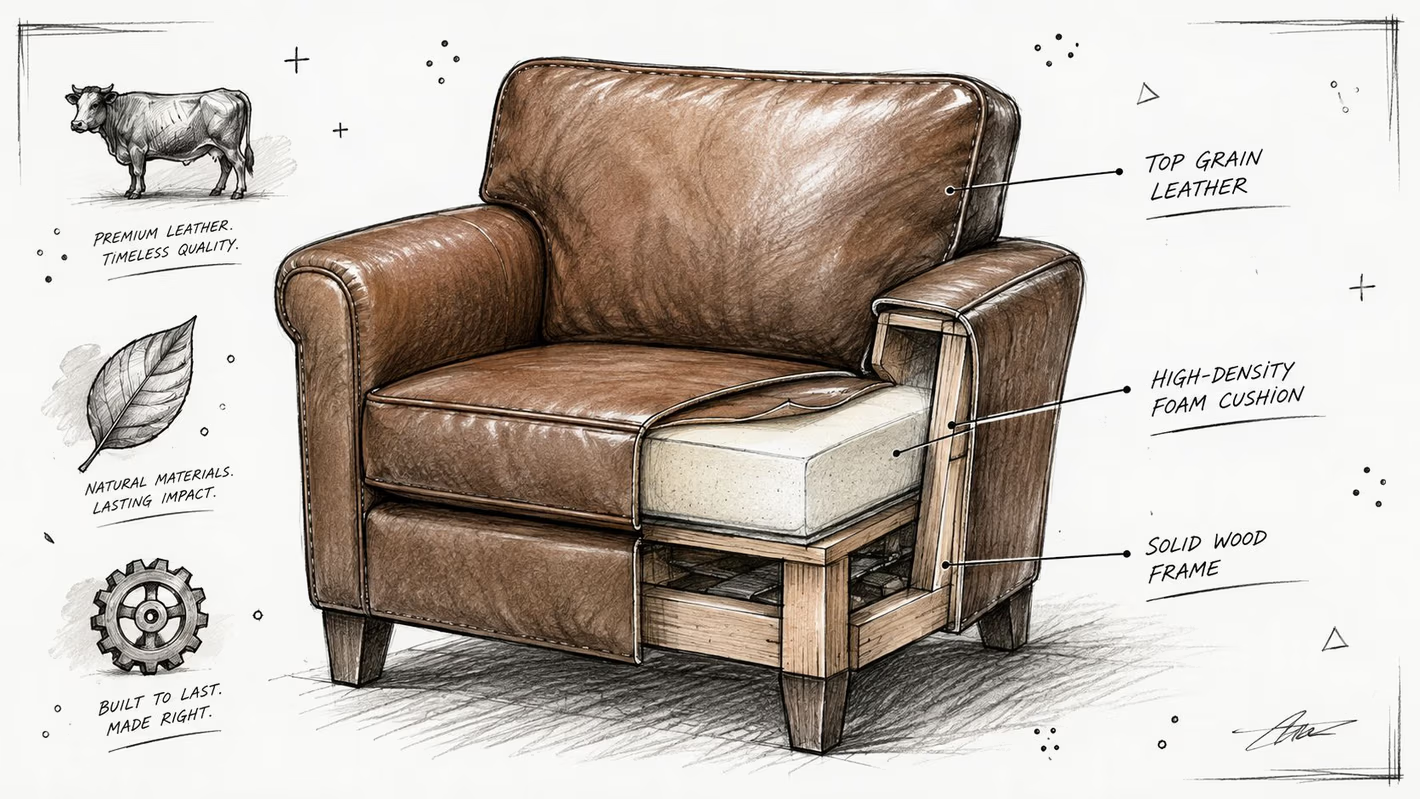
Shopping gets easier once the words start to mean something practical. Leather furniture often gets discussed as if the cover tells the whole story, but the frame and cushion core matter just as much because they decide whether the piece feels supportive or starts slumping after everyday use. A buyer looking at an ottoman leather chair should think in layers, with each layer doing a different job.
Start with the leather cover
The leather on top sets the first impression, and it also shapes how the chair ages in a living room. Genuine leather usually brings a more natural feel and a surface that can develop patina with use. Bonded and faux options can still make sense when budget or easy upkeep matters more than long-term aging.
A simple comparison helps here. Top-grain leather behaves more like a well-used baseball glove, flexible and familiar in the hand. Bonded leather is closer to a sturdy paperback cover, serviceable, but built with a different kind of wear in mind.
Then look at what sits underneath
The hidden structure is what keeps the chair honest over time. High-density foam tends to hold shape better than softer fill, sinuous springs help the seat resist sag, and solid or engineered hardwood frames give the whole piece a steadier base. The right mix matters because a small ottoman still has to support real use, whether it is holding tired feet, acting as a spare seat, or taking the weight of a serving tray.
For a closer look at how covering materials affect feel, upkeep, and daily use, Tanger's upholstery material guide is a useful place to compare the main options before you decide.
Practical rule: if the comfort story sounds great but the frame description is vague, the piece may feel fine in the store and tire out quickly at home.
A shopper planning a room for years, not just for the first weekend, can also use reupholstery guidance on leather yardage and frame choices as a reminder that the structure under the cover shapes how much work the furniture can take.
Right-Sizing the Chair and Ottoman for Your Room
A beautiful chair can still be the wrong chair if the room has to squeeze around it. Start with the floor plan. Ask how much space the set can use without crowding a doorway, pinching a side table, or making the room feel full before anyone sits down. With an ottoman leather chair, size is where comfort either settles in or starts causing daily frustration.
Measure the chair, then map the walking path
A useful way to begin is with the room itself, not the finish. Measure the wall-to-wall span, note the door swing, and mark the walking path where people pass through the room. Tanger's furniture measuring guide gives you a simple way to turn those numbers into a plan you can bring to the showroom, and that helps a first-time buyer avoid guessing from memory or from a quick glance across the floor.
Several modern lounge-recliner sets cluster around an armchair width of about 29.5 to 32.3 in, a reclined depth of about 41.75 to 46.1 in, and an ottoman footprint near 18 to 20 in wide by 16 to 17 in deep. Those measurements matter because they describe what the furniture asks from the room before it ever comes home. In a compact Bellefontaine apartment or a smaller Logan County family room, that footprint can separate a calm layout from one that feels pinched.
A helpful starting layout is straightforward. Place the ottoman about 12 to 18 inches from the chair, and leave at least 30 inches of circulation space around the set when the room allows it, since the ottoman needs room to support the legs without making the seating area feel cramped. Many designs also pair a 17 to 19 in seat height with an ottoman around 15 to 16 in high, which helps keep the lower leg closer to horizontal while seated.
Bring the room measurements, the door swing, and the nearest wall distance. A showroom conversation goes much faster when the floor plan is already on paper.
For a local shopper, the useful next step is to bring those numbers to the showroom and let them be translated into a real layout. Tanger's local team can help judge whether the set leaves room to walk, turn, and sit without the room feeling crowded, and that kind of fit check is easier to do before delivery than after.
Genuine Versus Faux Leather in Everyday Use
A leather choice should match the way the room is used. A quiet formal sitting area, a sunny front room, a den with pets, and a family room that doubles as homework space all ask for different levels of durability and maintenance. For an ottoman leather chair, the right answer is rarely about prestige, it's about fit for the household.
Match the material to the room
Genuine leather makes the most sense when the goal is a piece that can age with the home and pick up character over time. It tends to feel like a better fit for a room where the chair gets regular, careful use and where a warmer patina is part of the appeal. Faux and bonded leather can be a practical option in busier spaces or for budget-conscious buyers who want the leather look without leaning as hard on long-term aging.
Think about daily habits, not just the finish
Sunlight matters. Spills matter. Pet claws matter. A front room that gets a lot of light needs a different upholstery mindset than a shaded reading corner, and a chair used as an extra seat will wear differently from one used mostly as a footrest. A good showroom conversation should cover those use patterns up front, because upholstery is one of the first choices that can be customized in a custom order program, and it shapes everything that follows.
A few questions help narrow it down:
- Will the chair sit in direct light? That pushes the conversation toward care, color stability, and placement.
- Will kids or pets use the ottoman as a perch? That makes surface durability and cleanup more important.
- Is the room formal or everyday? That usually decides whether character or practicality matters more.
- Does the buyer want easy styling or long-term aging? That separates appearance-first choices from longevity-first choices.
For shoppers comparing full-grain options, Tanger's full-grain leather ottoman guide is a practical reference point for thinking through where genuine leather earns its keep.
Care Habits That Keep Leather Looking Its Best
Leather care works best when it becomes a small routine instead of a big project. A quick dusting, a gentle wipe, and a little attention to where the chair sits can prevent most of the annoying aging problems that show up later. That approach fits an ottoman leather chair especially well, because the piece gets touched in the same few places over and over.
Simple habits that protect the surface
Weekly care can stay easy. Dust the chair, wipe it with a soft cloth if needed, and avoid harsh cleaners that strip the finish or leave the surface sticky. Keep the piece away from direct heat sources and strong sun when possible, because both can dry leather out faster than a normal living room would suggest.
Seasonal care matters in Ohio too. Dry winter air can make leather feel stiff, while humid summer weather can change how a room smells and how finishes age, so a light conditioning routine during the year is usually smarter than waiting for visible cracking. If a cushion starts looking tired, or if a stiff patch appears where people sit the most, that is usually the point to ask for service instead of guessing.
For more detailed cleaning basics, Tanger's upholstery cleaning guide is a solid companion before any stronger treatment is attempted. For homeowners who want outside help with deeper care, hiring leather cleaning specialists can make sense when the piece needs a careful reset rather than a quick wipe.
The best leather care is boring on purpose. Small habits repeated often usually protect the surface better than a big rescue job once the damage has already settled in.
Customizing the Set Through Tanger's Design Staff
A custom order conversation feels a lot calmer when it starts with a room and not a catalog. One Bellefontaine couple may need a compact chair for a reading corner, while another household wants a larger statement piece that still leaves room to pass by the sofa. The right answer changes with the room, and that is exactly why a ottoman leather chair can be worth planning carefully.
Shoppers looking at select Smith Brothers of Berne and Flexsteel pieces can watch for the customizable icon, then work with trained specialists to tailor fabrics, finishes, and configurations through an in-showroom visit or a digital request form. More information about those brands is available through Smith Brothers of Berne and Flexsteel, but the useful part is simpler than brand language suggests. The choices usually include leather grade, finish, nailhead trim, cushion feel, and ottoman shape.

How a showroom conversation tends to go
A customer brings a phone photo of the room, a tape measure reading, and maybe a swatch from another piece already in the house. The design staff then helps compare proportions, finish choices, and comfort levels, so the chair and ottoman don't look stranded once they arrive. That same consultative process works just as well for a condo corner as for a larger lounge, because fit matters at every scale.
Tanger's design staff has served the area since 1964, which gives the process a steady, local rhythm instead of a rushed sales-floor feel. A shopper who wants to start online first can do that too, then use the showroom visit to narrow the final details.
Pricing, Delivery, and the Next Step
A good chair still has to fit the budget, the calendar, and the front door. That is why the last decision in an ottoman leather chair purchase is often less about color and more about making the whole project doable without stress. For families, that usually means asking about value, payment options, and who handles the heavy lifting once the order is placed.
Tanger's Furniture keeps that part straightforward. The store is locally owned, has served Bellefontaine since 1946, and offers a Low Price Promise, flexible financing, professional local delivery, and the Love Your Home Club for exclusive offers and design tips (Tanger's Furniture information). That combination matters because a custom piece can feel more reachable when payment is spread out, and delivery is handled by people who know how to set the piece where it belongs.
Commercial buyers can use the same mindset for waiting rooms, private offices, or reception areas. The question is still fit, durability, and room planning, only with a different traffic pattern and a different kind of wear. Residential shoppers and business owners both benefit from the same no-pressure approach, one that treats the room as the starting point instead of the sale.
Join the Love Your Home Club if design ideas and exclusive offers sound useful, especially when a room refresh may take more than one step. For shoppers balancing value with style, the goal is simple, a chair that works now and still makes sense after the room changes around it.
Visit Tanger's Furniture in Bellefontaine to see custom options in person or browse collections online to start your journey. Have a specific design question? Contact the design staff today or join the Love Your Home Club for expert tips delivered to your inbox.