Pillow Top vs Memory Foam: A Tanger’s Furniture Guide

A mattress question usually starts the same way in Logan County. Someone wakes up stiff, tosses the blankets back, and wonders whether the problem is stress, age, the way they slept, or the bed itself. By the time that happens a few mornings in a row, the question becomes simpler. Is the mattress helping, or is it making rest harder?
That's where the pillow top vs Memory Foam conversation gets confusing. The names sound like two equal categories, but they aren't the same kind of thing. One describes a surface style. The other describes a material. For shoppers trying to make a smart, long-term choice, that mix-up can lead to buying what sounds good in the store but feels wrong at home.
For families trying to stretch a household budget, renters planning the next move, or homeowners finally replacing an aging bed, a mattress is more than a comfort purchase. It affects how a bedroom functions and how a home feels every day. Around Bellefontaine, practical value matters. People want comfort, but they also want something that holds up through Ohio seasons, daily use, and real life.
A quick self-check helps before any shopping trip. If a bed has deep body impressions, feels uneven, or leaves a sleeper sore in the morning, it may be time to look over these signs it's time to replace a mattress. And when pain is already part of the picture, broader body-care guidance can help too, such as ways to get back pain relief in Quincy through movement and physical therapy support.
Table of Contents
- Is Your Mattress Working Against You?
- Defining the Contenders What Are Pillow Top and Memory Foam?
- A Detailed Comparison Feel Comfort and Performance
- Who Is Each Mattress Best For?
- Beyond the Bedroom Professional and Commercial Uses
- Your In-Store Testing Guide at Tangers Furniture
- Making Your Decision A Personal Mattress Checklist
Is Your Mattress Working Against You?
A mattress rarely fails all at once. More often, it changes little by little. A sleeper starts rotating positions more often at night. The lower back feels tight in the morning. One side of the bed seems better than the other. Those small annoyances add up.
In a local showroom, this often sounds familiar. A couple may walk in thinking they need “something softer,” but after a few minutes of talking, one person really wants pressure relief while the other wants less movement from a restless partner. Another shopper may say the bed feels cozy at first, but by early morning it feels hot and unsupportive. The mattress isn't just a bedroom item at that point. It's part of the daily routine, mood, and comfort of the whole home.
Common Signs the Bed May Be the Problem
- Morning soreness: Stiff shoulders, hips, or lower back can point to a surface that no longer cushions or supports evenly.
- Uneven comfort: If one area feels flatter or softer than another, wear may be changing how the body rests.
- More nighttime movement: Tossing and turning often means the body is searching for a better position.
- Heat buildup: Some sleepers notice that the bed feels warmer than it used to, especially during muggy Ohio nights.
A mattress doesn't have to be visibly broken to be the reason sleep feels harder.
That's why the pillow top vs Memory Foam decision matters. These two options can feel very different over the course of a full night, even when both seem comfortable for the first minute or two in a showroom. What helps a side sleeper relax may not help a stomach sleeper keep a straighter posture. What feels plush at first may soften faster over time.
For a mattress store in Logan County, the most useful starting point isn't brand jargon. It's helping people connect what they feel each morning to what the mattress is doing underneath them.
Defining the Contenders What Are Pillow Top and Memory Foam?
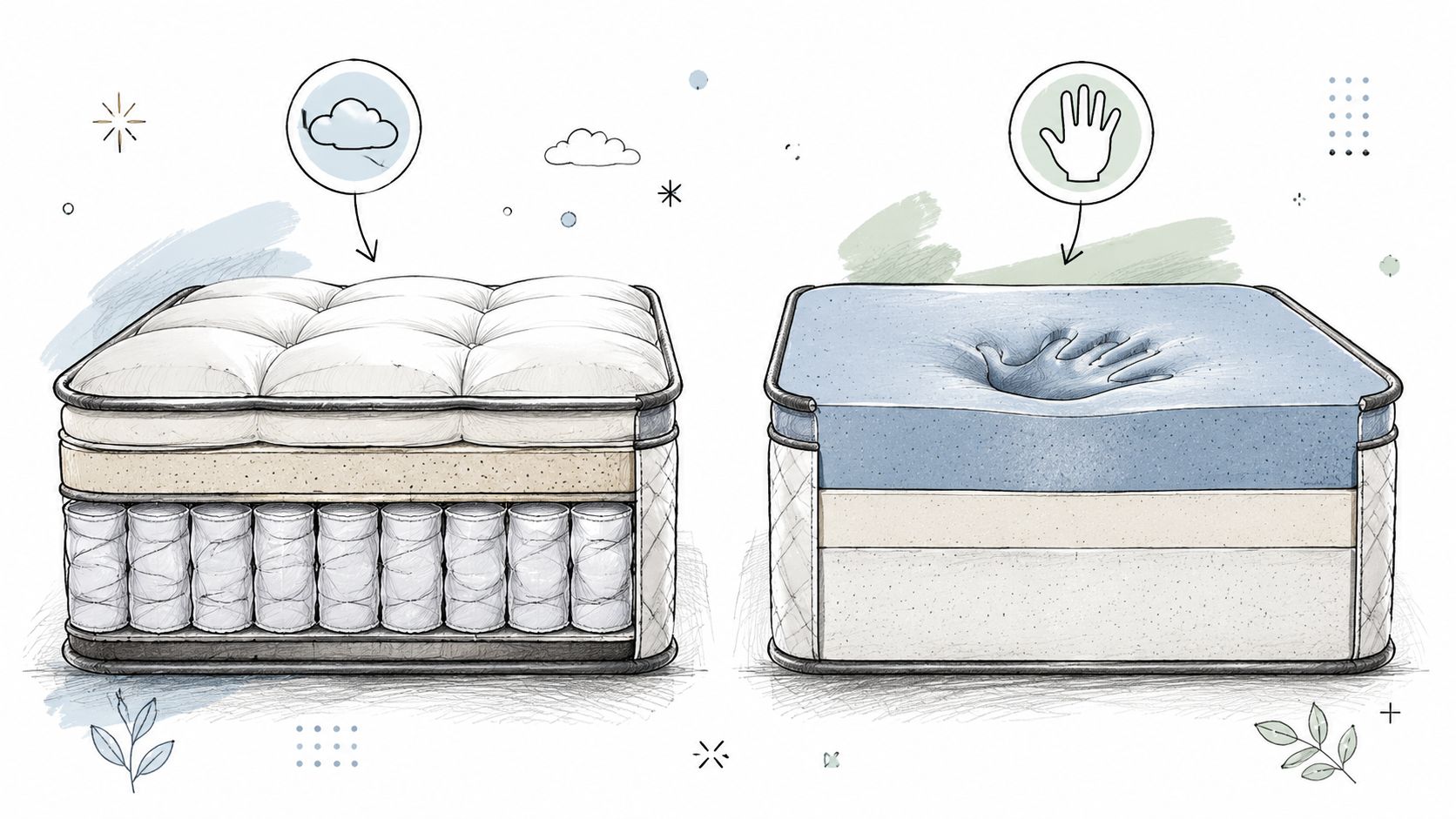
The biggest confusion in pillow top vs Memory Foam is simple. These terms sound like they belong in the same category, but they don't. One is about construction style. The other is about material.
One Is a Style and One Is a Material
A pillow top mattress has an extra cushioned layer sewn onto the top of the bed to create a softer, more plush surface. A memory foam mattress uses viscoelastic foam, a material developed in the 1960s under a NASA-funded project and later adapted for sleep products, while pillow top is not a separate foam technology at all. That distinction is explained in this overview of pillow top versus memory foam construction and origins.
A simple way to picture it:
- Pillow top: Like a jacket with extra quilting on the outside.
- Memory foam: Like choosing a fabric that reacts differently when pressure is applied.
That difference matters because a pillow top mattress can contain different comfort materials underneath its top layer. In some models, that top section may even include foam. So the comparison isn't always “soft versus firm.” It's often “plush sewn-on surface versus contouring foam response.”
For shoppers who want another useful term for comparison, a tight top mattress guide can help clarify how mattress surfaces are built.
Why Shoppers Mix Them Up
The confusion usually happens in everyday conversation. Someone says they want a “soft memory foam” bed, but what they may really mean is that they want a softer top layer. Another shopper says they don't like pillow top because they assume all plush beds lack support. That isn't always true either, because the support core underneath still matters.
Here's the easiest way to separate them in plain language:
- Pillow top answers: What does the top surface feel like when someone first lies down?
- Memory foam answers: How does the material respond to body weight, pressure, and heat?
Practical rule: If the question is about the stitched surface, think pillow top. If the question is about contouring behavior, think memory foam.
Once that distinction is clear, the rest of the decision gets easier. A shopper can stop comparing labels and start comparing what sleep feels like over a full night.
A Detailed Comparison Feel Comfort and Performance
A good mattress comparison should answer a simple question. How will this bed feel at 10:30 p.m., and how will it still feel at 5:30 a.m.?
That is where pillow top and memory foam often separate.
| Feature | Pillow Top | Memory Foam |
|---|---|---|
| What it is | A mattress construction style with an extra cushioned top layer | A foam material that contours under pressure and heat |
| First impression | Plush, soft, cushioned surface | Closer contouring, often more of a “sink in” feel |
| Surface response | More traditional mattress feel with a bit more lift | Slower, body-conforming response |
| Typical lifespan | Often wears sooner in the comfort layers | Often lasts longer in higher-quality builds |
| Best fit for many shoppers | Those who want a plush, classic feel | Those who want contouring and stronger motion control |
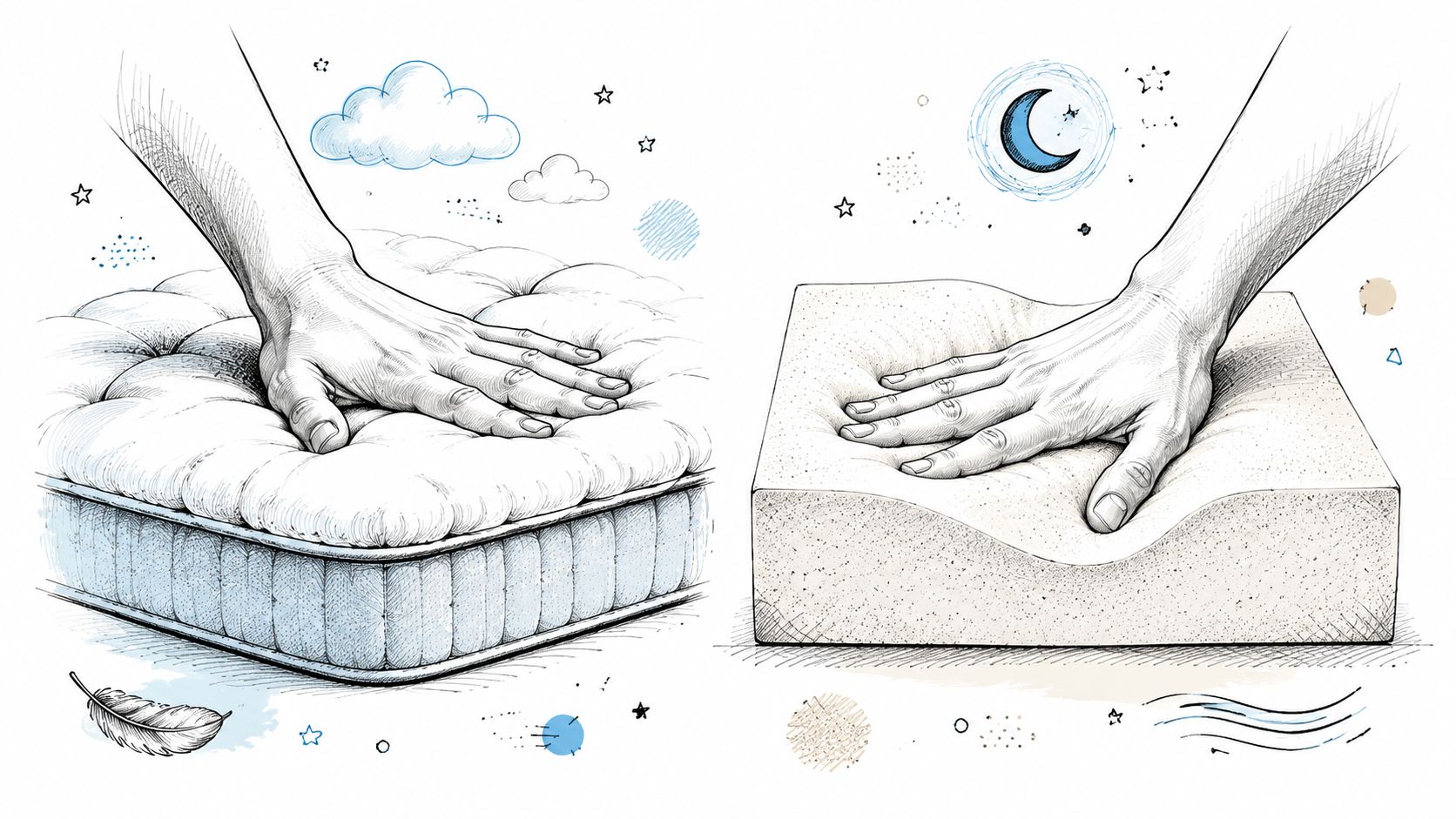
How Each One Feels at Bedtime
The easiest way to describe the difference is this. A pillow top usually feels like resting on a cushioned surface. Memory foam usually feels like the mattress is shaping itself around you.
For many Ohio shoppers, that first minute matters because it feels familiar. A pillow top often has a welcoming, classic surface feel, especially over coils. It gives a softer landing and a little more buoyancy when you change positions.
Memory foam has a different rhythm. It responds to body weight and warmth, then settles in around the shoulders, hips, and lower back. Some sleepers love that close contour because it can feel steady and secure. Others miss the bounce and prefer a surface that is easier to move across.
A simple store-test question helps here. Do you want a mattress that greets you with softness right away, or one that gradually molds to your shape?
Pressure Relief Motion and Overnight Comfort
Pressure relief is really about where your body carries weight. Side sleepers usually notice it first at the shoulders and hips. Back sleepers often feel it through the lower back and hip area. Stomach sleepers tend to notice it if the middle of the bed lets the torso dip too far.
A pillow top can feel gentler at the surface. That soft upper layer may ease the sharp “push back” some people notice on firmer beds. Memory foam often spreads weight more evenly because it conforms more closely to the body. For sleepers with tender joints, that difference can be meaningful over a full night, not just the first few minutes.
Motion is another clear dividing line. If one partner gets up early, shifts often, or comes to bed later, memory foam usually does a better job absorbing that movement. Pillow top models, especially those paired with springs, often have more bounce. Some couples enjoy that lively feel. Others would rather not feel every turn.
Firmness still matters in both categories. A soft memory foam mattress and a firm memory foam mattress can feel miles apart. The same goes for pillow tops. Our mattress firmness guide for different sleep styles and body types can help sort that out before you rely too much on the label alone.
Ohio Weather and Long-Term Value
Here in Bellefontaine and across Logan County, summer air can feel heavy. That matters in a mattress more than many shoppers expect.
Memory foam can hold warmth closer to the body, so humid Ohio nights may make it feel warmer than it did during a quick test in a cool showroom. Pillow tops can feel airier at first, depending on the materials underneath, but thick padding can also trap heat and moisture over time. In plain terms, local weather can change how “cool” or “warm” a bed feels in everyday use.
Long-term value matters too, especially for households that want to buy well and buy less often. Pillow top comfort layers often compress first because that stitched-on top takes the most daily pressure. Memory foam models, particularly better-built ones, often hold their feel longer. That does not mean every foam mattress outlasts every pillow top. Build quality still decides a lot.
A useful way to look at it is cost per year, not just price on delivery day. If one mattress feels great for a shorter stretch and another gives steady support for several more years, the better value may be the one with the lower yearly cost, even if the ticket price starts higher.
That line of thinking fits the way many Logan County families shop. Comfort matters. So does getting dependable use from something you bring into your home.
Who Is Each Mattress Best For?
The technical details matter, but most shoppers want the answer translated into everyday life. Which one fits the way a person sleeps?
Sleepers Who Often Prefer Pillow Top
A pillow top often suits people who want a bed to feel welcoming right away.
That can include:
- Dedicated side sleepers: The softer surface can feel gentler around shoulders and hips.
- People who like a traditional mattress feel: A pillow top often feels more familiar to shoppers moving from an older innerspring bed.
- Anyone chasing plush comfort first: Some people care most about that “soft landing” feeling when they lie down.
This doesn't automatically mean pillow top is the better choice for every person who likes softness. The support underneath still matters, and some plush surfaces can become too soft for a sleeper's posture over time.
Sleepers Who Often Prefer Memory Foam
Memory foam often fits sleepers who care more about contouring response than bounce.
That may include:
- Back sleepers: Many appreciate a more even, body-conforming feel.
- Stomach sleepers who want less sag at the midsection: A supportive foam feel may be easier to manage than an overly plush top.
- Couples sensitive to movement: Less disturbance across the mattress can matter when sleep schedules differ.
- Shoppers thinking long-term: As covered earlier, many buyers look at replacement cycles as much as first-night comfort.
The best mattress isn't the one that feels softest for thirty seconds. It's the one that still feels right after a full night in the sleeper's usual position.
Body type, sleep position, and comfort preference all affect this choice. A shopper trying to narrow the options can use a mattress guide based on body type to connect mattress feel with real support needs.
For many households, this is also where the “Love Their Home” idea becomes practical. The right mattress doesn't just improve sleep. It changes how the bedroom supports recovery, quiet, and daily comfort.
Beyond the Bedroom Professional and Commercial Uses
A mattress for a guest room at home gets judged one sleeper at a time. A mattress in a rental, lodging space, or furnished apartment gets judged by a long line of different bodies, sleep habits, and expectations. That changes the question from "Which feels nicest today?" to "Which holds up well, stays comfortable for different guests, and makes sense over the full cost per year?"
In Ohio, that practical math matters. Logan County families and local business owners often weigh value over flash, and commercial spaces have to do the same. Humid summer nights can also make heat retention more noticeable, so a mattress that seems fine in a quick showroom tryout may feel different after repeated overnight use.
Guest Comfort Versus Replacement Cycles
A pillow top often works well in spaces where the first impression matters most. It gives many guests that familiar cushioned feel right away, a little like walking into a room with a soft area rug underfoot. People tend to understand it instantly.
Memory foam usually fits spaces where consistency matters more than that first plush impression. It molds more closely to the body, which some guests appreciate, but the slower response can feel very different from what they have at home. In a property with frequent turnover, that means the decision is less about trend and more about who will be sleeping there week after week.
Commercial use also puts extra attention on lifespan. Many modern mattresses are one-sided, which can limit how much owners can rotate wear over time. For a business, church guest suite, campus apartment, or short-term rental, that affects budgeting. A lower purchase price does not always mean a lower cost per year if the mattress needs replacement sooner than expected.
Planning for Business Spaces
Commercial buyers usually need more than a comfort label. They need to match mattress type to the room's purpose, expected traffic, cleaning routine, and replacement plan.
A boutique guest room may favor a pillow top because it feels welcoming fast. A furnished rental may favor memory foam if the goal is steadier support and less motion transfer between guests sharing a bed. A local property owner comparing options can start with this guide on how to choose a mattress and then narrow the choice based on real use, not just showroom feel.
At Tanger's, that conversation often connects back to the same thing Ohio households care about at home. Buy for the years ahead, not just the first night. That approach helps people Love Their Home, and it helps business owners furnish spaces that stay comfortable and sensible to maintain.
Your In-Store Testing Guide at Tangers Furniture
A mattress can sound perfect on paper and still feel wrong after ten minutes. Testing matters.
How to Test a Mattress the Right Way
Many shoppers make the same mistake. They sit on the edge for a few seconds and decide based on that. Edge sitting tells very little about how the bed will feel at two in the morning.
A better testing routine looks like this:
- Lie down in your sleep position. Side, back, or stomach matters more than a quick hand press.
- Stay there long enough to notice pressure. A mattress often feels different after a few minutes.
- Roll once or twice. That helps reveal whether the surface feels easy to move on or overly restrictive.
- Pay attention to the lower back, shoulders, and hips. Those areas usually answer the question fastest.
A shopper comparing models can also review this guide on how to choose a mattress before visiting a showroom.
What to Notice Before Making a Final Choice
The most useful notes aren't technical. They're physical.
- Does the shoulder feel pinched or cushioned?
- Does the lower back feel supported or dropped?
- Does turning feel easy or effortful?
- Does the surface start feeling warm quickly?
This is also where a no-pressure showroom experience matters. A customer should be able to test, ask questions, compare comfort styles, and leave with clarity rather than urgency. Tanger's Furniture is one local option where shoppers can browse mattress selections, ask about financing, and coordinate delivery and service requests without treating the process like a rushed sales event.
A good showroom visit should make the decision simpler, not louder.
Local delivery and service matter too. Once the mattress is chosen, the heavy lifting, setup, and follow-through should feel straightforward. That's part of helping a home work well, not just helping someone buy something.
Making Your Decision A Personal Mattress Checklist
The pillow top vs Memory Foam decision usually becomes clear when the shopper stops asking, “Which one is better?” and starts asking, “Which one fits this sleeper, this room, and this budget?”

Questions That Narrow the Choice Quickly
A simple checklist can help:
- What sleep position shows up most often? Side sleepers may lean toward a softer surface feel. Back and stomach sleepers often think more about steady support.
- What matters more, plushness or contouring? Some people want a cloud-like top. Others want the mattress to shape around them more closely.
- Does the sleeper get warm easily? In humid Ohio weather, temperature feel over time matters more than a quick showroom touch.
- Is partner movement a problem? Couples often notice this issue long before they know what to call it.
- Is the goal lower upfront cost or longer use before replacement? Long-term value can matter just as much as first-day comfort.
A Simple Way to Decide
If a shopper keeps coming back to words like soft, cushioned, plush, and familiar, a pillow top may be the better direction.
If the repeated words are contouring, steady, supportive, and less motion, memory foam may be the better fit.
For many households, the final choice also depends on practical support around the purchase:
- Low Price Promise: Value matters, especially for families comparing long-term ownership.
- Flexible financing: Payment options can make a better mattress more manageable for any project.
- Delivery and service: Setup, hauling, and follow-up support remove a lot of stress from the process.
- Whole-home thinking: A good mattress choice supports the larger goal of helping people love their home, one room at a time.
A confident choice doesn't require guessing. It requires enough clarity to know what the body needs, what the budget allows, and what kind of comfort will still feel right after the novelty wears off.
Visit Tanger's Furniture to see custom options in person at the Bellefontaine showroom or browse collections online to start the process. For shoppers with a specific question, design staff can help with practical guidance, financing options, delivery coordination, and service support. Those who want ongoing ideas and exclusive offers can also join the Love Your Home Club.