Ashley Furniture Mirror: A Buyer’s Guide to Finding Yours


A room can be clean, furnished, and even nicely decorated, yet still feel unfinished. You might have the sofa, the rug, the lamp, and the artwork. But something still feels flat. In many homes, that missing piece is a mirror.
That’s especially true when a space needs a little more light, a little more height, or a stronger focal point. A well-chosen ashley furniture mirror can do all three. It gives you function, but it also gives the room a sense of completion that’s hard to create any other way.
A mirror can soften a bedroom, sharpen an entry, or help a living room feel more open. If you’ve ever stood back and thought, “This room is close, but not quite there,” you’re not alone. That last layer often comes from thoughtful wall decor and reflective surfaces, much like the finishing ideas shared in this guide to creating an eye-catching room.
The Finishing Touch Your Home is Missing
Some of the best design decisions happen late in the process. A family updates the bedding, replaces the nightstands, adds a chair in the corner, and then notices the wall still looks bare. Or a homeowner refreshes the entryway but finds it still feels darker than it should.
That’s where mirrors earn their place.
They aren’t just for checking your outfit on the way out the door. They help bounce natural light, visually open a tight wall, and add personality without making the room feel crowded. In a smaller bedroom, a leaning floor mirror can make the whole space feel more relaxed and less boxed in. In a dining room, a framed mirror can make a wall feel intentional instead of empty.
Why mirrors solve a design problem so often
People usually shop for mirrors late because they think of them as accessories. In practice, they behave more like anchors. A mirror can:
- Brighten a dim corner by reflecting available light
- Balance a furniture grouping over a dresser, console, or mantel
- Add height to a room when the ceiling feels visually low
- Give a practical daily use in bedrooms, closets, and entryways
A mirror often works like the final piece of jewelry for a room. It doesn’t replace the outfit. It completes it.
That’s why shoppers often feel immediate relief when they find the right one. The room starts making sense.
Understanding the Ashley Furniture Legacy
A mirror purchase usually starts small. You want the right shape over a dresser, a better scale for the entry, or a frame finish that ties the room together. Very quickly, though, the brand behind that mirror starts to matter, because it affects how well the piece coordinates, how easy it is to replace or service later, and whether you can still get help years after the sale.
That helps explain Ashley’s staying power.
Ashley began in 1945 as a furniture business focused on occasional pieces and grew into a major home furnishings company by combining manufacturing, sourcing, and retail. One Ashley company overview describes that long-term growth and the broad reach that followed. For a shopper, the practical takeaway is simple. A company with that kind of scale usually offers more matching pieces, more repeatable finishes, and more chances to find a mirror that fits the rest of your room instead of fighting it.
In our Bellefontaine showroom, that matters in a very down-to-earth way. A customer may fall in love with a dresser first and only later realize the mirror needs to match the wood tone, frame profile, and overall mood of the set. Ashley often makes that process easier because many mirrors are designed as part of a coordinated collection, not as an isolated accent.
That coordination helps people Love Their Home because the room feels settled. It feels finished.
Ashley’s history also helps explain why the brand appears in so many different types of homes. Some shoppers want a clean, simple mirror that quietly supports the room. Others want something with more presence, texture, or decorative framing. Ashley has spent decades building lines for different budgets and tastes, which is part of why the brand stays relevant as styles change. If you like tracking those changes, our guide to home furniture style trends and design ideas gives helpful context for how mirror choices fit into the bigger picture.
A good comparison is a paint line with many coordinated colors. The value is not just the number of options. The value is that the options are organized well enough that a homeowner can build a room with confidence.
That is also where buying from a local, family-owned store makes the Ashley story more useful. National scale can give you selection. Local support makes ownership easier. In Ohio, mirrors and case goods deal with seasonal humidity changes, dry winter air, busy family use, and the occasional need for parts, adjustments, or warranty help. A trusted local store can guide the purchase, arrange professional installation when needed, explain care, and still be here if a service issue comes up years later. That local promise is a big part of what turns a popular brand into a smart long-term choice.
Some homeowners also compare Ashley pieces with more specialized reflective products, especially when they are deciding between coordinated furniture mirrors and highly customized wall pieces. These residential bespoke mirror solutions offer a useful point of comparison if you want to see how custom fabrication differs from a furniture-focused mirror collection.
For many families, Ashley’s legacy is not really about corporate size. It is about predictability. You can often find a mirror that works with your furniture, fits your budget, and comes with local help if your home changes, your room gets updated, or service is needed down the road. That kind of support makes decorating feel less risky and more enjoyable.
A Style for Every Story Navigating Ashley Mirror Collections
Mirror shopping gets easier once you stop asking, “Which one is best?” and start asking, “Which one fits my home story?”
That shift matters because mirrors do more than reflect. They reinforce the mood of a room. Some feel crisp and precise. Others feel warm and collected. Some are quiet background pieces. Others are meant to be noticed.
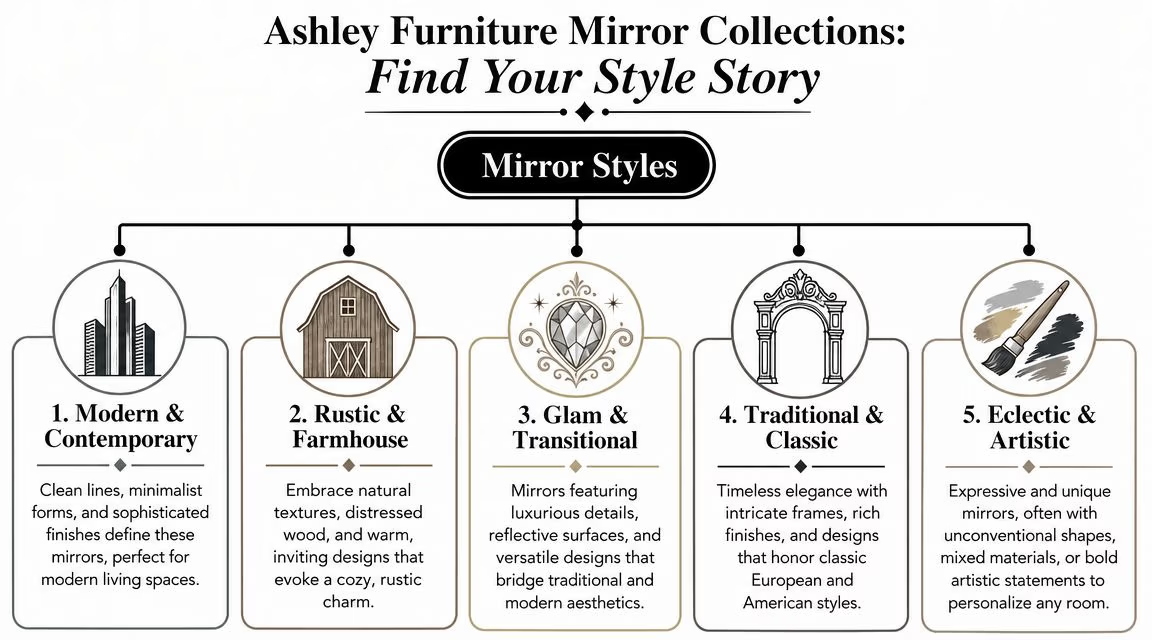
A helpful way to browse is by style family, not just by product photo. If you enjoy exploring custom reflective designs too, these residential bespoke mirror solutions offer a useful comparison point for how shape and finish can change the feel of a room.
Modern and contemporary
These mirrors usually rely on restraint. Clean edges, slim frames, and simple geometry do the work.
They fit well in homes with:
- Neutral color palettes like black, white, taupe, or gray
- Furniture with clean lines with fewer decorative details
- Open layouts where visual clutter stands out quickly
Look for:
- Rectangular or round shapes
- Metal or thin-profile frames
- Minimal ornament
A modern mirror often works best when you want the reflection and shape to carry the design, not the frame itself.
Rustic and farmhouse
This group feels warmer and more familiar. Think visible wood grain, weathered finishes, and shapes that soften a room instead of sharpening it.
They usually pair nicely with:
- Textured wood furniture
- Cozy bedrooms
- Casual dining areas and entries
Common signs of this style include:
- Distressed or natural-looking finishes
- Chunkier frames
- Arched or windowpane-inspired forms
Rustic mirrors can help a room feel settled. They’re especially useful when newer furniture needs a touch of age or texture.
Glam and transitional
Some shoppers want sparkle without going fully formal. That’s where glam and transitional mirrors live.
These mirrors often blend dressier details with flexible styling. They may have beveled-looking edges, reflective trim, or elegant contours that still work in a mixed room.
If your furniture sits between traditional and modern, a transitional mirror usually gives you the most freedom.
You might like this category if your room includes:
- Upholstered headboards
- Mixed metal finishes
- Softer color palettes
- Dressers with polished hardware
Traditional and classic
Traditional mirrors tend to feel rooted. They bring visual weight and often look best with furniture that has shaping, molding, or richer finishes.
You’ll often see:
- Decorative framing
- Darker wood tones or classic metallic finishes
- Symmetrical shapes
These are good choices for homes where the room already has a sense of formality. In the right setting, a traditional mirror can make a bedroom or dining room feel established rather than pieced together.
Eclectic and artistic
Not every mirror needs to match everything else. Some are there to create a moment.
This category works for people who enjoy:
- Unexpected silhouettes
- Mixed materials
- Bold contrast
- Personality over strict coordination
An eclectic mirror can wake up a plain wall. It can also help a room feel more personal, especially when the larger furniture is simple.
For more ideas on pairing mirror shapes with broader room direction, this roundup of home style trends can help you narrow your instincts into a clear plan.
Finding the Perfect Fit How to Choose and Place Your Mirror
A beautiful mirror can still feel wrong if the size is off or the placement fights the room. This is the part that tends to make shoppers nervous, especially when they’re buying online.
The easiest way to think about it is this. Style gets your attention. Fit makes it work.
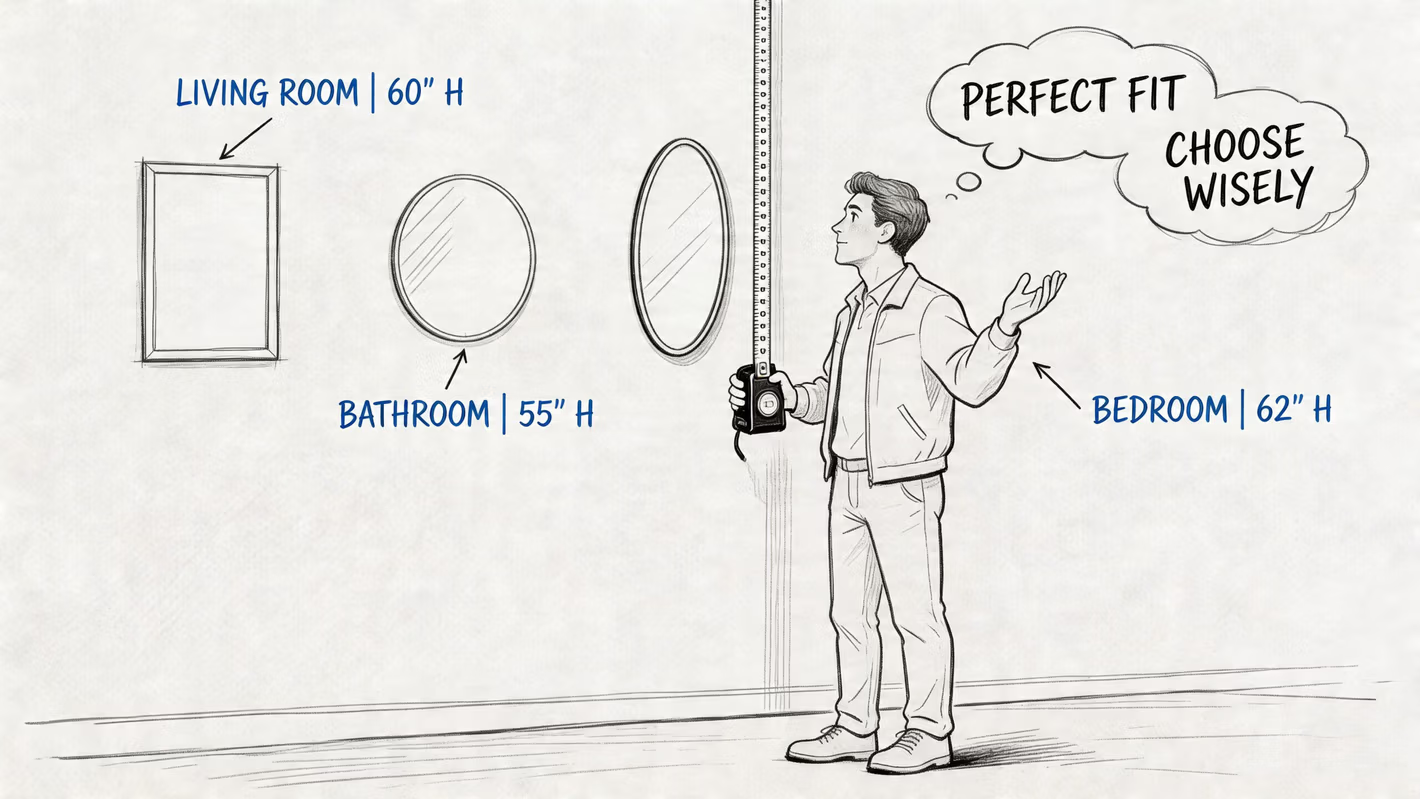
Start with the wall, not the mirror
Most sizing mistakes happen because people fall in love with the product first and measure second. Flip that process.
Take note of:
- Wall width so the mirror doesn’t feel undersized or overwhelming
- Furniture below it such as a dresser, console, or sofa table
- Ceiling height because taller walls usually want more vertical presence
- Nearby lighting and windows so the reflection adds something useful
If you want a practical refresher before shopping, this guide on how to measure furniture gives a helpful framework for thinking through scale in the room.
Match the mirror to the job
Not every mirror needs to do the same kind of work.
A full-length mirror is mainly functional. You want enough height for dressing, a location with decent light, and a frame that suits the bedroom or closet area.
An accent mirror is more decorative. It might sit above a console in the entry, over a sideboard in the dining room, or on a living room wall that needs shape and light.
A quick decision guide helps:
| Room | Best mirror role | What to watch |
|---|---|---|
| Bedroom | Full-length or dresser mirror | Make sure daily use is easy |
| Entryway | Quick-check accent mirror | Keep it proportional to the table or wall |
| Living room | Decorative statement | Avoid glare from direct reflections |
| Dining room | Depth and light | Coordinate with the room’s formality |
Placement mistakes to avoid
Mirror placement isn’t just visual. It affects how comfortable the room feels.
Keep an eye on:
- Reflections you don’t want like clutter, cords, or a harsh overhead light
- Crowded pathways where large leaning mirrors could feel intrusive
- Frame mismatch when the finish fights nearby wood or metal tones
Traffic flow matters more than people expect. If you’re arranging a mirror near seating or walkways, these guidelines on proper furniture spacing are a useful outside reference.
Practical rule: A mirror should support the room’s layout, not interrupt it.
Think like a stylist, not just a shopper
Here’s a simple way to decide if your choice is working. Ask whether the mirror is acting like a partner to the furniture below it.
A mirror over a dresser should feel connected to that dresser. A leaning floor mirror should feel intentional in its corner, not like it was set there temporarily. A living room mirror should echo something in the room, whether that’s the shape of the coffee table, the finish of a lamp, or the mood of the upholstery.
That same mindset helps if you’re shopping across multiple categories at once, whether you’re browsing accent pieces, planning around existing custom sofas Ohio shoppers often invest in, or updating a bedroom alongside a mattress store Logan County purchase. The mirror shouldn’t be an afterthought. It should help tie the whole room together.
Beyond the Box Installation Safety and Long-Term Care
A mirror isn’t finished when you buy it. It’s finished when it’s safely placed, properly installed, and still looking good after daily life has had its say.
That’s where many shoppers have the same questions. Can this lean safely? Will humidity affect it? Is a heavy mirror something I should really handle on my own?

Why setup matters more than people expect
Some floor mirrors look simple, but simple doesn’t mean lightweight. The Ashley Norigan Floor Mirror is listed at 48 lbs (21.77 kg) on its product listing, and that weight is part of what gives it stable presence as a leaning floor mirror, according to the Norigan product information.
That matters in real homes. A heavier leaning mirror often feels more planted than a light one that shifts easily when bumped. The same source also notes the mirror is engineered with a low center of gravity to exceed ANSI/BIFMA stability standards, which is helpful for anyone considering a freestanding option in a bedroom, dressing area, or office.
Durability features worth noticing
Not every shopper asks about construction details, but these details affect long-term ownership. The Ashley Feronia 71" Standing Floor Mirror includes shatter-proof glass and a copper-free backing, according to the Feronia product page.
Those are useful features for practical reasons:
- Shatter-proof glass adds peace of mind in busy homes
- Copper-free backing is designed to help resist corrosion
- Leaning floor format gives flexible placement in bedrooms and dressing spaces
If you live in Ohio, that last point matters more than people think. Seasonal humidity and everyday moisture can be tough on reflective surfaces over time, especially in homes where mirrors are placed near bathrooms, entries, or other active zones.
Some official product pages focus mostly on looks. Long-term care usually depends on material details and how the mirror is placed in the home.
The real-world care questions shoppers ask
Mirror buyers often want to know how these pieces hold up in damp or high-traffic environments. That concern is reasonable. Official style pages tend to emphasize shape and decor value much more than maintenance.
A better approach is to be proactive:
- Keep moisture from sitting on the edges
- Use a soft, non-abrasive cloth
- Avoid spraying cleaner directly onto the mirror surface
- Check the placement if the room gets frequent humidity swings
If you’ve got paint specks, renovation residue, or a stubborn mark, this article with expert advice for paint-free mirrors is a practical read before you scrub too hard.
For wall-mounted pieces, precision matters too. If you’re dealing with artwork and mirrors in the same room, this guide to hanging your picture with precision gives a useful starting point for alignment and placement.
Mirrors as part of a full-home plan
People rarely update just one thing. A mirror purchase may happen during a bedroom refresh, a hallway improvement, or a broader home project that also includes appliances or sleep products. That’s why these decisions often sit alongside shopping in categories like Speed Queen laundry or a new mattress.
The key is to think long term. A mirror should fit your home on day one, but it should also be easy to live with on day one hundred and beyond.
The Tangers Advantage Your Local Design Partner
Some stores help you buy a mirror. A good local design partner helps you make the right mirror decision in the first place.
That difference matters when you’re choosing between a leaning floor mirror, a dresser mirror, and a wall piece that needs to coordinate with the rest of the room. It matters even more if your space has quirks, your budget has limits, or you’re trying to make several purchases work together.
Why local guidance still matters
A mirror can look perfect online and still be wrong for your wall. The frame may read cooler in person. The scale may feel different. The leaning angle may be better than a mounted look you originally had in mind.
That’s where in-person guidance helps. A design-oriented furniture store can help you compare shape, finish, and room placement in a way a product grid can’t. If you like a more hands-on planning experience, this page on a furniture store with design services shows what that kind of support can look like.
Not every home needs an out-of-the-box answer
Ashley mirrors can be a strong fit when you want coordinated style and practical value. But sometimes the room asks for more customization than a standard collection can offer.
That’s especially true when:
- Your room has unusual dimensions
- You’re matching a very specific fabric or wood tone
- You want a one-of-a-kind look rather than a catalog match
- You’re furnishing an office, waiting space, or reception area
In those cases, it helps to know there are custom options from makers such as Flexsteel and Smith Brothers of Berne. Those brands are useful when shoppers want more say in finish, scale, or upholstery around the mirror and surrounding furniture.
Value isn’t only about the ticket price
Value is often defined too narrowly. It’s not just about finding the least expensive mirror. It’s about buying a piece that fits your room, arrives safely, and won’t leave you solving extra problems later.
That’s why shoppers often ask about:
- The Low Price Promise so they feel confident in the purchase
- Flexible financing for projects that include more than one room
- Delivery and setup because mirrors can be awkward to move and place
- Service after the sale if an issue comes up later
Local reliability changes the experience. When a question comes up, you want real people nearby who can help.
That same support matters for households shopping across categories, whether that’s living room furniture, bedroom pieces, or practical home needs like Speed Queen laundry. It also matters for businesses working on reception areas, executive offices, and waiting rooms where reflective pieces can contribute to a polished environment.
A better fit for home and business projects
Mirror guidance isn’t only for residential shoppers. Business owners often need durable, attractive pieces for professional settings too.
A commercial office or waiting room usually needs a mirror that feels polished, easy to maintain, and appropriate for a public-facing environment. Good planning support can make that process much smoother, especially when the mirror needs to work with seating, desks, traffic flow, and the overall tone of the space.
Love Your Home with the Perfect Reflection
The right mirror does more than show your reflection. It helps a room feel finished, useful, and personal.
That’s why choosing an ashley furniture mirror is rarely just about shape or frame color. It’s about what the piece does in your home. It can brighten a darker wall, create a more open feeling, support your daily routine, and bring the rest of the room together in a quiet, confident way.
For some homes, the best answer is a simple leaning mirror with practical everyday use. For others, it’s a decorative wall mirror that gives the room its final layer. Either way, the best choice is the one that helps you Love Your Home a little more every time you walk into the space.
Visit our showroom in Bellefontaine to see our custom options in person or browse our collections online to start your journey. Have a specific design question? Contact our design staff today or join our Love Your Home Club for expert tips delivered to your inbox.
Answering Your Top Mirror Questions
Can I hang a heavy mirror on drywall
You can, but the answer depends on the mirror’s weight, mounting hardware, and whether you can anchor into framing. Drywall by itself isn’t something to guess with. For heavier mirrors, careful hardware selection and proper installation matter a lot.
What’s the best way to clean a mirror without streaks
Use a soft cloth and a gentle cleaner. It’s usually better to spray the cloth lightly instead of spraying the mirror directly, because extra moisture can creep toward the edges. Wipe in a consistent pattern and avoid rough paper products that can leave lint or fine scratches.
Can a dresser mirror be used as a standalone wall mirror
Sometimes, but not always. Some dresser mirrors are designed as part of a matching case piece and may not be finished or mounted the same way as a dedicated wall mirror. Before repurposing one, check how it was built and how it’s meant to attach.
Are leaning mirrors safe for family spaces
They can be, especially when the piece is well made and properly positioned. Stability, placement, and room traffic all matter. If the mirror will sit in a busy area, pay close attention to how planted it feels and whether professional placement would give you more confidence.
Is a mirror a good idea in a commercial office
Yes, in the right location. Mirrors can help waiting areas feel more finished and can add brightness to an office environment. The key is choosing a style that fits the tone of the business and placing it where it supports the space instead of distracting from it.
If you’re ready to find the right mirror for your space, Tanger's Furniture can help with no-pressure guidance, local delivery, in-house service support, flexible financing for any project, and the Low Price Promise. Visit the showroom in Bellefontaine to compare styles in person, browse online to get ideas, or join the Love Your Home Club for exclusive offers and practical design inspiration.