Smith Brothers Of Berne Fabrics: Quality & Style

Your current sofa is probably telling you a lot.
Maybe the cushions have that one dip everyone avoids. Maybe the fabric still looks fine in photos, but in real life it's showing wear where the kids climb, the dog naps, or where family members frequently settle in. That's usually the moment people start looking at custom upholstery and realize fabric choice feels more complicated than they expected.
That's where smith brothers of berne fabrics stand out. You're not choosing from a tiny rack of “good enough” options. You're choosing from a wide custom program built around real homes, real routines, and real preferences. The challenge isn't finding a fabric. It's narrowing the field in a way that makes sense for your life in Logan County.
At a local family furniture store, this is the part of the conversation that matters most. Not just “What color do you like?” but “Who uses this room?” “Does the dog get on the sofa?” “Is this your everyday family seat or a quieter formal room?” If you've been trying to make sense of fabric samples, cleaning labels, and durability terms, you're in the right place.
Your Guide to Finding the Perfect Furniture Fabric
A lot of people start with color. That makes sense. You see a sofa first, and you feel a fabric second.
But on the showroom floor, the better starting point is usually your routine.
A family in Bellefontaine might love a soft ivory fabric, then realize they host ballgame nights, have two children, and a chocolate lab who thinks every cushion is his. Another customer may want a chair for a bedroom reading corner and can choose something more delicate because that piece won't face the same daily traffic. The right fabric depends on the room's job.
What most shoppers are really deciding
When people compare smith brothers of berne fabrics, they're usually balancing three things:
- Comfort for daily living because a fabric has to feel good every day, not just look nice under showroom lights
- Performance because active homes and office settings need surfaces that can handle regular use
- Personal style because nobody wants a practical piece that doesn't feel like home
Smith Brothers of Berne is known for customization. The company offers a broad range of fabric and leather choices, along with details that let you shape the final look around your room and your habits. That's a very different experience from buying something off the floor and hoping it works.
The best fabric choice usually isn't the fanciest one. It's the one that fits the way your household actually lives.
Why this gets easier once you can touch the samples
Online photos help you narrow ideas, but fabric is tactile. You want to feel whether a weave is smooth or textured, whether a color reads warm or cool, and whether a pattern feels calm or busy next to the rest of your room. If you want a good primer before you start comparing swatches, this guide to upholstery materials is a helpful place to begin.
A custom sofa or chair shouldn't feel intimidating. It should feel like solving a puzzle one simple piece at a time. Once you know how to read fabric quality, durability, and style choices, the process becomes much more manageable.
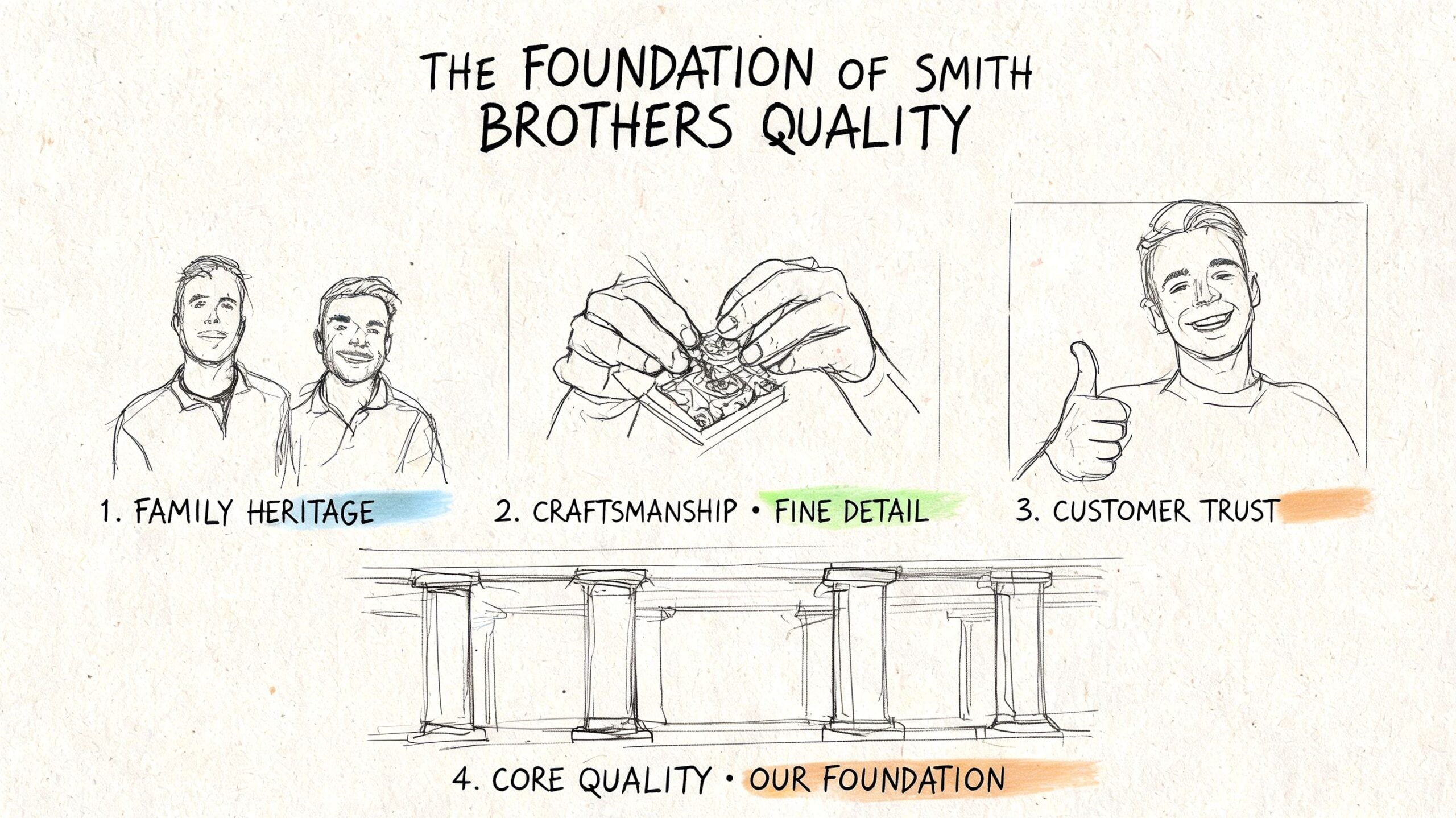
The Foundation of Smith Brothers Quality
A family walks through the showroom in Bellefontaine, finds a fabric they love, and then asks the question that usually matters more over the long haul. What is the piece itself made of?
That question gets to the heart of Smith Brothers quality. Fabric is the part you see and touch first, but the frame, springs, cushioning, and tailoring decide how that fabric will look and feel after years of real use.
Smith Brothers of Berne is celebrating its 100th anniversary in 2026, marking a century of continuous domestic upholstered furniture manufacturing in Berne, Indiana, according to Furniture Industry News. For shoppers, that history is helpful because it points to a company that has spent decades refining how upholstered furniture is built, not just how it is styled.
What sits under the fabric matters
On the showroom floor, this is one of the first things we try to translate for families. A sofa works like a house. The fabric is the paint color everyone notices, but the frame and support system are the foundation, walls, and floor joists. If those parts are well made, the whole piece stays comfortable and holds its shape better.
Smith Brothers describes its furniture as bench-built in Berne, Indiana, with features such as hardwood maple frames, eight-way hand-tied coil spring construction on many styles, and precision upholstery details on its official company website. Those construction choices matter because strong support underneath helps the fabric wear more evenly across seats, arms, and backs.
A durable cover cannot make up for weak construction. Good upholstery is a team effort between the inside and the outside of the piece.
How quality starts before you choose a color
Customers often focus on color first. That is natural. In the store, though, we usually slow the process down and look at how the fabric will behave on the specific frame they are considering.
A few checkpoints help:
- Fiber content affects softness, resilience, and how the fabric responds to daily use
- Weave structure influences texture, appearance, and how firmly the yarns hold together
- Tailoring fit matters because a fabric can look different on a tight-backed chair than on a loose, deep seat
- Use in the room changes the recommendation because a formal sitting area and a busy family room ask different things from the same material
This is the practical side of showroom guidance. A swatch can look perfect in your hand and still be the wrong match for a broad seat cushion, a favorite recliner, or an office guest chair that gets constant traffic.
Helpful rule: Ask how the fabric will perform on the exact style you are ordering, not just whether the sample looks good under store lighting.
Why long-term craftsmanship shows up in daily comfort
Heritage alone does not guarantee the right fit for your home. What it often does mean is a more established building process, steady sourcing, and construction methods that have been tested across many years and many furniture styles.
That matters in Logan County homes where furniture tends to be lived on, not just looked at. Kids drop into cushions. Guests gather for holidays. Pets claim the warm corner seat. In those real-life conditions, quality shows up in quieter ways. Seats stay supportive. Arms feel solid. Fabric hangs the way it should because the furniture underneath is doing its job.
If you want to see how those build standards show up across different silhouettes and seating options, the Smith Brothers furniture collection at Tanger's gives a good sense of how construction and customization come together.
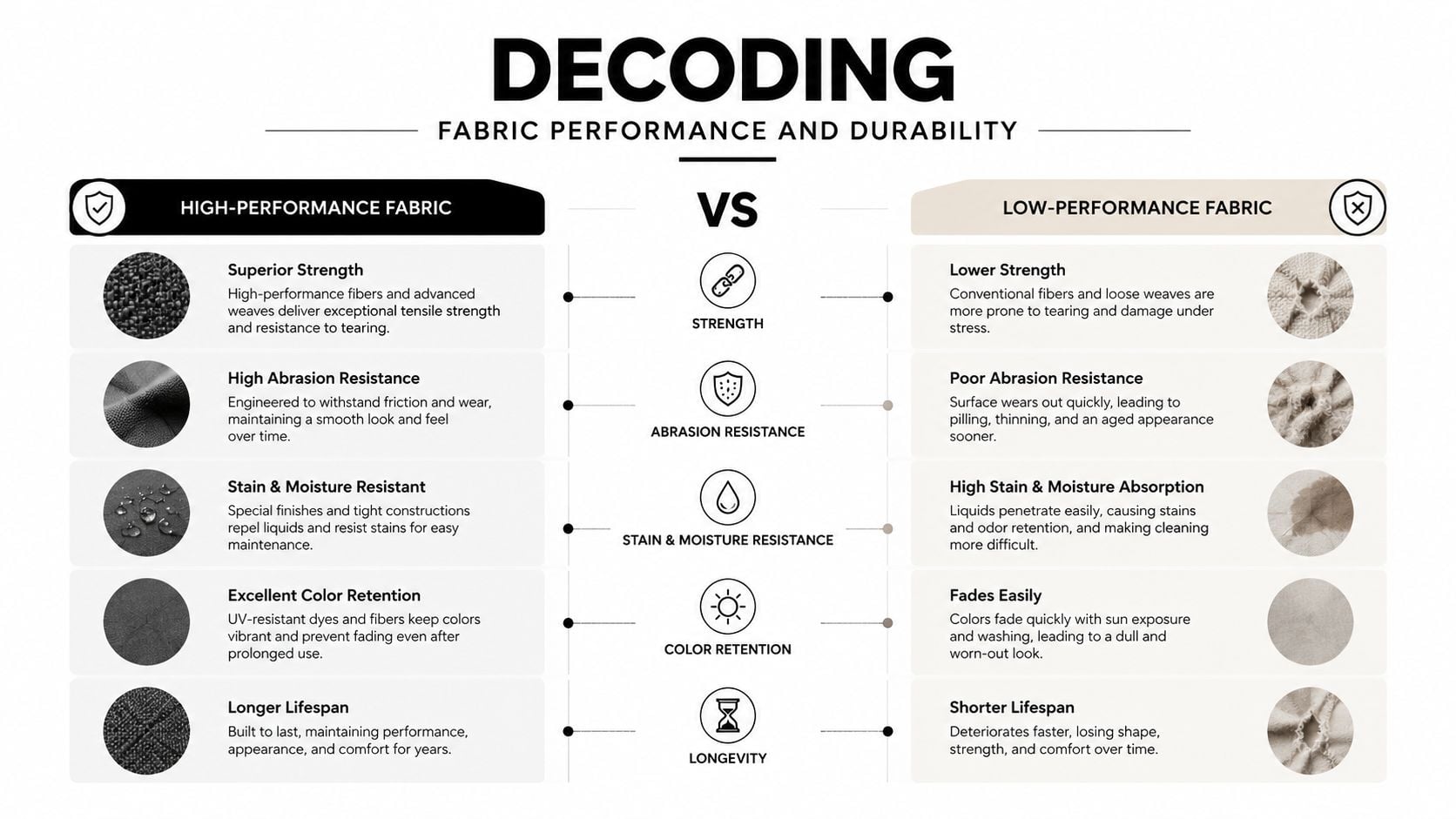
Decoding Fabric Performance and Durability
This is the point where many shoppers hit unfamiliar terms. Double rubs, pilling, abrasion, cleanability. None of those labels are hard once you translate them into daily life.
The easiest way to think about fabric performance is this. A sofa fabric isn't tested for beauty. It's tested for repeated contact.
What double rubs actually mean
A double rub is a durability measure used to test upholstery fabric. In practical terms, it helps estimate how well a fabric handles repeated wear from sitting, shifting, standing up, and doing that all over again.
Smith Brothers fabrics undergo rigorous testing, with many options exceeding 50,000 double rubs, and fabrics rated over 30,000 are considered suitable for heavy-duty commercial use, according to this fabric performance overview.
That sounds technical, so here's the plain-English version.
A simple way to read the number
Think of double rub counts the way you think about treadwear on tires. It doesn't tell you everything about how the ride feels, but it does give you a useful durability benchmark.
A higher number generally gives you more confidence for spaces where people use the furniture constantly. That matters in:
- Busy family rooms where everyone lands on the same cushions every evening
- Homes with pets where claws, shifting, and repeated movement add wear
- Commercial waiting areas where many different people use the same seat
- Open office seating where upholstery needs to hold up without looking tired too quickly
Durability isn't only about one test
Double rubs are helpful, but they're not the whole story. Two fabrics can have strong abrasion ratings and still feel very different in a home.
Here are the other questions worth asking when you're handling smith brothers of berne fabrics in person:
| Fabric question | Why it matters in real life |
|---|---|
| Does it have visible texture? | Texture can help disguise day-to-day signs of use |
| Is the color very light or very dark? | Both can be beautiful, but they may show lint, crumbs, or pet hair differently |
| Is the weave smooth or nubby? | Surface feel changes comfort, style, and how casual the piece reads |
| Will this be used daily or occasionally? | The same fabric can feel perfect in one room and risky in another |
For a family sofa, don't shop for “indestructible.” Shop for “forgiving.” A fabric that hides ordinary life well often makes people happier than one that only looks perfect on day one.
A showroom-floor example
If someone is furnishing a living room used every day by kids, guests, and pets, I'd steer the conversation toward fabrics that combine a reassuring hand with strong durability numbers. If a local business is selecting seating for a reception area, the bar shifts toward upholstery that can take repeated use and still look tidy.
That same mindset can help with the rest of the room too. If you're coordinating upholstery with window treatments, it helps to compare window shade options so your fabrics, light control, and overall wear expectations work together.
If you'd like a practical breakdown of what to compare while shopping, this article on how to choose upholstery fabric puts the key terms into everyday language.
Finding Your Style in a World of Options
A couple walks into the showroom with a common problem. One person wants something timeless. The other wants a fabric that does not feel bland after six months. By the time they have looked at a wall of swatches, both start to wonder if custom furniture means too many choices.
On the showroom floor, the job is to turn that big wall of options into a smaller group that fits the room, the household, and the look you want to live with every day. Custom works best when you sort fabrics the same way you would sort paint samples or flooring. You do not start with every possibility. You start with the piece, the room, and the kind of life that will happen around it.
Smith Brothers of Berne gives shoppers a very wide range of fabrics, leathers, and finishing details. That variety helps you solve real decorating problems. You can choose a cleaner, refined look for an office, a softer and more relaxed fabric for a family room, or a statement pattern for a chair that needs some personality.
How to narrow a large fabric library
Browsing by color alone usually makes the process harder. In a showroom, we usually narrow the stack by asking a few plain questions first.
Start here:
- What feeling should the room have? Calm, cozy, crisp, formal, or casual.
- How polished do you want the piece to look day to day? Some fabrics stay visually neat with very little effort. Others have more texture and a more relaxed appearance.
- How much visual activity do you want? A quiet solid, a soft texture, or a pattern with more movement.
- What do you want your hand to feel first? Smooth, plush, structured, or lightly textured.
Those answers do something helpful. They turn hundreds of swatches into a manageable handful.
A fabric library works a lot like a menu at a good local restaurant. If you know whether you want something light, hearty, familiar, or adventurous, the decision gets easier fast. Furniture fabric is similar. The clearer the goal, the easier it is to spot the right fit.
Three common style directions
Quiet and versatile
Mid-tone solids and soft neutrals are often the easiest fabrics to live with over time. They give you room to change pillows, rugs, artwork, or wall color without making the sofa feel out of place.
This direction suits shoppers who want custom furniture to feel settled and flexible, not tied to one decorating moment.
Textured and relaxed
Texture adds interest in a quieter way than pattern. On a showroom floor, this is often the answer for families who want the piece to feel warm and inviting without drawing attention to every little sign of use.
A textured weave can soften the look of a larger sofa, especially in homes around Logan County where living rooms often need to handle movie nights, visitors, and everyday traffic in the same space.
Pattern with purpose
Pattern works best when it has a job. It can wake up an accent chair, connect several colors in the room, or keep a formal space from feeling too stiff.
Scale matters here, so swatches can fool people. A pattern that looks small in your hand may look much bolder across a full sofa or wing chair. On the showroom floor, laying several swatches side by side usually makes that easier to judge.
Bring in a photo of your room, your flooring, and your nearby wood tones. Fabric choices get clearer when the sample is compared to the colors already living in your space.
Style and practicality can work together
Shoppers sometimes worry that practical fabric choices will look plain, or that a beautiful fabric will be too delicate for real life. In many homes, the best answer sits right in the middle. A blue textured fabric, for example, can feel current, hide everyday variation better than a flat solid, and still look comfortable in every season.
That balance is easier to find in person than it is on a screen. At Tanger's, the showroom perspective matters because you can touch the fabric, hold it next to wood finishes, and compare one option against another under real lighting. That hands-on process is often what turns a confusing decision into a confident one.
A good fabric choice should feel like it belongs in the room from the start, and still make sense after years of ordinary use.
The Tanger's Custom Order Experience
Custom furniture sounds complicated until you see the process laid out clearly. Most confusion comes from trying to make every decision at once.
A better approach is to make one decision at a time. Shape first. Then comfort. Then fabric. Then finishing details.
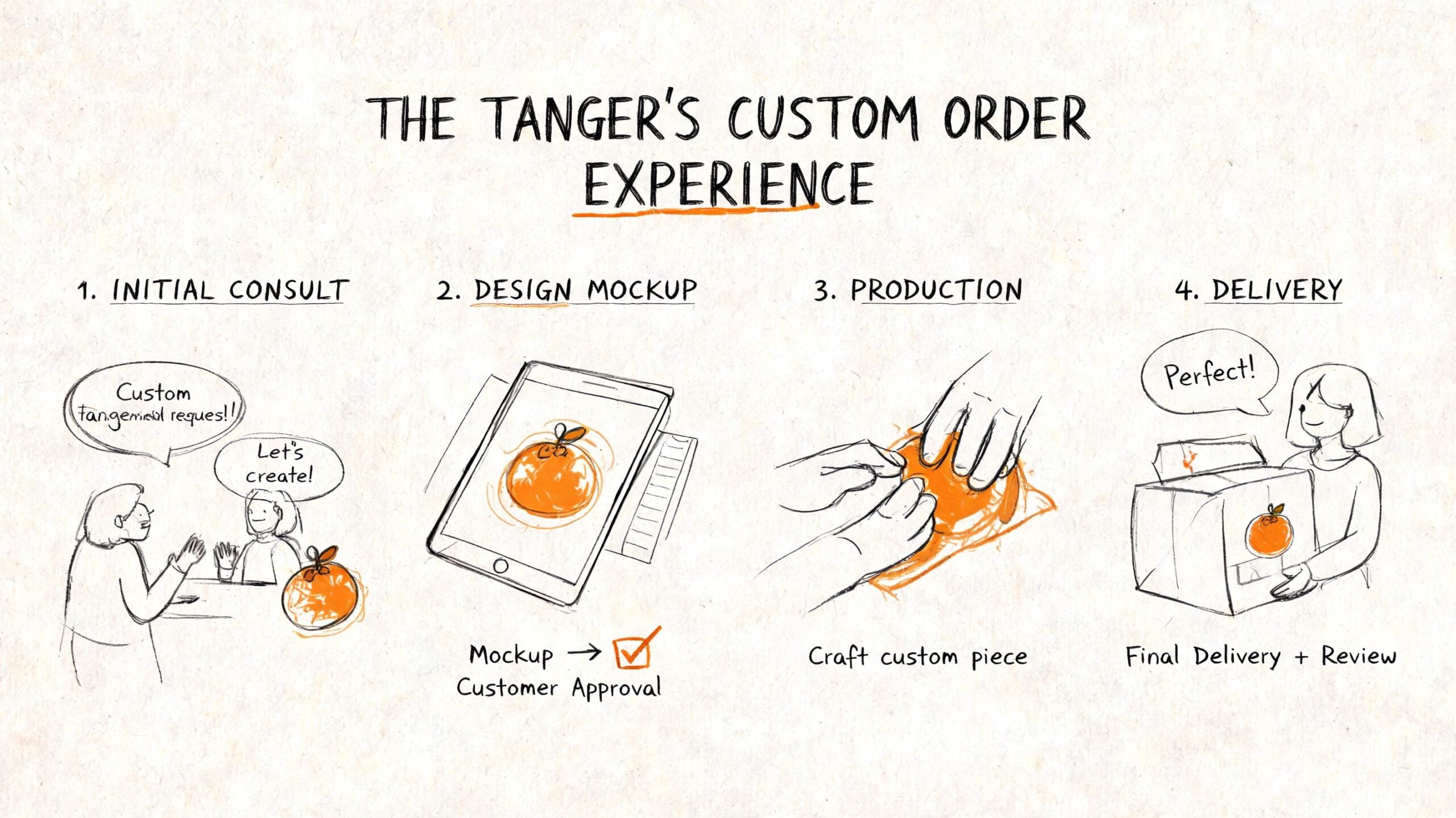
What the process usually looks like
For shoppers comparing custom sofas Ohio options, a straightforward order path helps keep the experience grounded.
Choose the type of piece
Start with the furniture role. Is it a family sofa, a pair of accent chairs, a sectional for a larger room, or seating for a professional setting?Sit and evaluate comfort
Seat depth, back height, and arm style change how a piece feels. This is why in-person testing matters.Review fabric swatches with your lifestyle in mind
During this review, performance and style finally meet. A sample can look perfect until you ask whether it suits kids, pets, guests, or office traffic.Finalize details and delivery planning
Trim, welting, finish choices, and room access all matter before the order is placed.
Why local guidance changes the experience
Tanger's Furniture has served the Bellefontaine area for decades, with design staff history going back to 1964 according to the publisher background provided for this article. That kind of local continuity matters because custom ordering usually brings up practical questions, not just design ones.
You may need help deciding whether a fabric is too light for your routine. You may want input on balancing a patterned chair with a solid sofa. A business owner may need seating that works for a reception space without feeling overly corporate.
For people who want a starting point before coming in, this guide on getting started with custom order furniture outlines the early decisions.
The everyday concerns people ask about
Customers in Bellefontaine and Logan County often ask the same practical questions, and they're good ones:
Will this fit my budget
Flexible financing options are available for projects, which can make a custom piece more manageable.Will I still get good value
The Low Price Promise is part of the store's value position, which helps reassure shoppers who are comparing custom furniture to mass-market alternatives.Who handles the heavy lifting
Delivery and setup support matter, especially with larger upholstered pieces.What if I'm furnishing an office or waiting area
Commercial office planning and product support are available for professional spaces, not just homes.
This kind of support also matters to shoppers visiting for other needs, whether they're browsing Bellefontaine furniture for a living room refresh, stopping into a mattress store Logan County families know for bedroom projects, or asking about practical home staples like Speed Queen laundry. Most households don't shop in neat categories. They're trying to make the whole home work better.
A good custom process should leave you feeling clearer with each step, not more pressured.
Caring for Your Custom Furniture
Once your piece arrives, daily care keeps it looking good without turning you into a full-time fabric manager. Most upholstery does best with simple, steady habits.
Vacuuming with a soft brush attachment helps remove dust before it settles into the weave. Rotating loose cushions, when your style allows it, helps distribute wear more evenly over time. Sunlight matters too. If one arm or back cushion gets strong direct light every day, that area may age differently from the rest.
Know the cleaning code
One of the easiest ways to avoid fabric-care mistakes is to check the manufacturer cleaning code before using any product. You'll usually see one of these labels:
- W means water-based cleaners are generally appropriate
- S means use solvent-based upholstery cleaner
- W/S means either water-based or solvent-based cleaner may be used
- X means vacuum only or professional cleaning only
If you're unsure, stop before trying a random spray from the utility closet. The wrong cleaner can create a bigger problem than the spill.
A simple response to spills
When something spills, speed matters more than scrubbing. Blot gently with a clean, dry cloth. Don't grind the spill into the fabric.
Use this basic routine:
- Blot first because pressing lightly lifts moisture better than rubbing
- Test in a hidden spot before applying any approved cleaner
- Work from the outside in so the spill doesn't spread
- Call for help when needed especially for large stains or fabrics with special cleaning requirements
The safest first move is usually the least dramatic one. Blot, check the code, and slow down.
If you want a practical refresher, this article on how to clean upholstery is a useful guide to keep bookmarked.
Good furniture should support real life, not make you nervous about living in your own home. With the right fabric choice and a little routine care, a custom upholstered piece can keep looking welcoming for years.
Visit Tanger's Furniture showroom in Bellefontaine to see custom options in person or browse collections online to start your journey. If you have a specific design question, contact the design staff for guidance. Flexible financing is available for any project, the Low Price Promise helps you shop with confidence, and the delivery team handles the heavy lifting. You can also join the Love Your Home Club for expert tips and exclusive offers sent to your inbox.