Discover Your Perfect 8 Seat Square Dining Table


A lot of families reach the same point at about the same time. The holiday meals are getting bigger, the kids are bringing friends, and the old table suddenly feels too small for the way your home functions. You want everyone seated together, not split between the dining room and a folding table in the next room.
That’s where an 8 seat square dining table starts to make sense. It gives you a place where conversation stays easy, serving dishes stay within reach, and nobody gets pushed way down at the far end. In Bellefontaine and across Logan County, that matters. Homes here are meant to be lived in, and the dining room often does more than one job.
At Tanger’s, families have been turning to local guidance since 1946, and our design staff has been helping with room planning since 1964. That history matters because a large square table is one of those purchases that looks simple until you start measuring walls, chairs, traffic flow, and finish options. Then the questions come fast.
Gathering Everyone Together The Heart of the Home
A full dining room has its own kind of rhythm. Someone is passing a bowl across the center, someone else is telling a story, and everyone can see each other. That’s the quiet advantage of a square table. It helps the room feel shared.
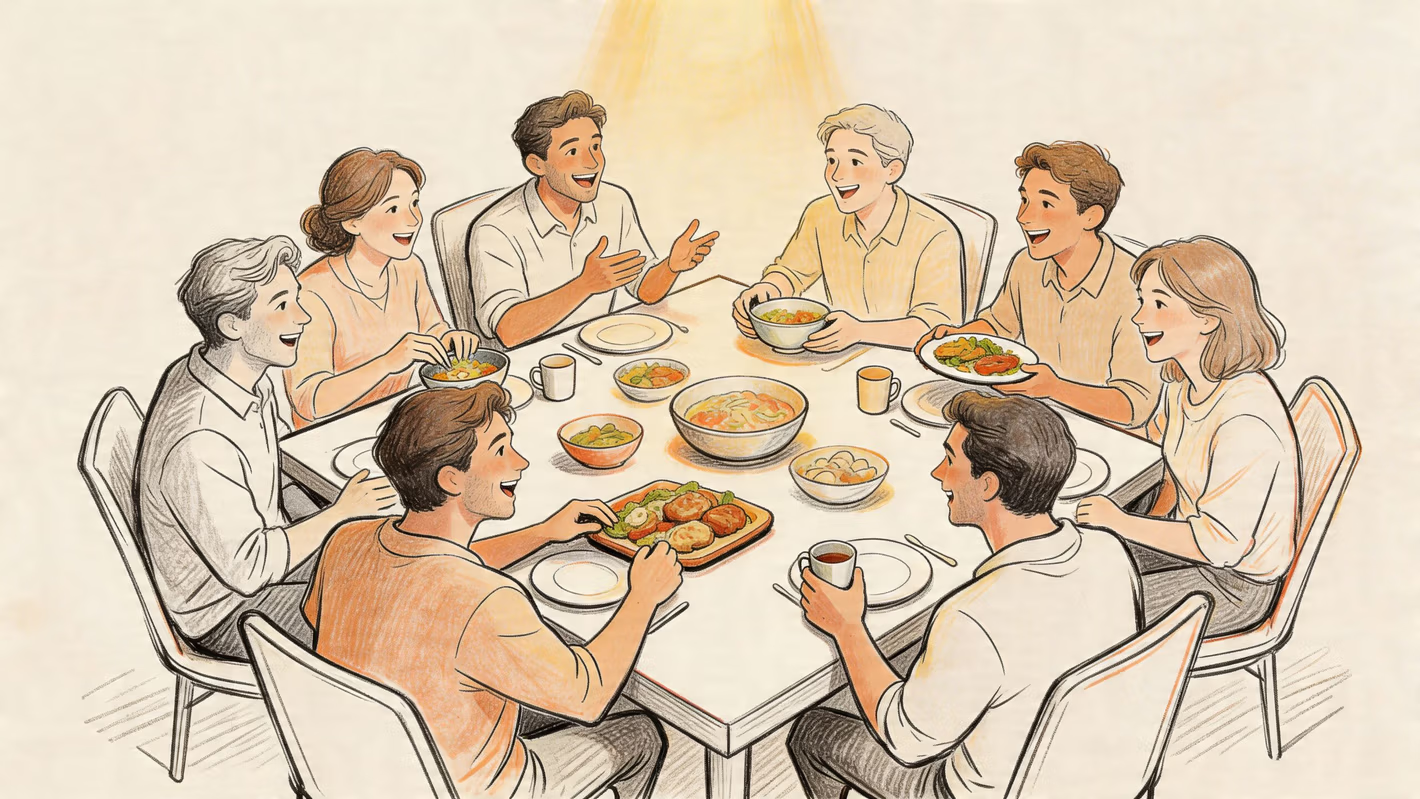
For many homeowners, the goal isn’t just buying a bigger table. It’s creating a place where weeknight dinners, birthday cakes, homework, coffee with neighbors, and holiday gatherings can all happen in one familiar spot. That’s one reason custom dining pieces keep drawing attention. If you enjoy reading about the relationship between furniture and connection, this article on how custom dining tables foster community and family togetherness offers a thoughtful perspective.
A square table for eight makes a strong statement without feeling flashy. It says your home is built for gathering. It also changes the mood of a meal. Instead of two people sitting at opposite ends, the whole group feels part of one conversation.
A good dining table doesn’t just fill a room. It gives people a reason to stay a little longer.
That matters in real houses, not just magazine photos. In many Bellefontaine homes, the dining room has to feel welcoming every day, not only when company comes over. The right table should support that kind of living.
Why Choose a Square Table for Eight People
Rectangular tables are common for a reason. They’re familiar, and they fit many room shapes well. But when a homeowner wants a more balanced and social layout, a square table often does the job better.
Everyone shares the same conversation
With a large square table, each diner is positioned more evenly around the center. That changes how the room feels. People can talk across the table without the long-distance effect that often happens at a rectangular table.
The shape itself encourages a more connected meal. Two people sit per side, and no one gets treated like the “end seat.” That’s especially appealing for families who use the dining room often and want it to feel welcoming instead of formal.
The shape has deep roots
Square dining tables for communal seating aren’t some passing trend. According to the history of dining tables, square dining tables designed to seat 8 people, known historically as “eight immortals tables” in China, trace their origins to at least the Western Zhou dynasty in the 8th century BC, representing an ancient form of furniture designed for balanced, communal gatherings.
That history helps explain why the shape still feels so natural today. The square form has long been tied to shared meals, balance, and face-to-face interaction.
Square tables also change the look of the room
A square 8 seat square dining table creates symmetry in a way a long rectangle usually doesn’t. In a room with centered lighting, matching windows, or a fairly even floor plan, that can make the whole space feel calmer and more intentional.
Here’s where readers sometimes get stuck. They assume a square table is automatically more modern. It can be, but it doesn’t have to be.
- Traditional rooms can use a square table in warm wood with classic side chairs.
- Farmhouse spaces can lean into a painted base, bench seating, and a natural top.
- Cleaner interiors can use a simpler base and quieter finish for a more refined look.
If you want a broader look at how different shapes change seating flow, this guide to maximizing your dining space with table shapes and seating arrangements is a useful companion.
Practical rule: Choose a square table when your priority is conversation and balance, not just squeezing the most seats into the narrowest footprint.
That distinction matters. A square table isn’t the default answer for every room. It’s the right answer when togetherness is the point.
Mastering the Measurements for Your Dining Space
The first question people ask in the showroom is usually simple. “Will it fit?” That’s the right question, because a beautiful table that blocks movement won’t feel beautiful for long.
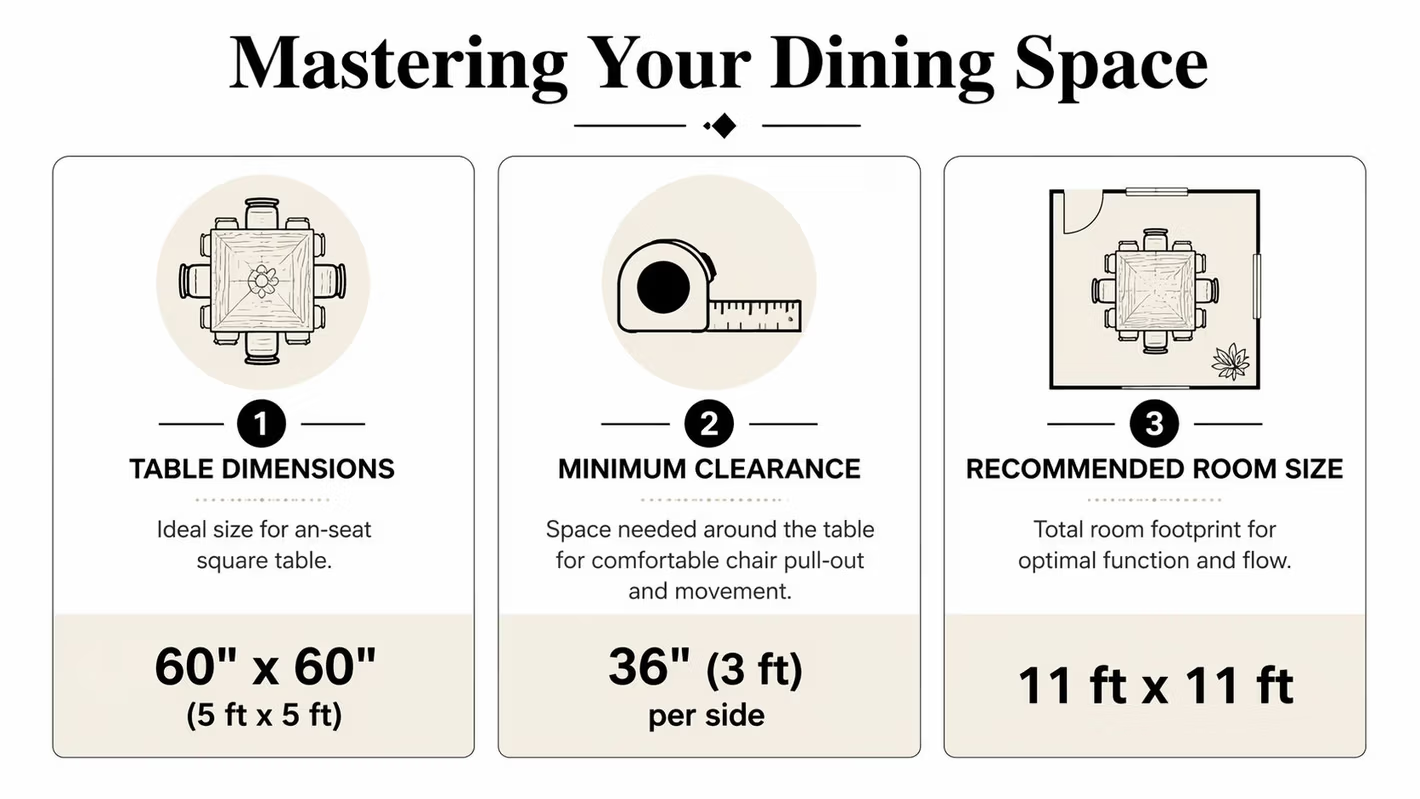
For an 8 seat square dining table, the key numbers are straightforward when you break them into parts. According to this guide on square dining room table sizing, an 8-seat square dining table optimally measures 60-72 inches per side, provides the recommended 24 inches of space per person, and needs at least 36 inches of clearance on all sides. That means a total room footprint of at least 12 by 12 feet.
Start with the table size
A lot of confusion happens because people measure only the tabletop. That’s only the first layer.
If your table is in the 60 to 72 inch range per side, you’re looking at the standard zone for seating eight with reasonable comfort. On a practical level, that gives each person enough room to eat without bumping elbows all night.
A smaller square can look tempting on paper, especially in a tighter dining room. But once you add place settings, serving bowls, and real people, small differences matter fast.
Then measure the space around it
The next step is clearance. You need enough room for chairs to pull out and for people to move behind them without turning sideways every time someone gets up.
Use this simple checklist:
- Measure wall to wall at the narrowest points in the room.
- Subtract the table size you’re considering.
- Make sure the remaining space allows at least 36 inches on each side.
That’s why the minimum room often lands around 12 by 12 feet for this shape and seating count. In daily life, that extra room is what keeps the dining area from feeling crowded.
Watch the traffic paths
A dining room doesn’t exist in isolation. People still need to walk to the kitchen, pass through to another room, or move around a sideboard.
Here are the spots homeowners sometimes forget to account for:
- Door swing space if the room has a hinged door nearby.
- Buffets and hutches that take up part of the wall area.
- Walkways to the kitchen that stay busy during meals.
- Radiators, floor vents, or trim details that slightly reduce usable depth.
Don’t measure the room as an empty box if it doesn’t live like an empty box.
That one habit saves a lot of regret.
Older homes need a realistic approach
Many Logan County homes have defined dining rooms, but they can also have quirks. Window placement, built-ins, and narrower openings can make a room feel more generous than it really is. The answer isn’t always “no.” Sometimes it’s a different chair profile, a tighter base design, or a better traffic plan.
If you’d like a second layer of sizing help, this dining table size guide is handy for comparing common dimensions. And once the table is chosen, the floor finish matters too. A rug can either support the layout or create one more obstacle, so this advice on how to choose the best size rug for your dining room is worth reviewing before you buy one.
A quick room planning example
Let’s say a homeowner has a dining room that seems “about right” for a large table. The room might look open because the walls are clear and the ceiling is high. But after subtracting the table and the chair clearance, the room can tighten up quickly.
That’s why tape on the floor helps. Mark the actual footprint of the table, then walk around it as if chairs are occupied. It sounds basic, but it gives you a much truer answer than standing in the room and guessing.
| What to check | What to look for |
|---|---|
| Table footprint | A square in the 60 to 72 inch range |
| Seat spacing | Enough room for each diner to sit comfortably |
| Open clearance | At least 36 inches around the table |
| Real-life flow | Clear movement to doors, kitchen, and storage |
A large square table can feel wonderful in the right room. The room just has to work as hard as the table does.
Pairing Chairs and Benches for Function and Style
Once the table size is settled, seating becomes the next big decision. Through these choices, the room begins to reflect your personality. The same 8 seat square dining table can feel formal, casual, relaxed, or refined depending on what you place around it.
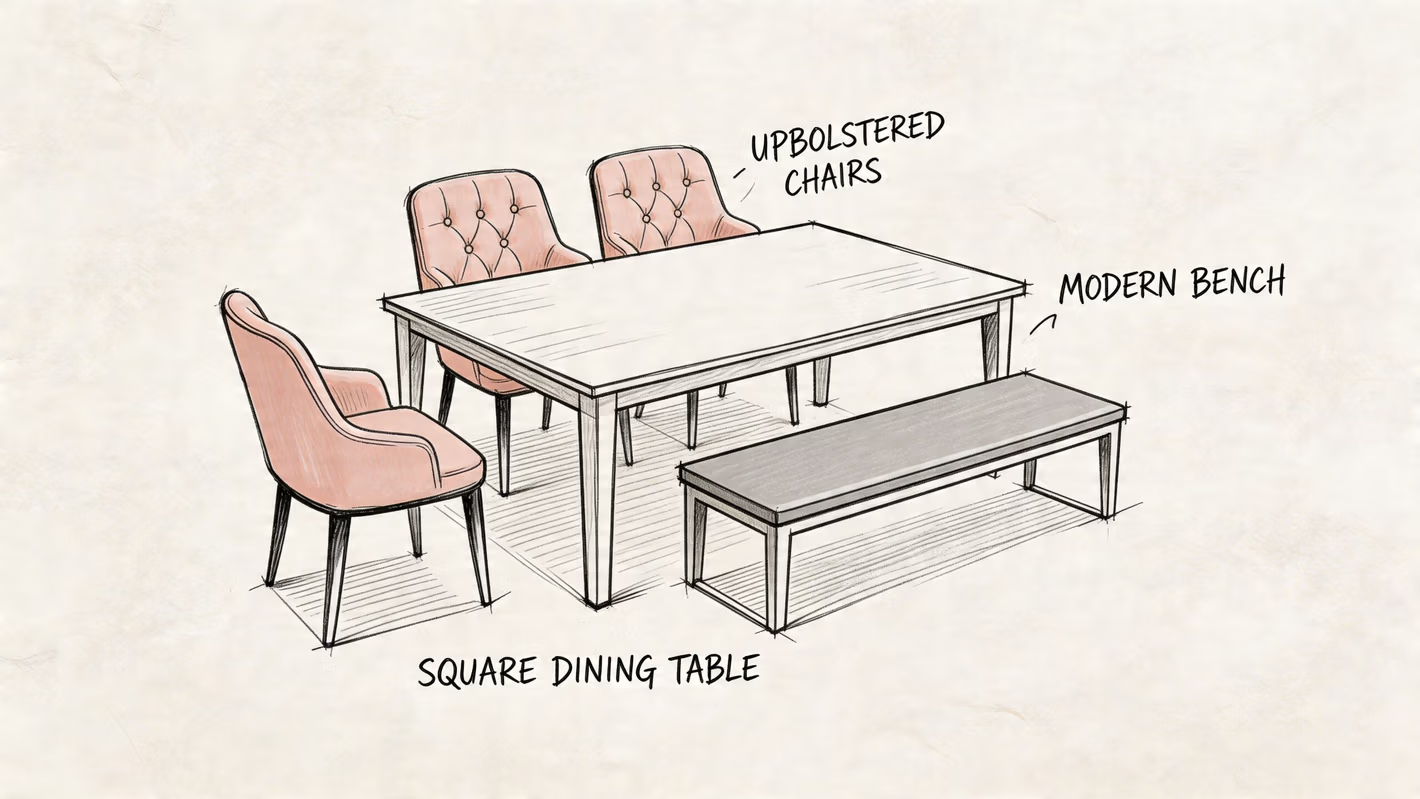
Some households want eight matching chairs and a polished look. Others want flexibility for children, guests, and tighter walkways. Both approaches can work well.
Chairs give structure and a finished look
Individual dining chairs create a more defined seating plan. They also make the table feel complete in a traditional way.
Chairs are often the better fit when:
- You host longer meals and want each person to have a clearly defined seat.
- You prefer a more formal style with upholstery, wood detailing, or a matched set.
- You want visual symmetry around all four sides of the square.
Armchairs can add comfort and presence, but they also take up more visual and physical room. Side chairs usually keep the layout lighter.
Benches solve space problems quietly
Benches are one of the most practical tools for tighter dining rooms. According to this guide to square dining tables that seat 8, using benches can save 6-12 inches of clearance space per side compared to individual dining chairs, which can help in rooms that are a little smaller than the ideal footprint.
That’s a meaningful difference when every inch counts.
A bench works especially well if:
- Kids use the table often and you want easier in-and-out seating.
- The room is close on one or two sides and fully pulling out chairs feels awkward.
- You like a more relaxed, communal style with some farmhouse character.
Mixing the two often works best
The most useful arrangement for many homes isn’t all one thing. It’s a mix.
A common approach is to use chairs on two sides and a bench on one or two others. That keeps the room visually interesting and helps with flexibility. It also softens the “meeting table” look that very large square tables can sometimes get if every seat is identical.
A bench can make a room feel easier to live with, even when the table itself is substantial.
If you’re comparing styles and proportions, this guide on how to choose dining room chairs can help narrow down what will feel right in your room.
Choosing Materials and Finishes That Will Last
The top of a dining table sees everything. Hot dishes, school papers, game night, holiday serving trays, coffee cups, craft supplies. That’s why material choice matters just as much as shape.
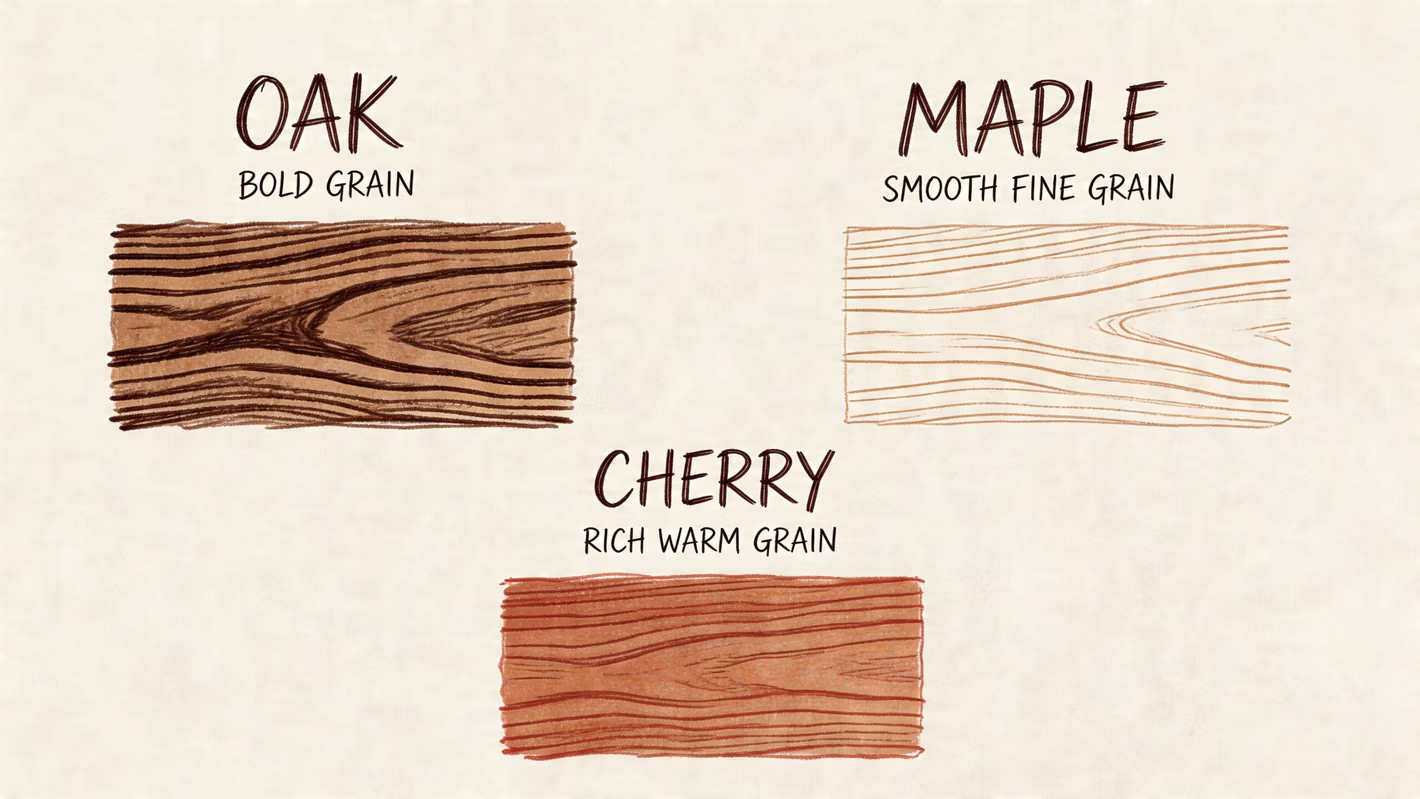
A family that eats at the table every day may need something very different from a household that mostly uses the dining room for hosting. Neither is wrong. The best material is the one that matches your real life.
Solid wood for warmth and long-term character
Many shoppers still gravitate to hardwood because it looks familiar and ages gracefully. Oak, maple, and walnut all bring a different personality, and each one fits a square table well because the larger top gives the grain more visual presence.
Wood is often the right fit if you value:
- Natural variation that makes the table feel one of a kind
- Classic styling that can move with you if the house changes
- The option to refinish later if the top collects wear over time
Wood asks for a little cooperation. You’ll want everyday habits that protect the finish and keep the surface looking its best.
High-performance tops for busy homes
Some households don’t want to think about maintenance very much. That’s where more durable surface options start to stand out.
According to Living Spaces’ material overview for square dining tables, high-performance finishes like sintered stone offer superior heat and scratch resistance compared to traditional wood veneers, reducing maintenance costs and the need for refinishing over a 10-15 year ownership cycle.
That doesn’t mean wood is less worthy. It means the better choice depends on your household habits.
| Lifestyle need | Material direction |
|---|---|
| Daily family meals | Lower-maintenance tops often make life easier |
| Warm, traditional look | Solid wood usually feels more natural |
| Frequent hot dishes and heavy wear | A high-performance surface may be the better fit |
| A future heirloom feel | Hardwood remains a strong choice |
Finish choice changes the experience
Shoppers often focus on species first and finish second. In practice, both matter.
A darker finish can feel dressier and more traditional. A lighter finish often makes a large square table feel less heavy. Painted bases with stained tops can break up the mass nicely and help a substantial table feel more approachable in a family home.
If you’re curious about finish durability in general, this article on the most durable wood finish gives useful background on how protective finishes perform. And if you want a broader primer on species and wear, this guide to choosing the right hardwood for longevity and style is worth saving.
Material choice is really a lifestyle choice. The table should support how your home works on an ordinary Tuesday, not just how it looks on Thanksgiving.
That’s usually the clearest way to decide.
Your Custom Table Journey at Tanger's Furniture
A custom table order usually starts with a very ordinary Bellefontaine problem. You have enough people to seat, a room that has its own quirks, and no interest in guessing wrong on a table this large.
That is why the process matters.
At Tanger's Furniture, custom ordering gives Logan County families a way to make decisions in the right order. You start with the room, then the table size, then the base, chairs, finish, and delivery details. It works a lot like building a house plan before pouring concrete. If the layout is right first, the finished result feels right in daily life too.
If you want a clearer picture of how that works, our guide to getting started with a custom furniture order walks through the early steps.
Custom choices solve real home layout problems
“Custom” can sound bigger than it really is. In many cases, it means you are not stuck with one preset combination.
For an 8-seat square dining table, that flexibility helps with the problems we see all the time in local homes. One family needs a size that leaves enough room near a doorway. Another wants a base that keeps knees from bumping at the corners. Someone else loves the idea of eight seats, but wants two benches because kids can slide in and out more easily.
Those choices may include:
- Adjusting the table dimensions to better suit the room
- Choosing a base style that supports legroom and traffic flow
- Mixing chairs and benches for the way your household sits
- Selecting a finish that works with nearby flooring, trim, or cabinetry
That is where local planning helps more than online browsing. A product page can show you a table. It cannot look at your Bellefontaine dining room and point out that the china cabinet door needs clearance, or that the walkway to the kitchen gets pinched at one corner.
Good planning is part measurement, part experience
Large square tables are less forgiving than smaller rectangular ones. A few inches can change how the whole room feels.
That is why our team often works through the plan with customers piece by piece. Bring in your room dimensions, photos, or even a quick phone sketch. We can help you compare options on paper before an order is placed. For some homes, that confirms a full 8-seat square table is the right call. For others, it reveals that a different base, slimmer chairs, or a slightly adjusted size will serve the room better.
This is especially helpful in older Logan County homes, where room shapes are not always simple and entrances are not always generous.
The last part of the journey matters too
Choosing the table is only part of the project. Delivery path, setup, and long-term service matter just as much once the table arrives.
A large top and eight seats can be difficult to move through tight halls or older stair openings. Local delivery and setup remove a lot of that stress. Financing can also help families space out a meaningful purchase in a practical way. And if something needs attention later, having an established local store involved makes that process easier.
Tanger's has served this area for generations, and that local history shows up in the way custom orders are handled. The goal is not to sell a square table in the abstract. The goal is to help you choose one that works in your actual home, with your actual space, and the people who will use it every week.
The best custom plan usually feels simple by the end. That is a good sign. It means the hard decisions were handled before the table ever comes through the door.
Common Questions from Our Logan County Neighbors
Some questions come up again and again because they’re honest, practical concerns.
Can an 8-seat square table fit in an older home
Sometimes yes, sometimes no, and the difference is usually in the measuring. Older Bellefontaine homes often have dining rooms with strong character and defined walls, which can suit a square table very well. But those same homes may have tighter passages, nearby built-ins, or less forgiving openings.
Bring in your room dimensions, and it becomes much easier to test options on paper before anything is ordered. Benches, narrower chair profiles, or a more efficient base can make a layout work better than people expect.
Is wood too much work for everyday family life
Not always. Wood is still a strong everyday option if you like its look and are comfortable with basic care. But if your table will see constant activity, a higher-performance surface may give you more peace of mind.
The right answer depends on how you use the room. A family with young kids may prioritize easier cleanup. Another household may happily choose wood because they want character and don’t mind the maintenance habits that come with it.
Can a quality table fit a real family budget
That’s a fair question. Large dining furniture is a meaningful purchase, so value matters. Financing can make the project easier to manage, and the Low Price Promise helps keep the conversation grounded in practical terms.
A well-made table also tends to stay useful through different seasons of life. That part doesn’t show up on a tag, but families feel it over time.
Bringing Your Vision Home to Bellefontaine
The right 8 seat square dining table does more than fill an empty room. It creates a place where people naturally gather, stay longer, and feel included. That’s why this choice matters. It affects the look of the room, but it also shapes the way the room gets used.
A good table should fit your home. It should suit your space, your routines, and the way you want guests and family to feel when they sit down. That’s the heart of the “Love Your Home” idea. Not decorating for show, but choosing pieces that support everyday life.
If you’re weighing dimensions, finishes, chair options, or budget, take your time. Bring measurements. Ask the practical questions. Think about traffic flow, cleanup, and how often the room really gets used.
Visit our showroom in Bellefontaine to see custom options in person or browse the collections online to start your journey. Have a specific design question? Contact the design staff today or join the Love Your Home Club for expert tips, local updates, exclusive offers, financing information, and help creating a home that works beautifully for your family.