Dining Room Tables and Chairs for 10: Your Complete Guide

A crowded holiday table usually starts with good intentions. Then the side chairs come in from the office, someone eats at the island, and one guest ends up balancing a plate from the living room. Families across Bellefontaine and Logan County know that feeling well, especially in homes where gathering matters as much as the meal itself.
A large dining set changes that rhythm. It gives everyone a place to sit, talk, linger, and stay connected after the dishes are cleared. For households shopping for dining room tables and chairs for 10, the main question isn't just whether the table can technically fit. Instead, the primary concern is whether the room still works when ten people are seated, chairs are pulled back, serving dishes are moving, and the evening is in full swing.
That practical view has guided local furniture help since 1946, with design support shaped over decades of serving area homes since 1964. A ten-person dining set isn't just a bigger table. It's a home hub, and choosing well means thinking about movement, comfort, materials, delivery, and long-term use just as much as style.
Table of Contents
- Creating a Home Hub for Your Biggest Gatherings
- Before You Shop Planning and Measuring for Ten
- Choosing Your Table Shape and Style
- Selecting Chairs for Comfort and Capacity
- Custom Orders Delivery and Long-Term Care
- Budgeting for Your Perfect Gathering Spot
Creating a Home Hub for Your Biggest Gatherings
A ten-seat dining set usually enters the conversation when a family gets tired of making do. One holiday exposes the problem. Then a graduation party does it again. Before long, the dining room starts to feel less like a finished space and more like a seating puzzle.

That's why larger dining furniture matters so much in real homes. It creates one clear place for birthdays, Sunday meals, school projects, and the kind of holiday dinners that run late because nobody wants to leave the table. The best large sets don't feel oversized for the sake of it. They feel settled, welcoming, and ready.
In Logan County homes, that practicality often matters more than formality. Some families want a polished dining room for hosting. Others need one hardworking table that handles weeknight dinners, card games, homework, and guests. Both are valid, and both deserve furniture that supports the way the home lives.
A dining table for ten works best when it serves ordinary Tuesday nights just as well as Thanksgiving.
A good starting point is thinking about the room as a gathering zone, not just a furniture layout. That means looking at traffic flow, sight lines into adjoining spaces, and whether chairs can move without turning every meal into a shuffle. It also means thinking about the chairs themselves, because a table may look generous in a showroom and feel crowded the moment every seat is occupied.
For families who entertain often, the room should support movement as much as seating. Serving dishes need a path. Guests need to stand up comfortably. Children need a place that feels included instead of improvised. Helpful entertaining ideas in this effortless entertaining guide can make that larger setup feel even more natural.
Before You Shop Planning and Measuring for Ten
Buying a large dining set without measuring first is how beautiful furniture becomes a daily frustration. A ten-seat table asks more from a room than expected, especially once every chair is in use.
What ten seats really require
A practical rule says each adult needs about 24 inches of table edge, and comfortable room planning should leave about 36 inches of clearance between the table and walls or surrounding furniture. That's also why tables meant for ten are commonly 96 to 120 inches long in rectangular form or around 72 inches if round, as explained in this dining table sizing reference.
Those numbers matter because they shift the conversation from “Can a ten-seat table fit in this room?” to “Can ten people sit here without blocking the room?” A large table may fit on paper and still feel cramped when chairs are pulled back and someone needs to pass behind a guest.
A quick planning table helps make that easier to visualize:
| Table Shape | Common Dimensions for 10 | Minimum Room Size |
|---|---|---|
| Rectangular | 96 to 120 inches long | Large enough to allow 36 inches of clearance around the table |
| Round | Around 72 inches | Large enough to allow 36 inches of clearance around the table |
| Oval | Similar planning to a large rectangular table | Large enough to allow 36 inches of clearance around the table |
For homes that host milestone events, it can also help to study how event planners think about circulation and seating density. This guide for perfect wedding layouts is useful because it frames layout as movement, not just furniture placement.
Use the tape test before buying
Painter's tape is one of the most useful planning tools in furniture shopping. Mark the full tabletop on the floor. Then add the chair zone around it. Walk the room the way people would use it.
Try these checks:
- Pull out every side fully: Chairs need room to slide back without striking walls, cabinets, or a buffet.
- Walk a serving path: Carry a tray or large bowl through the space. If that path feels awkward now, it won't improve on a busy holiday.
- Test nearby doors and openings: In open layouts, a table can interfere with traffic patterns even when the room itself seems large enough.
- Include end seating: Those seats often affect circulation more than expected.
Practical rule: An empty room can make almost any table look manageable. The tape test reveals whether the room still works once people sit down.
It also helps to compare the room's daily use with its occasional use. A household that seats four most nights may still need ten seats several times a year. In that case, the layout should support both conditions, not force the room into one permanent mode. A larger planning walkthrough in this dining table size guide can help households think beyond the product dimensions alone.
Choosing Your Table Shape and Style
Shape affects more than looks. It controls conversation, serving flow, chair count, and how crowded the room feels once every place is filled.
How each shape behaves with a full guest list
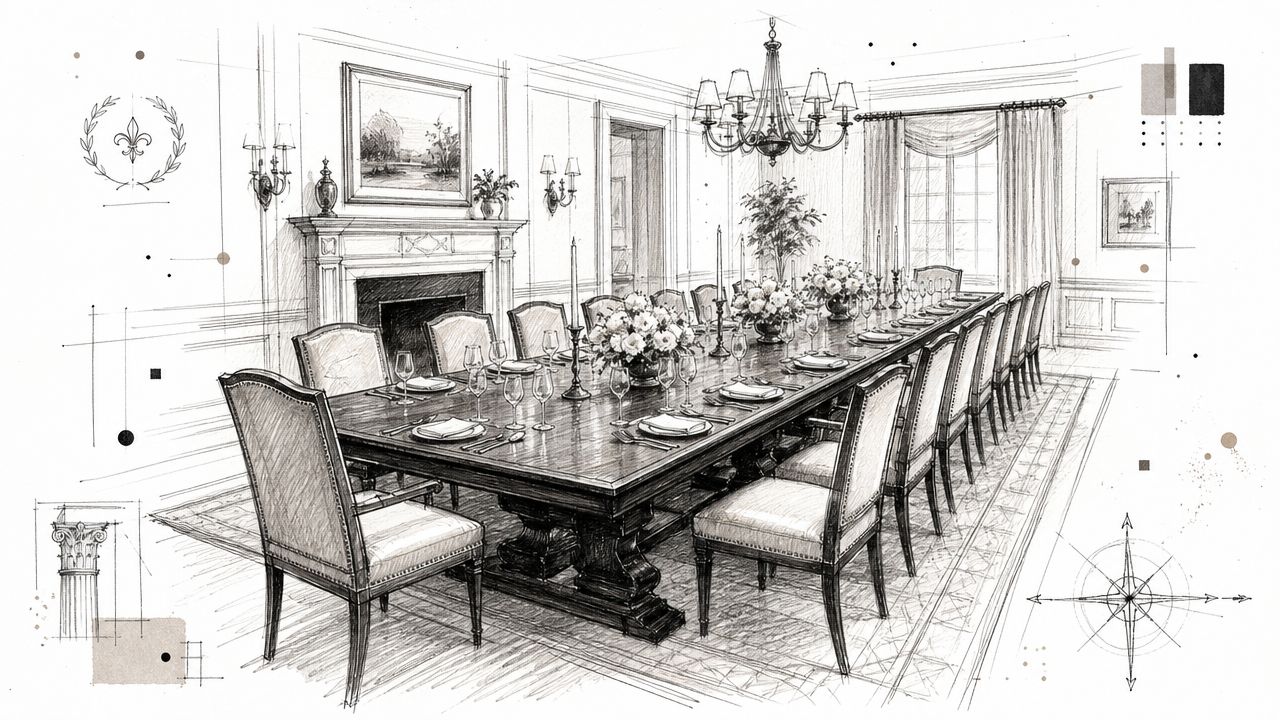
Rectangular tables remain the most common answer for dining room tables and chairs for 10 because they organize a large guest count efficiently. They suit longer rooms, define a formal dining area clearly, and make it easier to keep serving pieces centered.
Round tables create a different feeling. Conversation tends to be easier because everyone can see one another, and the lack of corners softens movement around the table. But a large round table needs real floor space, and that footprint can take over a room faster than buyers expect.
Oval tables split the difference. They carry some of the sociable feel of a round top while preserving the directional flow of a rectangular table. In homes with children or tight pass-through areas, the softened ends can also make movement feel easier.
Extendable tables solve a common household problem. They allow a smaller everyday profile and open up when guests arrive. For many families, that flexibility is more useful than committing to a permanently expanded table.
Many buying guides stop at tabletop dimensions, but the more important issue is how the layout behaves when all seats are in use. As noted in this practical dining layout article, the key challenge is the total footprint created by occupied chairs, pull-out space, and room to serve.
Style choices that help or hurt function
A table's base matters just as much as its top. Heavy corner legs can interfere with end seats or make side seating feel awkward. Pedestal or trestle designs can improve flexibility, but they should still be checked for legroom and chair placement before purchase.
A few style decisions tend to work well in larger dining rooms:
- Simple chair silhouettes: Ten ornate chairs can make a room feel visually busy.
- Durable surfaces: Large tables host more meals, more elbows, and more cleanup.
- Balanced visual weight: A substantial top needs chairs that don't disappear under it, but they shouldn't overwhelm the room either.
- Bench seating where appropriate: On one side, a bench can make casual family seating easier and help with flexibility.
Households deciding between shapes often benefit from seeing room-flow examples first. This guide to dining space, table shapes, and seating arrangements is helpful for narrowing the choice based on how the room functions.
Selecting Chairs for Comfort and Capacity
The table usually gets the attention first. The chairs determine whether anyone wants to stay seated after dessert.
Check the chair and table together
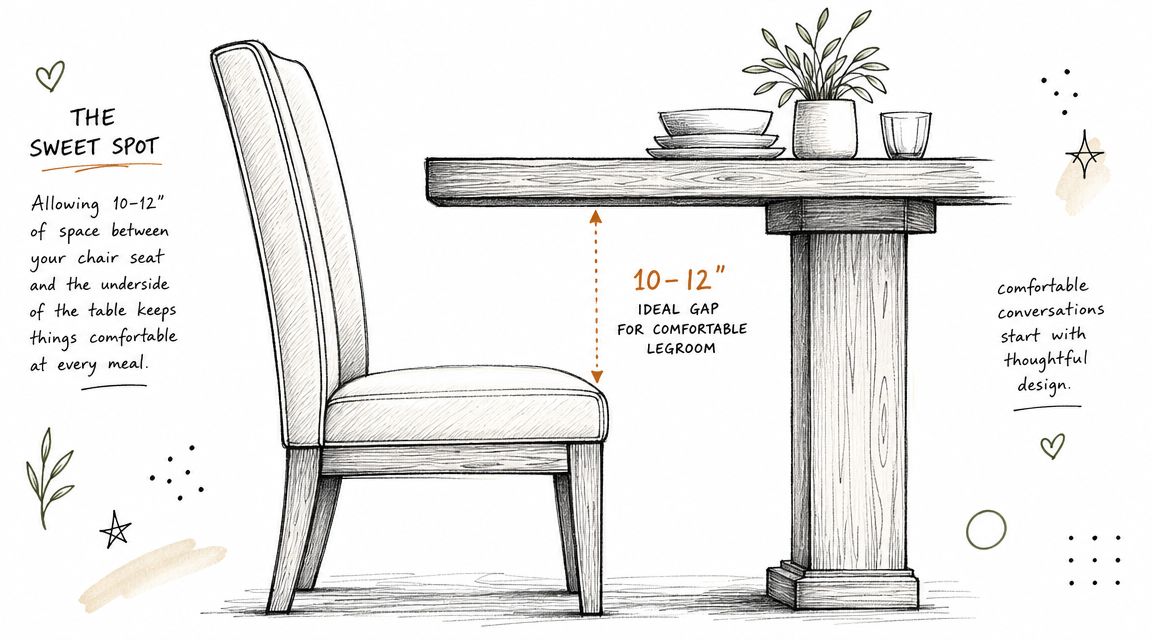
The key relationship is vertical, not decorative. For comfortable dining, the seat and tabletop should have a 10 to 12 inch differential, and the underside of the table should allow at least 27 inches of knee clearance, according to this table and seating size guide.
That prevents one of the most common mistakes with large dining sets. A table may look roomy from the outside but feel restrictive once someone sits down and discovers the apron or support structure cuts into legroom.
Chair width also matters more than buyers often expect. Ten narrow chairs and ten generously proportioned chairs create two completely different seating realities, even at the same table length. Armchairs at the heads can add comfort and presence, but too many armed side chairs can reduce usable capacity and make the room feel crowded.
If the chair looks wide, cushioned, or heavily framed, it needs to be measured with the table, not judged by eye.
A strong shopping habit is testing the full set as a group. Sit in the side seats. Sit at the ends. Slide the chair in and out. Check whether guests can get in and out without bumping adjacent chairs. For households comparing styles, this dining chair selection guide can help narrow the field.
Pick materials for real family use
Material choice should follow lifestyle, not just design preference.
- Upholstered chairs: Better for long meals and lingering conversation. They can also soften the look of a larger set.
- Wood chairs: Practical for active households that want easier wipe-down care.
- Mixed seating: Upholstered end chairs with simpler side chairs often balance comfort, cost, and visual interest.
- Performance-minded fabrics and finishes: Worth considering when the dining room doubles as a homework station or gathering zone.
This is also where customization can be useful. Some buyers want the comfort of upholstery without overly delicate fabric. Others want a wood finish that coordinates with nearby cabinetry or flooring. Those choices matter more in a ten-piece seating group because repetition amplifies every design decision.
Custom Orders Delivery and Long-Term Care
A large dining set usually needs more than a quick click-and-buy approach. Bigger furniture asks tougher questions about finish, fabric, shape, access into the home, and long-term upkeep.
Why customization matters with larger dining sets
The most successful ten-seat sets often come from thoughtful adjustments rather than settling for an almost-right option. That might mean choosing a different finish to better suit the room, selecting a more forgiving fabric on host chairs, or opting for a table configuration that handles both daily meals and larger gatherings.
For shoppers who want those choices, custom order planning is often the most practical path. Tanger's Furniture offers a custom-order process with configurable options on select furniture, including choices tied to fabrics, finishes, and layout needs.
External brand standards can also help buyers understand what customization looks like at the manufacturer level. Flexsteel and Smith Brothers of Berne are examples of partners known for customizable upholstery programs that can inform how buyers think about material selection and durability in high-use spaces.
For business owners furnishing hospitality-style meeting or break spaces, these same issues apply. Commercial projects need seating that holds up, layouts that move well, and delivery that doesn't interrupt operations. That's why some buyers also look at broader planning support through Commercial Office solutions when the project goes beyond the home.
Delivery service and care after the sale
Large dining furniture can be difficult to maneuver through doorways, hallways, and stair turns. Professional delivery matters because the product has to arrive safely, be assembled correctly, and be placed where the room works best.
Good service also matters later. Chairs loosen over time. Finishes need the right care. Busy households benefit from knowing there's a clear path for help instead of being left on their own once the receipt is filed away.
A few practical care habits can extend the life and appearance of a high-use dining set:
- Use the right cleaning method: Surface type and fabric type should guide care, not guesswork.
- Address spills quickly: Dining furniture ages better when stains and moisture don't sit.
- Recheck hardware periodically: Bigger sets see more movement and more daily use.
- Protect the traffic side: The chairs that get used most often usually need attention first.
For homeowners refreshing older pieces rather than replacing everything at once, this article on Shiny Go Clean Madison furniture offers useful cleaning perspective. Local shoppers often think the same way across the home, whether they're updating a dining room, shopping for custom sofas Ohio families can personalize, replacing a dependable laundry pair such as Speed Queen laundry, or visiting a mattress store Logan County residents rely on for everyday comfort.
Budgeting for Your Perfect Gathering Spot
A ten-seat dining set is a meaningful purchase because it solves a real household problem and becomes part of the way the home functions for years. Budgeting goes more smoothly when the focus stays on use, durability, and fit instead of only the ticket price.
Think in years of use, not just purchase day
The current market reflects a broader shift toward homes that host more often. A 10-foot (120-inch) table has become a common centerpiece for larger gatherings and can seat 10 comfortably with potential maximum seating beyond that, as described in this large table sizing overview.
That doesn't mean every household needs the largest possible table. It means buyers should match the investment to the role the room plays. If the dining room serves as the setting for holidays, birthday dinners, and regular family meals, quality construction and practical seating comfort usually matter more than chasing the lowest upfront cost.
For homeowners weighing this purchase alongside broader home updates, renovation budgeting frameworks can help put the decision in context. This guide for homeowners from Templeton Built is useful for thinking about furniture as part of a larger home investment plan.
Make the project manageable
Value matters, especially for families balancing several priorities at once. A Low Price Promise can provide reassurance that quality and sensible pricing don't have to work against each other. Flexible payment options also make it easier to choose the right set now instead of settling for one that won't age well with the home.
A complete project budget should include more than the table and chairs alone:
- Delivery and setup: Large furniture is easier to enjoy when the heavy lifting is handled properly.
- Material upgrades: Better fabrics or finishes can be worth it in a high-use room.
- Long-term fit: The right dimensions prevent an expensive mistake.
- Future flexibility: An expandable design can reduce the need to replace the set later.
Visit Tanger's Furniture showroom in Bellefontaine to see custom options in person or browse collections online to start the process. Shoppers can also explore financing options for flexible payments, join the Love Your Home Club for exclusive offers and expert tips, or contact the design staff with specific room-planning questions. Local delivery and in-house service requests help take care of the heavy lifting, both on delivery day and after the furniture is home.