A Guide to the Perfect TV Stand 62 Inch

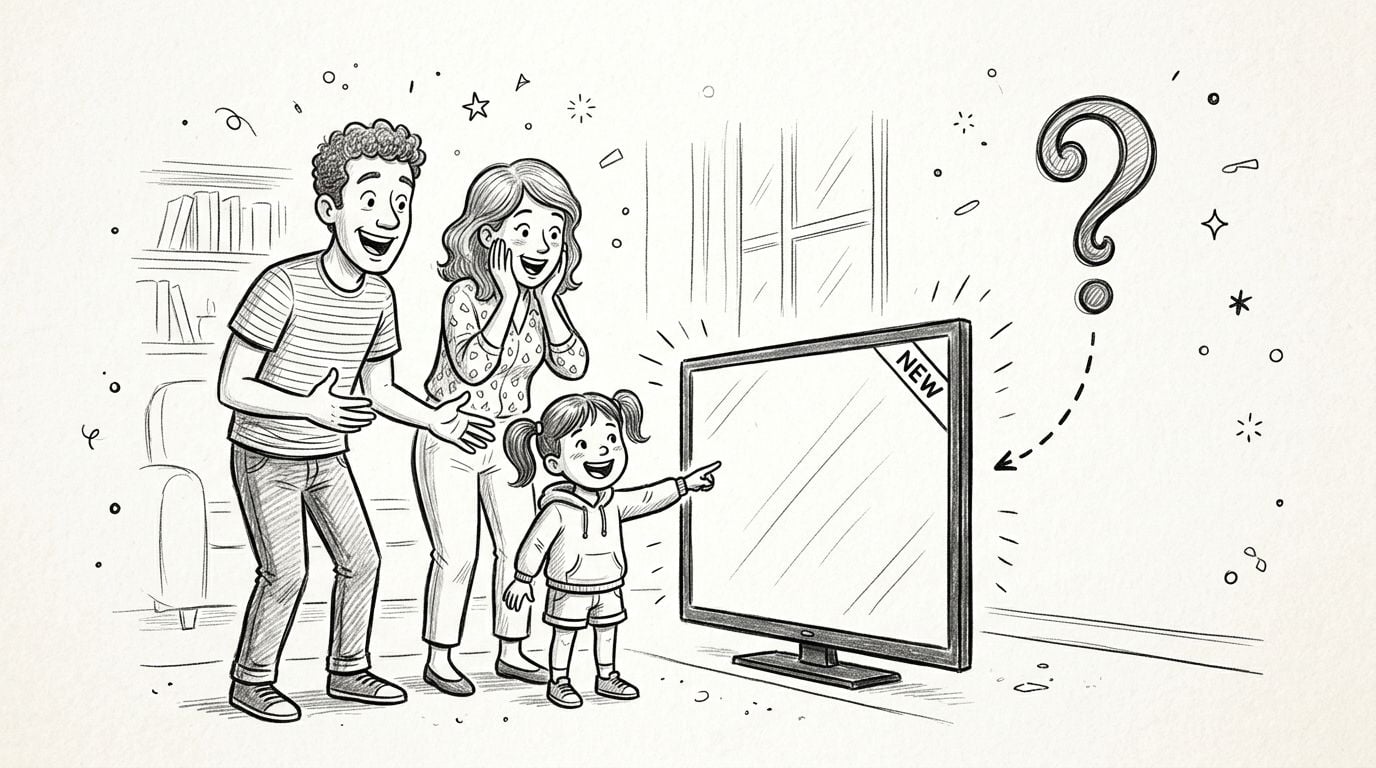
A new television often brings a quick burst of excitement, then a very practical question. Where should it go, and what should hold it?
That's where many shoppers get stuck on the phrase TV stand 62 inch. It sounds simple, but retail naming often blurs two different ideas. Some listings use it to mean a stand that is 62 inches wide, while others use it to suggest a stand meant for a certain TV size. That confusion shows up often enough that shoppers regularly need help sorting out actual stand width, TV diagonal size, and room placement, as noted in this overview of 62-inch TV stand naming confusion.
A family setting up a new screen in a living room usually isn't worrying about industry terminology. They're thinking about whether the TV will look balanced, whether a soundbar will fit, and whether the whole setup will feel right with the sofa, rug, and wall space already in place.
In communities like Bellefontaine and across Logan County, that kind of furniture decision tends to be practical first. People want a room that works on movie night, on game day, and on an ordinary Tuesday evening. For households planning a fuller entertainment space, ideas like Northpoint Construction's basement ideas can also help connect furniture choices to the bigger room layout.
A good stand does more than hold a screen. It sets the visual center of the room, manages cords and components, and helps a home feel finished instead of temporary. That's one reason a 62-inch width has become such a useful category. It often lands in the sweet spot between compact and oversized.
Table of Contents
- Welcome Home Your New TV Now What
- Getting the Measurements Right For a Perfect Fit
- Considering Weight Airflow and Safety
- Finding Your Style With Custom Finishes and Materials
- Solving for Cords and Components
- Bringing Your Perfect Stand Home With Confidence
Welcome Home Your New TV Now What
The first decision usually isn't style. It's fit.
A 62-inch stand can sound like a stand made for a 62-inch television, but that headline doesn't answer the key questions. A shopper still needs to know the stand's true width, whether the TV base fits on top, and whether the piece works on a straight wall or in a corner. Those are the details that turn a promising listing into the right choice or the wrong one.
Why the label trips people up
TVs are sold by diagonal screen size. Furniture is sold by overall width.
That difference is where most mistakes happen. Someone buys a mid-size or larger television, sees “62 inch TV stand,” and assumes it's a direct match. Then the stand arrives, and the television's feet sit wider than expected, or the room suddenly feels cramped.
Practical rule: A product name is only a starting point. The actual width, top surface, and placement in the room decide whether the stand works.
This issue has become more common because screens got wider and furniture changed with them. The old idea of matching one number to another doesn't work very well anymore. A better approach is to treat the 62-inch category as a furniture width that may suit a range of TVs, depending on the television's actual dimensions and base footprint.
What people usually want from this size
For many homes, a TV stand 62 inch piece hits a comfortable middle ground:
- Enough presence: It gives the television a visual base so the setup doesn't feel top-heavy.
- Enough surface area: It often leaves room for a soundbar, remote charging tray, or a small decorative accent.
- Enough flexibility: It can suit apartments, family rooms, finished basements, and even some office lounge spaces.
That balance matters because a media console is rarely the only thing happening in a room. It has to live beside sectionals, recliners, side tables, baskets, lamps, and sometimes the family dog's favorite sleeping spot.
A stand should make the room feel settled, not squeezed.
Getting the Measurements Right For a Perfect Fit
A TV stand should be sized from the TV's actual width, not from the number printed on the TV box.
That one shift clears up most sizing confusion. Independent sizing guidance notes that a 65-inch TV is commonly about 57 inches wide and is often paired with stands in the 63 to 70 inch range for balance and stability, which helps explain why a 62-inch stand is often close to the conversation for mid-size and larger screens in this class, according to this TV stand size guide from Belleze.
Why diagonal size causes confusion
A television's advertised size measures from one corner of the screen to the opposite corner. A stand is measured straight across from left to right.
That means a TV with a large diagonal doesn't take up that same amount of horizontal space. In real shopping terms, a person comparing a 65-inch television to a 62-inch stand isn't comparing like with like.
Three measurements deserve attention before purchase:
Actual TV width
This tells whether the screen will look proportionate on the stand.Base or feet footprint
This decides whether the TV can physically sit on the top surface.Usable top width and depth of the stand
Not every inch of a console top is equally usable if edges are curved, raised, or interrupted by design details.
For households that want a little help before moving furniture around, this furniture measuring guide offers a practical way to double-check room fit.
A quick sizing table
The easiest way to shop is to compare diagonal size to approximate actual TV width, then compare that width to a recommended stand width.
| TV Diagonal Size | Approximate TV Width | Recommended Stand Width |
|---|---|---|
| 65 inches | about 57 inches | 63 to 70 inches |
That table isn't a giant chart, but it covers one of the most common reasons shoppers search for a TV stand 62 inch option in the first place. They're often trying to support a popular larger screen without jumping to a very long console.
What makes a 62-inch stand workable
One furniture sizing guide says a 62-inch TV stand can leave about 9 inches of space on each side when a 65-inch TV, roughly 56 inches wide, is centered on it. The same guide also says that for 60-inch-and-larger TVs, the stand should be about the same width as the screen, which helps explain why this size often feels balanced rather than too small or too large in real rooms, according to this furniture sizing reference on TV stand proportions.
A good fit doesn't come from matching labels. It comes from checking the TV's real width against the stand's real surface.
A 62-inch console often works best for shoppers who want a stand that feels substantial without dominating the wall. It can be especially useful in homes where the room still needs space for end tables, walkways, or a nearby accent chair.
Considering Weight Airflow and Safety
Width gets most of the attention. Safety deserves just as much.
Modern flat-panel televisions can be heavier than they look, especially once a soundbar, game system, streaming device, and decorative items share the same surface. One sizing guide notes that contemporary televisions in larger sizes often weigh 50 to 100+ pounds, and it recommends a top-surface safety margin of 20% to 50% above the combined weight of the TV and components in this TV stand console sizing reference.
The load rating matters
That recommendation changes how a stand should be evaluated. The question isn't only, “Will it fit?” The question is also, “Can it carry the full setup safely over time?”
A solid checklist looks like this:
- Check the maximum load rating: The stand should exceed the combined weight of the television and everything stored on or in it.
- Look at how the weight is distributed: A centered pedestal base behaves differently from wide-set TV legs.
- Think beyond day one: A setup may grow to include a soundbar, speaker pair, or gaming console later.
Shoppers sometimes assume a low-profile media console is automatically sturdy because it looks substantial. That isn't always true. A long, sleek shape can still have limits.
Airflow protects the electronics
Storage shouldn't trap heat.
Components such as game consoles, media boxes, and audio gear need room around them so warm air can move out instead of building up. That's why open shelving, ventilated backs, and sensible spacing inside cabinets matter. A beautiful console that overheats electronics becomes frustrating very quickly.
Helpful signs of better airflow include:
- Open shelves: These allow easy heat release and easy access.
- Back panel openings: These help with both ventilation and cord routing.
- Cabinets that aren't overpacked: Devices need breathing space, not a tight stack.
Safety note: Furniture placement and cord management go hand in hand. Homeowners who want a broader household checklist may find these electrical safety tips for homeowners useful when setting up entertainment equipment.
A practical setup also protects the floor beneath it. Anyone moving or repositioning a media console can reduce scuffs and pressure marks by reviewing these ways to protect floors from furniture.
The shift to wider, lower-profile media furniture happened for good reason. Flat screens needed broader surfaces, steadier support, and better space for components. A 62-inch stand makes sense within that change, but only when the stand's construction, weight rating, and ventilation all support the setup.
Finding Your Style With Custom Finishes and Materials
Once the measurements work, the stand needs to belong in the room.
A television is already a large visual object. If the console beneath it feels disconnected from the rest of the space, the wall can look awkward even when every measurement is correct. A well-chosen TV stand 62 inch piece helps the screen settle into the room instead of taking it over.
Choosing a look that belongs in the room
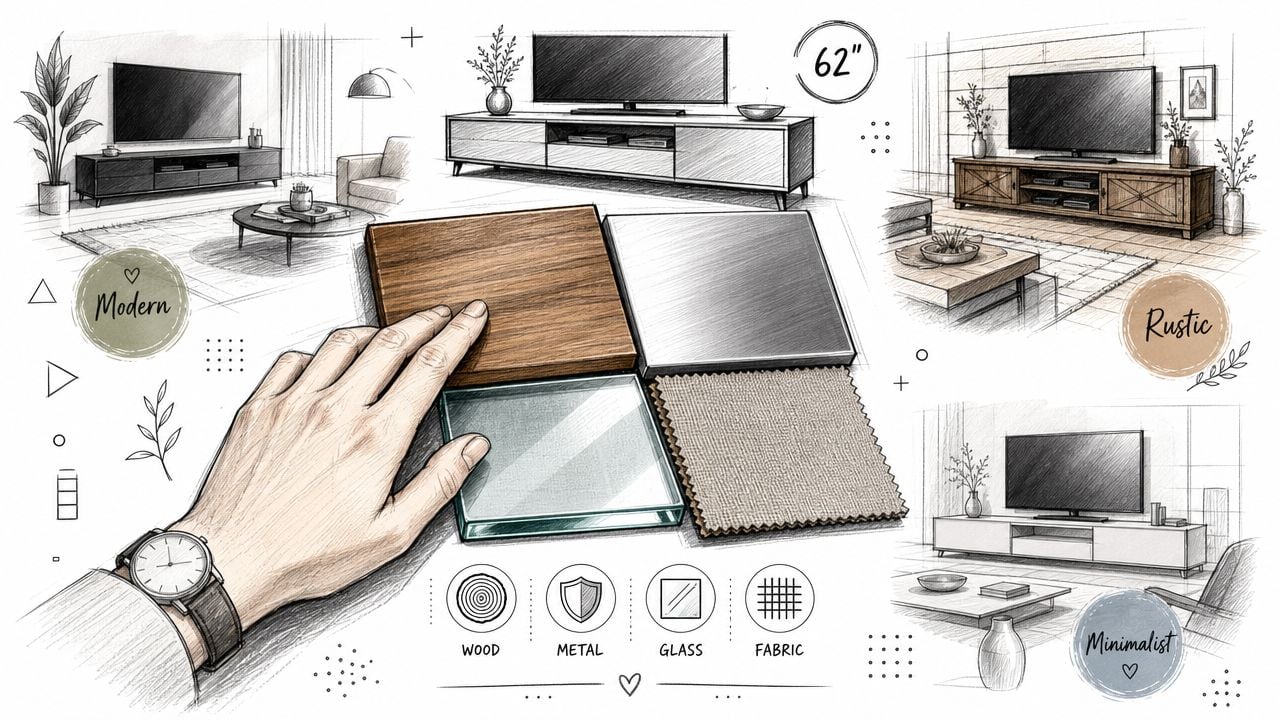
Different materials change the feeling of the setup, even when the stand is the same width.
- Solid wood: Warm, grounded, and easy to blend into traditional, transitional, or farmhouse rooms.
- Metal and wood mixes: Good for industrial or urban spaces where a little contrast adds character.
- Clean painted finishes: Useful for lighter, more casual rooms that need a fresh look instead of visual weight.
- Glass accents: These can feel lighter, though they also show dust and fingerprints more quickly.
Style direction matters too. A low modern console with flat fronts creates a different mood than a piece with framed doors, visible grain, or turned legs. In a family room, softer lines can help the space feel more welcoming. In a finished basement media area, a sharper profile may feel more architectural.
The best stand usually echoes something already in the room. The wood tone, the leg shape, the hardware finish, or the overall silhouette.
Why customization changes the result
Custom options can make a big difference. Rooms rarely come together from one label and one product photo alone.
A shopper may like the width of one console, the finish of another, and the storage layout of a third. That's why custom furniture matters. Instead of settling for a near match, households can often get closer to the look they want through custom furniture options made simple.
When discussing trusted quality and tailoring, it also helps to explore established makers such as Flexsteel and Smith Brothers of Berne. Those brand standards reflect a broader idea that furniture should fit the home, not force the home to fit the furniture.
A few style questions often guide the decision well:
Does the room need warmth or contrast?
A medium or darker wood finish can soften a room filled with electronics and black screens.Should the stand disappear or stand out?
In some homes, the media wall should feel quiet. In others, the console acts like an anchor piece.Is storage visible or hidden?
Open shelves feel casual and accessible. Closed doors keep the room looking calmer.Will the room evolve?
A timeless finish usually adapts better when the rug, art, or sofa changes later.
This part of the process is often where people begin to feel excited again. The decision stops being only technical and starts becoming personal. That's a big part of what helps people love their home, not just furnish it.
A thoughtful stand can also connect nicely with the rest of the room. In the same household, the family might be choosing living room furniture, planning a guest room refresh, comparing a mattress store Logan County option for better sleep, or shopping custom sofas Ohio households can tailor to their space. Good design decisions tend to ripple outward.
Solving for Cords and Components
A great media setup can still look messy if cords are hanging everywhere.
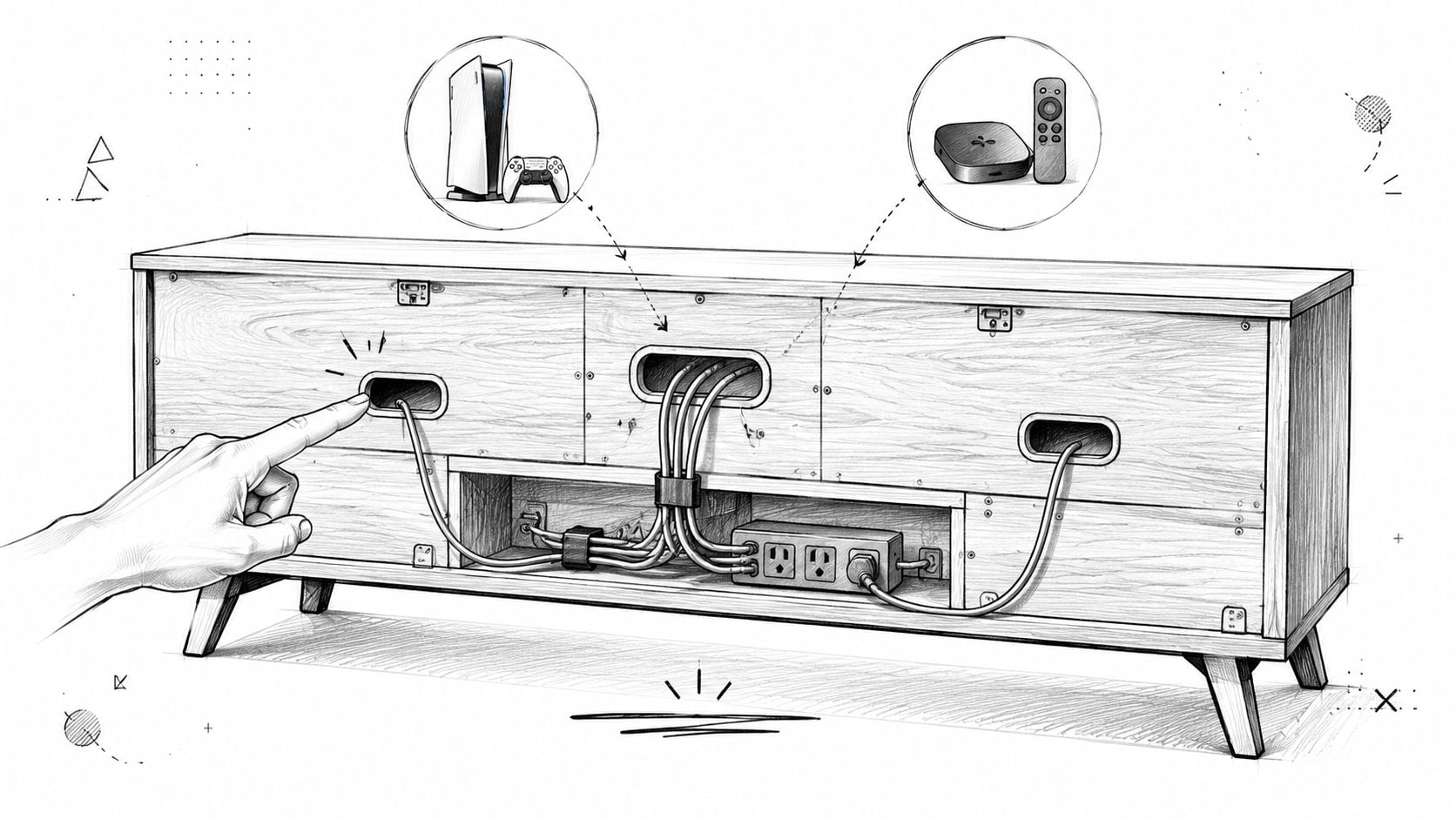
That's why storage design matters almost as much as width. The best TV stand 62 inch options don't just support a screen. They organize the hardware that comes with modern viewing, including sound systems, game consoles, streaming boxes, routers, and chargers.
Storage that works with real electronics
A media console should make it easy to hide clutter without making equipment hard to reach.
Some setups benefit from closed cabinets, especially when the goal is a clean, relaxed look. Others work better with open shelves because devices need airflow and quick access. The right answer depends on how the room is used.
Good cable management often includes:
- Cord cutouts in the back panel: These reduce the tangle behind the stand.
- Shelf spacing that fits actual devices: A shelf isn't useful if the equipment barely squeezes in.
- Room for a soundbar: The stand should support the TV without forcing the audio gear into an awkward position.
- A plan for the power strip: It should be accessible, but not visible from across the room.
For households trying to sort out what cords and signal needs belong in a television setup, this guide to TV cord performance can be a helpful companion resource.
Clean design works at home and at work
The same cable and component principles that help in a family room also apply in professional spaces.
Conference rooms, waiting areas, and shared office lounges benefit from furniture that hides visual clutter while keeping technology accessible. That's one reason organized media furniture translates well beyond residential rooms. Businesses that need broader furnishing help can explore commercial office solutions.
A well-planned stand also leaves room for styling above and around the screen. Once the cords are controlled and the equipment is in the right place, the entire wall becomes easier to finish. For readers thinking about the bigger visual picture, these above-TV decorating ideas can help tie the media area into the rest of the room.
Clean cable management doesn't just look better. It makes the space easier to clean, easier to troubleshoot, and easier to live with every day.
That kind of order matters in busy households. It also matters in rooms where technology shares space with everyday life, from children's toys to books, baskets, and even laundry folded while a show plays in the background. A home rarely functions one activity at a time, which is why smart storage earns its place.
Bringing Your Perfect Stand Home With Confidence
By the time a shopper reaches the final decision, the main questions are usually practical again. Will the stand arrive safely, fit as expected, and support the full setup once everything is in place?
That last part matters because safe use depends on more than the advertised TV size. One product listing for this size category specifies a 150 lb max load, which illustrates the importance of checking the stand's rating against the actual system weight, according to this 62-inch console product listing with load information.
Delivery and setup matter more than people expect
A TV stand can look straightforward in a product image, but bringing it into a home is often the hardest part.
Doorways, stairs, flooring, room turns, and final placement all affect the experience. Proper setup also includes checking that the TV base sits securely, that the load is within the stand's rating, and that the final placement feels stable and intentional. Families that want a smoother process often appreciate local furniture delivery service options, especially when the piece is substantial or the home layout is tight.
A stand isn't really chosen until it's in the room, level, loaded correctly, and working with the rest of the furniture.
Value includes support after the sale
People usually remember the ease of ownership more than the buying moment itself.
That's why value means more than the sticker. It includes clear guidance, reliable setup, flexible financing for households balancing a furniture budget, and service when something needs attention later. A strong Low Price Promise matters too, because most families want durability and style without feeling they overpaid to get it.
For some homes, the TV stand is part of a larger furnishing plan. The same household may be shopping living room pieces, comparing Bellefontaine furniture options, replacing a washer with Speed Queen laundry equipment, or updating a bedroom at the same time. A no-pressure approach helps those decisions stay manageable.
Visit Tanger's Furniture to see custom options in person at the Bellefontaine showroom or browse collections online to start the journey. Flexible financing is available for projects large and small, the Low Price Promise helps protect the value, and local delivery and in-house service handle the heavy lifting after the sale. For a specific design question, reach out to the design staff or join the Love Your Home Club for exclusive offers and helpful ideas delivered straight to the inbox.