Dining Room Tables for Sale: Find Your Perfect Style


A lot of households start looking at dining room tables for sale at the same moment. Dinner feels cramped, one chair wobbles, and the table that once worked for two people and a takeout bag now has to handle homework, laptops, holiday dishes, and a growing family calendar.
That's why a dining table rarely feels like just another purchase. It becomes the landing place for ordinary Tuesdays and big family milestones alike. In a community like Bellefontaine and across Logan County, that kind of purchase matters because people want furniture that fits their home, their budget, and the way they live.
Table of Contents
- The Heart of the Home A Table for Every Story
- Finding the Perfect Fit for Your Logan County Home
- Defining Your Look with Styles and Materials That Last
- The Custom Difference Crafting Your Unique Table
- Completing the Set How to Perfectly Match Dining Chairs
- More Than a Purchase Our Promise of Value and Service
- For Our Business Neighbors Commercial Dining Solutions
- Let's Find Your Table and Help You Love Your Home
The Heart of the Home A Table for Every Story
Saturday morning often makes the problem obvious. Someone is paying bills at one end of the table, a child is working on homework at the other, and lunch plates need a place to land. By the time friends come over that evening, the table that once felt fine starts to feel too small, too worn, or out of step with the way the home really works.

That is usually when the search for dining room tables for sale begins. People are looking for a surface, of course, but they are also looking for a place where everyday life can gather again without feeling cramped or temporary.
At our family-owned store in Bellefontaine, with roots going back to 1946 and design experience dating to 1964, we see that pattern every week. A dining table asks more of a buyer than many other pieces do. It has to welcome guests, survive busy weekdays, suit the home, and still feel right years later. Buying one feels less like picking a product off a shelf and more like choosing a long-term partner for the room that brings everyone together.
Why this piece matters so much
A dining table works like the hearth used to. It draws people in, gives routines a home, and supports the moments families remember later. Birthday candles, quick breakfasts, school projects, holiday meals, and hard conversations can all happen in the same spot.
That is why a pretty tabletop alone does not solve the problem. A table can look perfect in a photo and still disappoint at home if it marks too easily, feels fussy to maintain, or never becomes part of the household's daily rhythm.
A good dining table should support the life you already live, then keep doing that as your routines change.
Some readers like to start with the bigger meaning behind the piece before they sort through shapes, finishes, and details. This short piece on crafting custom dining tables speaks well to the way a table can strengthen connection at home.
Value lasts longer than the sale price
Price matters. So do the years that follow.
A dining table gets used in a very physical way. Plates slide, chairs bump the edges, bags get dropped, kids lean on corners, and spills happen when no one expects them. That daily use is why the best value often comes from a table that fits your household well, holds up to real routines, and comes from a local store that can help with options, financing, delivery, and service after it arrives.
We encourage shoppers to judge a table the way they would judge a good pair of work boots. The first question is not just how it looks in the store. The better question is how it will perform after years of regular use, and whether you have someone local to call if you want help choosing, ordering, or caring for it.
If you are still sorting out the look you want, our guide to seven dining room styles for different homes can help you connect your taste with a direction that makes sense for everyday living.
Finding the Perfect Fit for Your Logan County Home
Saturday dinner is over, someone pushes back a chair, another person tries to carry plates to the kitchen, and the whole room turns into a careful side-step routine. That usually comes from a sizing problem, not a style problem.
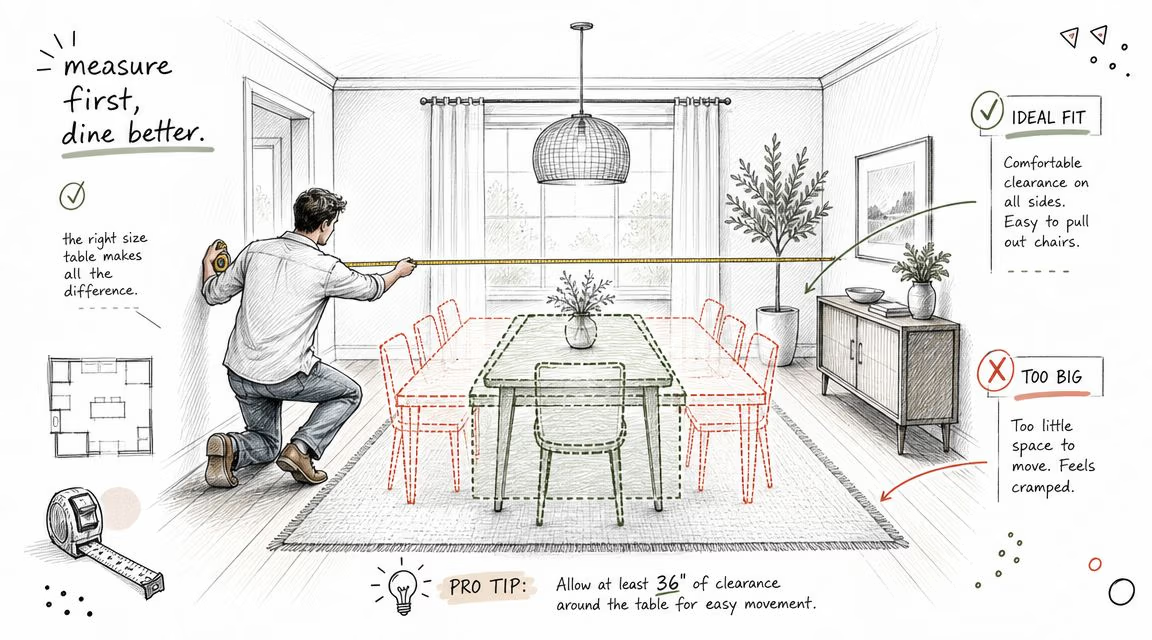
A dining table has to do two jobs at once. It needs to fit the room, and it needs to let real life happen around it. In many Logan County homes, especially open layouts where the dining area connects to the kitchen or living room, the second part is what people feel every day.
We tell shoppers to treat table sizing like fitting a walkway, not just placing a surface. The tabletop is only part of what the room must hold. Chairs slide out. People pass behind them. Someone stands to refill drinks. A good fit leaves space for all of that without making the room feel tight.
Start with the room, not the table
A few simple checks can prevent the most common sizing regrets:
- Measure the full dining area. Include walls, windows, nearby walkways, and any furniture that shares the space.
- Mark the table shape on the floor. Painter's tape helps because you can see the footprint at full size.
- Test chair movement. Pull out one of your current chairs where each side would be and walk around it.
- Follow your daily traffic path. Make sure the route to the kitchen, patio, or hallway still feels easy.
That last step gets overlooked.
People often focus on seat count first, but comfort usually comes from movement. A room can hold a large table on paper and still feel awkward once chairs are occupied.
Use shape and seating as a reality check
Round tables often work well in tighter rooms because they keep corners out of the traffic path. Rectangular tables usually make better use of longer rooms. Extendable tables are helpful for households that need one size on a weekday and another when family visits.
Seat capacity also works like a reality check. Four seats, six seats, and eight seats are not small jumps. Each step usually calls for a noticeable increase in table size, not a few extra inches.
A quick planning guide looks like this:
| Table shape and size | Typical seating use |
|---|---|
| 48-inch round | Good fit for 4 |
| 62-inch rectangular | Works up to 6 |
| 82-inch rectangular | Works for 8 |
Surface details matter too, especially once you narrow the size. Looking at examples of table tops can help you see how thickness, edge shape, and visual weight change the way a table feels in the room, even before you get into finish and style.
If you want a clearer step-by-step reference before visiting us, our dining table size guide for planning your room lays out the process in a practical way. When you come into our showroom, we can use those same basics to help you choose a table that fits your home now and still works well years from now, with delivery, financing, and local support if you need it.
Defining Your Look with Styles and Materials That Last
A dining table often sets the tone for the whole room. Once you know the table will fit, the next question is simpler. What look will still feel like home a few years from now, after paint colors, rugs, or light fixtures change?
Many shoppers pause here because style and material terms can sound more technical than they are. We walk people through this in our showroom all the time. The goal is not to memorize furniture jargon. It is to choose a table that fits your household, wears well, and still feels right as life changes around it.
Style should support the way you live
A good starting point is the mood you want the room to carry every day.
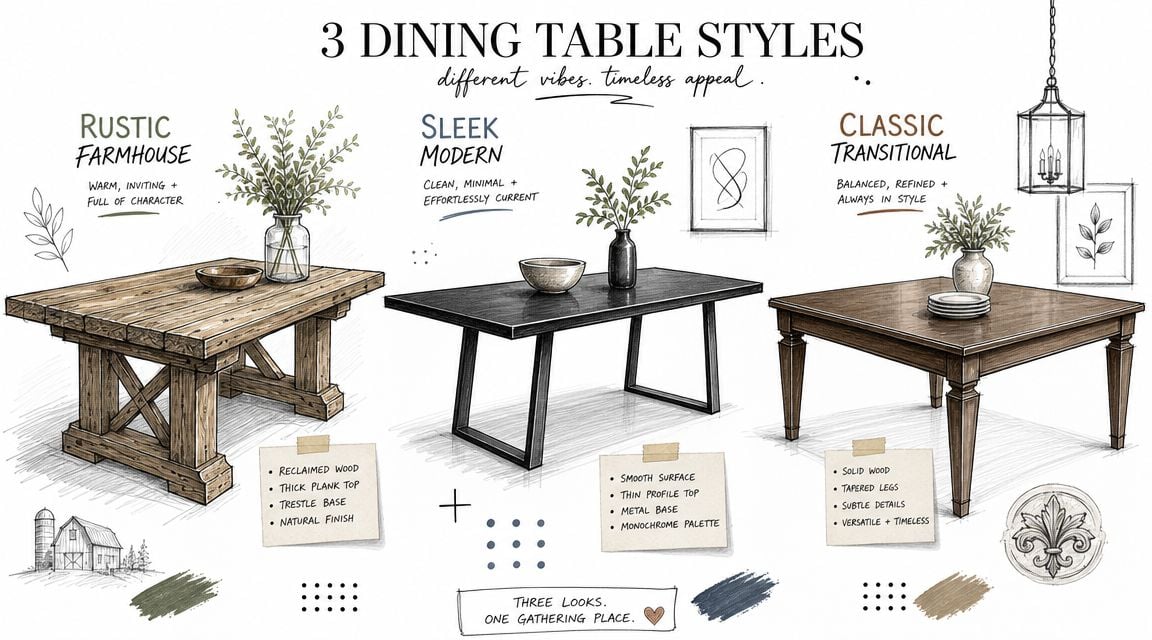
Farmhouse and rustic tables usually feel warm, grounded, and relaxed. Distressed finishes, visible grain, and thicker proportions can make everyday use feel more forgiving. If your table will host homework, takeout, and holiday meals in the same week, that softer, lived-in look often makes sense.
Modern tables bring order. Cleaner lines, simpler shapes, and lighter visual weight can calm a busy room the same way a plain frame can help a piece of artwork stand out. They often work well in open layouts where the dining area shares space with the kitchen or living room.
Transitional styles split the difference. They borrow some warmth from traditional furniture and some restraint from modern design, which is why they tend to stay appealing for a long time. If you are unsure which direction you prefer, transitional is often the safest place to start.
Smaller details shape the personality too. Browsing examples of table tops can help you notice how edge profile, thickness, and surface texture change the character of a table before you even get to the base.
Materials work together, not alone
Material descriptions can confuse people because one label rarely tells the whole story. “Solid wood” sounds simple, but construction works more like a recipe than a single ingredient list. The top, base, core, and finish each do a different job.
A well-built table may combine hardwood solids in the legs or frame, veneer on larger surfaces, and an engineered substrate under the finish. That does not mean corners were cut. It usually means the builder used each material where it performs best.
Here is the practical version:
- Hardwood solids add strength, weight, and a substantial feel, especially in legs, aprons, and edge details.
- Wood veneers show real wood grain while helping broad surfaces stay more consistent over time.
- Engineered cores such as MDF can help a top remain flatter in homes where humidity changes from season to season.
- Protective finishes do much of the daily work by resisting moisture rings, minor scratches, and routine wear from family use.
That last point deserves more attention than it usually gets.
A beautiful wood species can still disappoint if the finish is too delicate for the way the table will be used. A family with young children may need a more forgiving surface. A formal dining room used a few times a year can sometimes prioritize appearance over wear resistance. We help customers sort through that tradeoff every day because the best material choice depends on real life, not a showroom label.
For a closer look at species, grain, and durability, our guide to choosing the right hardwood for longevity and style explains what to watch for.
The best table usually comes from matching style and construction to the life happening around it. That is part of the value of working with a local partner. We can help you compare finishes in person, explain what each material is doing, and steer you toward a table that feels right on day one and still serves your home well years later.
The Custom Difference Crafting Your Unique Table
You find a table that is close. The width works, but the finish fights the floors. The shape fits the room, but one more foot of length would make holidays easier. That kind of near match is common, and it is often the moment custom starts to make sense.
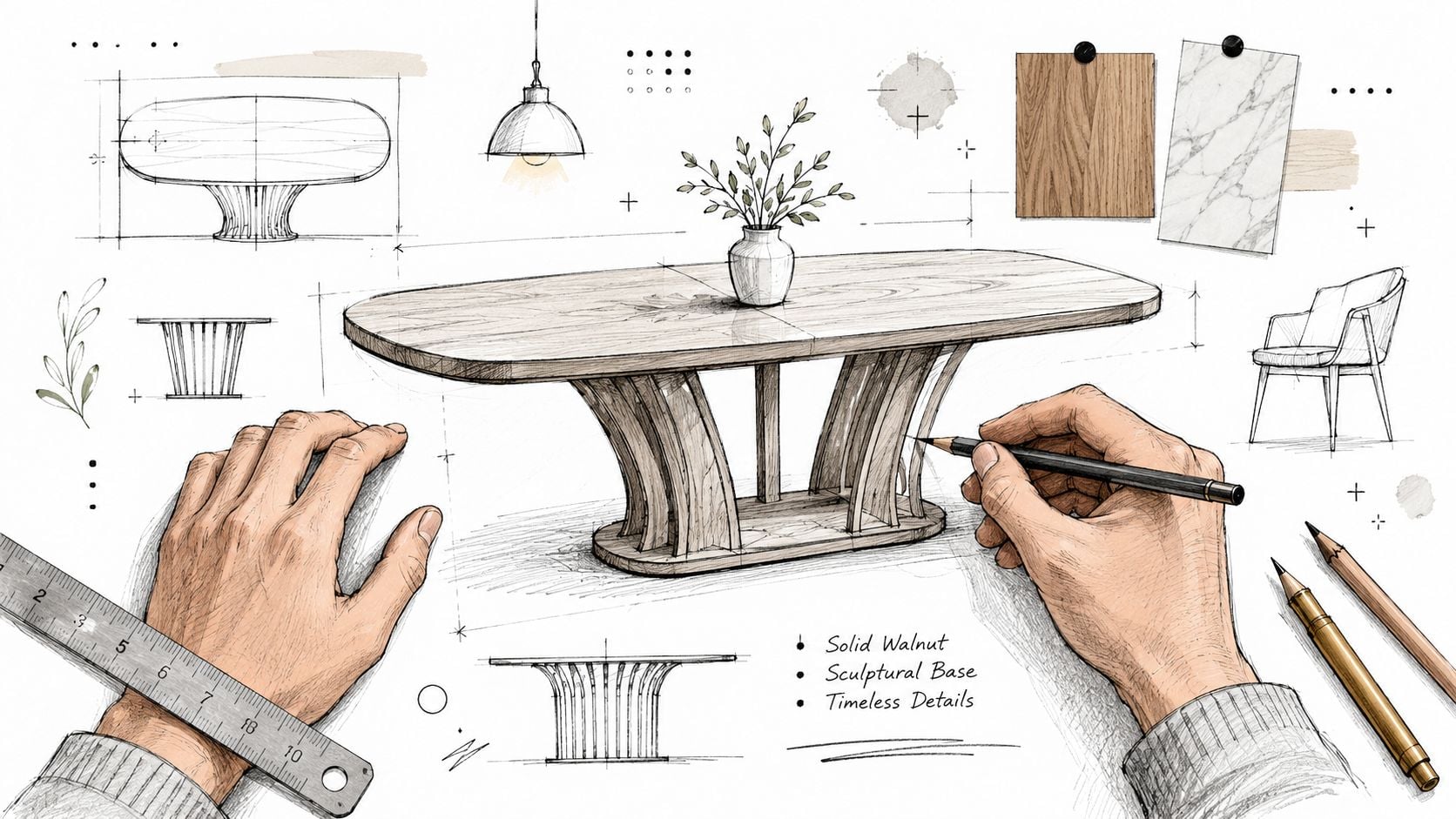
A dining table has to do more than look good under showroom lights. It has to suit your room, your routines, and the way your home feels every day. A custom piece helps bring those parts into alignment, much like tailoring a jacket so the shoulders, sleeves, and length all fit the person wearing it.
Why a custom table can feel more right
Standard sizes and finishes are built for broad demand. Real homes in Logan County are more specific than that. An older home may need a narrower table to keep walkways comfortable. A newer open layout may call for a larger top that visually anchors the space. A family may want one table that handles homework at 4:00 and Thanksgiving at 4:00.
Custom options let us adjust the details that create that better fit:
- Size and shape. A few inches can change how easily people move around the room and how many seats the table handles comfortably.
- Finish and wood tone. Matching undertones matters more than many shoppers expect, especially when the table needs to relate to floors, cabinets, or nearby case pieces.
- Base and edge details. These are the small design choices that make a table feel lighter, more formal, more casual, or better suited to the chairs you already own.
- Daily function. Some homes need a table that can dress up for guests and still stand up to ordinary weeknights.
That last point matters.
A custom table is rarely about adding complexity. It usually removes compromise. Instead of settling for something that is close, you get a piece shaped around the way your home works.
For a closer look at the process, our guide to custom furniture made simple explains how ideas turn into practical choices without making the project feel overwhelming.
At Tanger's Furniture, we walk customers through those decisions in person. We can compare samples, talk through room measurements, and help you sort out what should stay flexible and what should stay fixed. That local relationship matters because buying a dining table is not a one-time transaction. It is choosing a centerpiece for years of meals, gatherings, delivery day, and the support that comes after it.
Completing the Set How to Perfectly Match Dining Chairs
A dining table and its chairs should work together the way a good team does. If one piece is off, people feel it right away. The room may look fine at first glance, but dinner tells the truth.
Chairs affect more than appearance. They decide how long people want to stay, how easily everyone gets in and out, and whether the table feels welcoming on an ordinary Tuesday as much as it does on a holiday.
Match comfort first, then style
We always encourage shoppers to start from the seated experience. A chair can have the right shape and finish, but if it sits too high, feels too narrow, or bumps the table apron, it becomes frustrating fast.
A few measurements make this easier to judge:
- Seat height and table clearance. You want enough room between the seat and the underside of the table for a comfortable posture.
- Chair width. Broader chairs can reduce how many people fit around the table, especially on smaller rectangular tops.
- How long people will sit. A chair for quick weekday meals may not feel as good during long gatherings.
- Arm height. Arms can add comfort and presence, but they also need to tuck under the table if space is tight.
One simple test helps. Pull out every chair position in your mind and ask whether the table still feels easy to use when all the seats are occupied, not just when the room is styled for a photo.
Mix materials with a clear thread
A perfect match does not always mean buying a full set in one finish. Many Logan County homes feel warmer and more personal when the chairs relate to the table instead of copying it exactly.
The key is consistency in one or two places. That might be a shared wood tone, a similar line in the chair back, a repeated fabric color, or a common visual weight. A heavy farmhouse table with equally bulky chairs can make the room feel crowded. Pair that same table with slimmer side chairs and the whole setup breathes better.
We often help customers build around combinations like these:
- A wood table with upholstered end chairs for softness and a little contrast
- Simple side chairs with a more detailed table base to keep the room balanced
- Different chair shapes in the same color family so the mix feels intentional
That balance matters.
Buying chairs is also where a local relationship helps. In our showroom, we can set options beside one another, talk through spacing, and help you decide whether you want a coordinated look or a collected one. If you want more chair-specific advice before you visit, our guide on how to choose dining room chairs walks through the details in plain language.
A good dining set should feel settled from day one and still feel right years later. That is why we treat the chairs as part of the whole plan, not as an afterthought added at the end.
More Than a Purchase Our Promise of Value and Service
Buying a dining table should feel reassuring, not risky. That's especially true when the purchase affects everyday routines and usually involves more than one household decision maker.
Support before delivery and after
Real value includes more than the table itself. It includes what happens around the purchase.
In a local showroom model, shoppers can ask practical questions, compare finishes in person, and talk through room challenges without being left alone with a dozen tabs open. That kind of help matters for budget-conscious families, first-time homeowners, and anyone balancing multiple projects at once.
A lower-stress buying experience often includes:
- A Low Price Promise that reassures shoppers they're getting strong value, not just a flashy markdown.
- Flexible financing for projects that need manageable payments instead of one large upfront expense.
- Local delivery so the heavy lifting, transport, and setup don't become the customer's weekend problem.
- Service support that remains available after the table is in the home.
This broader support matters in the same way it matters for other long-term household purchases. A family choosing Bellefontaine furniture often thinks about coordination across rooms. The same household may also be comparing appliance needs like Speed Queen laundry or planning a bedroom update through a mattress store Logan County shoppers already trust. In all of those decisions, confidence comes from knowing help doesn't disappear after checkout.
A lower-stress way to buy for real life
There's also a larger market reason this category deserves careful attention. The dining table market is not a tiny niche. Fortune Business Insights reports the global market was valued at USD 8.68 billion in 2025, is projected to reach USD 9.19 billion in 2026, and may grow to USD 16.01 billion by 2034, a projected 7.19% CAGR. The same report says Asia Pacific held 46.14% of the market in 2025, and it projects the U.S. market could reach USD 2.34 billion by 2032. Those figures suggest continued demand and a durable category for households and retailers alike, according to Fortune Business Insights on the dining table market.
That matters because shoppers aren't overthinking the purchase. They're treating an important home category with the seriousness it deserves.
For Our Business Neighbors Commercial Dining Solutions
A good dining-height table can do real work in a business.
We see that in staff breakrooms, waiting areas, training rooms, and shared team spaces across Logan County. The goal is rarely to make the room look like a formal dining room. The goal is to create a place where people can sit comfortably, reset between tasks, talk face to face, or spread out materials without the space feeling cold or overly corporate.
That difference matters. A business table often has to serve several roles in one day.
For example, the same table might hold lunches at noon, laptops at 2 p.m., and paperwork during a quick end-of-day meeting. In a reception area, it may need to feel welcoming while still standing up to constant use. In a flex space, it has to fit the room well enough that people can move around it easily, even when chairs are occupied.
Common uses include:
- Breakroom tables for daily employee meals and short pauses during the workday
- Shared work surfaces for laptops, coffee, and informal conversations
- Hospitality tables in client-facing spaces that need a warmer, less rigid feel
- Training or multipurpose tables that help a room stay adaptable
The buying process looks a lot like choosing a table for home, but the pressure points change. At home, a family may focus on holidays, homework, and everyday meals. In a business setting, the questions shift toward traffic, wipe-down ease, finish wear, chair clearance, and whether the table still looks appropriate after repeated use by many people.
That is where working with a local partner helps. At Tanger's Furniture, we can help business owners sort through practical details before they become expensive mistakes. A table that looks right in a photo can feel too large once people walk around it. A finish that looks beautiful in a quiet showroom may show wear quickly in a busy staff area. Good planning solves those problems on paper first.
Commercial projects also tend to involve more than one decision at a time. You may be matching an existing interior, furnishing multiple rooms, coordinating delivery timing, or trying to stay within a set budget. Our role is to make that process clearer and more manageable, with guidance that continues from selection through delivery and setup.
That long-term support is part of the value. Business owners are not only buying a table. They are choosing a local relationship that helps the space work better now and remain serviceable later.
Let's Find Your Table and Help You Love Your Home
The search for dining room tables for sale becomes much easier when the decision is broken into the right questions. Does the size support movement? Does the shape suit daily use? Do the materials match the household's expectations for wear? Does the style still feel right once the novelty wears off?
A good table solves more than one problem
The strongest choices usually do several jobs at once. They make the room function better. They give the home a stronger center. They reduce future regret because the buyer understands what they're choosing and why it fits.
That's why a dining table often marks a turning point in a home. It can make a room feel finished, but it also makes the room more usable. Meals get easier. Guests fit more naturally. Work, conversation, and family life all have a more comfortable place to happen.
Local takeaway: The right table should support the life already happening in the home while leaving room for the life that's still coming.
Local help still matters
For many shoppers, that kind of purchase still feels better with a local guide than with guesswork alone. A store relationship built on design help, custom options, financing, delivery, and follow-up service turns the process into something more personal and less transactional.
That's part of why families return to a trusted local furniture partner across different stages of life. A first dining table might be followed by a bedroom refresh, a living room redesign, or practical home upgrades down the line. The goal stays the same. Help people love their home, not just fill it.
Visit the showroom in Bellefontaine to see custom options in person or browse collections online to start the journey. Have a specific design question? Contact the design staff or join the Love Your Home Club for expert tips and exclusive offers delivered to the inbox.
For readers ready to take the next step, Tanger's Furniture offers a starting point for browsing dining collections online, planning a showroom visit in Bellefontaine, exploring financing options for any project, and joining the Love Your Home Club for ongoing ideas and offers.