Dining Room Tables Marble: Your 2026 Buying Guide

A lot of shoppers arrive at the same moment. They've seen a beautiful marble dining table online, maybe with soft light across the top and dramatic veining, and they can already picture it in the dining room. Then the practical questions show up just as fast. Will it stain during weeknight dinners, is it too heavy for the room, and what happens when someone sets down a glass a little too hard?
Those are fair questions. In Bellefontaine and across Logan County, families usually aren't shopping for a photo set. They're shopping for a real home with real meals, busy schedules, children, guests, and rooms that need to work every day. A marble table can absolutely be the right choice, but it helps to understand what living with one is like before bringing it home.
This guide takes a plainspoken look at dining room tables marble buyers often admire but hesitate to commit to. It covers the look, the fit, the care, and the delivery realities that glossy inspiration photos usually skip. With roots in the community since 1946 and design help that goes back to 1964, the perspective here stays simple. Buy the piece that fits the home, the household, and the way the room will really be used.
Table of Contents
- The Dream of a Marble Table and The Questions That Follow
- The Beauty of the Stone Understanding Marble Types and Finishes
- The Honest Truth Pros and Cons of Everyday Life with Marble
- Finding the Perfect Fit Sizing and Styling Your Marble Table
- Protecting Your Investment Essential Care and Maintenance Tips
- From Showroom to Your Home The Tangers Advantage
- Frequently Asked Questions About Marble Tables
The Dream of a Marble Table and The Questions That Follow
Saturday evening in Bellefontaine, the table is doing more than holding dinner. It is catching a casserole dish, a stack of school papers, a phone charger, and one guest who sets down a sweating glass before anyone can grab a coaster. That is the true test for a marble dining table. It has to look beautiful, but it also has to live in an active home.
That first attraction is easy to understand. A marble top brings light, pattern, and a sense of permanence that few other materials match. Marble is a material people have returned to for generations to make a room feel established and intentional. The appeal is real. So are the questions that show up right after the excitement.
Around our showroom, families usually stop admiring the veining and start asking practical questions. How will it handle weeknight meals? What happens if spaghetti sauce, lemon juice, or a coffee mug sits too long? Can the floor support the weight? Will the base and top fit through the front door, around a stair turn, or into an older Bellefontaine home with tight entry space?
Those are smart questions.
A marble table works a bit like a white sofa or a solid wood heirloom piece. It rewards owners who love the look and understand the care. It also asks for some planning before delivery day, especially with stone. The weight is part of the value, but it is also part of the job. That is why many shoppers benefit from reading through custom order planning for furniture delivery and fit before they choose a size or shape.
The stone itself adds another layer of decision-making. Veining, finish, and porosity all affect how the table will look and behave over time. Original Mission Tile's natural stone guide gives a helpful overview of how natural stone surfaces vary, which is useful if you are still learning what makes one marble top feel polished and formal while another feels softer and more relaxed.
Before buying, it helps to answer four plain questions:
- Daily use: Will this table be used gently, or will it host homework, takeout containers, and holiday traffic?
- Care routine: Will the household wipe spills quickly and use placemats and coasters consistently?
- Delivery and fit: Can the room, entry path, and flooring handle a heavy stone top safely?
- Long-term satisfaction: Will the table still suit the home after the novelty wears off?
That honest pause is healthy. It separates a table that looks good for a month from one that feels right for years. In a real home, and especially in homes where furniture needs to work hard, that kind of clarity matters more than a perfect photo.
The Beauty of the Stone Understanding Marble Types and Finishes
A marble table can look completely different from one home to the next, even when the shape is nearly the same. That is usually the first surprise. One top reads soft and quiet. Another becomes the first thing you notice when you walk into the room.
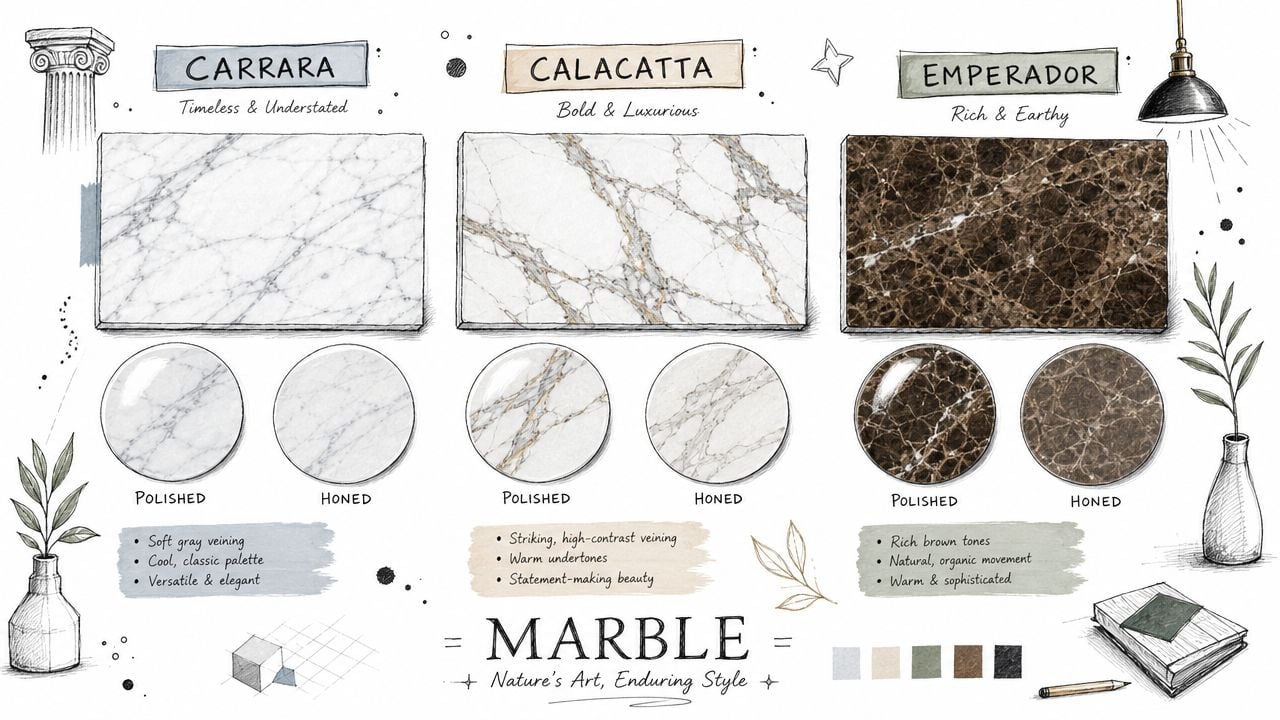
The reason is simple. "Marble" is not one look. It is a family of natural stone looks, and the finish changes the personality just as much as the color does. After helping Bellefontaine-area families choose tables for decades, we can say this with confidence. The photo online may catch your eye, but the slab pattern and surface finish are what determine whether the table feels calm, formal, bright, or busy in your actual dining room.
What makes one marble look different from another
Marble varieties differ in base color, contrast, and the way the veining moves across the slab. Some patterns are light and cloudy. Others are sharp, high-contrast, and dramatic.
Some of the commonly discussed looks include:
- Carrara style: Usually lighter and softer in appearance, often with gentler gray movement.
- Calacatta style: Often chosen when a room needs stronger contrast and more dramatic veining.
- Darker marbles such as Emperador-inspired looks: Useful when the goal is warmth, contrast, or a richer formal setting.
That variation matters more than many first-time buyers expect. Two white marble tops can create very different rooms. One may blend easily with painted wood chairs and a relaxed farmhouse or transitional setting. Another may feel dressier and more architectural, especially if the veining is bold.
No two slabs match perfectly, and that is part of the value. Natural stone has the kind of variation that gives a table character over time. It also means shopping for marble is less like picking a paint chip and more like choosing a specific piece of nature for your home.
If you want to get familiar with the visual language of stone before visiting a store, Original Mission Tile's natural stone guide offers a helpful overview of how natural surfaces differ. If you are already thinking about sizing, room fit, and what a made-to-order piece involves, Tanger's explains that process in its custom order introduction.
Polished and honed surfaces behave differently
Finish matters just as much as marble type.
| Finish | Look | Everyday impression |
|---|---|---|
| Polished | Shiny and reflective | Dressier, brighter, more formal |
| Honed | Matte and softer | Relaxed, muted, less reflective |
A polished top reflects windows, chandeliers, and overhead lighting. In the right room, that extra light can make the table feel refined and substantial. A honed top absorbs more light, so the surface looks softer and more understated.
Many households get tripped up here. They believe they are choosing only a color family, but they are also choosing how the table will sit with the flooring, the chair fabric, the wall color, and even the amount of sunlight the room gets in the afternoon.
Practical rule: The finish should match the way the room is used, not just the way the table looks under showroom lighting.
Here is the plain-English version we often share in the store. If your dining room already has plenty of shine from glass, metal, or large windows, a honed marble top often feels more settled. If the room feels dim and needs some lift, polished marble can help bounce light around the space.
That local, real-home perspective matters. A marble table does not live on a styled photo set. It lives with Ohio weather, muddy boots by the door, holiday traffic, and the challenge of getting a heavy stone top into place safely. Choosing the right variety and finish from the start saves a lot of second-guessing later.
The Honest Truth Pros and Cons of Everyday Life with Marble
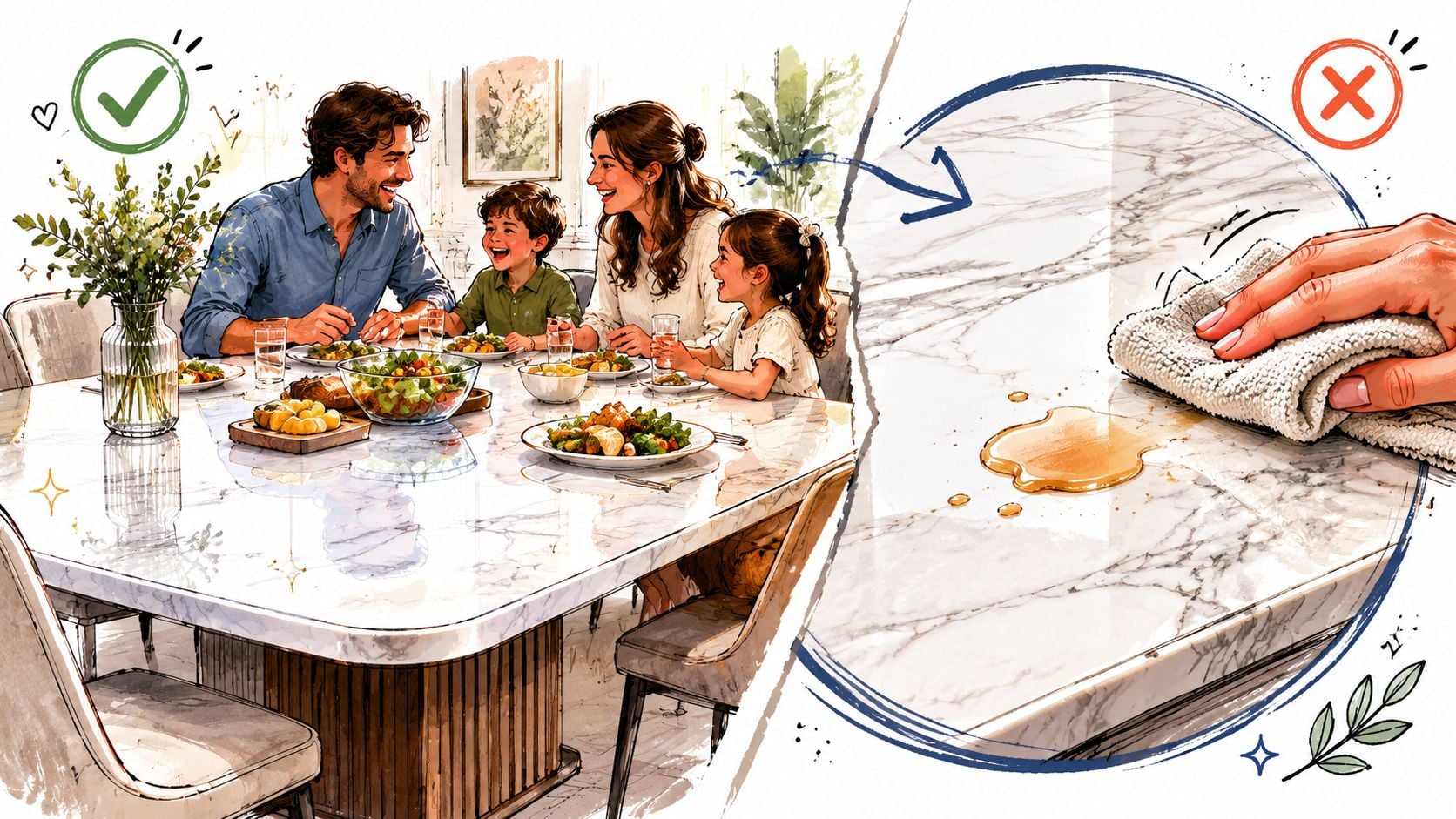
Marble can be wonderful to live with. It can also frustrate a household that expected it to behave like a wipe-and-forget surface. That's why the honest version matters more than the romantic one.
Independent consumer guidance notes that marble is porous and can stain or etch when exposed to acids, which is why so many buyers need clearer guidance on sealing and spill resistance in busy homes, as discussed in this consumer-focused product writeup.
Where marble shines
There are real advantages, and they're the reason marble keeps showing up in well-designed dining spaces.
- Distinct natural character: Every slab has its own movement and veining, so the table feels singular.
- Strong visual presence: Marble gives a room a focal point quickly, especially in dining areas that need one anchor piece.
- Heat resistance: Industry guidance regularly describes marble as resistant to moisture and heat, which is one reason it remains popular for dining surfaces.
- Long design life: It doesn't go in and out of style the way some trend finishes do.
For households that entertain, prefer formal dining, or want the room to feel more elegant, marble can do something wood and metal often don't. It makes the dining area feel composed right away.
A helpful way to think through the broader surface tradeoffs is to look at how stone compares with other hard-use materials in everyday rooms. This article on understanding countertop options for Colorado homes is useful because it frames the same lifestyle questions buyers ask at a dining table. What stains, what cleans easily, and what asks more from the owner?
Where households need to be realistic
The tradeoffs are just as real.
- Porous surface: Marble needs protection because spills can become stains if they sit.
- Acid sensitivity: Citrus, vinegar, wine, and similar foods can leave etching.
- More upkeep: Daily gentle cleaning and periodic sealing are part of ownership.
- Edge vulnerability: A sharp hit can chip the stone.
- Higher cost position: Marble is generally treated as a luxury material and is often priced above comparable wood or metal tables.
Families with children often ask whether that means marble is off the list. Not necessarily. It means the family should be honest about habits. A home that already uses placemats, wipes spills quickly, and doesn't mind routine care may do well with marble. A home that wants a surface for crafts, science projects, and rushed breakfasts may be happier with another material.
For shoppers also weighing family-friendly performance across the whole house, this guide to kid-friendly and pet-friendly furniture can help put the dining decision in context.
A marble table works best when the household likes the beauty enough to respect the routine.
Finding the Perfect Fit Sizing and Styling Your Marble Table
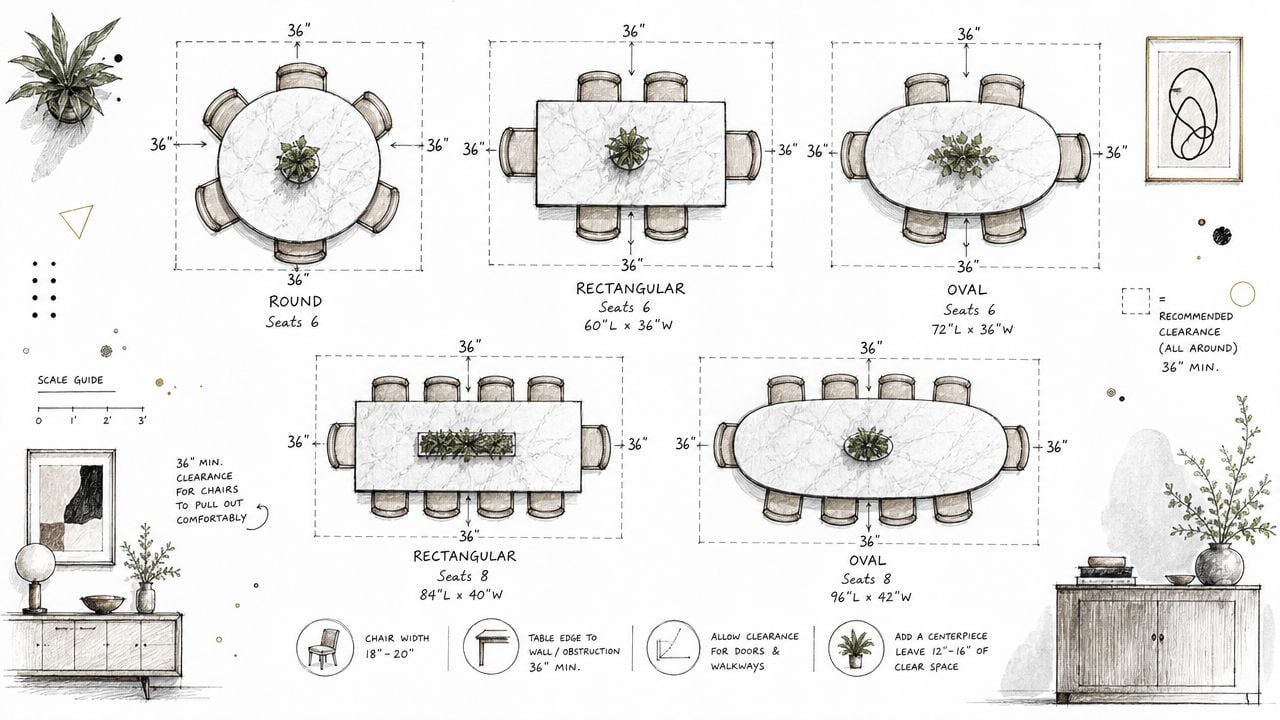
A marble table can look balanced on a showroom floor, then feel oversized the moment it reaches a real dining room in Bellefontaine. That usually happens because the room was measured for the tabletop, not for the chairs, the traffic path, and the very practical question of how a heavy stone top gets through the door without scraping walls or stressing the floor.
That is the part big-box displays often skip. In everyday homes, size and styling are tied to access, layout, and long-term comfort just as much as color and shape.
Start with the room's working space
Seat count matters, but movement matters first. A dining table works like the center lane in a small parking lot. If cars cannot turn, the lot feels cramped no matter how nice the pavement looks. Your table works the same way with chairs, walkways, and nearby furniture.
Before choosing among dining room tables marble styles, measure these areas carefully:
- Open space around the table: Chairs need room to pull back without bumping walls or a buffet.
- Traffic paths: People should be able to pass through the room without squeezing sideways.
- Doorways, turns, and stairwells: A marble top that fits the room still has to make it into the home.
- Floor contact points: Heavy tops and bases may need pads or other protection, especially on wood or older flooring.
The dining table size guide helps turn those measurements into a table shape that feels comfortable instead of crowded.
Round tables often suit tighter rooms because they keep corners out of the traffic path. Rectangular tables usually make more sense in longer spaces or rooms with a formal layout. Oval tables fall in the middle. They give you the length of a rectangle with a softer outline, which can help a room feel less rigid.
Shape and base affect daily use
The stone top gets the attention, but the base often decides how the table lives in the room. It also affects legroom more than many shoppers expect.
| Top and base combination | Typical feel |
|---|---|
| Marble with wood base | Warmer, softer, more rooted |
| Marble with metal base | Cleaner, simpler, more modern |
| Pedestal base | More open legroom, strong focal point |
| Four-leg base | Familiar look, easier chair placement |
A pedestal can be a smart choice for families who want flexible seating. Four legs can be easier if you already own dining chairs and want a predictable fit. Those details sound small in the store. They feel much bigger after a few holiday meals.
Styling should follow the way the room is used. In an open floor plan, a bright white marble top with a sleek base may feel too cold beside warm wood flooring and comfortable upholstery. In a smaller dining nook, that same table might reflect light and help the area feel more open.
Local shoppers often appreciate seeing those combinations in person because photos flatten the details. Edge shape, base thickness, and the visual weight of the stone can change the whole mood of a room.
Plan for ownership, not just placement
Marble buying has a practical side that deserves equal attention. Delivery teams need a clear path. Older homes may have narrow entries. Upstairs spaces raise another layer of planning. Even after the table is in place, some households benefit from simple floor protection and a careful setup so the weight is distributed well.
That practical mindset shows up across the store, from dining room refreshes and custom seating to appliances and mattresses for Logan County homes. It is the same common-sense approach families use when learning about other stone surfaces too, including broader care topics such as travertine sealers for Australian conditions.
The best marble table is not the one that photographs well for a day. It is the one that fits your room, enters your home safely, and still feels right after years of weeknight dinners.
Protecting Your Investment Essential Care and Maintenance Tips
Marble ownership gets much easier when the routine is simple. The surface doesn't need complicated rituals. It needs consistency.
Furniture guidance commonly recommends daily cleaning with a soft cloth and mild soap, avoiding harsh cleaners, and sealing the stone annually to help guard against staining and etching, as explained in this marble dining table care article. That annual sealing schedule is one of the clearest benchmarks a buyer can keep in mind.
A simple care routine that works
A practical routine usually looks like this:
- Wipe daily with a soft cloth. This removes grit and meal residue before they become a problem.
- Use mild soap when needed. Gentle cleaning protects the finish better than harsh sprays.
- Skip aggressive cleaners. If a product feels strong, it's probably the wrong choice for marble.
- Blot spills quickly. Press and lift rather than pushing liquid around the surface.
- Reseal on a regular schedule. Annual sealing is a useful standard for most households.
Some homeowners like to learn more about stone sealing in broader outdoor and indoor contexts before committing to a maintenance plan. This guide to travertine sealers for Australian conditions is useful as a general stone-care reference because it reinforces the same basic idea. Natural stone lasts best when owners protect it before damage starts.
For added everyday protection during meals, crafts, or holiday serving, a table protector pad can make ownership easier without hiding the table full time.
Why careful handling matters
Marble is strong, but its strength has a limit that surprises people. Industry guidance describes marble dining tables as strong in compression but mechanically brittle in impact, so real-world performance depends on slab thickness and understructure support rather than the stone alone, according to this explanation of marble table construction and risks.
That's why owners should treat the table more like fine furniture than like a rugged workbench.
- Don't drag heavy objects across the top
- Avoid hard knocks at the edges
- Lift items rather than dropping them onto the surface
- Keep the table stable and properly supported
If questions come up after delivery or during ownership, a local service request option matters. Big purchases are easier to live with when support doesn't end after the table is set in place.
From Showroom to Your Home The Tangers Advantage
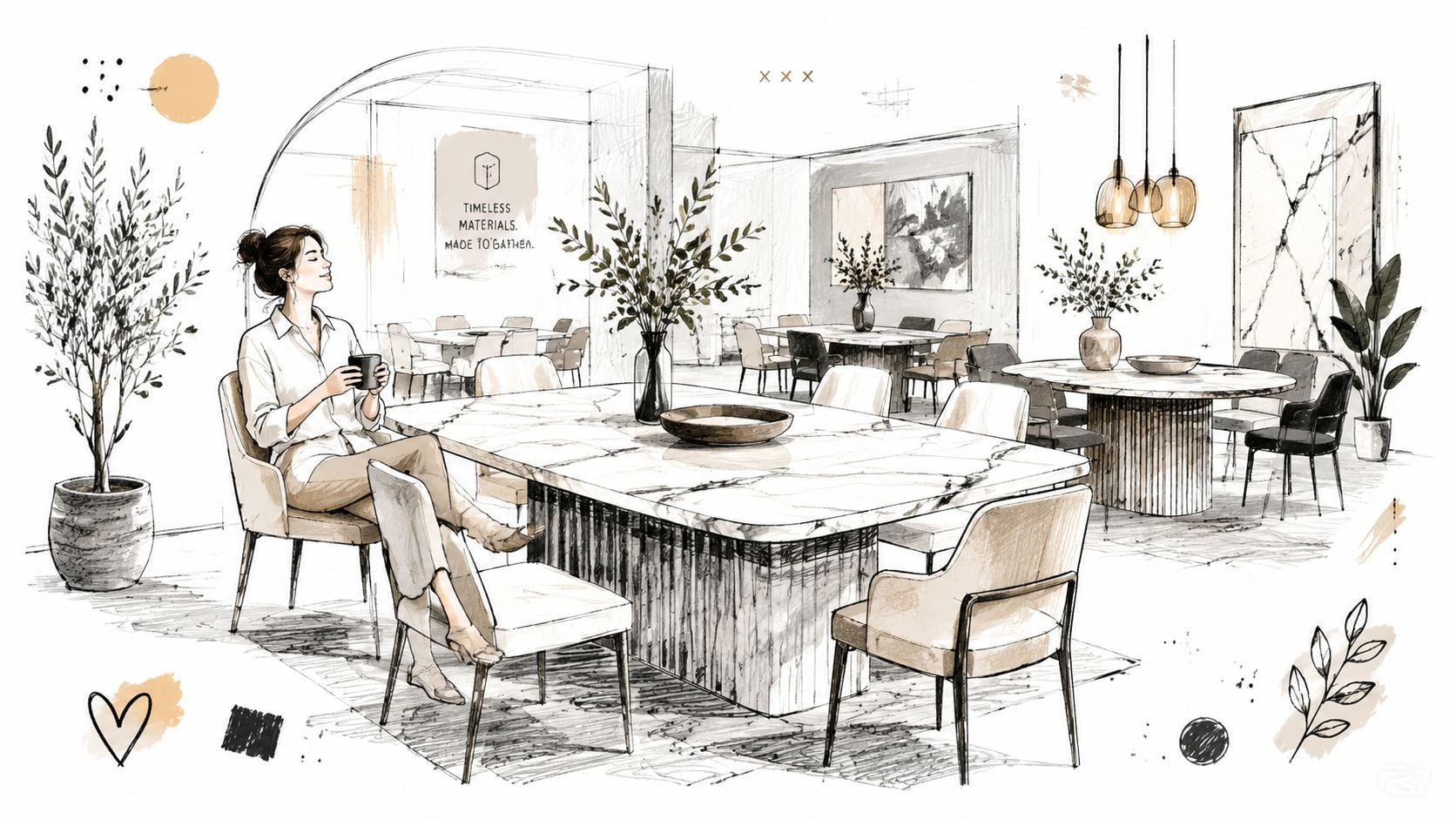
Saturday afternoon in Bellefontaine, a couple finds the marble table they love. Then the practical questions start. Will it fit through the front door, can the floor plan handle the weight, and who sets it in place without scraping walls or stressing the stone?
Those are the questions big purchases should answer before delivery day.
At Tanger's Furniture, the advantage of shopping local is simple. You can sit down with someone who has helped families in Logan County furnish real homes for generations, including older houses with tight stair turns, newer builds with open layouts, condos, apartments, and business spaces. Marble is beautiful, but it is also heavy, less forgiving than wood, and harder to move once it is in place. Honest guidance matters.
A marble table works a bit like a piano. The beauty gets the attention first, but ownership goes better when placement, access, and setup are planned ahead of time. That is why buyers often talk through the room itself, not just the tabletop. Shape, base style, chair clearance, traffic flow, and delivery path all matter before the order is finalized.
The heavy lifting is a real part of the decision. A curbside drop-off is one thing. Getting a stone table safely into the right room, assembled correctly, and positioned where it will stay for years is another. A local furniture delivery service for marble dining tables and other large pieces helps remove a lot of guesswork, especially in upper-floor spaces, older homes, and houses with narrow entries or sharp turns.
Business buyers have similar concerns, just in a different setting. A reception room or conference space may want the polished look of marble, but the layout, access, and intended use still need to be discussed early. For larger projects, the Commercial Office department can help business owners plan around the room, not just the furniture list.
Residential shoppers usually need a different kind of help. They may be matching nearby seating, balancing a formal top with an everyday-friendly base, or trying to choose a table that feels special without making family meals feel stiff. That is where custom-order support and patient floor-planning conversations can make the difference between a table that only looks good in the showroom and one that works well at home.
The practical side still counts.
- Value matters: Premium materials still need to fit the household budget.
- Flexible payment options: Larger room updates can be spread out with financing.
- Support after the sale: Questions do not always show up on purchase day.
After 75 years of helping neighbors furnish their homes, one lesson keeps proving true. The right marble table is not just the one that looks impressive under showroom lights. It is the one that arrives safely, fits the room, suits the household, and still feels like a smart choice long after delivery day.
Frequently Asked Questions About Marble Tables
Can a marble table work in a business setting
Yes, if the setting matches the material. Marble tends to fit best in conference rooms, reception areas, private offices, or hospitality spaces where appearance carries weight and the surface won't take constant rough use. In a high-traffic break room or training room, many businesses may prefer an easier-care material.
Is marble a good choice for renters
It can be, but renters should be more cautious than long-term homeowners. The biggest concerns are weight, delivery access, room flexibility, and future moves. If the household expects to relocate often or likes to rearrange furniture regularly, a heavy stone table may feel limiting even if the look is appealing.
What should be checked before delivery day
Three things matter most:
- Access into the home: Measure doors, stairways, and tight turns.
- Final room layout: Decide the table's location before the crew arrives.
- Floor and surrounding clearance: Make sure chairs, traffic paths, and nearby furniture all work once the table is in place.
A little planning prevents the most common headaches. Marble usually rewards careful buyers.
A marble dining table can be a beautiful long-term choice when the room, lifestyle, and maintenance expectations all line up. For shoppers who want help thinking through size, finish, custom options, delivery, or payment plans, Tanger's Furniture offers a practical next step. Visit the showroom in Bellefontaine to see custom options in person or browse collections online to start the journey. Have a specific design question? Contact the design staff today or join the Love Your Home Club for exclusive offers and expert tips delivered to the inbox.