Mixing Leather and Fabric Furniture: Perfect Pairs

A lot of homeowners get stuck on the same question. Should the room lean into the easy elegance of leather, or the softer, relaxed feel of fabric?
That pause usually happens right in the middle of planning a living room. One person wants the classic sofa that wipes clean after movie night. Another wants the deep, cozy seat that invites a Sunday nap. The good news is that mixing leather and fabric furniture lets a room do both.
That approach isn't reserved for decorators or magazine homes. It works in real houses with kids, pets, guests, and everyday routines. Since 1946, families in Bellefontaine and across Logan County have looked for furniture that feels lived in, not staged, and design guidance has been part of that story since 1964.
The most welcoming rooms rarely follow rigid formulas. They blend comfort, practicality, and personality in a way that fits the people using them. For anyone who has been weighing one material against the other, this can be a helpful next step, especially when paired with ideas like mixing furniture styles with confidence.
Table of Contents
- Your Guide to a Beautifully Balanced Living Room
- Start with a Strong Foundation Your Anchor Piece
- Pairing Color Palettes and Textures
- Mastering Scale Balance and Placement
- The Finishing Touches Customization and Durability
- Love Your Home We Can Help You Get Started
Your Guide to a Beautifully Balanced Living Room
Mixing leather and fabric furniture works because it solves a real design problem. Leather brings polish, structure, and easy cleanup. Fabric adds warmth, softness, and more freedom with color and pattern.
A balanced room doesn't ask those materials to compete. It gives each one a role. Leather might carry the visual weight in the seating area, while fabric makes the room feel approachable and comfortable. In another home, that order might flip.
The goal isn't to make every piece match. The goal is to make every piece belong.
That shift in thinking helps people relax. They don't need a leather room or a fabric room. They need a room that supports how they live.
For a family room in Logan County, that could mean a leather sofa that handles everyday traffic, paired with fabric swivel chairs that soften the layout. For a quieter formal sitting area, it might mean a structured fabric sofa with a leather bench or accent chair nearby. Both combinations can look finished when the shapes, colors, and scale support one another.
Three ideas usually make the biggest difference early on:
- Pick one visual leader. One large piece should set the tone before smaller pieces are added.
- Repeat something on purpose. A color, wood tone, or silhouette helps different materials feel connected.
- Leave room for contrast. A space gets more interesting when not every surface feels the same.
That's why these guidelines feel useful rather than restrictive. They help a room look intentional without draining the fun out of the process.
Start with a Strong Foundation Your Anchor Piece
Choose the piece that leads
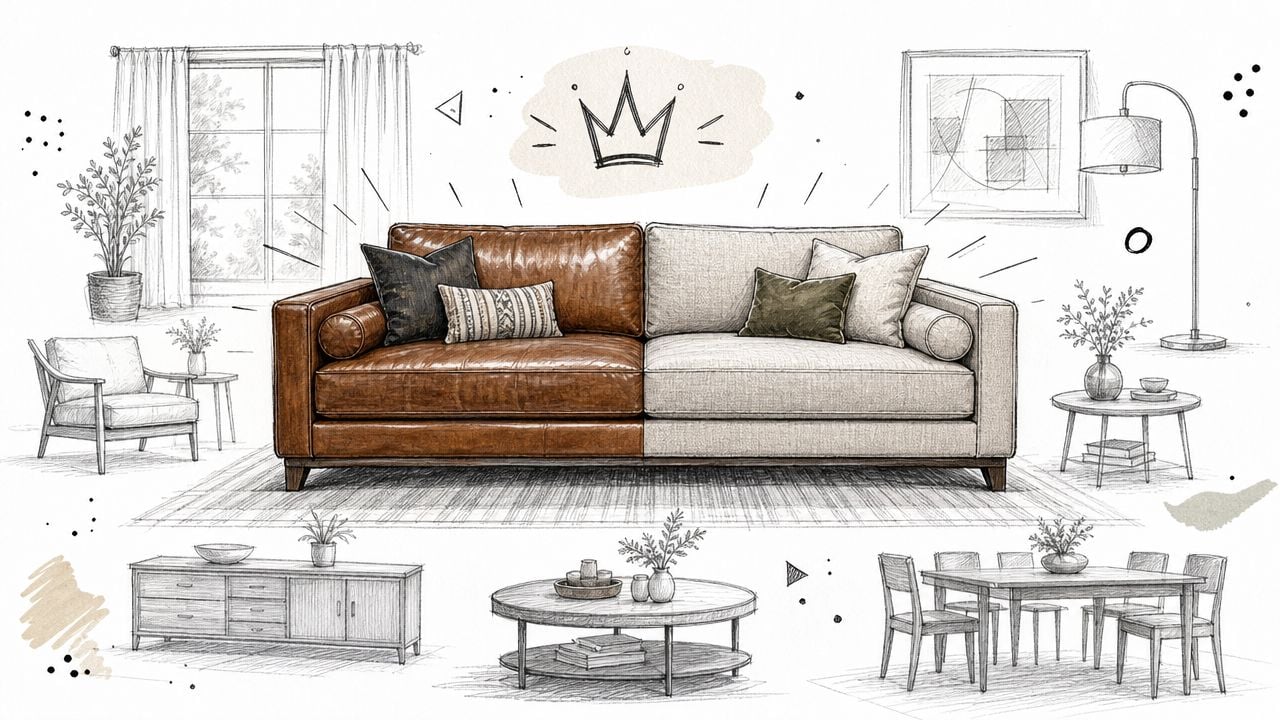
The simplest way to begin is to choose an anchor piece. That's usually the largest item in the room, often the sofa or sectional. Once that piece is decided, every other choice gets easier.
Design guidance recommends making one material dominant on the largest pieces and bringing in the other through smaller complementary items, then using throws or cushions to visually connect them, as noted in this upholstery mixing guidance. That one principle removes a lot of second-guessing.
A room anchored by leather often feels grounded and refined. A room anchored by fabric usually feels softer and more casual. Neither is more correct. The better choice depends on how the room will be used and what kind of mood the household wants.
For shoppers comparing silhouettes, seat depth, and cushion feel, a practical next step is reviewing this sofa buying guide for the living room.
Think outfit, not showroom set
An anchor piece works a lot like the main item in a good outfit. Once the jacket or shoes are set, the rest of the look doesn't need to shout. It just needs to support.
That's why a leather sofa often pairs well with:
- Fabric accent chairs that add pattern or softness
- An upholstered ottoman that breaks up the slicker finish of leather
- Layered pillows that repeat a color already in the room
A fabric sectional can also lead beautifully when paired with:
- A leather recliner for contrast and easy care
- A leather bench or pouf to sharpen the room's lines
- Smaller leather details that keep the palette from feeling too flat
Practical rule: If the biggest piece already has a strong presence, the supporting pieces should complement it, not compete with it.
Customization becomes especially helpful. When households aren't locked into one stock fabric or one stock leather, they can build around the room they have. That's often the difference between a combination that feels random and one that feels settled.
Pairing Color Palettes and Textures
Use color to create connection
Once the anchor is in place, color becomes the bridge. Many people often worry about making a mismatch here, but the process is usually simpler than expected.
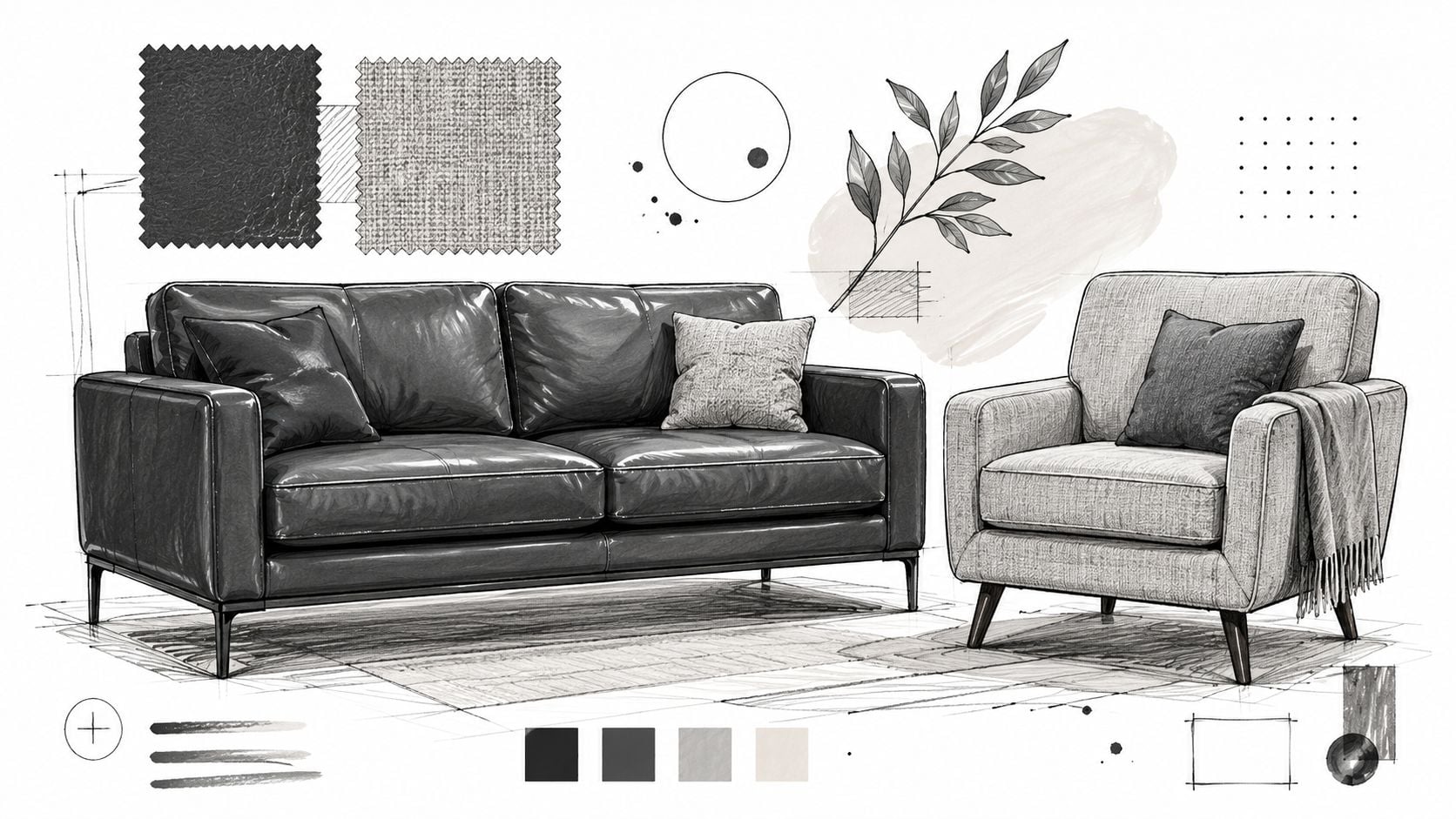
A good rule of thumb is to let one upholstery color lead and let the second support it. That can happen in a quiet way, such as warm brown leather with oatmeal fabric, or in a bolder way, such as camel leather with deep blue upholstery. The room doesn't need duplicate colors on every piece. It just needs one repeated note.
Industry design guidance says mixed leather and fabric rooms shouldn't aim for a 50/50 split, and that contrast works best when at least one color is repeated and the furniture shares a similar style language, as explained in this leather and fabric furniture guide.
A quick visual check can help:
| Room element | What to repeat |
|---|---|
| Sofa | Main tone or undertone |
| Accent chairs | A related shade, not an exact copy |
| Pillows and rug | One color pulled from both upholstery pieces |
| Wood or metal details | A finish that appears at least twice |
That kind of repetition keeps the room from feeling accidental.
For anyone who wants help narrowing options, this color palette guide gives a helpful starting point for building a room around a few dependable tones.
Let texture do some of the work
Color matters, but texture often creates the magic. Leather reflects light differently than woven upholstery. That difference gives the room depth before a single pattern is added.
A smooth leather sofa can look especially inviting next to fabrics with a softer hand or more visible weave. Linen-look upholstery, velvet, and nubby textures all create contrast in a good way. If a household is comparing upholstery samples for durability and feel, it also helps to choose the perfect fabric weight so the texture choice supports the room's daily use.
A few pairings that usually work well:
- Sleek leather with textured fabric for a balanced, layered look
- Distressed leather with clean woven fabric for a relaxed room with character
- Matte fabric with slightly glossy leather to keep light moving through the space
A room often feels flat when every surface has the same visual temperature. Mixing smooth and soft finishes helps the eye move comfortably around the space.
If the leather feels rich and substantial, lighter fabrics can keep the room from turning heavy. If the fabric is plush and full, a more sleek leather accent can sharpen the overall look.
Mastering Scale Balance and Placement
Why equal isn't always better
A room can have the right colors and still feel off the moment the furniture goes in place. That usually happens because the visual weight is uneven, even if the material mix looks balanced on paper.
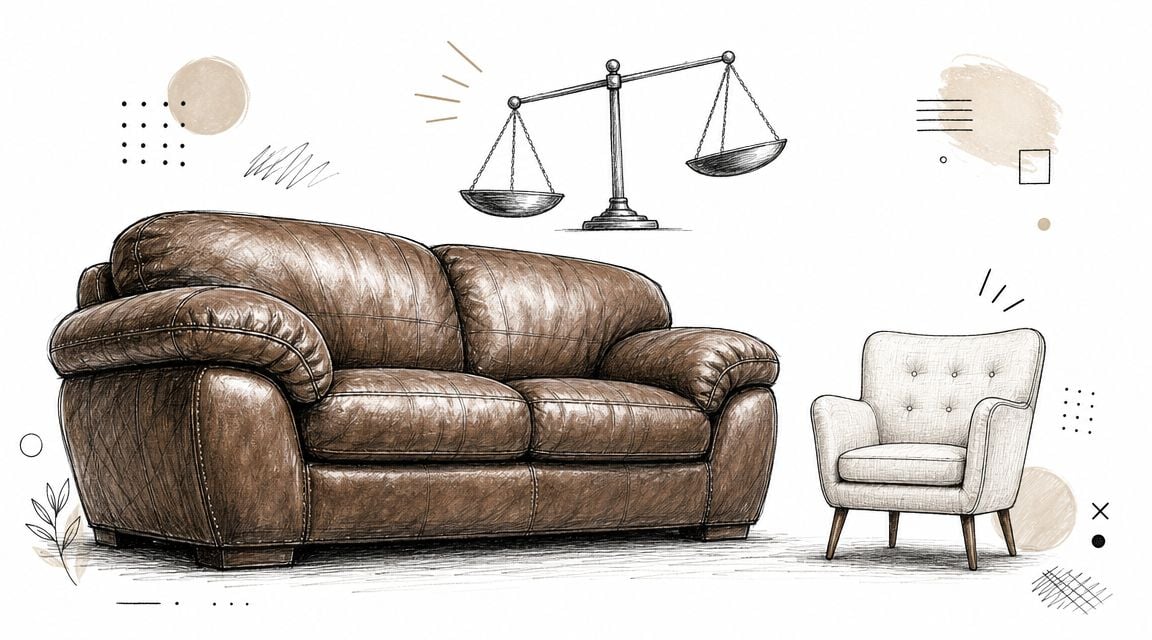
Leather often reads heavier than fabric. It reflects light differently, holds a stronger outline, and tends to feel more substantial across the room. So a large leather sofa usually pairs best with fabric pieces that look lighter in shape, such as chairs with visible legs, a slimmer loveseat, or an open-frame accent chair. The goal is not a perfect 50-50 split. The goal is a room where each piece has a job and no single corner feels overloaded.
A good way to judge scale is to picture the room like a group conversation. If one person does all the talking, the room feels tense. If every voice has some space, the room feels comfortable. Furniture works the same way.
Here is a simple comparison:
Less balanced arrangement
Oversized leather sofa
Boxy fabric loveseat
Large recliner
Heavy shapes in every direction
More balanced arrangement
Leather sofa as the main anchor
Two fabric chairs with a lighter frame or narrower profile
One ottoman or bench to soften the grouping
Repeated wood or metal finishes to tie everything together
A customization-first approach helps. In our showroom, many families discover that the right mix is less about finding a ready-made matching set and more about adjusting scale piece by piece. With custom-order options from makers such as Smith Brothers and Flexsteel, it is often possible to choose the sofa size, arm shape, seat depth, leg finish, and upholstery in a way that makes leather and fabric feel intentionally paired instead of randomly combined.
Place pieces so they feel related
Placement decides whether mixed materials feel collected or disconnected.
If leather seating sits on one side of the room and fabric seating drifts to the other, the eye reads them as separate zones. A shared rug helps bring them into one conversation area. So do side tables that visually bridge the gap, similar seat heights, or a single accent color repeated across both materials.
Distance matters too. A leather sofa and fabric chairs can look beautifully coordinated, but if they sit too far apart, the contrast becomes stronger than it needs to be. Pulling pieces inward often fixes the problem faster than buying anything new.
Small details help the arrangement feel finished. A pillow that repeats a leather tone, a fabric ottoman near a leather sofa, or a soft throw can ease the transition between surfaces. For anyone who likes that layered, cozy look, this guide to sofa styling with faux fur offers practical ideas.
If the room also has to handle television viewing, walkways, and everyday traffic, this guide to the best placement for your sofa and television can help you map out a layout that feels connected and comfortable.
The Finishing Touches Customization and Durability
Choose materials by how the room is used
The prettiest plan still has to work on a Tuesday night. That's why the most successful mixed rooms usually choose materials by performance-by-use, not by trend.
Commercial-space guidance notes that designers often use leather on higher-traffic pieces because protected or pigmented leather is generally the easiest sofa material to maintain, while solution-dyed synthetic fabrics offer the next-best stain resistance. That same guidance also notes that performance fabrics are often more expensive than standard residential fabrics but still more affordable than high-quality leather, which helps explain why many rooms use leather as the anchor and fabric as the accent, as described in this performance-focused upholstery article.
That idea applies well in both homes and workplaces:
- Family room: leather on the main sofa, fabric on accent chairs
- Waiting area: easy-clean leather where traffic is heaviest, softer fabric where comfort matters
- Open-concept home: durable main seating, more expressive fabric on smaller pieces
For shoppers comparing upholstery options more closely, this guide to upholstery materials helps translate showroom terms into plain language.
Use accents as the glue
This is also where customization earns its place. A household might love the shape of one sofa and the scale of another chair, but the room won't feel complete until the finishes talk to each other. That's why custom order programs matter. They let the room be built around real needs instead of whatever happened to be stocked in one color.
Tanger's Furniture offers custom-order options that allow shoppers to work through fabric, leather, finish, and configuration choices for living spaces and professional settings. That makes mixing materials easier because the match can be intentional instead of approximate.
A few finishing touches usually tie the whole room together:
- Pillows that repeat leather tones in a woven or patterned fabric
- Throws that soften the transition between sleek and textured upholstery
- Rugs that unite the seating group so the pieces read as one composition
- Window treatments that echo the room's softness and keep the harder surfaces from dominating
For readers thinking beyond the furniture itself, exploring layered window treatment styles can help complete that softer, connected look.
A mixed-material room often comes together in the last layer, not the first purchase.
Love Your Home We Can Help You Get Started
A couple walks into the showroom with a common question. They love the warmth of leather, but they also want the softness and color range that fabric brings. They are not looking for a matched set. They want a room that feels like their home.
That is usually the right starting point.
The rooms people enjoy longest are shaped around daily life. A house with kids, pets, and movie nights will ask more from a sofa than a quiet sitting room used on holidays. A reception area has different priorities than a den. The goal is not to follow a rigid formula. The goal is to choose materials, scale, and details that fit the way the room functions.
Custom ordering helps make that possible. Instead of settling for a leather piece that is close enough, or a fabric chair that almost matches, shoppers can work from a stronger plan. At Tanger's Furniture, lines such as Smith Brothers and Flexsteel give people more control over the final mix, from upholstery choices to finishes and configuration. It works a lot like tailoring clothing. The shape matters, but the final fit comes from the small decisions.
That approach also takes pressure off the process. A good showroom conversation can narrow the choices step by step. Start with how the room is used. Then choose the anchor piece. Then compare leather and fabric samples in the lighting and color story of the space. By the time those pieces come together, the room feels coordinated on purpose instead of accidentally close.
Local support matters too.
Shoppers in Bellefontaine often want furniture that will still feel right a year from now, not just something that looks good on delivery day. They may also need practical help while building the room, whether that means financing for a larger project, delivery and setup, or service after the furniture is in place. Mixed-material rooms feel much less intimidating when help continues after the sale.
A beautiful room rarely happens by guessing. It comes from clear guidance, good options, and enough flexibility to get the details right.
Visit Tanger's Furniture to explore living room and Commercial Office possibilities, ask about flexible Financing, and see custom options in person in Bellefontaine or online. For no-pressure design help, local delivery, in-house service support, and exclusive offers, contact the design staff or join the Love Your Home Club to start building a room that fits the way home really works.