Your Electric Reclining Sectional Buying Guide


A lot of living rooms reach the same point. The seats still look fine from across the room, but movie night turns into shifting around, hunting for the one comfortable corner, and arguing over who gets the end seat. That's usually when families start looking at an electric reclining sectional and realize comfort has changed quite a bit.
In Logan County, that search often isn't only about softness. It's about building a room that works for real life, with space for family, guests, naps, game days, and long evenings at home. Since 1946, and with design help serving the area since 1964, there's been a long tradition in Bellefontaine of choosing furniture carefully, with a no-pressure mindset and an eye toward pieces that help people love their home for years.
A big reason these sectionals are showing up in more homes is simple. The power reclining sofa market was valued at $12.4 billion in 2025 and is projected to reach $21.8 billion by 2034, growing at a 6.5% CAGR, reflecting stronger demand for power-operated comfort over manual recliners, according to Dataintelo's power reclining sofa market report. People want easier movement, better support, and seating that feels built for the way they relax.
Comfort also depends on the room around the sofa. Good lighting can make the whole seating area feel more useful and inviting, especially in reading corners and media spaces, so Golden Lighting's wall sconce guide is a helpful companion for anyone planning the whole room instead of just one piece.
Table of Contents
- Finding the Ultimate Comfort for Your Home
- Beyond the Lever What Is an Electric Reclining Sectional
- A Closer Look at Power Features and Reclining Tech
- Designing Your Perfect Sectional in Ohio
- Planning Your Room Layout and Measuring for Success
- Long-Term Care and Maintenance for Your Investment
- Why Your Bellefontaine Neighbor Chooses Tangers
- Frequently Asked Questions About Power Recliners
Finding the Ultimate Comfort for Your Home
The best living rooms usually have one thing in common. People want to stay there.
A sectional with power recline has become a natural fit for that goal because it lets several people settle in without fighting over a single favorite chair. One person can lean back a little to watch a show, another can put their feet up fully, and someone else can stay upright for conversation. The room feels more welcoming because the seating adapts to the people using it.
Why comfort matters more than ever
An electric reclining sectional isn't just a bigger sofa. It's a comfort system built for shared living. Families use it for weeknight streaming, grandparents appreciate easier motion, and busy households like having one piece that can serve as lounge space, guest seating, and the visual center of the room.
Comfort usually works best when it feels effortless. If someone has to wrestle with the furniture, the room never feels fully relaxing.
That shift helps explain why power motion seating has become more common in both casual family rooms and more polished entertainment spaces. Buyers aren't only choosing style anymore. They're choosing convenience, support, and easier everyday use.
How local homes use these sectionals
In Bellefontaine and across Logan County, homes vary quite a bit. Some living rooms need a compact L-shape that keeps pathways open. Others have enough room for a larger configuration that anchors an open floor plan. The appeal of an electric reclining sectional is that it can fit both situations when it's planned well.
A family with young children may care most about wipeable upholstery and enough room for everyone on one piece. A retired couple may focus on support for the neck, legs, and lower back. A business owner furnishing a waiting area or private office may want clean lines and dependable motion features that still feel inviting.
- For residential rooms: comfort and everyday ease often come first.
- For budget-conscious households: financing can make a better long-term piece more realistic.
- For professional spaces: durability and layout matter just as much as appearance.
That's why the best buying process doesn't start with color. It starts with how the room needs to work.
Beyond the Lever What Is an Electric Reclining Sectional
A manual recliner asks the user to pull a lever or push back with body weight. An electric reclining sectional replaces that effort with powered movement. Press a button, and the seat adjusts smoothly.
That's the simplest difference. It's a lot like the change from a hand-crank window to a power window in a car. Both can get the job done, but one gives far more control with much less effort.

What makes it a sectional
A sectional is built from connected seating pieces rather than one straight sofa. That can include corners, armless chairs, consoles, wedges, or chaise-style ends. When power recline is added, one or more of those seats can move independently.
That matters because a sectional isn't only about adding seats. It shapes the room. It can define a family space in an open floor plan, create a conversation zone, or give a media room that finished, intentional feel.
For anyone still sorting through base terminology, this guide on what to know before buying a sectional helps clarify common layouts and sizing decisions.
What power recline changes in daily use
The biggest upgrade isn't flashy. It's precision.
With a manual seat, there are usually just a few natural stopping points. With power motion, the user can often stop where the body feels best. That small adjustment matters when someone wants:
- A slight recline: helpful for conversation or reading
- Feet raised: useful after a long day standing
- A custom TV angle: better for movie viewing without neck strain
- An easier transition in and out: important for users who don't want to push hard against the seat
A good power sectional doesn't feel complicated. It feels easier than the furniture it replaced.
Who benefits most
First-time homebuyers often like electric motion because it combines several needs in one piece. It can be stylish enough for the main living room, comfortable enough for long evenings, and flexible enough for guests.
It also helps households planning for the long haul. If a room needs to serve children now and aging family members later, power operation adds convenience without making the furniture feel clinical. That's one reason these sectionals have moved from specialty seating into mainstream home design.
A Closer Look at Power Features and Reclining Tech
The comfort in an electric reclining sectional comes from the features hidden inside it. Some are obvious the first time someone sits down. Others are the kind of details that only become clear after months of use, when the seat still moves smoothly and still feels supportive.

High-end electric reclining sectionals utilize dual 12V DC motors per seat, enabling a full recline angle of 110° to 120°, with a load capacity of 250 to 300 lbs per seat and low-noise operation under 45 dB, according to this high-end power reclining sectional product specification. In plain terms, that means the motion can feel smooth, quiet, and strong rather than jerky or strained.
For a broader overview of motion options, this guide to types of power reclining seating is a useful next step.
Dual motors and why they matter
A dual-motor setup lets different parts of the seat move with more control. Instead of one motion doing everything at once, the mechanism can better manage how the back and legrest recline.
That's important for comfort because bodies don't relax in one standard position. One person wants a higher back angle and a raised footrest. Another wants a deeper lean with less lift under the legs. Better motor control makes those small differences possible.
Features that solve real problems
Many power sectionals include comfort upgrades that sound technical at first, but they're easy to understand once tied to daily life.
- Power headrests: These support the head and neck when the body reclines. They're especially helpful for reading or watching TV without staring at the ceiling.
- Power lumbar support: Adjustable lower-back pressure helps the seat fit the user instead of forcing the user to fit the seat.
- Zero-gravity positioning: This raises the legs and shifts weight in a way many people find relaxing.
- USB-C charging ports: Convenient when phones, tablets, or e-readers tend to follow people to the sofa.
- App-based controls on some high-end models: Handy for households that like precise settings and saved positions.
Practical rule: The more time a household spends in one room, the more worthwhile adjustability becomes.
Frame strength and quiet operation
Comfort doesn't come only from cushions. It also depends on the frame and support system under the upholstery. Higher-end pieces often combine reinforced wood or metal framing with cross-bracing to keep the seating stable during motion.
That stability shows up in small ways. The seat feels planted when someone shifts positions. The upholstery stays neater. The movement sounds controlled rather than clunky.
A quick buying checklist can help:
| Feature | Why it matters |
|---|---|
| Quiet motor operation | Keeps the room calm during movies or conversation |
| Independent movement | Helps each user find a better personal position |
| Headrest and lumbar options | Adds support where people usually feel strain |
| Strong frame construction | Helps the sectional age better under regular use |
When the engineering is sound, the technology fades into the background. The user notices comfort, not machinery.
Designing Your Perfect Sectional in Ohio
The biggest mistake many buyers make is assuming the right sectional is sitting on a floor somewhere exactly as it needs to be. For a lot of homes, that isn't how the best result happens. The best result usually comes from building around the room, the household, and the way the piece will be used.
That's where custom sofas Ohio shoppers tend to think differently. They don't want a close-enough shape in a close-enough color. They want a sectional that fits the room and the routine.
Smith Brothers of Berne, which manufactures all its furniture in Indiana, offers hundreds of fabric and leather options with full customization of cushion firmness, arm and back styles, and leg finishes. Flexsteel's custom program also allows buyers to specify power headrests, lumbar support, or zero-gravity settings, as outlined in this overview of living room furniture brands.
Customization changes the whole decision
Customization doesn't only mean picking a color. It changes how the sectional lives in the room.
A household with pets may choose a more forgiving upholstery feel. Someone furnishing a more formal space may lean toward a cleaner silhouette with structured arms. A family that hosts often may prioritize a configuration that keeps conversation open across the room instead of pushing everyone into a straight line.
A helpful planning article on how to choose living room furniture can make those decisions easier before any fabric book is opened.
What can often be tailored
Some of the most useful choices happen before the piece is ever built.
- Configuration: L-shape, modular layout, or room-defining arrangement
- Motion options: Standard power recline, added headrest support, or lumbar features
- Upholstery: Fabric or leather based on feel, maintenance needs, and overall style
- Comfort level: Cushion firmness that matches how the room is used
- Style details: Arms, backs, and finishing touches that tie into the rest of the home
Not every brand offers the same menu of options, but quality custom lines give people more room to solve problems before delivery day.
Why local design help matters
An electric reclining sectional can be hard to judge from a photo alone. The seat depth may look right online but feel too deep in person. A leather tone may read warm on one screen and cool on another. A layout that looks balanced in a large studio photo may overpower a real family room.
That's where a local design process helps. People can compare fabrics, talk through layout choices, and make practical decisions based on how the room will be used every day. In a community like Bellefontaine, that kind of guidance matters because homes are personal. Buyers usually aren't trying to copy a showroom. They're trying to make their own space work better.
The perfect sectional usually isn't discovered by accident. It's shaped through a series of smart choices.
Residential and commercial use can overlap
Reclining sectionals are often considered home furniture, but some professional spaces can also benefit from comfort-focused seating. Private offices, client lounges, hospitality settings, and smaller waiting areas sometimes need a warmer, less corporate feel. In those situations, customized motion seating can soften the room while still presenting a polished appearance.
That blend of residential comfort and professional planning is often what turns a nice room into one people remember.
Planning Your Room Layout and Measuring for Success
A sectional can be beautifully made and still feel wrong if the room isn't planned well. Most problems start with one of two issues. The piece is too large for the traffic flow, or it fits the room but can't get through the house.
That's why measuring matters so much with an electric reclining sectional. Power motion needs room not only for the footprint of the piece, but also for the movement around it.
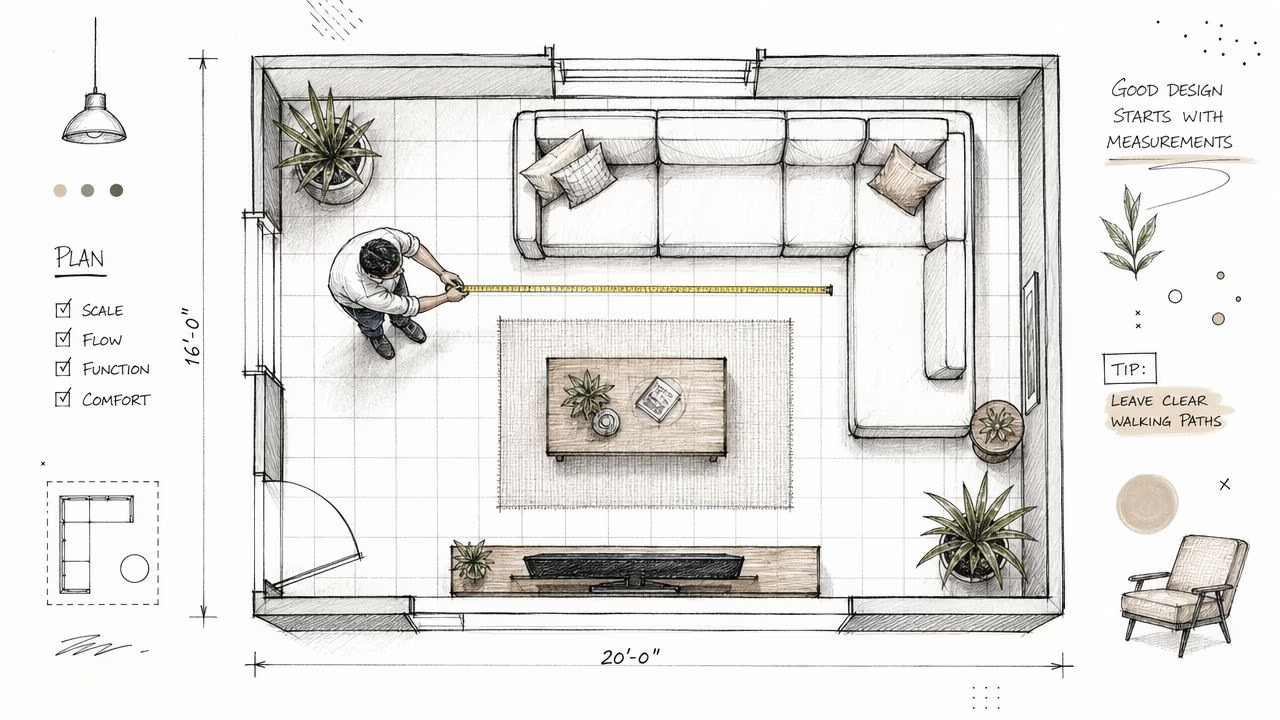
A practical reference on how to measure furniture is worth reviewing before any order is finalized.
Measure the room first
Start with the open floor area where the sectional will sit. Then look beyond the footprint.
- Mark the seating zone: Use painter's tape on the floor to outline the sectional shape.
- Check walking paths: Make sure people can still move from entry points to nearby rooms without squeezing past the furniture.
- Notice windows and vents: Keep the sectional from blocking light, airflow, or access.
- Think about companion pieces: Coffee tables, end tables, lamps, and media storage all need breathing room.
A taped outline helps people spot problems quickly. It's easier to shift a line on the floor than a large sectional after delivery.
Measure for recline, not just seating
Power sectionals need clearance when the seats move. A back wall, console, or table placed too close can limit the very feature people are paying for.
That doesn't always mean huge empty space. It means being realistic about how far the moving parts extend and whether nearby pieces leave room for them to operate comfortably.
A sectional should fit the room while open, not only while closed.
Don't forget the delivery path
This is the part many buyers miss. The sectional has to travel from the truck to the final room.
A delivery checklist helps:
- Measure doorways at the narrowest point.
- Measure hallways where turns are tight.
- Check stairwells for width and headroom.
- Note ceiling fixtures or railings that could interfere.
- Clear the route before delivery day.
Some sectionals come apart into multiple pieces, but each piece still needs enough clearance. A little planning here can prevent stress, delays, and disappointment.
For Bellefontaine-area households, local delivery and in-house service matter because they take some of the uncertainty out of this process. That kind of support helps people enjoy the new furniture instead of worrying about logistics.
Long-Term Care and Maintenance for Your Investment
A quality electric reclining sectional is built for everyday use, but everyday use still leaves a mark. Crumbs collect in seams, oils from hands settle into upholstery, and cords can get tugged when people vacuum or rearrange the room. A little routine care keeps small issues from turning into bigger ones.
The first rule is simple. Follow the upholstery care guidance for the exact material on the sectional. Fabric and leather don't respond to the same cleaners, and power components should never be treated like a standard stationary sofa.
Upholstery care that makes a difference
Gentle maintenance works better than occasional heavy cleaning. Regular vacuuming with a soft brush attachment helps remove grit before it wears on the fabric or settles into creases.
For spills, blot first. Don't scrub. Scrubbing can spread moisture deeper into the cushion or rough up the surface.
A useful outside reference is this guide to signs your upholstered furniture needs cleaning, which helps people spot when routine care isn't enough anymore. For material-specific basics, this overview of upholstery materials can also help buyers match care habits to the fabric or leather they choose.
Protect the moving parts
Power seating adds one more layer of maintenance. The mechanism and wiring should stay clear, dry, and undisturbed.
- Keep cords visible: Don't trap power cords under the frame.
- Vacuum around the base carefully: Dust buildup near moving parts isn't ideal.
- Give the mechanism space: Toys, pet items, and storage bins shouldn't be shoved underneath.
- Use controls gently: Buttons and ports last longer when they aren't forced.
When to request service
Some issues are simple, like a plug that came loose during cleaning. Others need professional attention, especially if the seat stops moving evenly, makes unusual sounds, or loses power intermittently.
Small service issues are easier to correct when they're reported early.
That's where in-house service support matters. A simplified service request process gives homeowners a clear next step when something feels off. Good care protects comfort, appearance, and the long-term value of the piece.
Why Your Bellefontaine Neighbor Chooses Tangers
Buying a large motion sectional isn't only a style decision. It's a trust decision. People want to know the piece will fit, the value will make sense, and help will still be available after the truck leaves.
That's one reason local stores still matter so much in Bellefontaine and Logan County. A nearby team understands how local homes are laid out, how families shop, and how important it is to solve problems without passing customers from one department to another.
Value without pressure
A no-pressure approach matters with furniture because people need time to compare comfort, function, and budget. The Low Price Promise adds reassurance that value stays part of the conversation, not as a gimmick but as a practical safeguard for families trying to furnish well.
Flexible payment options help too. Financing can make a better-quality sectional possible without forcing a household to settle for a short-term fix. That matters for growing families, first-time homebuyers, and anyone furnishing more than one room at once.
Help beyond the sale
Delivery is part of the product experience. A large reclining sectional needs careful handling, thoughtful setup, and a team that treats the home with respect. Local delivery and in-house service requests help take the heavy lifting off the customer, both physically and figuratively.
That reliability also matters for professional audiences. Commercial Office projects often need more than furniture selection. They may need space planning, durable seating solutions, and coordinated delivery for offices, conference rooms, waiting areas, or remodels.
- For homeowners: support with customization, delivery, and service
- For businesses: planning help and durable solutions for professional spaces
- For budget-minded shoppers: financing options that keep quality in reach
Whole-home thinking matters
Many households shopping for living room seating are also working on other parts of the home. That might include bedroom updates, dining pieces, or appliance needs like Speed Queen laundry. Others may already know the store through its reputation as a trusted mattress store Logan County shoppers rely on when comfort matters most.
That broader perspective helps because rooms don't live alone. The best furniture decisions usually support the home as a whole, not just one corner of it.
Frequently Asked Questions About Power Recliners
Some of the most useful information about power sectionals doesn't come up until after delivery. A family has lived with the piece for a while, notices something unexpected, and starts wondering whether it's normal or fixable.
Two questions come up often because they're frustrating and rarely explained clearly.
Why is there a gap between reclining seats
A visible gap between reclining sections can surprise people, especially when the rest of the sectional looks tightly fitted. In many cases, that space exists because dual-side reclining mechanisms require structural separation between sections, which is the mechanical reason behind the common “2-inch gap” concern.
That doesn't mean every gap should be ignored. If the space suddenly seems larger, looks uneven, or affects comfort more than expected, it's worth having the piece inspected. Some situations may benefit from adjustment, and some may be a natural part of how the reclining hardware needs to move without rubbing or stressing the frame.
Not every visible gap is a defect, but buyers deserve a clear explanation of why it exists.
Why did the recliner lose power when the plug seems fine
A seat can stop working even when the obvious connections look normal. One hidden cause is zip-tie pinching, where wire bundles are secured so tightly that insulation gets compressed and damaged over time.
User reports and technician analyses show that zip-tie pinching can account for over 30% of non-wiring-related power failures, according to this technician-focused discussion of power recliner failures. That's a helpful reminder that the issue isn't always the wall plug, battery, or handset.
What should a homeowner do first
If a power seat stops working, a calm checklist is the best starting point.
- Check the basic connection: Make sure power is reaching the unit.
- Listen for motor response: Silence can point toward a power or wiring issue.
- Look for pinched areas: If accessible, inspect visible wire paths without forcing anything apart.
- Stop if the seat strains: Repeated button pressing won't help a compromised wire.
- Request service when needed: Internal repairs are usually best handled by trained technicians.
A good retailer should be transparent about these issues. The right answer isn't to dismiss every concern as normal. It's to explain what's expected, what isn't, and what can be done next.
Tanger's Furniture helps Bellefontaine and Logan County shoppers create comfort that fits real life, from custom living room seating to whole-home planning and Commercial Office projects. With a Low Price Promise, flexible Financing options, local delivery, and in-house service support, the process stays helpful and low-pressure from start to finish. Shoppers can also browse Living Room collections and explore professional solutions through Commercial Office services. Visit our showroom in Bellefontaine to see our custom options in person or browse our collections online to start your journey. Have a specific design question? Contact the design staff today or join the Love Your Home Club for expert tips and exclusive offers delivered to the inbox.