Mattress Types for Side Sleepers: Find Your Perfect Fit

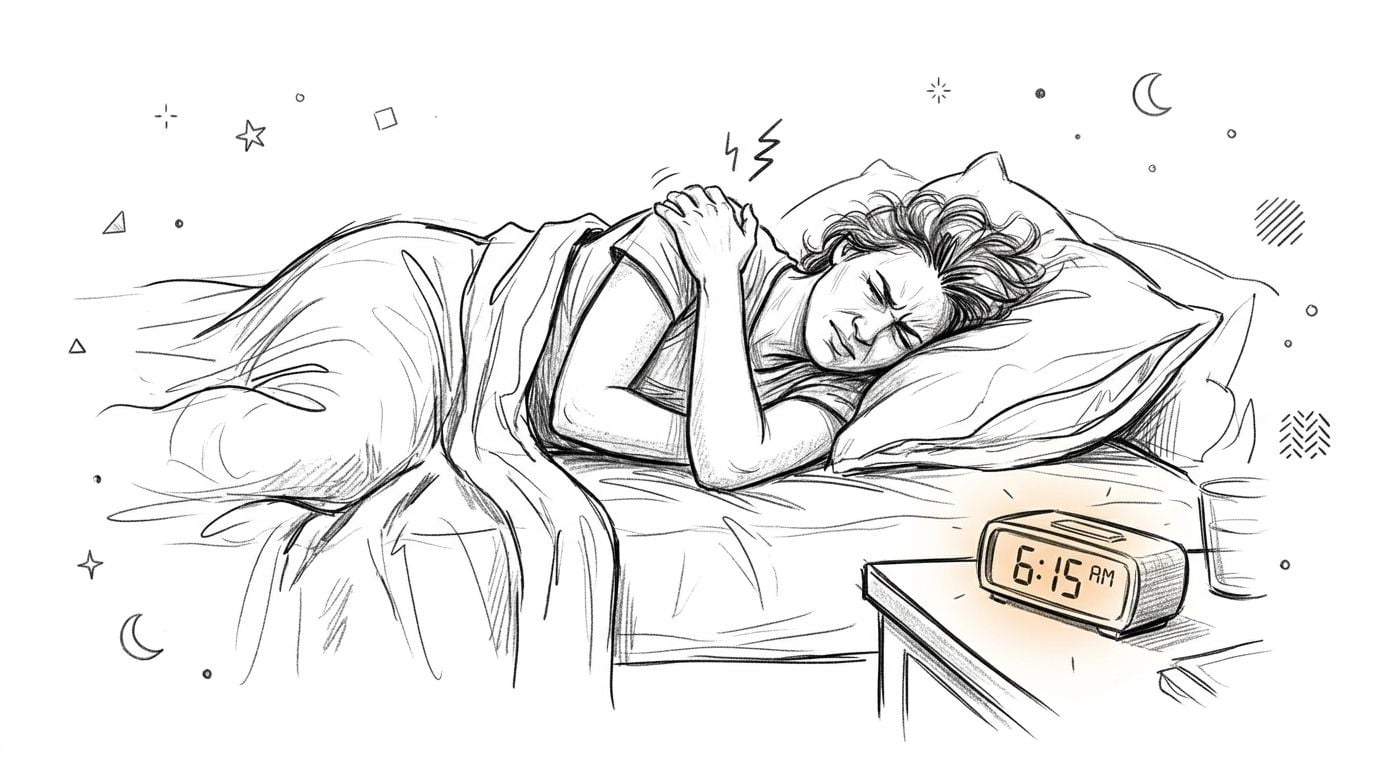
A lot of side sleepers know the feeling. The alarm goes off, and one shoulder feels pinched, one hip feels sore, and the lower back seems tighter than it should after a full night in bed. The mattress might have looked fine in the store, but at home it doesn't feel like it's working with the body.
That confusion is common in homes across Bellefontaine and Logan County. Mattress labels can sound helpful, but words like plush, firm, hybrid, and zoned don't always explain what a bed will feel like at 2 a.m. for someone sleeping on one side. A clear guide matters because the wrong mattress doesn't just feel annoying. It can change how the whole bedroom feels, and that affects how much people enjoy being at home.
Since 1946, and with design guidance rooted in a tradition that reaches back to 1964, local furniture expertise in this community has always worked best when it feels neighborly and low-pressure. The goal isn't to push a trend. The goal is to help people understand what supports their body, what fits their budget, and what helps them love their home a little more each day.
Sleep comfort also depends on the room itself. People who wake up dry, stuffy, or overheated may also benefit from learning how humidifiers improve sleep quality, especially during Ohio heating season. For shoppers starting the mattress search, this mattress buying guide helps connect the basics with what to test in person.
Table of Contents
- Your Guide to a Better Night's Sleep in Logan County
- A Breakdown of Mattress Types for Side Sleepers
- Finding Your Ideal Firmness and Thickness
- Key Features That Make a Real Difference
- Your Local Mattress Buying Checklist
Your Guide to a Better Night's Sleep in Logan County
For side sleepers, comfort usually comes down to two questions. Does the mattress let the shoulder and hip sink in enough, and does it still hold the spine in a healthy line? If either part is off, the body notices by morning.
That's why the best mattress types for side sleepers aren't always the softest models in the room. A bed can feel cozy for a minute and still fail after a full night because it lets the middle of the body drop too far, or because it pushes back too hard under the shoulder.
Why shoulders and hips complain first
Side sleeping concentrates body weight into smaller contact points. The shoulder and hip take the brunt of that pressure. A mattress that's too firm can feel a little like pressing a grape on a countertop. There isn't enough give, so the pressure builds in one spot instead of spreading out.
Common signs of poor pressure relief include:
- A sore upper arm or shoulder: This often means the comfort layers aren't allowing enough cushioning where the body presses deepest.
- A hip that feels tender in the morning: The mattress may be too firm, or the top layer may be too thin.
- Frequent tossing from side to side: The body is often searching for a softer pressure point.
Practical rule: If a side sleeper feels pressure before feeling supported, the surface is usually too firm or too shallow in its comfort layers.
Why straight alignment matters
Pressure relief is only half the job. The mattress also has to keep the spine from bending out of line. That means the neck, upper back, lower back, and hips should rest in a fairly straight path when someone lies on the side.
This isn't just a vague comfort idea. Side sleepers need less than 0.75° of spinal deviation over 12 hours, and materials with a 1.8–2.2 inch foam layer at the lumbar region maintain this 93% of the time, according to a 2025 longitudinal study noted here. That small tolerance shows why the mattress has to do a precise job, not just feel nice for a few minutes.
People dealing with recurring stiffness may also appreciate expert guidance on spine health, especially when they're trying to tell the difference between mattress discomfort and a bigger posture issue. For readers focused on pain relief, this guide on helping back pain with the right mattress gives added context.
A Breakdown of Mattress Types for Side Sleepers
A mattress label tells part of the story. The better question is what each mattress type feels like under the shoulder, hip, and waist when someone lies on a side. That's what helps shoppers make sense of mattress types for side sleepers in a showroom.
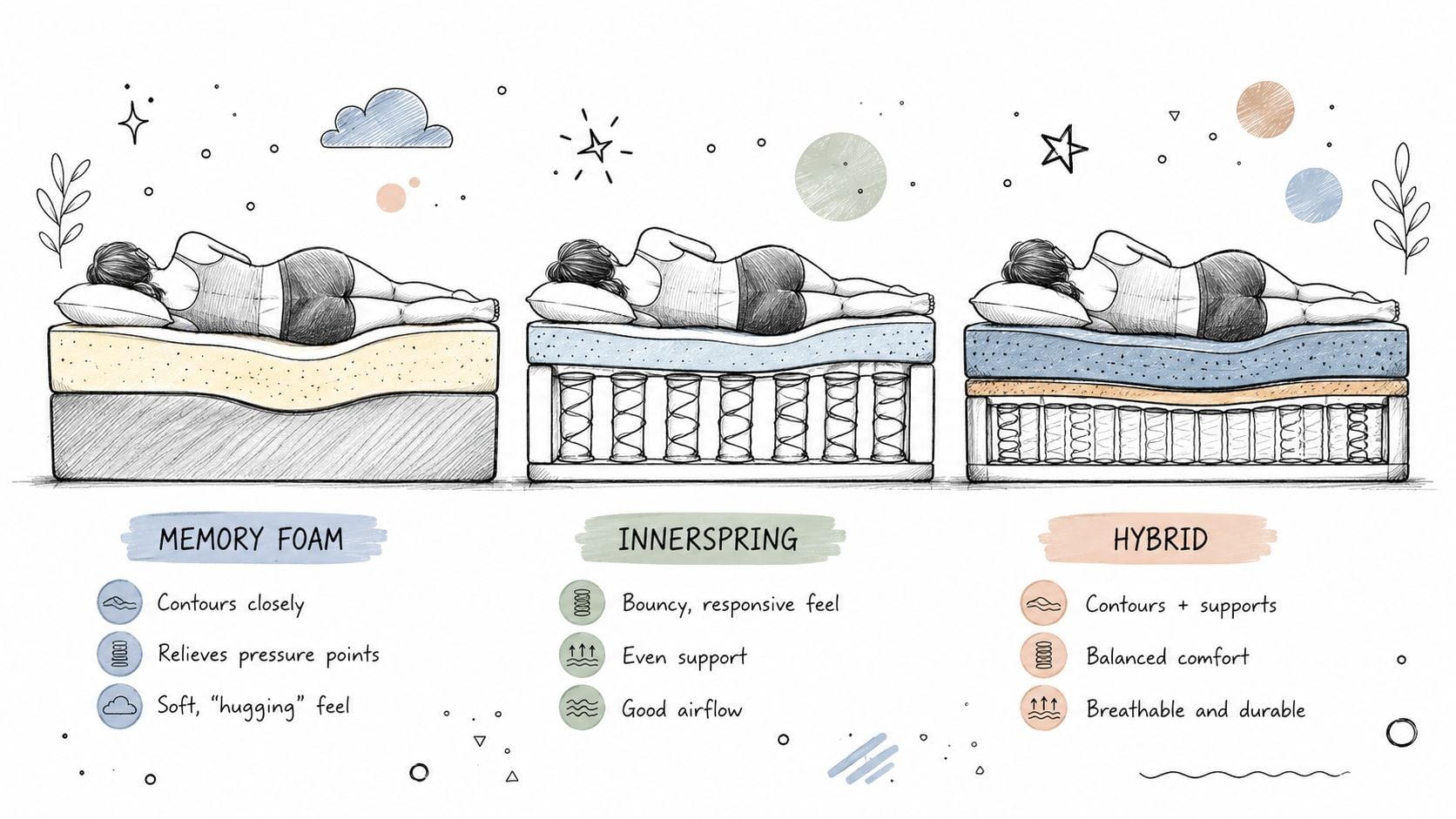
Memory foam
Memory foam is usually the first type people mention for side sleeping. It has a close, contouring feel that many describe as a gentle hug. For a side sleeper, that can be helpful because the foam molds around the shoulder and hip instead of pushing against them.
According to Wirecutter's side sleeper guidance, memory foam and hybrid mattresses are often effective for this position, and memory foam can reduce pressure by up to 30% compared to traditional innerspring beds. In simple terms, it spreads body weight more evenly.
This type can work well for:
- People who want deep contouring
- Couples who are bothered by movement
- Sleepers who feel sharp pressure at the shoulder
Some people love that cradled feeling. Others feel stuck in it. That's a personal comfort preference, and it matters.
Latex
Latex usually feels more buoyant than memory foam. Instead of a deep hug, it tends to give a lighter lift. A side sleeper often notices easier movement and a more springy surface.
That can be a strong match for someone who wants pressure relief but doesn't want a sinking sensation. Latex often appeals to shoppers who change positions, dislike slow-response foam, or want the bed to feel a little more lively.
A good side-sleeper mattress shouldn't force the body to choose between cushioning and support. It should do both at the same time.
Innerspring
A traditional innerspring mattress has a familiar bounce. For some sleepers, that feel is comfortable because it's easy to move on and doesn't feel overly cushioned.
For strict side sleeping, though, a basic innerspring can be tricky. If the comfort layer on top is thin, the coils underneath may feel too direct at the shoulder and hip. That doesn't mean innerspring is always wrong. It means the top comfort system has to do enough pressure-relief work.
Shoppers testing this type should pay attention to whether the shoulder settles in naturally or feels pushed upward.
Hybrid
A hybrid combines foam or similar comfort layers on top with coil support underneath. For many shoppers, this is the easiest category to understand once they lie down on one. It often feels like a middle ground. The surface cushions the body, while the support core keeps the torso from sinking too far.
For side sleepers, hybrids can be especially useful when the foam on top softens the pressure points but the coil system still gives structure through the center of the bed. Readers who want a closer look at this build can review what a hybrid mattress is.
When testing hybrids in a Bellefontaine showroom, a shopper should notice two things right away:
- The shoulder should settle in without strain
- The waist and lower back shouldn't feel unsupported
If both happen together, that's usually a promising sign.
Finding Your Ideal Firmness and Thickness
Firmness confuses a lot of shoppers because it sounds simple. It isn't. A mattress can feel soft on top but still be supportive underneath, and that combination is often what side sleepers need.
What firmness really means
Firmness is best understood as how strongly the mattress pushes back against the body. For side sleepers, too much pushback creates pressure. Too little pushback can let the hips and torso sink too far.
A helpful benchmark comes from AARP's mattress testing for side sleepers. The best firmness range is 4 to 6.5 out of 10 for most side sleepers. That lands in the soft to medium-firm zone, not at the extremes.
This range makes sense because side sleeping needs a careful balance. The mattress should cushion the curvier parts of the body while still supporting the heavier middle.
A simple weight-based guide
Body weight changes how a mattress feels. A lighter sleeper may barely compress a firmer bed, while a heavier sleeper may push much deeper into the same model.
For that reason, the same source notes these practical ranges:
| Sleeper profile | Typical side-sleeper feel |
|---|---|
| Under 130 pounds | 4 to 5 out of 10, often medium-soft |
| Over 130 pounds | 6 to 6.5 out of 10, often medium-firm |
That's why showroom testing matters. One mattress doesn't feel the same to every person.
A few useful takeaways:
- Lighter side sleepers: They often need a little more softness so the shoulder and hip can sink in enough.
- Heavier side sleepers: They usually need a bit more support to avoid bottoming out.
- Couples with different builds: They may do best with a balanced medium feel, or with a model designed for more specific support.
People who want help translating labels into feel can use this mattress firmness guide.
Key takeaway: For side sleepers, “firm enough” should never mean “hard.” The right feel is pressure relief first, support second, and both working together.
Thickness matters too, but shoppers often overfocus on the total height of the bed. What usually matters more is whether the comfort layers and support layers are doing their jobs in the right places. A tall mattress isn't automatically a better mattress.
Key Features That Make a Real Difference
Once the basic mattress type is narrowed down, the smaller construction details start to matter. These are the features that often separate a mattress that feels good for five minutes from one that still feels right by morning.
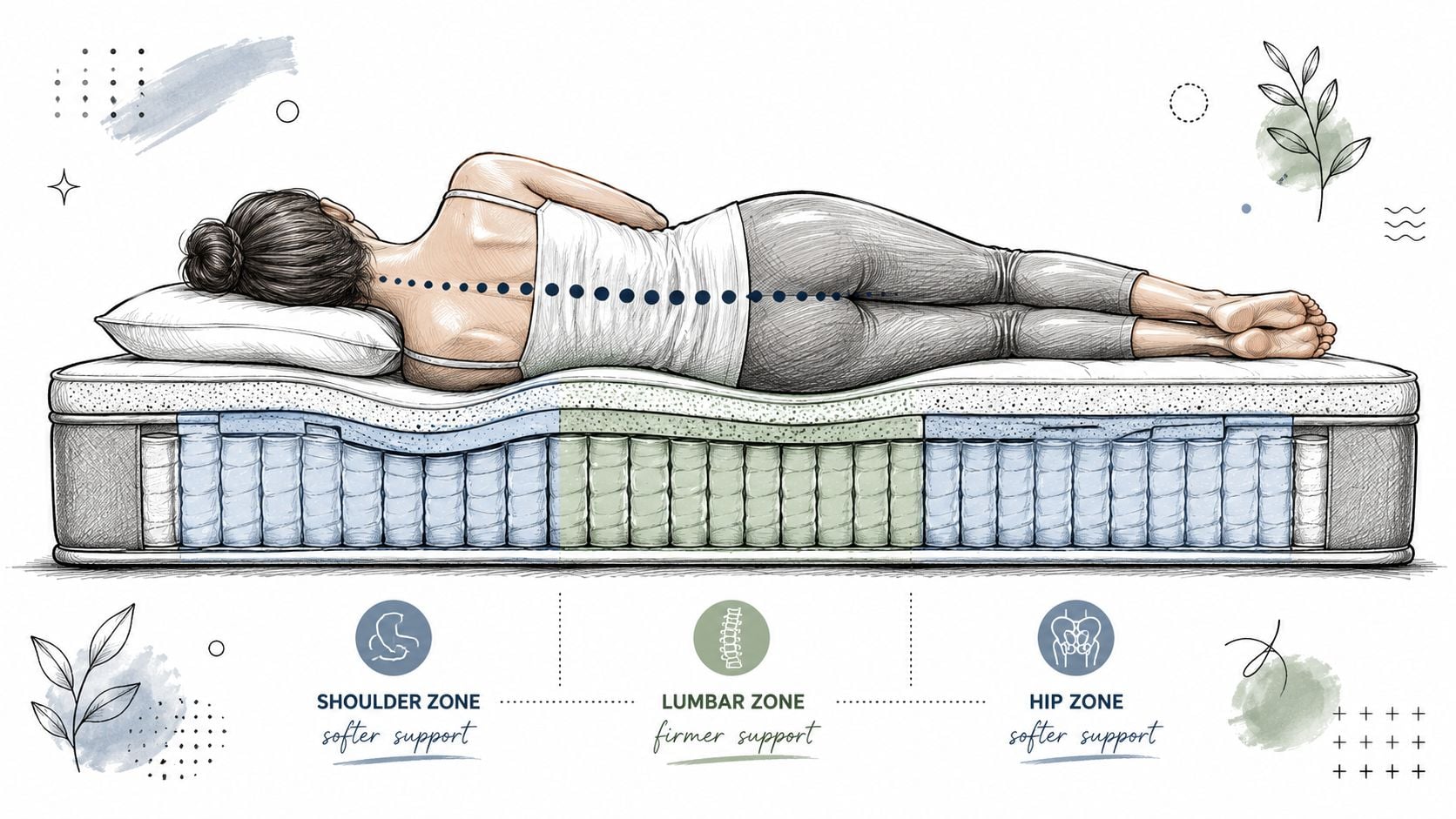
Zoned support that helps instead of fights the body
Zoned support means different parts of the mattress are built to feel different under different parts of the body. In theory, that sounds simple. In practice, it can be done well or poorly.
For heavier side sleepers, one detail matters a lot. A mattress with a softer shoulder zone can make a real difference. According to this guidance on mattresses for heavy side sleepers, zoned support with a softer shoulder zone reduces shoulder indentation by 35% in heavy side sleepers compared to uniform zoned designs, and the source also notes that 25% of the population weighing over 220 pounds are side sleepers.
That matters because some zoned mattresses are firmer through the middle but don't soften enough at the shoulder. The result can feel like a hump or pushback exactly where a side sleeper needs more give.
Shoppers in that category should look for:
- A shoulder area that compresses more easily
- A waist area that feels steady, not saggy
- A smooth transition between zones, not a sharp change
Edge support, motion control, and surface comfort
Edge support doesn't sound glamorous, but many side sleepers notice it quickly. Someone who sleeps near the side of the bed, shares a mattress, or sits on the edge to get ready in the morning will feel the difference.
A stronger edge can also make the sleeping surface feel more usable across the full width. That's especially helpful in smaller bedrooms or for couples trying to spread out comfortably.
Other features worth noticing in person include:
- Motion isolation: If one partner moves, the other person should feel as little transfer as possible.
- Pillow top or plush surface layers: These can add immediate comfort, but they still need the support underneath to keep the body aligned.
- Responsive surface feel: Some sleepers want an easy turn-and-settle feel rather than a deep sink.
The best advanced features are the ones a sleeper can actually feel in the right places. Good design should show up at the shoulder, hip, waist, and edge without needing a marketing lesson.
This kind of detail-oriented shopping often shows up in other parts of the home too. People choosing Bellefontaine furniture, looking into custom sofas Ohio shoppers can tailor, or comparing practical essentials like Speed Queen laundry often arrive at the same conclusion. The details behind the product matter just as much as the label on the floor.
Your Local Mattress Buying Checklist
Online research helps, but side sleepers usually get clarity when they test a mattress the right way in person. A quick sit on the edge won't tell much. A full side-lying test will.
What to look for before buying
A simple checklist keeps the process grounded. For mattress types for side sleepers, these are the signs worth watching:
- Pressure relief at the shoulder and hip: Those areas should settle in, not feel jammed.
- Stable support through the middle: The waist and lower back shouldn't feel like they're hanging.
- A firmness match for body build: Softer isn't always better, and firmer isn't always more supportive.
- Useful edge support: A reinforced perimeter can matter a lot. According to 2023 ASTM F2960 compliance data summarized here, mattresses with a 1.5-inch high-density rail around the perimeter prevent 78% more shoulder sinkage at the edge versus standard rails.
- A feel that matches real sleep habits: Some people like a close contour. Others want easier movement.
For readers making a shortlist before visiting a store, these tips for buying a new mattress are useful to review ahead of time.
How to test a mattress in person
In a showroom, a shopper should lie down in the position used at home. That means getting fully on one side, using a pillow that feels close to normal, and staying there long enough for the body to settle.
A practical in-store routine looks like this:
- Lie on one side for several minutes. The body often needs a little time before pressure points show up.
- Notice the shoulder first. If it feels trapped or forced upward, the bed may be too firm.
- Check the hip next. It should feel cushioned, not dropped too deep.
- Pay attention to the waist. There should be support there, even though the body isn't flat.
- Roll once or twice. The bed should let the sleeper move without a fight.
This low-pressure approach tends to work best for families, first-time buyers, and budget-conscious shoppers alike. Residential customers want comfort that lasts. Business owners furnishing guest rooms, apartments, or workplace lodging spaces often want durability and straightforward support. Commercial buyers may also want broader planning help through Commercial Office, especially when furnishing professional environments beyond the bedroom.
Value matters too. A mattress is a home purchase, but it's also a quality-of-life purchase. That's why shoppers often look for a Low Price Promise, flexible payment options, and reliable local help after the sale. Financing can make a better mattress realistic for a growing family or a larger furnishing project, and local delivery plus in-house service means the heavy lifting is handled from start to finish.
Home comfort tends to connect room by room. Someone updating a bedroom today may be planning a full refresh tomorrow, from Living Room pieces to custom seating options inspired by Flexsteel and Smith Brothers of Berne, especially for shoppers exploring custom sofas Ohio families can tailor to fit their homes.
Visit Tanger's Furniture to see custom options in person at the Bellefontaine showroom or browse collections online to start the journey. Flexible Financing is available for any project, the Low Price Promise helps protect value, and the local delivery team and in-house service process handle the hard part after the purchase. Have a specific design question? Contact the design staff today or join the Love Your Home Club for exclusive offers and expert tips that help every room feel more like home.