How to Design a Living Room: A Step-by-Step Ohio Guide

You’re standing in the living room, looking at a blank wall, an inherited chair, a sofa that may or may not fit, and a room that somehow feels too empty and too busy at the same time. That’s where most good rooms begin. Not with a perfect catalog photo, but with a real home, real habits, and a few decisions that matter more than the rest.
If you’re wondering how to design a living room that feels comfortable, looks pulled together, and actually works for daily life in Ohio, start with function and build from there. A room that looks good but fights your routine won’t stay lovable for long. A room that supports family time, quiet evenings, guests, and even the occasional work session will.
Begin with Your Vision Not Your Wallet
A common starting point is shopping. Designers start by asking better questions.
The living room carries a lot of weight in a home, and the spending around it reflects that. The global living room furniture market was estimated at $228.5 billion in 2024 and is projected to reach $320 billion by 2032, which says a lot about how central this room is to daily life and why quality matters when you choose pieces that need to last (living room furniture market statistics).
Decide what the room needs to do
Before you measure anything, write down how the room should serve you. Not what you think it should look like. What it needs to do on a normal Tuesday.
A useful living room brief can be very simple:
Daily use
Is this where the family watches movies, reads, hosts friends, or all three?Primary mood
Do you want the room to feel calm, cozy, polished, lively, or layered?Non-negotiables
Maybe you need reclining comfort, washable fabrics, hidden storage, or seating that works for grandparents and kids.Problem areas
Too much glare on the TV. No place for lamps. A traffic path that cuts straight through the seating area.
That short list keeps you from making expensive mistakes. It also helps you separate a real need from a passing trend.
Practical rule: If a piece doesn’t support the room’s purpose, it doesn’t belong there, no matter how pretty it looks in a showroom.
Think about feeling before style labels
A lot of homeowners get stuck trying to name their style. Modern. Traditional. Farmhouse. Transitional. In practice, that label matters less than the feeling you want when you walk in.
In Bellefontaine and across Logan County, the rooms that work best usually have a little mix in them. A structured sofa with a softer rug. A clean-lined table with a familiar lamp. A newer sectional that still feels right in an older home. That mix keeps a room from feeling staged.
Try this quick test:
- If you want the room to slow you down, choose softer shapes and quieter contrast.
- If you entertain often, build around conversation instead of a wall full of furniture.
- If the room has to do double duty, prioritize adaptable pieces over decorative extras.
Build the room in the right order
Good living rooms usually follow this sequence:
- Purpose
- Layout
- Anchor seating
- Lighting
- Textiles
- Color and art
- Budget adjustments
That order matters. People who reverse it often end up with accessories they love and a layout they regret.
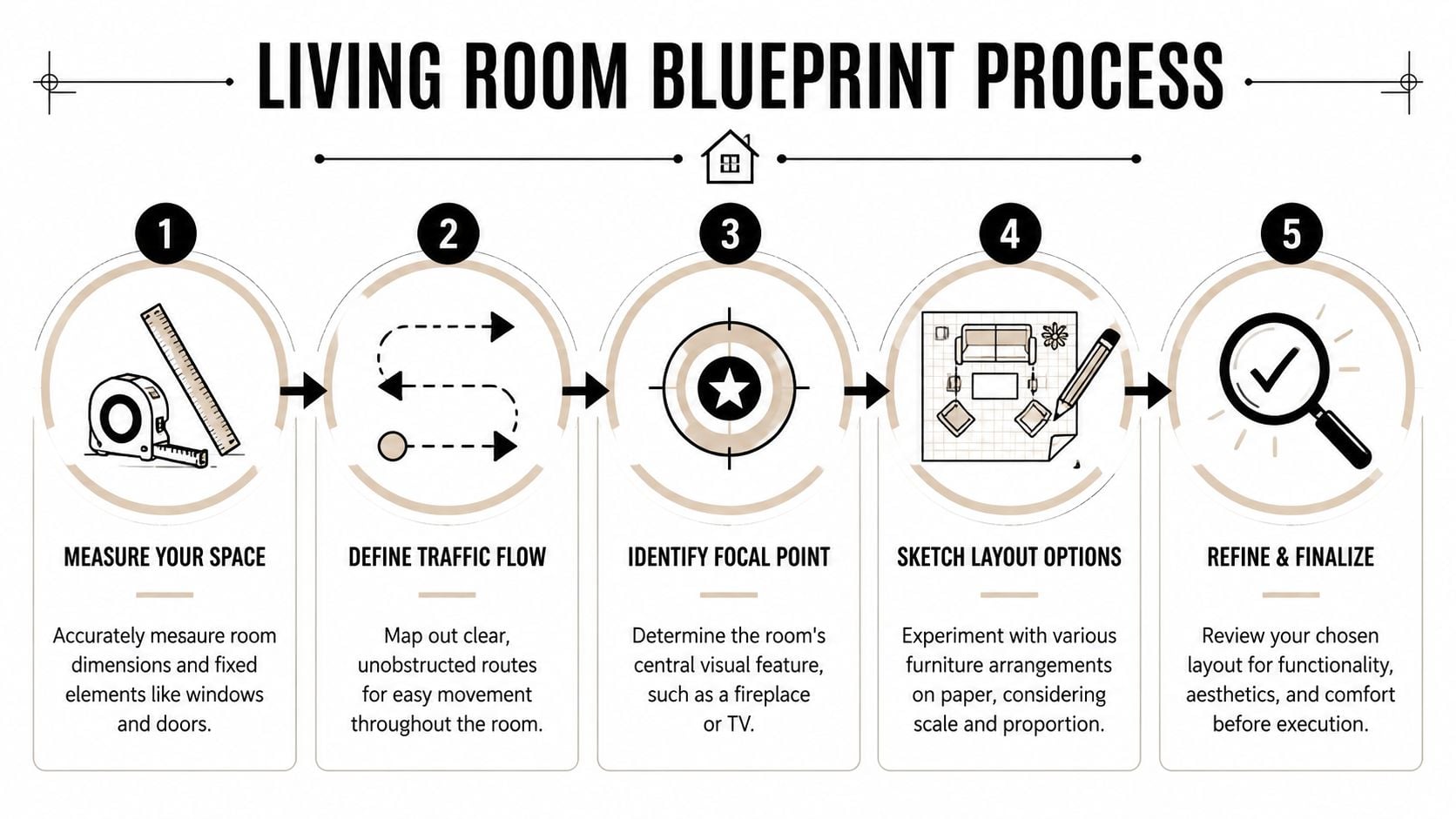
Create Your Living Room Blueprint
A good layout makes an average room feel better than expensive furniture in the wrong place. This is the part people skip because it feels technical. It’s also the part that saves the most frustration.
Measure the room you have
Start with the bones of the space. Measure the room width and length, then mark anything fixed:
- Doors and door swing
- Windows and trim
- Floor vents
- Fireplaces
- Radiators
- TV location or cable access
- Openings into nearby rooms
A hand sketch is enough. It does not need to look polished. It needs to be accurate.
If you’re replacing flooring before you furnish, it helps to think through both decisions together. The visual weight of the floor changes how every upholstered piece reads in the room. For ideas on finish direction and tone, this guide to choosing the perfect flooring in Setauket is a useful reference for seeing how flooring choices shape the rest of a room.
Protect your walkways
This one rule solves a lot of layout problems. Professional designers use 30 to 36 inches between large furniture pieces for comfortable traffic flow, with 18 to 24 inches as a tighter fallback when space is limited (living room spacing rules).
That means if your coffee table, chair, or sofa creates a squeeze point, the room will feel off even if every item is attractive on its own.
A quick layout check:
| Area | What works | What doesn't |
|---|---|---|
| Main path through room | Clear and obvious | Cutting through the conversation zone |
| Space around large furniture | Comfortable to pass through | Knees and shins constantly bumping edges |
| Entry into seating area | Easy and inviting | A chair arm blocking the route |
| Open plan rooms | Defined paths and zones | Furniture drifting with no order |
Find the real focal point
Every living room needs an organizing feature. Sometimes it’s obvious, sometimes it isn’t.
Common focal points include:
- A fireplace
- A large window
- A media wall
- Built-ins
- A strong piece of art
If the room has two competing focal points, choose the one that supports how you live. In many family rooms, that’s the TV. There’s no design prize for pretending otherwise. The better move is to make that choice intentionally and arrange the room with confidence.
Awkward rooms become easier to design once you stop treating their quirks like mistakes. Angles, offsets, and uneven walls can guide the layout instead of ruining it.
Sketch more than one option
Don’t lock yourself into the first arrangement. Try at least two or three.
One layout may look balanced on paper but block a walkway in real life. Another may feel unusual at first and then prove better because it opens the room and creates a clearer conversation area.
For homeowners and business owners alike, planning first keeps the room useful. The same principle applies in professional environments where furniture placement affects flow, comfort, and focus. For a closer look at that process, this guide to space planning for furniture layouts is worth reviewing before you buy.
Select and Customize Your Anchor Furniture
The anchor piece does most of the heavy lifting. Usually that’s the sofa or sectional. Get this choice right, and the rest of the room falls into place more naturally. Get it wrong, and every other decision becomes a workaround.
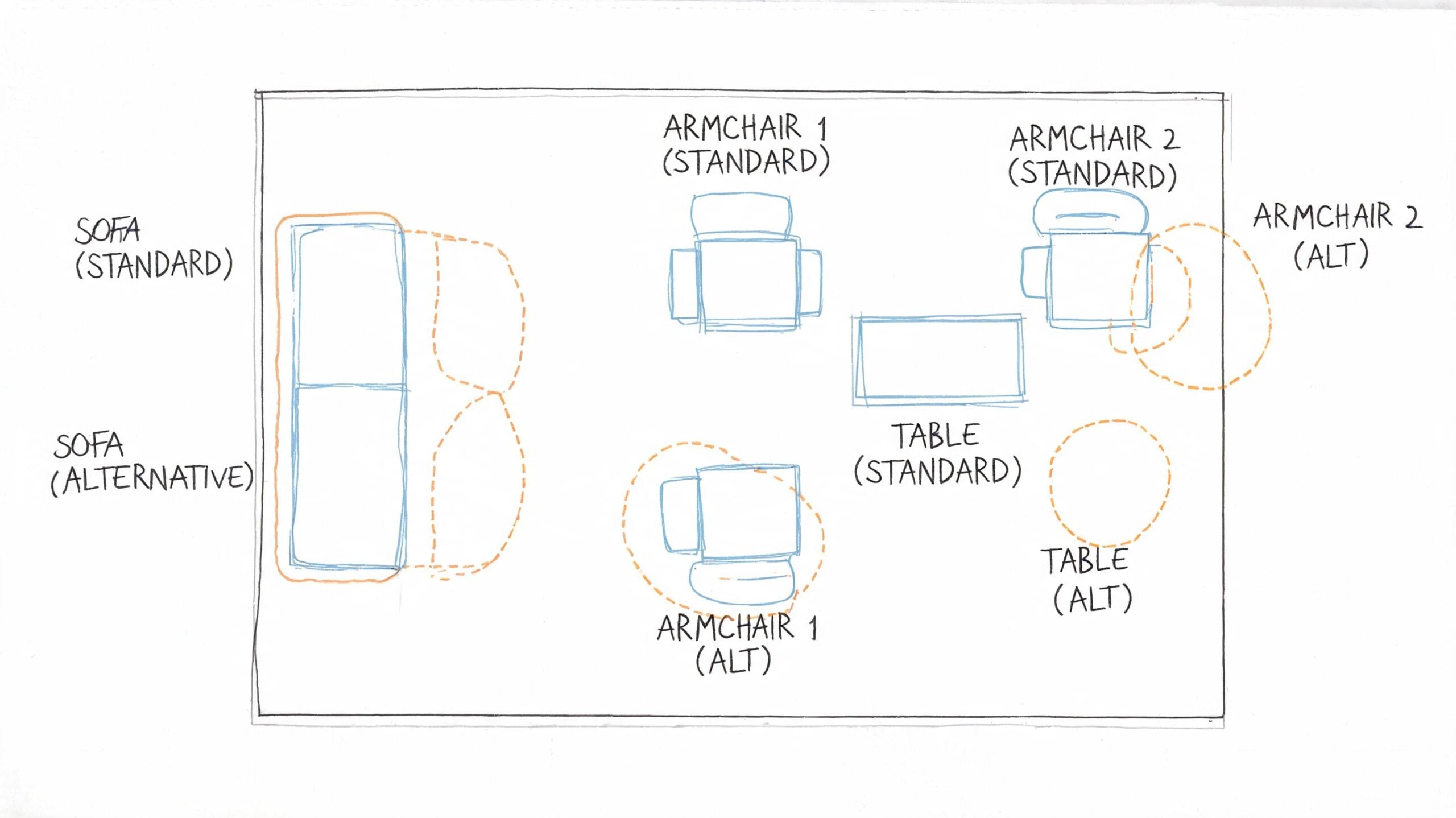
Choose for scale before style
A sofa can be beautiful and still be wrong for the room.
Interior trends in 2025 are moving away from oversized sectionals and toward downsized, modular, and multifunctional seating that feels more flexible and intimate (living room trends for 2025). That shift makes sense in real homes. Huge sectionals can swallow a room, block pathways, and make every other piece feel undersized.
A better way to choose is to weigh these trade-offs:
Sectional
Good for family lounging and open plans. Less flexible if you move or want to rework the room later.Sofa with chairs
Better for conversation and balance. Requires more planning so the room doesn’t feel scattered.Modular seating
Helpful when your needs change. Especially practical in multi-use spaces.Apartment-scale or downsized seating
Strong choice in older homes, tighter rooms, and spaces with multiple entry points.
Customize where it counts
Customization isn’t about making a room fancier. It’s about getting a better fit.
That can mean:
- a shallower depth so the room breathes
- a longer sofa so the wall doesn’t feel underused
- a performance fabric for kids, pets, or everyday wear
- a sectional configuration that works with your traffic path instead of against it
- a wood finish that ties into existing tables or flooring
Custom-order programs earn their keep. With brands like Flexsteel and Smith Brothers of Berne, shoppers can tailor fabrics, finishes, and configurations instead of settling for a close-enough option. For people trying to match a specific layout or solve an awkward room, that flexibility is often the practical answer, not an extra.
One local resource for that process is custom furniture made simple, which outlines how customizable pieces can be ordered around room size, finish, and fabric preferences.
Put more of the budget into the anchor piece
If the budget can’t stretch to a fully furnished room all at once, put more of it into the seating. That’s the piece you use hardest, see first, and feel most.
What usually pays off:
Frame quality
A sofa should feel solid when you sit down and stand up.Seat comfort that matches your habits
Deep lounge seating feels different from upright conversation seating.Fabric that fits your life
Homes with kids or pets need different upholstery choices than formal sitting rooms.Shape that respects the room
A large sectional is not always better. A right-sized sofa often makes the room feel more generous.
What people often get wrong
The most common mistake isn’t choosing a bad sofa. It’s choosing a sofa in isolation.
A piece can look perfect under showroom lights and still fail at home because:
- the arm style is too bulky for the room
- the back is too tall for the window line
- the seat depth doesn’t suit the people using it
- the sectional return blocks the natural path into the room
That’s why anchor furniture should be chosen with the floor plan beside it, not afterward.
Layer in Lighting and Textiles
A living room can be properly furnished and still feel unfinished. That usually comes down to two missing layers: light and texture.
Use more than one kind of light
Think about the difference between a room at noon and the same room at eight in the evening. The furniture hasn’t changed, but the room either feels welcoming or flat depending on how it’s lit.
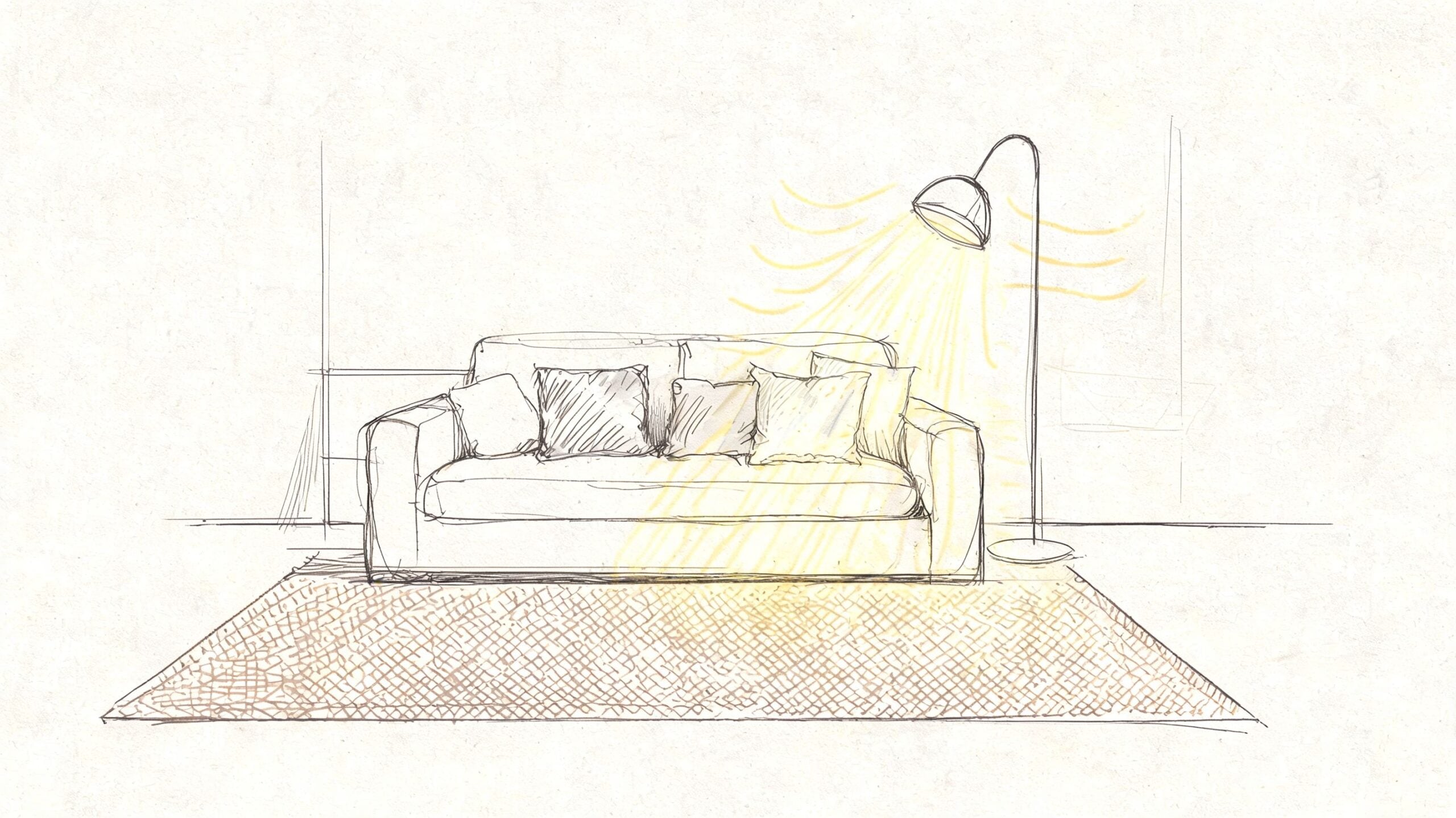
A finished living room usually includes three kinds of light:
- Ambient light for overall brightness, such as ceiling fixtures or recessed lighting
- Task light for reading, working, or hobbies, often from a table lamp or floor lamp
- Accent light for warmth and depth, such as a lamp near art, shelving, or a darker corner
A single overhead light rarely handles all of that well. It brightens the room, but it doesn’t shape it.
A better setup is one ceiling source, one floor lamp, and one table lamp placed with intention. If one seat is the favorite reading spot, light that seat first. Don’t make the whole room pay for one dark corner.
For more practical placement ideas, this article on putting your living room in the best light gives a useful starting point.
Textiles make the room feel lived in
Textiles do more than soften a room. They help define zones, absorb visual harshness, and make seating feel inviting.
A common example is the rug. Without one, furniture can feel like it’s floating. With the right one, the seating area reads as a single conversation zone.
Textiles that usually do the most work:
- Area rugs that ground the main seating group
- Curtains that soften window edges and add height
- Throw pillows that repeat color or add contrast
- Throws that bring in warmth and casual comfort
If you’re looking at natural fibers and want inspiration beyond the standard synthetic options, these sustainable jute and wool living room rugs show how texture can add depth without making the room feel busy.
A room starts to feel finished when the hard surfaces stop echoing and the soft surfaces begin to relate to one another.
Keep the layers edited
Not every sofa needs six pillows. Not every corner needs a basket. Layering works when each piece has a job.
Use this filter:
- If it adds comfort, keep it.
- If it adds contrast, maybe keep it.
- If it only fills space, remove it.
That approach gives the room warmth without clutter.
Add Personality with Color and Art
The room stops looking assembled and starts looking personal. Color and art bring character, but they need a little discipline to work well.
Choose a palette with range
You don’t need a complicated color scheme. You need a consistent one.
One easy way to think about it is through balance. The 60/30/10 rule gives many rooms a cleaner look. Let the dominant color or major furniture presence carry most of the room, support it with a secondary tone, then use a smaller accent color sparingly. That keeps the room from feeling random.
If you need help narrowing choices, this guide to the perfect color palette for your home is a helpful way to think through undertones, contrast, and finish coordination.
A few dependable color moves:
- Use one grounding neutral so bolder accents have something to rest against.
- Repeat wood or metal finishes so tables, lamps, and frames feel related.
- Let textiles carry some color if you don’t want to commit through paint.
- Mix quiet and bold elements instead of making every piece compete.
Hang art lower than you think
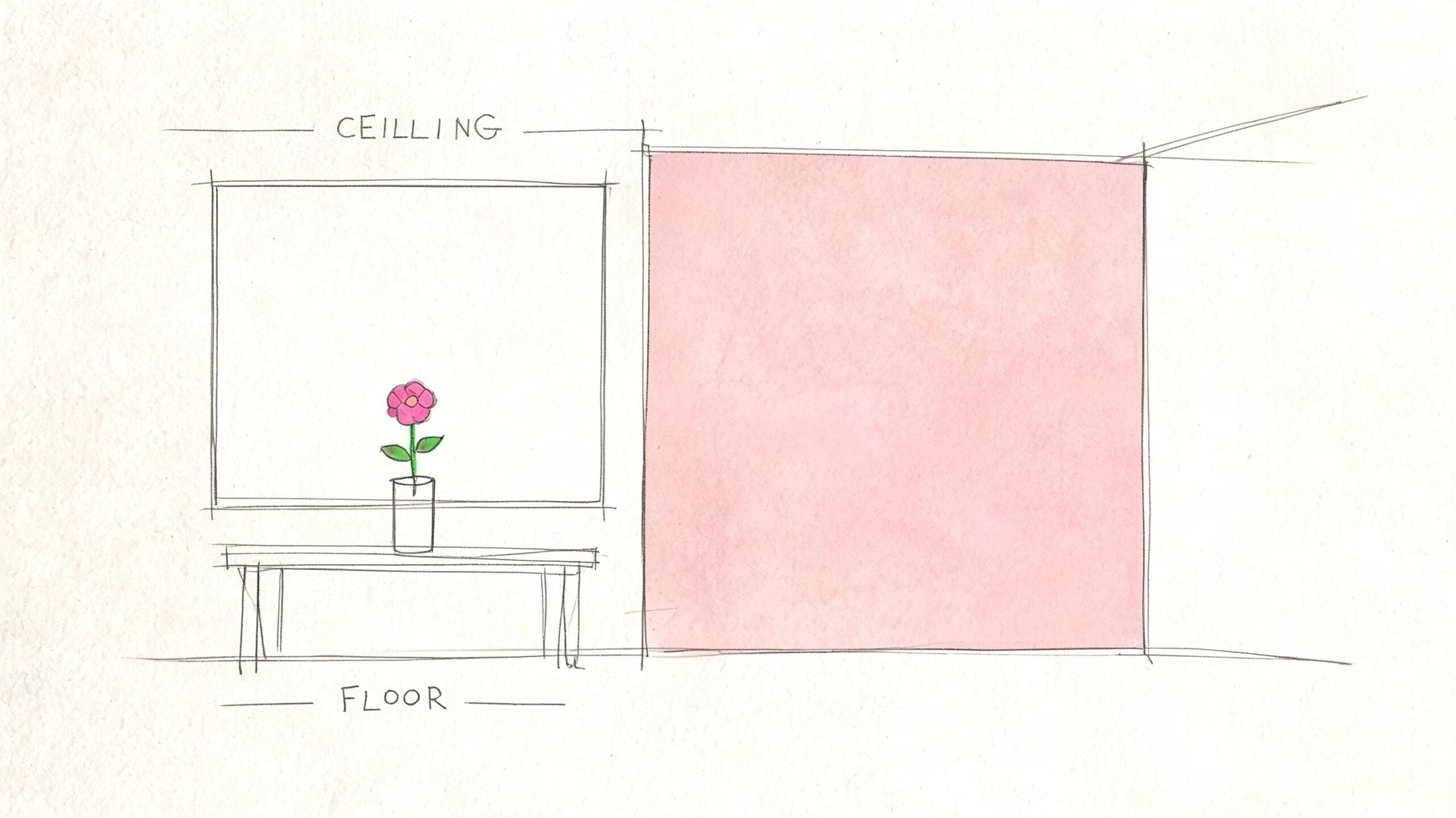
Artwork is often hung too high. It’s one of the fastest ways to make a room feel disconnected.
A strong standard is to hang artwork so the center sits 57 to 60 inches from the floor, which aligns with average eye level and creates a more cohesive look, regardless of ceiling height (artwork placement guidelines).
If you’re hanging art above a sofa, keep it visually connected to the furniture below it. You want the art to feel part of the composition, not like it floated upward.
Bring in living elements carefully
Plants can make a room feel fresher and less rigid, but they should fit the scale and style of the space. A small plant on a console can soften a hard edge. A sculptural plant in a bare corner can solve a visual gap.
If you want something more unusual than the usual leafy floor plant, these ideas for desert terrariums and vertical garden inspiration offer smart ways to add greenery without overfilling the room.
The most memorable living rooms usually include something personal that isn’t expensive at all. Family photos, collected objects, handmade pottery, or one piece of art you never get tired of seeing.
Edit shelves and tabletops
Accessories should support the room, not crowd it.
A simple rule that works in most homes:
- Group objects instead of scattering them
- Vary height and shape
- Leave some empty space
- Use books to anchor smaller decor
- Stop before every surface is full
That last step matters more than people think.
Plan Your Budget and Financing
A living room budget works best when it reflects priority, not pressure. The mistake is trying to buy everything at once and treating each piece as equally important.
Research around the common second furniture piece problem points to a smarter approach for budget-conscious shoppers. Design advice often assumes large budgets, but putting your money into one high-impact piece like a custom sectional, then using financing to spread out the investment, is often the more practical move for renters and families furnishing a room in stages (budget-conscious living room strategy).
Spend where the room feels it most
In most living rooms, the budget should lean toward:
- Primary seating because it handles the most daily use
- A rug or lighting upgrade if the room feels unfinished
- One or two supporting pieces that solve a real function, like a chair or storage table
Places to be more careful:
- trend-driven accents
- filler decor
- temporary placeholders that will need replacing soon
That approach isn’t restrictive. It’s disciplined.
Phase the room on purpose
Some of the best rooms develop over time. This approach allows you to experience the layout and identify what is missing.
One good sequence is:
- Anchor seating
- Rug or lighting
- Secondary seating or tables
- Art and accessories
That order prevents overspending on details before the room itself works.
For shoppers who want to spread out the investment, furniture financing options can make it easier to choose a stronger long-term piece instead of buying a quick replacement twice.
Value matters after the purchase too
Price matters, but value is broader than the ticket. A lower upfront number isn’t always the cheaper decision if the piece wears out quickly, doesn’t fit the room, or creates frustration every day.
For budget-conscious families in Logan County, the better question is often, “What piece will change this room the most right now?” Start there. Build outward after that. The room will feel steadier, and the money usually goes further.
Bring Your Vision to Life with Local Support
Design doesn’t end when you choose the sofa, the rug, and the artwork. It ends when the room is in place, the scale feels right, the lamps are where you need them, and you can finally sit down and enjoy it.
That’s where local support matters. A good delivery team protects the investment you just made and saves you from wrestling heavy furniture through a doorway at the wrong angle. Ongoing service matters too. If something needs attention later, it helps to have a local business with in-house service requests instead of a distant call center and a long wait.
Family-owned stores tend to understand this part better because they live in the same community as the people they serve. Around Bellefontaine, that still means something. It means the relationship doesn’t stop at the receipt. It continues through delivery, setup, follow-up, and the next project when you’re ready, whether that’s a family room refresh, a commercial office layout, custom sofas in Ohio, or even a stop for appliances like Speed Queen laundry and a mattress store Logan County shoppers can rely on.
A well-designed living room doesn’t need to look perfect. It needs to feel settled, useful, and like home.
Visit Tanger's Furniture to see custom options in person at the Bellefontaine showroom or browse collections online to start your journey. If you have a specific design question, contact the design staff for guidance, ask about flexible financing and the Low Price Promise, and join the Love Your Home Club for exclusive offers, practical tips, local delivery support, and help long after the furniture arrives.