A Guide to the Self Cleaning Hot Tub for Your Ohio Home


A lot of homeowners start in the same place. They want the comfort of a hot tub after a long Ohio week, but they don't want to spend every free evening fussing with water care, filters, and cleanup. A self cleaning hot tub sounds like the answer, yet the phrase can mean very different things depending on who's using it.
That's where plain language helps. For families in Bellefontaine and across Logan County, the main question isn't whether a hot tub can clean itself perfectly. Instead, the focus is whether modern systems can cut down the routine work enough to make ownership feel easier, more relaxing, and more worth it.
There's also a bigger lifestyle angle that often gets missed. If a tub needs less day-to-day attention, that saved time can go somewhere better. It can go into building a backyard that feels finished, comfortable, and personal, much like the same thinking that goes into Bellefontaine furniture planning, custom sofas in Ohio, or even updating practical spaces with Speed Queen laundry and a mattress store Logan County shoppers trust for everyday comfort.
What Self Cleaning Really Means for Your Hot Tub
The term self cleaning hot tub sounds simple, but it often creates the wrong picture. Many buyers hear it and assume the spa takes care of everything on its own. That isn't what the term should mean in real life.
A better comparison is a self-cleaning oven. It handles a lot of the dirty work, but someone still wipes the surface, checks the inside, and keeps it in good shape. A self cleaning hot tub works the same way. It reduces effort. It doesn't erase responsibility.
The main job is keeping water moving
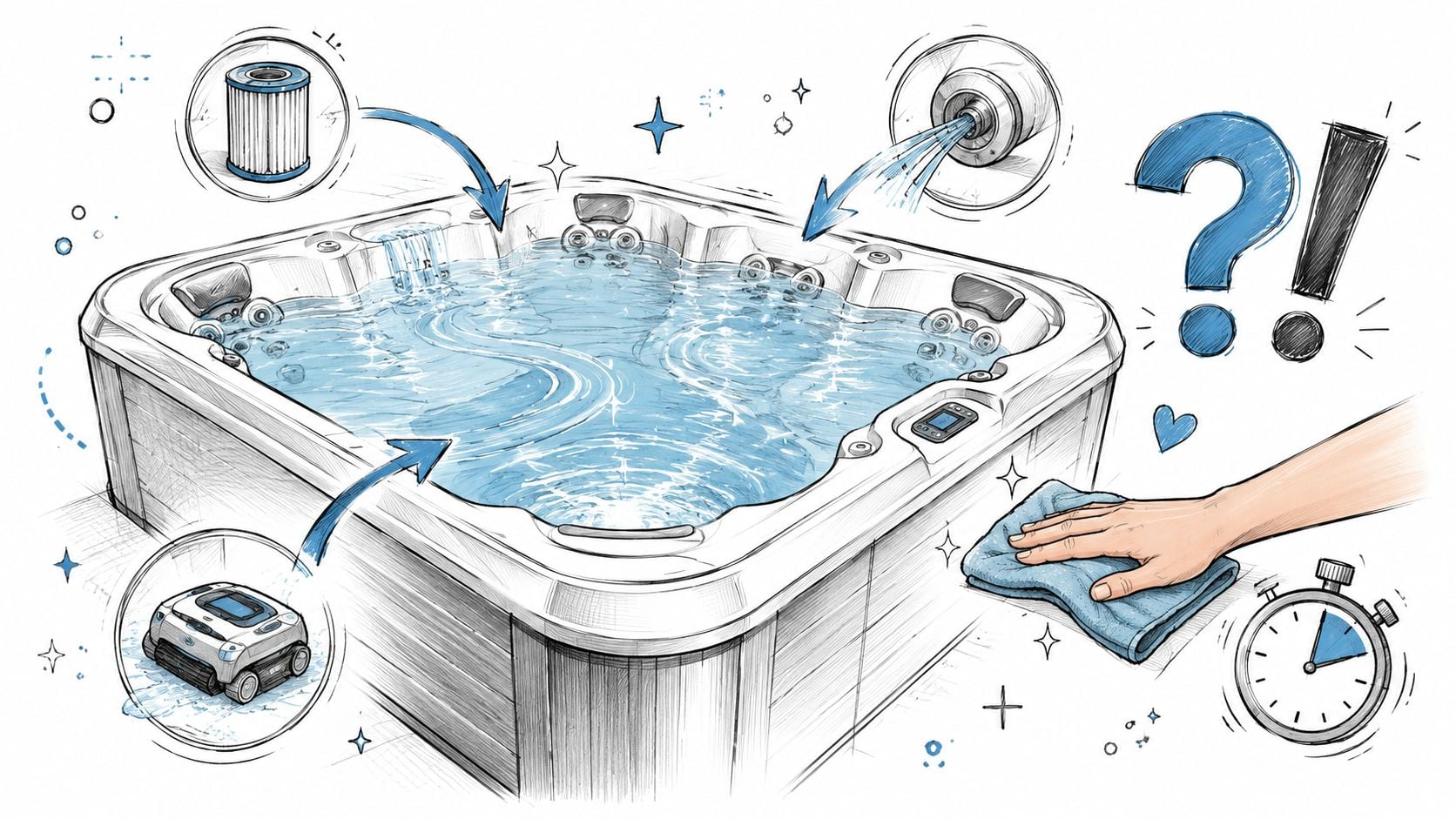
The most important part of the system is strong, fast filtration. Leading manufacturers of self-cleaning hot tubs use patented filtration technology that cycles 100% of the water volume every 15 minutes in standard models, which is much faster than traditional systems that can take hours. That fast turnover helps stop debris from settling to the bottom in the first place, according to this explanation of self-cleaning filtration performance.
That point matters because many people picture cleaning as something that happens after dirt appears. Modern spa systems try to interrupt the mess earlier. They keep particles moving so filters can catch them before they collect on the shell or floor.
Practical rule: A self cleaning hot tub works best when it prevents buildup, not when it promises magic.
Filtration, ozone, and UV-C each do a different job
Shoppers often become confused. They hear several technical terms and assume they all mean the same thing. They don't.
- Filtration handles visible debris. Think leaves, grit, body oils, and floating particles.
- Ozone purification is often used to support water sanitation by helping break down contaminants in the water.
- UV-C sanitation is designed to expose water to light treatment as it passes through a controlled part of the system.
Together, those features can make day-to-day ownership easier. The filter catches physical material. Ozone and UV-C support cleaner water conditions. One part removes what can be seen. The others support what can't.
Why this matters for a homeowner
For an Ohio homeowner, that can mean fewer moments of opening the cover and finding stale-looking water, settled debris, or a ring forming around the shell. It can also mean less frequent heavy cleanup compared with a more basic circulation setup.
That doesn't turn the spa into a zero-effort appliance. It does move it closer to a modern convenience. That's the same basic appeal people look for in a well-designed home. Good systems should make upkeep simpler, much like smart household habits discussed in home maintenance planning.
The Reality of Hot Tub Maintenance and Upkeep
A self cleaning hot tub can make ownership easier, but it still needs regular care. That's the honest version. The phrase can be a marketing myth because even advanced systems still require owners to manually replace filters, drain water, test pH levels, and scrub surfaces, as explained in this breakdown of what self-cleaning hot tubs still require.
That isn't bad news. It's the difference between lighter maintenance and no maintenance.

What still stays on the owner's checklist
A homeowner should still expect a few hands-on tasks:
- Water testing: pH and sanitizer levels still need to be checked on a regular basis.
- Filter care: Filters need rinsing and, eventually, replacement.
- Surface wiping: Seats, shell walls, and the waterline still need occasional cleaning.
- Water changes: Even a better filtration system doesn't remove the need to drain and refresh the tub.
- Cover care: A dirty or damaged cover can work against the whole system.
Each of those tasks is manageable. Trouble starts when buyers think “self-cleaning” means they can ignore the tub for long stretches.
Good operation habits matter more than people think
The system also works best when it's run correctly. Technical maintenance guidance for these tubs recommends a 24-hour continuous cycle starting at 8:00 PM for northern climates and a 16-hour cycle beginning at 6:00 PM for southern climates. That same guidance notes a stable operating temperature of 86°F (30°C) and says operation can cost only pennies per day when the system is used as designed, according to this maintenance and operation video reference.
For Ohio owners, the northern-climate recommendation is the relevant one to ask about. Colder weather changes how heat is retained and how hard the system has to work. Small habits matter too, including closing air controls after use so heat and surface cleanliness aren't working against each other.
Regular care is less about doing hard work and more about staying ahead of small problems before they grow.
For readers who like to understand the chemistry side a bit better, Peoria's experts on pool water issues offer a useful example of how water balance problems can show up even in systems with modern equipment.
Honest ownership is usually easier ownership
Most disappointment comes from mismatched expectations. Buyers who know the tub still needs attention usually feel better about the experience because they're not expecting a machine to replace every maintenance habit.
That same mindset shows up in other parts of the home. Seasonal upkeep always works better when it's steady and realistic, much like the routines covered in practical spring cleaning ideas for the home.
Pros and Cons for Bellefontaine Homeowners
For a Logan County household, a self cleaning hot tub can be a strong fit, but it isn't the right answer for everyone. The most useful way to judge it is with a balanced look at what gets easier and what still deserves caution.
Where the value shows up
A well-designed system can support a more relaxing ownership experience.
- Less routine mess: Faster circulation can help keep debris from hanging around long enough to settle.
- More usable downtime: Families often care less about the technology itself and more about what it gives back, which is time for evening soaks, conversations, and quiet weekends.
- Cleaner day-to-day feel: Water that stays in motion tends to feel less neglected between uses.
- Better fit for busy households: Homes with children, guests, or frequent use often appreciate anything that lowers the maintenance burden.
That practical value lines up with the local mindset in Bellefontaine. People want things that work, last, and make home life smoother. The same values often guide decisions to support local businesses that invest in the community.
Where caution is smart
No-pressure advice means being clear about the downsides too.
| Consideration | Why it matters |
|---|---|
| Higher upfront cost | More advanced systems usually mean a bigger initial investment. |
| Mechanical dependence | More moving parts can mean more things to diagnose if performance drops. |
| Marketing confusion | Buyers can overestimate how little care the tub will need. |
| Performance varies by design | Layout and circulation details can affect real-world results. |
Recent user data shows that some self-clean functions can be ineffective, with debris building up despite frequent cycles. That same reporting highlights the importance of skimmer positioning and pump performance before purchase, as noted in this discussion of owner-reported self-cleaning issues.
A practical local view
Ohio weather adds one more layer. Fall leaves, winter temperature swings, and muddy shoulder seasons can test any outdoor feature. A household that wants the lowest possible involvement may still find hot tub care more hands-on than expected.
A household that wants a better-maintained spa with less routine hassle may see the appeal much more clearly.
Creating Your Complete Backyard Oasis
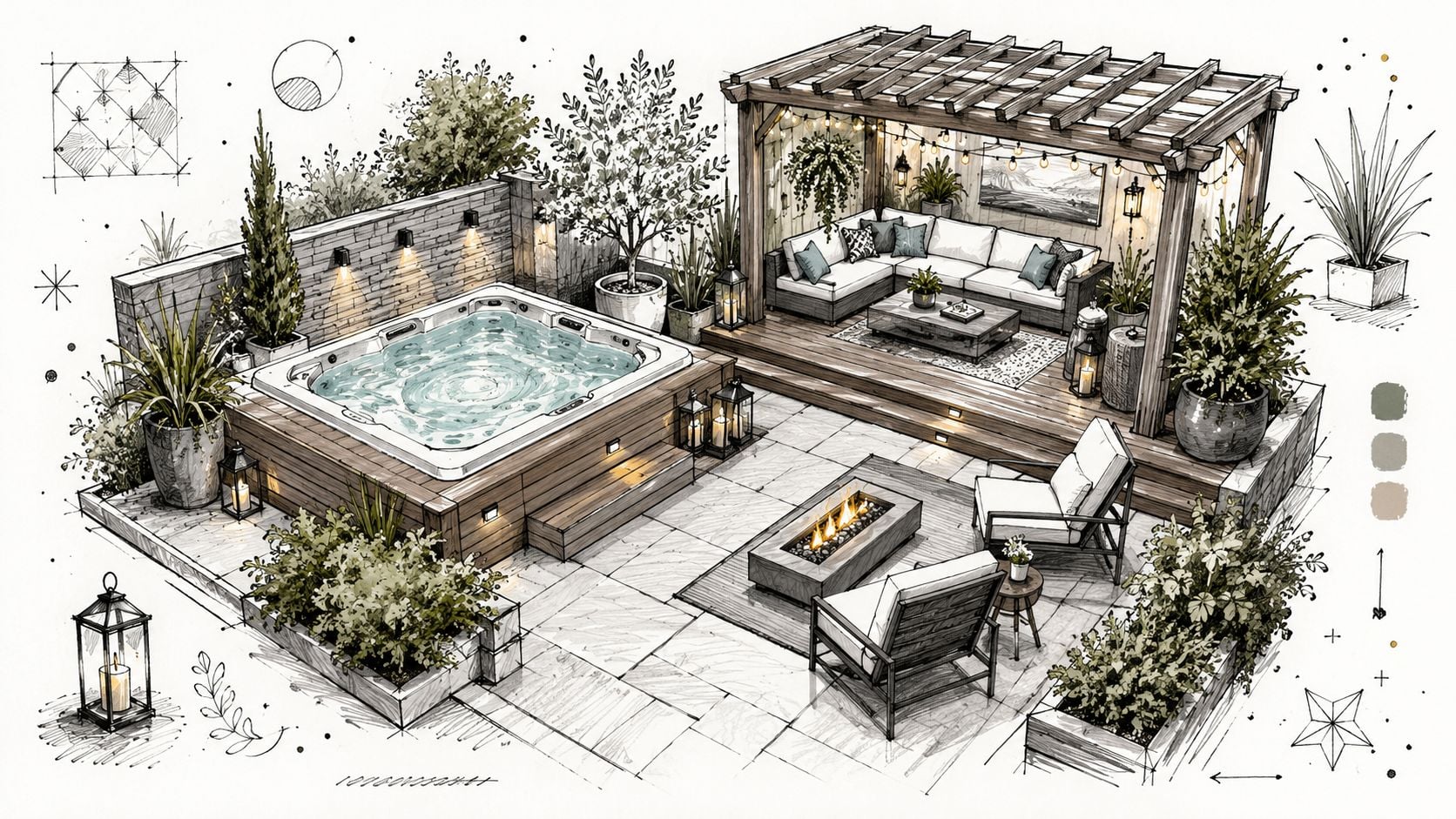
The most interesting part of a self cleaning hot tub often comes after the purchase. When less time goes to scrubbing and fussing, more time can go into the rest of the space. That's where a backyard starts feeling less like a tub in a corner and more like an outdoor room.
Use the saved time to finish the setting
A hot tub on its own can feel incomplete. A hot tub with seating, storage, lighting, and a clear layout feels intentional.
That's why the best backyard plans usually include:
- Deep seating nearby for cooling down, reading, or talking after a soak
- Storage that stays close for towels, robes, and water-care supplies
- A dining or snack zone for evenings outdoors without constant trips inside
- A traffic path that makes sense so guests aren't weaving around furniture or stepping through wet areas
Some homeowners also look for visual ideas before making any layout choices. For inspiration that focuses on the spa itself, custom outdoor jacuzzi options for homeowners can help spark ideas about shape, mood, and placement.
The same design logic applies indoors and out
When customizing furniture, it's best to start with configuration first so the piece fits the room's flow, then move to comfort details like seat depth, and then choose materials. Smith Brothers of Berne and Flexsteel offer extensive options that help solve common problems found in out-of-the-box furniture, as outlined in this guide to smarter furniture customization.
That same order works outdoors too.
Start with layout
Decide where people will walk, sit, dry off, and gather.Then think about comfort
Cushions that look good but don't feel good won't get used much.Choose materials last
Fabric, finish, and color matter, but they should support how the area functions.
A backyard retreat works best when every piece has a job. One seat invites conversation. One bench handles towels. One table gives wet glasses a safe landing spot.
Why customization matters
A common source of frustration for many homeowners is standard furniture. A ready-made piece may have arms that are too bulky, seats that are too deep, or proportions that fight the space. That's true in a family room, and it's just as true around a hot tub patio.
For readers browsing related ideas, living room collections can even help frame how to create an outdoor space that feels just as layered and welcoming as the inside of the home. And for budget-conscious households planning a larger upgrade, flexible financing options for home projects can make a full backyard vision easier to stage over time.
A good retreat doesn't have to feel oversized or elaborate. It needs to feel finished, usable, and personal. That's the difference between owning a feature and enjoying a space, much like the planning principles behind designing a captivating patio.
Key Questions to Ask Your Dealer
A careful buyer can avoid a lot of regret by asking sharper questions before signing anything. Sales language tends to sound polished. Good questions cut through that.
Questions that reveal how the system actually works
How fast does the tub filter the full water volume?
A dealer should answer clearly and explain how that affects debris control.What parts handle visible debris versus sanitation support?
Filtration, ozone, and UV-C shouldn't be lumped together as one vague feature.What maintenance tasks still remain with this model?
The answer should include filter care, water testing, surface cleaning, and draining.What operating routine fits an Ohio climate?
Northern weather changes how heating and circulation should be managed.
Questions that protect the budget
Some of the most important ownership costs don't show up on the first brochure.
- How often do filters or sanitation components need replacement?
- What maintenance can the owner safely do without a service call?
- What does the warranty cover, and what does it exclude?
- If the self-clean function underperforms, what diagnostic steps come first?
A trustworthy dealer should answer those without dodging. If the explanation stays vague, that tells the buyer something too.
Questions about the full backyard project
A hot tub purchase often leads to bigger decisions. Seating, storage, lighting, privacy, and pathways all shape whether the area feels relaxing or unfinished.
That's why smart shoppers also ask:
- Will the tub placement leave enough room for chairs, towels, and foot traffic?
- What surface around the tub will be easiest to keep clean?
- Is this part of a larger outdoor living plan or a stand-alone purchase?
- If the project expands later, what should be planned now?
Buyer safeguard: The best question in any showroom is, “What will still require effort from the homeowner after installation?”
That approach mirrors any large home purchase. A clear process, realistic expectations, and budget planning usually lead to better outcomes, much like the path described in the furniture buying journey from first research to final decision.
For households thinking beyond the spa, it also helps to remember that larger home upgrades can be easier to manage when flexible payment options are available and value stays in focus.
Love Your Home Inside and Out
A self cleaning hot tub is best understood as a convenience tool. It can reduce the amount of routine work, help water stay in better condition, and make ownership feel more manageable. It can't remove every maintenance task, and it shouldn't be sold that way.
That honest view usually leads to better decisions. Homeowners who understand the limits of the system are more likely to choose a tub that fits their habits, their climate, and their expectations. They're also more likely to enjoy it once it's in place.
There's a second lesson here too. Time saved on upkeep has value beyond the tub itself. It can be reinvested into the rest of the property, whether that means better seating, a more comfortable patio layout, or a backyard that feels complete enough to use often instead of admire from the window.
That kind of thinking has long mattered in communities like Bellefontaine and Logan County. People want homes that work well, feel welcoming, and hold up over time. The same mindset shapes decisions across the house, from outdoor gathering areas to Bellefontaine furniture choices, custom sofas Ohio families can personalize, practical laundry upgrades like Speed Queen laundry, and sleep essentials from a mattress store Logan County residents can count on.
For commercial readers, the principle holds up there too. Business owners planning hospitality spaces, waiting areas, or employee retreats often need durable furniture, thoughtful space planning, and solutions that don't feel generic. A polished environment doesn't happen by accident. It comes from asking better questions and choosing pieces that fit the way the space will really be used.
The strongest home projects usually combine comfort, durability, value, and service. That's why low-pressure guidance matters. So do local delivery teams, in-house service requests, flexible financing, and a Low Price Promise that helps families stay practical without settling for less than they want.
A home doesn't need to look like a magazine spread to feel special. It just needs to serve the people living in it, inside and out.
Visit Tanger's Furniture to explore ways to complete the spaces around everyday living, from custom seating and professional space planning to support for larger home projects with flexible financing and a Low Price Promise. Since 1946, with design guidance rooted in 1964, the showroom has served Bellefontaine and Logan County with family-owned care, local delivery, and in-house service that handles the heavy lifting. Visit the showroom in Bellefontaine to see custom options in person or browse collections online to start the journey. Have a specific design question? Contact the design staff today or join the Love Your Home Club for expert tips and exclusive offers delivered to the inbox.