Traditional Style Bedroom Furniture: A Bellefontaine Guide

A lot of Bellefontaine homeowners reach the same point with their bedroom. They're tired of quick trends, tired of pieces that never seem to belong together, and tired of a room that feels more temporary than restful. They want a space that looks settled, calm, and well cared for.
That's where traditional style bedroom furniture keeps earning its place. It doesn't chase the latest look. It leans on familiar shapes, warm wood tones, and details that help a bedroom feel grounded for years instead of just a season.
That long-view approach still matters in a big way. The global bedroom furniture market was valued at USD 266.15 billion in 2024 and the U.S. market is projected to reach USD 72.48 billion by 2030, showing strong ongoing demand for bedroom furnishings and enduring styles alike, according to Grand View Research's bedroom furniture market analysis.
For households thinking beyond the furniture itself, wall décor often finishes the room. A practical guide to choosing framed art for bedrooms can help tie traditional furniture to the mood the room is meant to create.
Creating a Timeless Retreat in Your Home
A traditional bedroom usually starts with a simple hope. Someone wants the room to feel like a retreat at the end of a long day, not a collection of random pieces that happened to fit.
In Logan County, that often means working with a mix of old and new. A home may have beautiful trim, older windows, or smaller bedrooms upstairs, yet the goal stays the same. The room should feel peaceful, useful, and personal.
Why traditional style still feels right
Traditional style bedroom furniture has staying power because it speaks a familiar design language. It uses forms people already trust. A substantial bed, a real dresser, matching nightstands, and warm finishes create a room that feels complete.
That doesn't mean formal or stiff. It means balanced.
A bedroom doesn't need to look grand to feel timeless. It needs to look intentional.
Traditional style also fits the way many local families furnish a home. They often want furniture that can move through life stages, from a first home to a forever home, without looking dated along the way.
What makes a bedroom feel permanent
Several design choices tend to create that settled feeling:
- Anchored furniture choices that give the room a clear focal point
- Natural materials that age with character instead of wearing out visually
- Symmetry and repetition that make the room feel calm
- Decor that supports the furniture rather than competing with it
In many homes, the bedroom is the one room where calm matters most. A traditional approach helps create that effect because the furniture isn't trying to surprise anyone. It's trying to reassure them.
That's part of why this style continues to resonate with people who value comfort, good workmanship, and a home that feels loved rather than constantly updated.
The Hallmarks of Traditional Bedroom Furniture
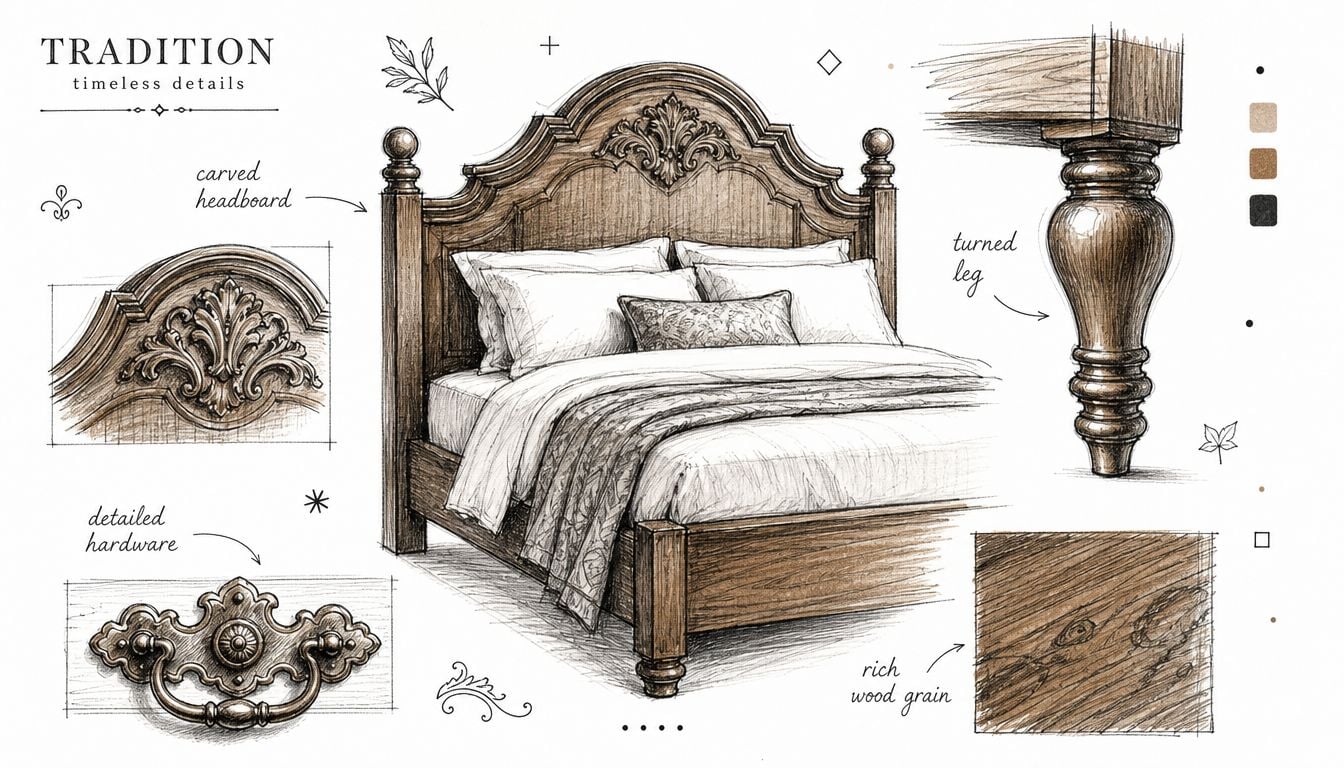
Traditional style bedroom furniture becomes easier to shop for once the eye knows what to look for. The style has a few clear signals. When those signals show up together, the room starts to feel classic rather than casual or ultra-modern.
A helpful starting point is this overview of traditional design style ideas, especially for anyone comparing classic looks against newer, cleaner-lined collections.
The visual cues to notice
Traditional pieces often share these features:
- Graceful silhouettes with curves, raised panels, shaped legs, or molded edges
- Substantial proportions that give each piece presence without looking bulky
- Rich wood finishes in warm, deeper tones that add weight and warmth
- Decorative hardware in classic metal finishes that feels intentional, not flashy
A dresser with framed drawer fronts and shaped feet reads differently from a flat-front case piece. A bed with a paneled headboard carries more visual history than a plain platform frame. Those differences are subtle, but they shape the whole room.
Why materials matter so much
Traditional furniture asks more of its materials because the style depends on depth, texture, and longevity. Grain pattern matters. Finish quality matters. Construction matters.
High-quality traditional style bedroom furniture is often judged by solid hardwood construction and dovetail drawer joints. In top-tier pieces, six-dovetailed drawers are a standard feature, giving the case piece structural integrity that resists warping far better than particleboard, as described by Countryside Amish Furniture's overview of traditional solid wood bedroom furniture.
Practical rule: If a traditional bedroom piece looks beautiful but feels light, hollow, or flimsy, the build may not match the style.
That's where many shoppers get confused. They see carved details or dark stain and assume the piece is high quality. But traditional style isn't just decoration. It depends on good bones underneath.
Quick checklist for shoppers
When judging traditional style bedroom furniture in person, these details help:
| What to check | Why it matters |
|---|---|
| Drawer joinery | Strong joinery supports long-term use |
| Wood construction | Solid hardwood generally offers better stability |
| Finish depth | Rich finishes help the piece feel warm and established |
| Hardware style | Pulls and knobs should suit the scale of the piece |
| Edge detailing | Molding, panels, and shaping add classic character |
The best traditional furniture usually feels coherent. Nothing looks added just for effect. The profile, finish, and construction all point in the same direction.
Assembling Your Classic Bedroom Ensemble
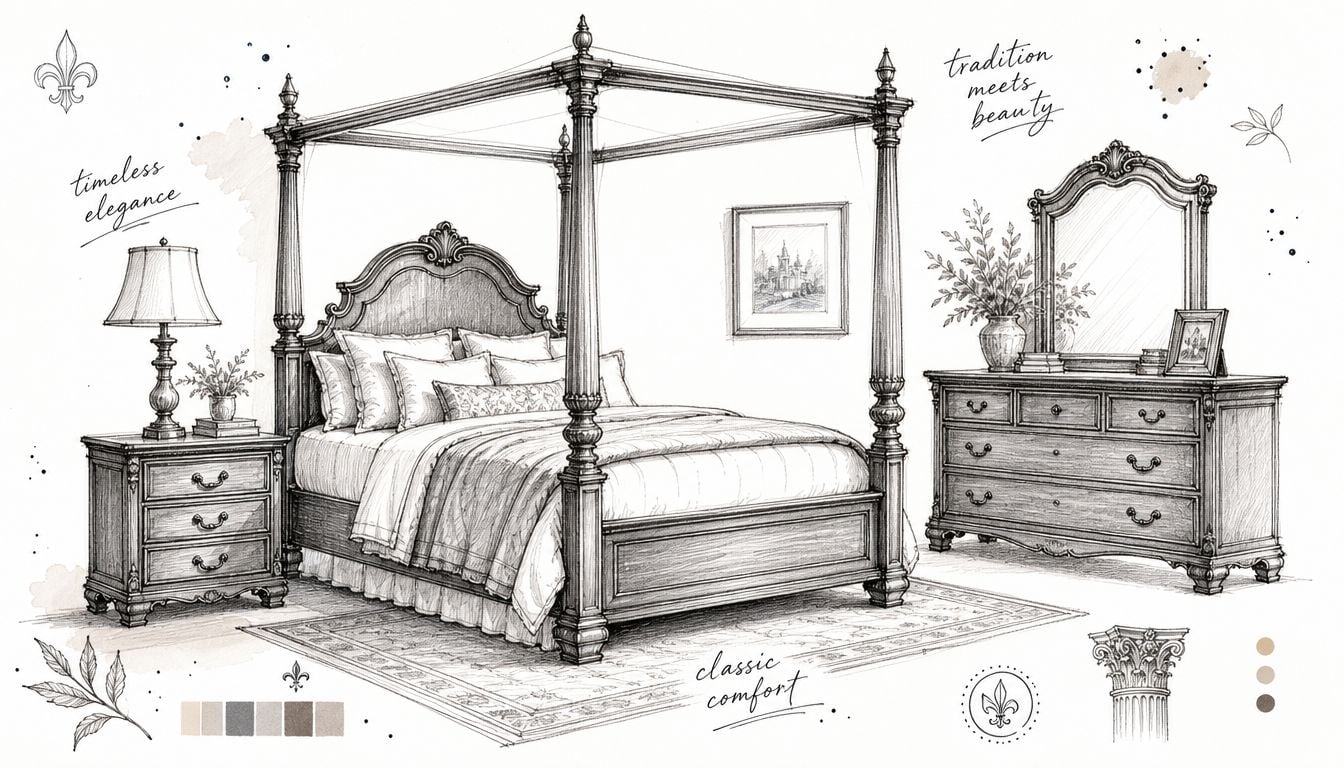
A traditional bedroom works best when the furniture acts like a family. Each piece has its own role, but the room feels strongest when those roles support one another.
For readers sorting through layouts and furniture combinations, this guide on how to select the perfect bedroom furniture offers a useful planning lens.
The bed sets the tone
In a traditional room, the bed is almost always the visual center. The style of bed chosen shapes the rest of the ensemble.
Common traditional bed types include:
- Panel beds, which feel well-defined and classic
- Sleigh beds, which bring softness through curved headboards or footboards
- Four-poster beds, which create height and formality without needing much extra decoration
A smaller room may do better with a panel bed that keeps the profile controlled. A larger primary bedroom may have enough space for a sleigh or poster bed that carries more visual weight.
Storage pieces that build the room
Once the bed is established, the storage pieces give the room function and rhythm.
A traditional dresser is often wide and grounded. It usually serves as the main clothing storage piece and also gives space for a mirror, lamp, or framed art. A chest of drawers brings the eye upward and works well when floor space is tighter.
Nightstands do more than hold a lamp and a book. They help the bed look finished. Even when the two nightstands aren't identical, they should feel balanced in height, shape, and visual weight.
Accent pieces with purpose
Some traditional bedrooms benefit from one additional piece that adds utility without crowding the room.
A few common options:
- Armoire or wardrobe for homes that need more concealed storage
- Bedroom bench at the foot of the bed for softness and function
- Gentleman's chest for vertical storage with a more formal look
Matching every piece exactly can make a room feel stiff. Traditional rooms often look better when the shapes relate, even if every item isn't from one identical set.
That idea helps many homeowners breathe easier. A room doesn't fail just because the nightstands came from one collection and the chest came from another. If the wood tone, scale, and detailing speak the same language, the room can still feel beautifully put together.
Styling and Accessorizing Your Space
Traditional doesn't have to feel heavy. It can feel layered, comfortable, and current when the room has enough breathing room around the furniture and the accessories are chosen with restraint.
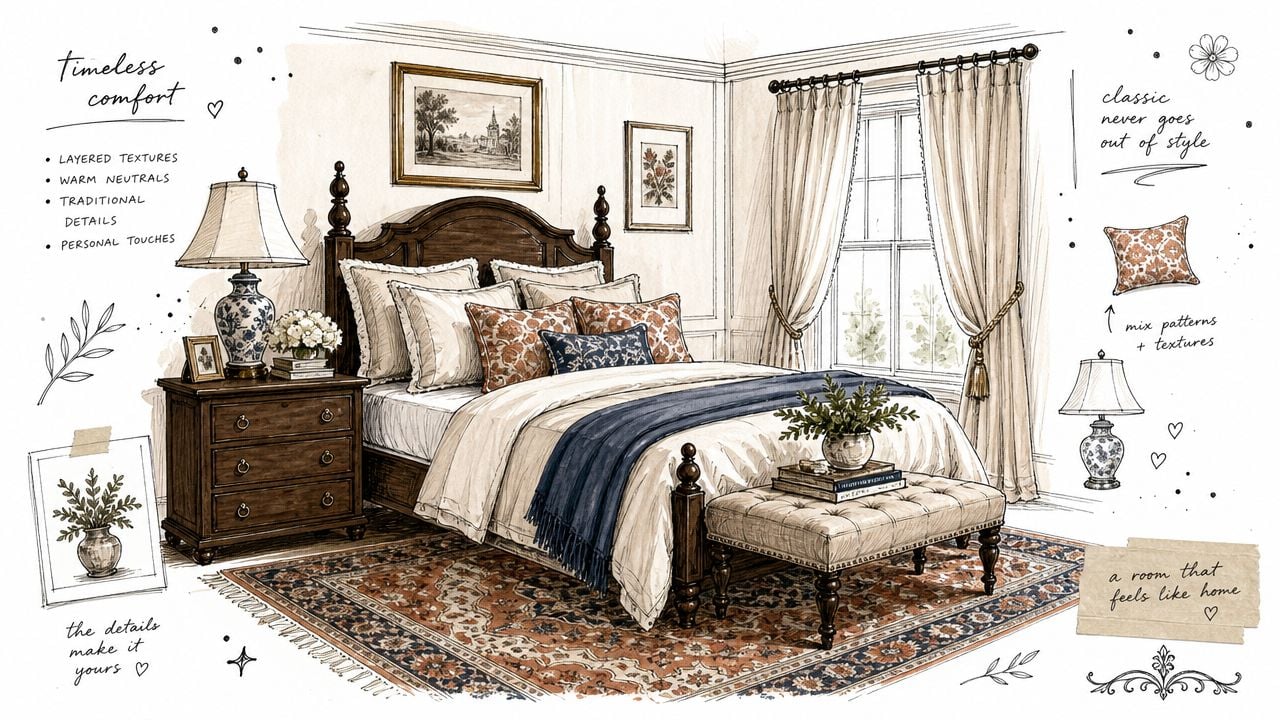
For more bed-focused finishing ideas, this article on accessorizing the bed of your dreams helps narrow down what belongs on the bed and what doesn't.
Start with layout before accessories
In classic bedroom design, the bed is the anchor and should have at least 30 inches of clearance on all sides for comfortable movement. Symmetrical placement of matching nightstands also helps create balance, and details like valance curtains can heighten the sense of luxury while keeping the room comfortable, according to Arredo Classic's classic bedroom furniture layout guidance.
That single rule clears up a lot of decorating mistakes. Many rooms don't feel “off” because of the color palette. They feel off because the furniture is packed too tightly.
How to keep traditional style from looking dated
A well-styled traditional bedroom usually relies on contrast. Rich wood furniture needs lighter or softer companions around it.
Helpful ways to create balance include:
- Use warm neutrals in bedding or rugs so darker wood doesn't dominate
- Mix smooth and soft textures such as wood, upholstered elements, and woven fabrics
- Limit ornate accents so the furniture remains the star
- Choose lamps with classic shapes instead of overly trendy forms
Window treatments can make a big difference too. Traditional rooms often benefit from fuller fabric treatments, but they don't need to feel formal to the point of fussiness.
Small details that change the mood
Finishing touches matter because they affect how the room feels when someone walks in after their day.
A few details often help:
- Layered bedding in solids or quiet patterns
- Framed artwork with enough scale to relate to the furniture
- Mirrors that reflect light and soften heavier woods
- Gentle scent choices that support a restful environment
For readers who enjoy creating a calm sensory atmosphere, this piece on incense for a better home offers ideas for making a bedroom feel more settled without adding visual clutter.
Symmetry calms a room, but perfection isn't required. The goal is visual steadiness, not a showroom that nobody can live in.
That's often the point where a room starts to feel personal instead of staged.
Practical Advice for Logan County Homes
Traditional style bedroom furniture can work beautifully in Logan County homes, but only when the room is measured accurately. Older houses often have narrower stairways, tighter corners, and bedrooms that ask for more restraint than a large suburban floor plan.
That's why local planning matters just as much as style.
Measure more than the floor space
When choosing bedroom furniture, it's important to verify dimensions beyond width and length. Checking height, depth, and overall scale helps protect traffic flow and comfort, and that's the kind of detail-oriented process covered in home design services for furniture planning.
A tall headboard may fit the wall but overpower the window trim. A deep dresser may technically fit the room while still making the walkway feel cramped. Those are common problems, and they're usually preventable.
A practical measuring list
Before any order is placed, it helps to record:
- Room dimensions including wall lengths and ceiling height
- Doorway openings so larger case goods can enter the room
- Stair and hallway turns for upstairs bedrooms
- Window placement to avoid blocking natural light
- Nightstand and dresser depth so walking paths stay comfortable
This planning guide on how to arrange bedroom furniture can help households think through placement before delivery day.
The best bedroom purchase is the one that fits the room, the doorway, and daily life.
Thinking about the whole home
Many Bellefontaine households also think room to room, not just piece by piece. Someone shopping for a bedroom may also be weighing living room updates, comparing custom sofas Ohio families can tailor to fit their space, or replacing a worn-out washer with reliable Speed Queen laundry for the utility room.
The bedroom is still a major decision because sleep affects the whole home. For many families, that also means pairing furniture with the right mattress from a mattress store Logan County shoppers already trust for comfort and fit.
Traditional furniture works best when it supports that broader goal. It should make the home function better, not just photograph well.
Making It Yours with Tanger's Custom Orders
Customization makes traditional style bedroom furniture much more flexible than many shoppers expect. The style may be rooted in history, but the buying process doesn't have to feel rigid.
A clear overview of the process appears in this guide to getting started with custom order furniture.
What shoppers can usually customize
Custom ordering often allows buyers to adjust the details that matter most in daily life and long-term satisfaction.
That may include:
- Wood finish choices to suit wall color, flooring, or existing furniture
- Hardware selections that shift a piece slightly dressier or simpler
- Scale decisions where available, especially when space is limited
- Fabric and upholstery choices for coordinated benches or nearby seating
This is one reason customization appeals beyond the bedroom. Households comparing traditional case goods may also be considering coordinated seating elsewhere in the home, including the kind of custom sofas Ohio homeowners often want for a more customized look. Brands such as Flexsteel and Smith Brothers of Berne are often part of that broader conversation because buyers value choice as much as quality.
Why the wait can be worth it
The typical lead time for custom traditional furniture averages 8 to 10 weeks from order to delivery, allowing time for dimension verification, material selection, and detailed craftsmanship, as explained in Woodstock Furniture Outlet's custom furniture ordering overview.
That timeline helps set fair expectations. Custom furniture usually asks for more patience because people are choosing specifics instead of taking home whatever happens to be in stock.
A simple way to think about the process:
- Narrow the style
- Confirm the room measurements
- Choose finish and hardware
- Review details carefully before production begins
- Prepare the room before delivery
Custom isn't only for large budgets
Many people assume custom means out of reach. Often, it means more intentional.
Financing can make a custom project more manageable for families who want lasting value without paying for everything at once. It's also useful for professional spaces. A business owner furnishing a guest suite, model unit, or office-adjacent apartment may need a more polished result and a clearer planning path. In those cases, commercial office and space-planning support can matter just as much as product selection.
Your Partner for a Home You Love
Traditional style bedroom furniture endures because it solves a real problem. It helps a bedroom feel restful, rooted, and cared for. For many households, that matters more than chasing whatever look happens to be popular at the moment.
The strongest bedrooms usually come together through a series of practical decisions. Good scale. Dependable construction. Finishes that warm the room. Accessories that support the furniture instead of distracting from it. When those choices line up, the space feels natural.
For readers gathering ideas from different design regions, this look at interior designer Chattanooga styles offers another perspective on blending classic elements with livable comfort.
A trusted local furniture partner can make that process much easier. Low Price Promise protection helps families feel confident about value. Flexible financing keeps larger projects within reach. Delivery and service support take care of the heavy lifting, both physically and figuratively. That kind of reliability matters to homeowners, budget-conscious families, and business owners alike.
The goal isn't just to fill a room. It's to build a home that feels right for the people living in it.
Tanger's Furniture has served the Bellefontaine community with family-owned care since 1946, with design help available since 1964. Visit our showroom in Bellefontaine to see our custom options in person or browse our collections online to start your journey. Readers planning a full-home update can also explore Living Room, Commercial Office, and Financing options. Have a specific design question? Contact our design staff today or join our Love Your Home Club for expert tips delivered to your inbox.