How to Decorate a Living Room on a Budget: A Local Guide

A lot of people in Bellefontaine stand in their living room, look at the same tired sofa, the blank walls, the lamp that’s never quite bright enough, and decide a better space must be expensive. That’s usually the wrong conclusion.
A good living room isn’t built by spending wildly. It’s built by making a few smart decisions in the right order. That’s how to decorate a living room on a budget without ending up with a room full of random bargains that don’t work together.
Around Logan County, most families want the same thing. They want a room that feels comfortable, holds up to real life, and doesn’t look like it was copied straight from a big-box showroom. You can get there. You just need a plan, a little restraint, and a willingness to mix practical purchases with a few creative fixes.
We’ve been helping local households love their homes since 1946, with design guidance in the business since 1964. That history matters because budget decorating gets easier when you stop guessing. You don’t need pressure. You need clear advice that works in real homes with kids, pets, guests, homework, game nights, and everyday mess.
Your Dream Living Room is Closer Than You Think
Most budget decorating problems start with one mistake. People try to solve the whole room at once.
They buy a lamp because it’s on sale. Then a rug because it’s cute. Then a chair because they found a deal online. A month later, they’ve spent real money and still don’t like the room. That’s frustrating, but it’s fixable.
The better approach is simpler. Choose what the room needs to do, decide what deserves real investment, and let the smaller pieces support that decision.
Start with the life you actually live
If your living room is where the family piles in after work, comfort comes first. If it doubles as a quiet reading spot, lighting matters more. If it’s the room everyone sees when they visit, the focal point and layout deserve extra attention.
I’m opinionated about this because I’ve seen the same pattern for decades. The families who get the best result on a budget aren’t the ones chasing trends. They’re the ones who make practical choices early.
A strong budget room usually includes:
- One dependable anchor piece that gives the room structure
- A clear furniture arrangement that supports conversation and traffic flow
- Affordable personality through textiles, art, paint, and thrifted accents
- Good lighting that makes everything look better at night
A beautiful room doesn’t require luxury pricing. It requires discipline.
That’s the mindset that turns a bland living room into a place you enjoy sitting in.
Laying the Foundation for a Room You'll Love
Before you buy anything, measure the room. Every wall. Every window. Every doorway. Measure where the vents are, where the outlets sit, and how far a recliner or sectional can extend without blocking traffic.
That small step saves money faster than any coupon ever will.
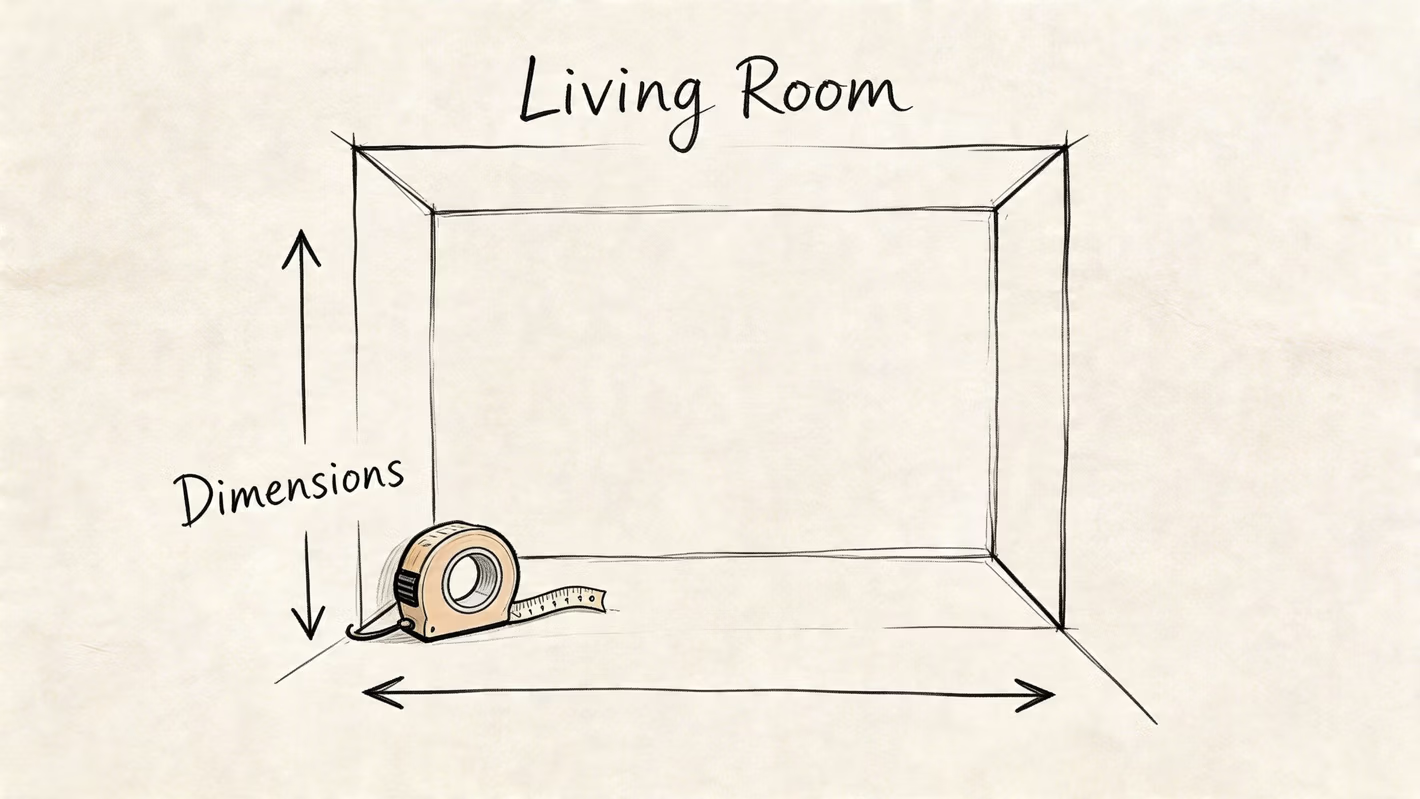
Make a simple floor plan
You don’t need fancy software. A pencil sketch works. The point is to stop shopping blind.
Draw the room and note:
- Wall lengths so you know what furniture can fit
- Window placement because that affects lighting, curtains, and TV location
- Walking paths so the room feels easy to use
- Existing features like a fireplace, built-in shelves, or a big front window
If you want a more structured approach, this guide on space planning is worth reviewing before you start moving money around.
Pick a style in plain English
You don’t need a design degree to define your taste. You just need a short sentence.
Try one of these:
- Modern farmhouse if you like warm woods, simple shapes, and soft neutrals
- Transitional if you want classic pieces that don’t feel fussy
- Casual contemporary if you prefer cleaner lines and less visual clutter
Now add a few words about mood. Cozy. Airy. Grounded. Lived-in. That helps you say no to impulse buys that don’t belong.
Give yourself buying rules
A budget gets blown when every item feels urgent. Most of them aren’t.
Set a few rules before shopping:
- No purchase without measurements
- No “deal” that doesn’t fit the plan
- No tiny decor until the main furniture is decided
- No duplicate function unless the room needs it
For extra inspiration, Striped Circle’s guide on how to decorate on a budget offers useful reminders about making intentional choices instead of scattered ones.
Practical rule: Planning feels slower at the beginning, but it keeps you from paying twice for the same mistake.
Prioritizing Your Purchases Where to Splurge and Save
If you only remember one thing from this article, remember this. Don’t cheap out on the seat you use every day.
That means the sofa, sectional, or main chair gets first claim on your budget. Everything else can flex.

The smartest splurge is usually upholstery
Many shoppers overlook that custom orders can be a savvy budget move. While thrift finds have a typical lifespan of 5-7 years, a customizable piece in a durable, chosen fabric from brands like Flexsteel can last 15-20 years, and 62% of homeowners prioritize avoiding big-box uniformity according to a 2025 Houzz report on living room budget decorating trends: Houzz report.
That’s why I push people toward a high-low strategy. Buy the durable piece once. Save on the items that are easier to swap later.
You’ll see the same logic in well-made seating from Smith Brothers of Berne. Good frames and well-chosen fabric choices age better than disposable furniture.
Where to save without regret
A room doesn’t need every piece to be premium. In fact, it shouldn’t be.
Save on these first:
- Accent tables because they’re easy to thrift, paint, or replace
- Pillows and throws since they’re style tools, not lifetime investments
- Wall art because affordable prints, vintage frames, and local finds can look far better than generic sets
- Accessories like trays, books, bowls, and candles that bring personality without major commitment
What smart buying looks like
A budget-friendly room usually works best when you divide purchases into three tiers.
| Priority | What belongs here | Why it matters |
|---|---|---|
| Buy well | Sofa, sectional, main chair | Comfort, daily wear, long-term value |
| Buy carefully | Rug, lighting, window treatments | These shape the room’s finish |
| Buy creatively | Side tables, art, pillows, decor | Easy places to thrift and personalize |
If you’re trying to think through value before you buy, this article on shopping for furniture smartly gives a solid framework.
A local option for this kind of planning is Tanger’s Furniture, where shoppers can compare customizable pieces, review financing choices, and match fabrics to real use instead of guessing online. That matters when you want one key piece to carry the room for years.
Big Impact Changes for a Small Budget
The fastest way to make a room feel better isn’t always furniture. Often, it’s what happens around the furniture.
Walls, light, and arrangement do more heavy lifting than people realize.
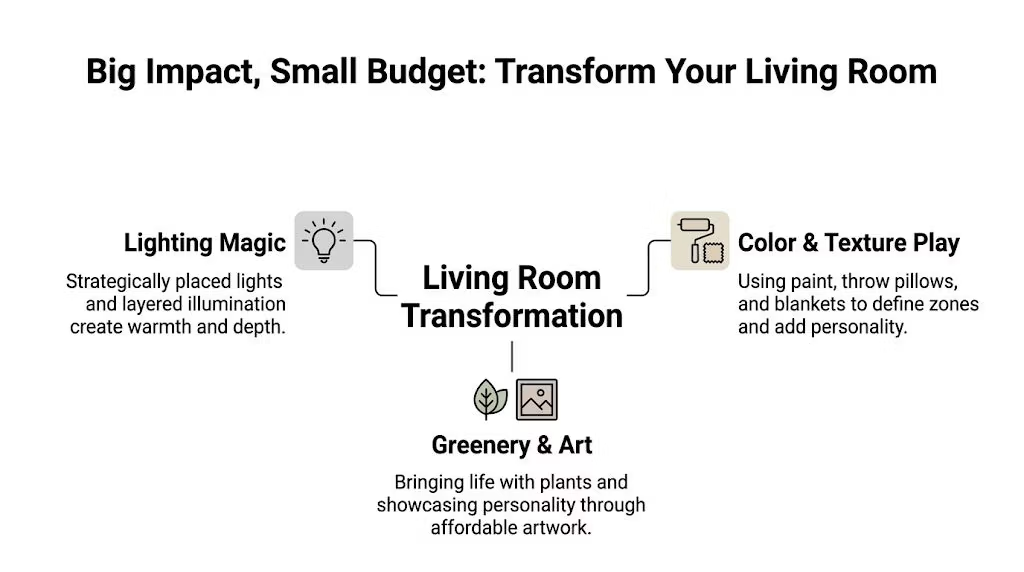
Fix the lighting first
Professional designers use three layers of lighting: ambient, task, and accent. That approach creates four times the depth of a single overhead light, and rooms with 50-70% shadow-free coverage plus decor grouped in odd numbers are seen as “expensive” by 88% of people in polling cited by Affordable Interior Design: layered lighting method.
That sounds technical, but it’s practical.
Use this mix:
- Ambient light for overall brightness, like ceiling fixtures or recessed lighting
- Task light near a reading chair or side table
- Accent light to highlight art, shelving, or a corner that feels dead at night
Most living rooms fail because they rely on one overhead light. It flattens everything.
Good lighting covers a lot of decorating sins. Bad lighting exposes all of them.
Rearrange before you replace
Push furniture into a conversation zone instead of hugging every wall. Keep sightlines open. Let the room breathe.
A few moves often help:
- Turn seating toward each other instead of only toward the TV
- Use a rug to define the main zone
- Place a lamp near the darkest corner
- Hang curtains higher and wider so the windows look more generous
If you want a focused project, this article on creating a balanced accent wall offers ideas that can sharpen a room without requiring a full overhaul.
Paint and texture do the rest
Fresh paint is one of the cheapest ways to clean up a tired room. Soft neutrals make mismatched pieces feel intentional. Deeper shades can make a large room feel grounded.
Then add texture. That’s where budget rooms start to look layered instead of bare.
Try mixing:
- A woven basket
- A knit throw
- Linen or cotton curtains
- Wood, ceramic, or metal accents
You don’t need more stuff. You need a better mix of surfaces.
Shopping Smart The Thrill of the Hunt and The Joy of DIY
Some of the best budget living rooms in Logan County aren’t fully bought new. They’re collected.
That’s a good thing. A room with a few older pieces usually has more character than one ordered all at once.

What to hunt for secondhand
Thrifting works best when you shop for pieces that don’t depend on upholstery fit or hidden structural quality.
Look for:
- Solid side tables with good bones and ugly finish
- Lamps that need only a new shade or paint
- Frames and artwork with size and character
- Wood benches, stools, and cabinets that can anchor a wall
Skip heavily worn seating unless you know exactly what you’re getting into. Cosmetic flaws are fine. Structural regret is not.
One DIY that changes the whole room
You can add thousands of dollars in perceived value to your room for under $200 with a DIY project like picture frame molding. Using inexpensive lattice trim from a home center, you can create a high-end millwork effect that mimics professional installations, according to this guide from Kylie M Interiors: picture frame molding project.
That’s one of my favorite high-impact upgrades because it makes plain walls look intentional.
A simple process looks like this:
- Measure the wall carefully and sketch the panel layout.
- Cut lattice trim with clean mitered corners.
- Prime and paint first for a cleaner finish.
- Install the trim, caulk the seams, and touch up.
- Keep the design restrained so the room feels polished, not crowded.
For more small-scale projects that don’t require advanced skills, this roundup of DIY home decor ideas on a budget is a helpful place to pull ideas.
Thrift the personality. Buy the foundation. DIY the polish.
That’s the balance that works.
If you’re looking locally for the anchor pieces that tie all those finds together, start with options close to home instead of driving all over the region. This roundup of local furniture stores near me can help narrow the search.
Your Action Plan A Sample Budget and Timeline
A living room budget doesn’t have to be mysterious. A well-planned economy budget can be around $10,000, while more modest redesigns often average $2,000–$5,000. For smaller spaces, multifunctional furniture such as storage sofa-beds is a growing trend, with sales up 28% as of early 2026 according to the living room cost breakdown from K. Peterson Design: living room budget reference.
The key is matching the budget to the goal.
Sample Living Room Budget Breakdowns
| Item | Thrifty Refresh (~$2,000) | Quality Foundation (~$5,000) | Full Redesign (~$10,000) |
|---|---|---|---|
| Sofa | Use existing sofa or shop carefully within basic budget ranges | Better sofa choice within a moderate plan | $2,000 |
| Loveseat | Skip if space is tight | Optional depending on layout | $1,000 |
| Armchair | Thrift or repurpose | Add if needed for seating balance | $800 |
| Coffee table | Affordable or secondhand | Mid-range | $500 |
| Side tables | Thrift, repaint, or mix pieces | Better-matched pair | $250 |
| Floor lamp | Basic lamp or reuse existing | Upgrade one key lamp | $500 |
| Table lamps | Existing or budget options | Add a pair if needed | $250 |
| Console table | Skip or repurpose furniture from another room | Add for storage/display | $800 |
| Rug | Entry-level option within budget range | Better material and size | $1,000 |
| Art | DIY, prints, thrifted frames | Expanded gallery wall | $600 |
| Pillows | A few covers to refresh seating | Coordinated mix | $500 |
| Window treatments | Simple curtains | Better fabric and fuller look | $1,000 |
| Accessories | Keep it minimal | Layer gradually | $800 |
A realistic timeline
You don’t need to do this in one weekend.
Week 1
- Measure the room
- Build a simple plan
- Decide what stays and what goes
Week 2
- Paint if needed
- Rearrange furniture
- Shop for lighting, curtains, and the rug
Week 3
- Order the anchor piece if you’re replacing it
- Hunt for secondhand accents
- Start one DIY project
Week 4
- Install art and curtains
- Add pillows, throws, and finishing details
- Edit the room so it doesn’t feel overfilled
Keep the project manageable
If cash flow is the issue, spread the project out instead of lowering every standard. That’s usually the smarter move.
Financing can make the room more achievable when you’re investing in one or two foundational pieces, and this guide on how to finance furniture walks through the basics. Pair that with a Low Price Promise, local delivery, and in-house service support, and the process gets much easier because you’re not left hauling, assembling, and troubleshooting on your own.
This same thinking applies beyond residential spaces too. Business owners furnishing waiting rooms, offices, or small collaborative areas also benefit from buying durable basics first and adding affordable finishing layers second.
It's Time to Love Your Home
A better living room usually starts with less drama than people think. Measure the room. Choose one strong direction. Spend where comfort and durability matter. Save where style can be layered in slowly.
That approach works for first apartments, family homes, downsizing households, and even professional spaces that need to feel more welcoming. It also fits the way people really shop in Logan County. Carefully. Thoughtfully. With an eye toward value, not waste.
If you’re also updating other parts of the house, that same mindset carries over. Someone shopping for Bellefontaine furniture, comparing custom sofas Ohio options, replacing appliances like Speed Queen laundry, or looking for a mattress store Logan County families can rely on is usually asking the same question. How do I buy well without overspending? The answer is the same. Make fewer, better decisions.
You don’t need a showroom-perfect home. You need a room that feels right when you walk into it after a long day.
And if you’re furnishing a business, office, lobby, or meeting space, the same rules hold. Plan the layout, choose durable workhorse pieces, and finish with details that make people feel comfortable.
Visit Tanger's Furniture showroom in Bellefontaine to see custom options in person or browse collections online to start your journey. Have a specific design question? Contact the design staff today or join the Love Your Home Club for expert tips and exclusive offers delivered to your inbox.