Your Guide to the Oval Storage Ottoman


A lot of homes reach the same point at once. The blankets need a place to go, the living room needs softer lines, and one more hard-edged storage bin is the last thing the room needs.
That's where an oval storage ottoman starts to make sense. It can hide clutter, offer a comfortable place to sit, and soften the look of a room without asking for much floor space. For families in Bellefontaine and across Logan County, that kind of flexible piece often does more work than people expect.
A trusted furniture store should make that decision feel simple, not stressful. Since 1946, Tanger's Furniture has served local households, and since 1964 its design history has helped customers think beyond “what fits” and toward “what helps a home work better.” That same practical thinking applies whether someone is shopping for living room pieces, looking into custom sofas Ohio families can tailor to their spaces, comparing options at a mattress store Logan County shoppers already know, or even choosing durable essentials like Speed Queen laundry for the utility room.
Table of Contents
- The Smart Solution for Style and Storage
- Choosing the Perfect Size and Shape for Your Space
- Understanding Quality Materials and Construction
- Designing Your Custom Ottoman at Tanger's
- Styling Ideas for Every Room in Your Home
- Our Local Commitment From Showroom to Your Home
- Start Your Journey to a More Stylish Home
The Smart Solution for Style and Storage
The appeal of an oval storage ottoman is easy to understand once a room starts doing double duty. A living room might need to hold toys by day and host guests by night. A bedroom may need a bench, but it also needs a place for extra throws or seasonal bedding.

That's why this piece earns so much attention in real homes. It blends three jobs into one object. It can act as a footrest, an extra seat, and a hidden storage spot, all while keeping the room looking calmer than a mix of separate bins, stools, and side pieces would.
Why this shape still works so well
The ottoman itself has a long history. Its design traces back to the Ottoman Empire and entered Western homes in the 18th century as a versatile, backless seat, which helps explain why it still adapts so well as a footrest, chair, and table today, with storage versions representing a newer evolution of the same idea, as noted in this history of the ottoman's design.
That background matters because it clears up a common confusion. An ottoman isn't just a decorative accessory. It was useful from the beginning, and the storage version extends that purpose in a way that fits modern life.
Practical rule: The most helpful furniture usually solves more than one problem at the same time.
What daily life looks like with one
In a family room, an oval storage ottoman can hold board games, spare pillows, or the blanket that's always left on the sofa arm. In a bedroom, it can gather linens that don't fit neatly in the closet. In an entryway, it offers a place to sit while shoes go on and off.
The oval shape also helps it feel softer than a boxy chest. That matters in homes where people walk around the furniture often, or where a room already has plenty of straight lines from sofas, beds, shelving, and media pieces.
For households trying to make one room do more, multi-functional furniture for modern homes often starts with pieces just like this. One good ottoman won't solve every layout challenge, but it can remove a surprising amount of visual and physical clutter.
Choosing the Perfect Size and Shape for Your Space
The right ottoman should make a room easier to move through, not harder. That's why measuring comes before fabric, color, or leg style.

Oval storage ottomans are especially useful in tighter circulation zones because the curved shape removes sharp corners. Common retail sizing places many models around 43 to 47 inches long and about 16 inches high, which makes them suitable for entryways, smaller living rooms, or the foot of a bed, according to retail sizing guidance for storage ottomans.
How to measure before shopping
A tape measure and a few minutes can prevent most sizing mistakes.
Mark the footprint first.
Painter's tape, a folded blanket, or even a line of books can show the length and depth on the floor. That makes the ottoman feel real before anything is ordered.Test the walking path.
Walk around that marked area the way people normally move through the room. If knees, shins, or a swinging bag keep brushing the outline, the piece is probably too large.Check the lid clearance.
Storage is only useful if the top can open comfortably. Nearby beds, sofas, consoles, or walls shouldn't block that motion.Sit where it will live.
In front of a sofa, the ottoman should feel reachable. At the foot of a bed, it should feel like a bench, not an obstacle.
A lot of shoppers guess at this step and hope the room will “make it work.” That usually leads to a piece that looks fine in a photo but feels awkward every day. Furniture measuring guidance can help turn that guesswork into a straightforward checklist.
Where an oval shape helps most
Some rooms benefit from an oval more than others.
- In front of a sofa: The longer form gives several seats access to the same surface area without the hard corners of a rectangular table.
- At the foot of a bed: The low height often works well as a bench substitute while still offering concealed storage.
- In an entryway: Curved ends make the path feel less blocked when people are entering, leaving, and turning around with bags or coats.
A good fit isn't only about whether the piece can physically enter the room. It's about whether the room still feels easy to live in once it's there.
That's a key advantage of the shape. It doesn't magically create more square footage, but it often preserves a smoother path through the space.
Understanding Quality Materials and Construction
Two ottomans can look almost identical on a showroom floor and perform very differently after daily use. The difference usually comes from what's inside the piece, not what's on the surface.
What matters under the fabric
A storage ottoman has more to do than a standard accent piece. It needs to support seated weight, open and close repeatedly, and stay square over time instead of wobbling or creaking.
Retail specifications show common footprints in this category around 43.5 to 47 inches long, 16 to 16.25 inches high, and 16 to 28 inches deep, with a weight capacity commonly around 250 lbs. Product guidance also points shoppers toward features like kiln-dried engineered hardwood and reliable lid construction to reduce warping and support repeated use, as described in this oval storage ottoman specification example.
A simple way to think about it is this:
| Part of the ottoman | Why it matters |
|---|---|
| Internal frame | Helps the piece keep its shape instead of twisting or loosening over time |
| Hinges or lift mechanism | Controls whether the lid opens smoothly and closes with alignment |
| Leg design and base stability | Affects how planted the piece feels when someone sits on the edge |
| Storage cavity construction | Influences how well the lid lines up after repeated opening |
That's why the frame matters as much as the fabric. The fabric is the paint job. The internal construction is the engine.
What to inspect: Ask how the lid is supported, what the frame is made from, and whether the piece is rated for regular seating instead of occasional use.
How upholstery changes the experience
The outside still matters, of course. Upholstery affects comfort, cleaning, and how formal or relaxed the piece feels in the room.
Some households want a soft, textured look. Others need something that handles heavy daily use. A home with children, pets, or frequent guests usually benefits from fabric choices that are easier to maintain and less likely to show every mark immediately.
That's where informed shopping helps. Upholstery material guidance can help shoppers compare texture, cleanability, and day-to-day practicality instead of choosing based on color alone.
Designing Your Custom Ottoman at Tanger's
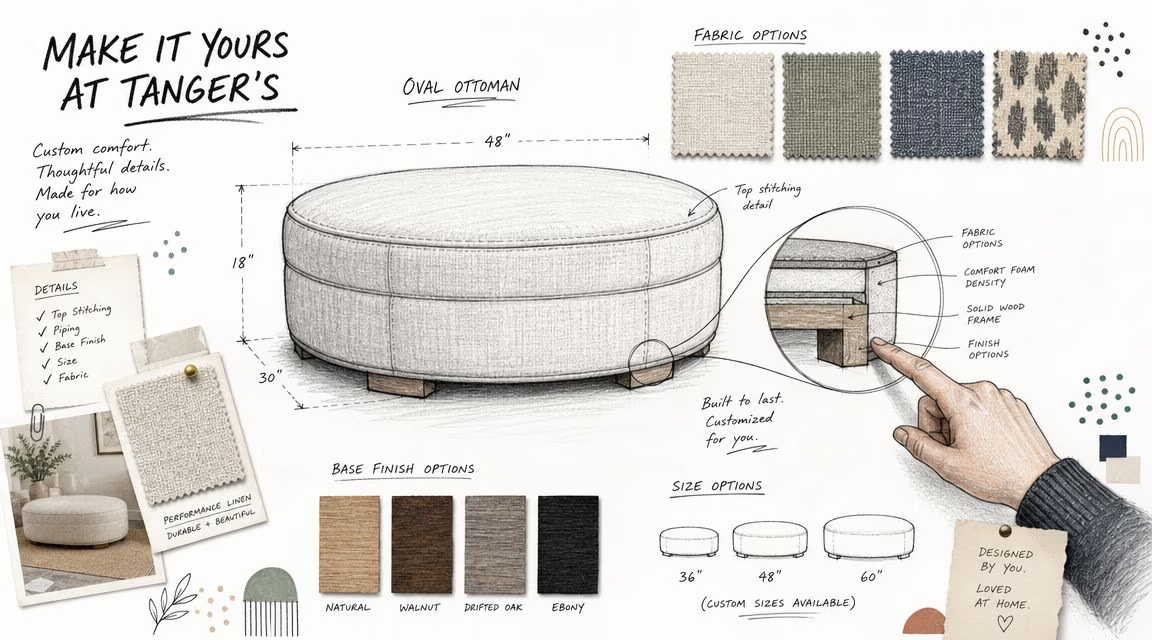
An ottoman works hardest when it fits the way the household lives. That's why customization often matters more here than people expect. A piece used as a coffee table substitute has different needs than one used at the foot of a bed.
Customization starts with use, not color
The easiest mistake is starting with a swatch book. Color matters, but function should come first.
A useful custom conversation often starts with questions like these:
How will the ottoman be used most often?
A footrest, a bench, or a hidden toy chest each calls for slightly different priorities.What should be stored inside?
Blankets, shoes, and children's items all create different expectations for access and interior volume.How formal should the room feel?
Structured upholstery and refined legs send a different message than a relaxed, textured fabric.Who uses the room every day?
Pets, grandchildren, overnight guests, or waiting-room visitors all change what “practical” means.
For upholstered ottomans used daily for seating and storage, fabric durability matters. Popular looks such as velvet and bouclé can be appealing, but their long-term performance for cleaning, pet hair, and abrasion varies, which is why this design discussion of storage ottoman materials points shoppers toward trade-offs rather than one-size-fits-all answers.
How the selection process becomes easier
Custom-order furniture can feel far less intimidating than expected. Tanger's Furniture offers a custom-order process that lets shoppers review fabrics, finishes, and configurations with trained staff, including options tied to partners such as Flexsteel and Smith Brothers of Berne, for customers who want more than an out-of-the-box piece.
A practical sequence usually looks like this:
Choose the role.
Is the ottoman mainly a centerpiece, a bench, or a storage helper?Pick the feel.
Soft and casual, structured and clean-lined, or somewhere in between.Refine the details.
Fabric texture, leg finish, stitching, and overall visual weight.Confirm the room around it.
Nearby sofa fabric, rug pattern, bed frame, and wall color all affect the final choice.
For shoppers exploring broader custom possibilities, getting started with custom order furniture helps connect those small decisions into one finished piece. That same approach is part of why custom sofas Ohio homeowners choose can feel personal rather than generic.
Styling Ideas for Every Room in Your Home
An oval storage ottoman earns its keep because it can read differently from room to room. In one home it behaves like a softer coffee table. In another, it becomes a bedroom bench. In a third, it keeps an entry from feeling cluttered the minute people walk in.
Living room comfort without visual heaviness
In the living room, this piece often works best when styled with restraint.
- Use a tray on top: A tray creates a stable surface for remotes, books, or a candle while keeping the upholstered top useful.
- Let the shape soften the room: If the sofa, rug, and media console all have straight edges, the oval form relaxes the overall look.
- Keep the top lightly styled: Too many accessories defeat the point of a piece that people should be able to use comfortably.
Color also affects how large or heavy the ottoman feels. Homes headed toward resale often benefit from calmer palettes and balanced accents. For readers thinking about broader room presentation, this guide on using color to sell homes faster gives helpful context on how color choices influence the feel of a space.
Bedroom, entryway, and even waiting spaces
At the foot of the bed, an oval storage ottoman can replace both a bench and a separate storage bin. That makes the room feel more finished because fewer individual pieces are competing for attention.
In an entryway, it gives daily clutter a hidden landing spot. Shoes, scarves, pet leashes, and reusable bags can disappear inside instead of spilling across the floor.
A few simple setups tend to work well:
- Bedroom: Folded quilt on top, spare linens inside.
- Entryway: Small pillow for comfort, seasonal accessories below.
- Family room: Tray above, games and throws inside.
- Waiting area: Minimal styling on top, practical storage out of sight.
A versatile piece should still look intentional. The room works better when the ottoman appears chosen for the space, not squeezed into it.
That flexibility also translates well to professional interiors. In a small reception or lounge area, the same shape can soften the room while giving visitors a practical place to sit or set belongings.
Our Local Commitment From Showroom to Your Home
Shopping for an ottoman sounds simple until the choices pile up. The broader market for ottomans and storage ottomans includes over 2,100 product variations, which points to a stable category with many options. It also means quality and service become key differentiators, as described in this market summary for ottomans and storage ottomans.
Why service matters in a crowded category
When a category gets that broad, shoppers usually need more than a product page. They need help sorting through what suits their room, their budget, and their routine.
That local support matters in Logan County. A family-owned store can help narrow the field based on real use instead of pushing whatever happens to be in stock. The same practical mindset also helps with other home purchases, whether someone is furnishing a bedroom, comparing seating, or visiting a mattress store Logan County residents trust for long-term comfort.
For business owners, the same service logic applies. A waiting space, office lounge, or reception area still needs durable, thoughtful furniture, and local furniture delivery service matters even more when a commercial project has to stay on schedule.
Value that continues after delivery day
Price matters, but value is bigger than the ticket. The Low Price Promise helps reassure budget-conscious shoppers that they're getting strong value, and flexible financing makes it easier to move forward on a room update or larger furnishing project without sacrificing quality.
Service after the sale matters too. Delivery teams handle the heavy lifting, room placement, and setup details that can turn a furniture purchase into an all-day strain if left to the customer. If questions come up later, in-house service support adds another layer of reassurance.
That's one reason local stores still matter. They don't only deliver furniture. They help people settle it into daily life, whether the purchase is one ottoman, a roomful of seating, or practical household staples such as Speed Queen laundry equipment.
Start Your Journey to a More Stylish Home
A well-chosen oval storage ottoman solves several everyday problems at once. It can soften a room, hide clutter, create extra seating, and make a tighter layout feel easier to move through.
The key is choosing with purpose. Size should fit the room's real traffic pattern. Construction should support daily use. Fabric should match the way the household lives, not just the look of a current trend. When those choices line up, the ottoman stops being filler furniture and becomes a piece that improves the whole room.
That kind of thinking is what helps people love their homes longer. A smart ottoman can support a first apartment, a growing family room, a guest bedroom, or even a professional waiting area. The piece is flexible, but the selection process doesn't have to feel overwhelming.
Flexible payment options are available for any project, and the Love Your Home Club gives shoppers another simple way to stay connected to fresh ideas, special offers, and practical design help. With delivery and service support included in the overall experience, the process stays focused on comfort and function instead of logistics.
Visit the showroom in Bellefontaine to see custom options in person or browse the collections online to start the journey with Tanger's Furniture. Have a specific design question. Contact the design staff today or join the Love Your Home Club for expert tips delivered to the inbox.