Living Room Sets Decor: Create Your Dream Space

A lot of people start living room sets decor the same way. They stand in the room, look at the sofa they have or the one they're thinking about, and then feel stuck. The rug, the chairs, the lighting, the wall color, the tables, the accessories. It can feel like every decision depends on the one before it.
That pressure usually leads to two mistakes. People either buy a full matching set too quickly, or they keep postponing decisions because they're afraid of getting one thing wrong. A better approach is to treat the room like a layered plan. The set is the anchor, not the entire answer.
For families across Bellefontaine and Logan County, that practical mindset matters. A living room isn't a display space. It's where people watch movies, host relatives, read, nap, talk, and live. Good decorating should support all of that while still feeling warm, personal, and pulled together.
Table of Contents
- Starting Your Living Room Journey
- Finding the Perfect Foundational Set
- Building Your Color and Texture Palette
- Arranging Your Furniture for Flow and Comfort
- Layering with Lighting Accessories and Personal Touches
- Bringing Your Vision to Life with Tanger's
Starting Your Living Room Journey
The first useful shift is simple. A living room set isn't just a sofa purchase. It usually becomes part of a larger decorating basket that includes rugs, curtains, and accent pieces. That bigger context matters because the U.S. home décor market is projected to reach USD 215.20 billion in 2025 in these home décor market projections, with rugs and decorations playing a major role in how a room comes together.
That's why living room sets decor works best when the furniture is treated as the foundation. The sofa or sectional often decides the room's scale, mood, and daily comfort. Everything else should support it, not compete with it.
A helpful way to begin is with a short planning list.
- Define the room's job: Is it mainly for conversation, television, reading, family gatherings, or a little of everything?
- Notice what already stays: Flooring, paint, a fireplace, heirloom tables, and windows all affect what will look right.
- Choose one priority: Some households need durability first. Others need more seating, easier traffic flow, or a softer look.
A room gets easier to decorate once the furniture stops being a guessing game and starts being the anchor.
For shoppers who want a little guidance before visiting a showroom, this helpful guide to design a living room gives a strong starting point. It turns a vague decorating goal into practical decisions that feel manageable.
The comforting truth is that nobody has to solve the whole room in one afternoon. A well-designed space usually comes together in layers. The strongest rooms are planned with patience, clear measurements, and a willingness to choose pieces that suit the home instead of chasing a perfect catalog look.
Finding the Perfect Foundational Set
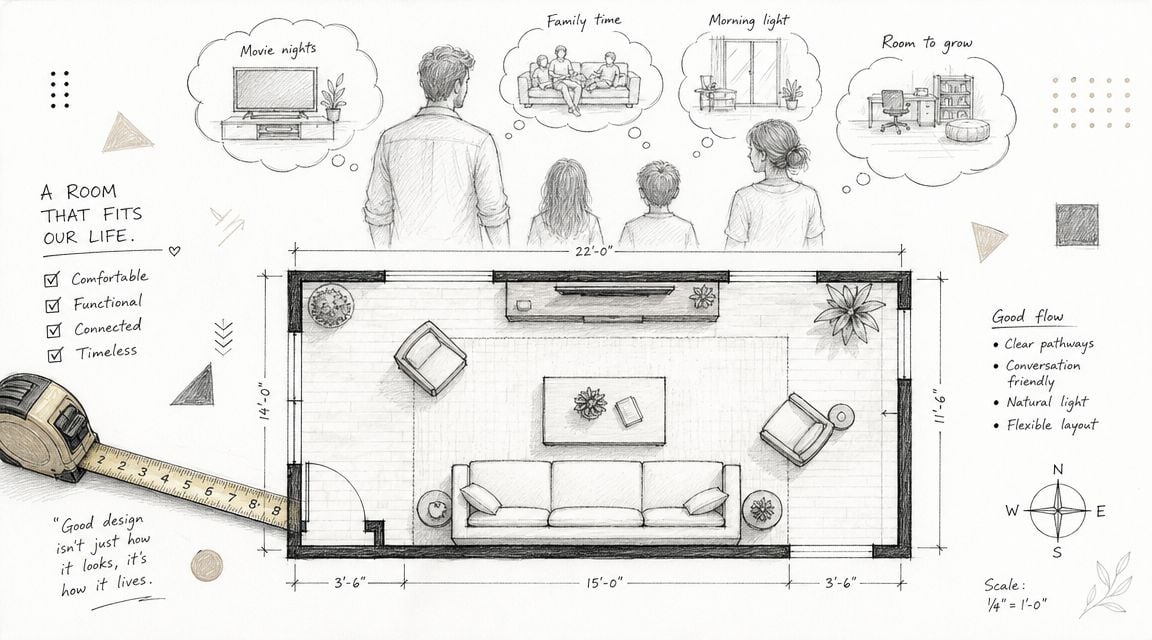
A living room set should fit the household before it fits a trend. That means the first decision isn't color. It's scale, use, and comfort.
Furniture is a meaningful purchase for most homes. In the U.S., household spending on furnishings surpassed USD 2,600 in 2022, as shown in these furniture spending figures. That's one reason thoughtful planning matters so much. A living room set isn't a temporary accessory. It's a long-term part of the home.
Think about the room before the fabric
Start with the room itself. Measure wall lengths, note door swings, and identify the focal point. In one home, that focal point may be the television. In another, it may be a fireplace or a bank of windows.
Then look at how the room is used on an ordinary day.
- Families with kids or pets: Usually benefit from easy-care upholstery, forgiving textures, and shapes that don't crowd walkways.
- Frequent hosts: Often need extra seating and side surfaces within easy reach.
- Quiet households: May prefer fewer pieces, deeper seating, or a reading chair that gives the room a second purpose.
A common mistake is buying every available matching piece because the room feels empty. That usually makes the room feel heavier, not better. Many spaces work more comfortably with a sofa and one or two complementary pieces than with a full suite of bulky furniture.
What to decide before ordering anything
Before style details come into play, these decisions should be settled:
| Decision | Why it matters |
|---|---|
| Sofa or sectional shape | It determines traffic flow and how the room gathers people |
| Seat depth and support | It changes whether the piece feels upright, loungy, or versatile |
| Arm style and visual weight | It affects how large the furniture feels in the room |
| Configuration flexibility | It matters if the household may move, grow, or rearrange later |
Customization becomes especially useful. Instead of settling for an out-of-the-box option, many shoppers want control over fabric, scale, cushion feel, and configuration. Durable custom choices from Flexsteel and Smith Brothers of Berne make that process more practical because the room can drive the selection, not the other way around.
Practical rule: If the room is average in size but daily life is busy, choose the simplest furniture shape that solves the function first. Details can be layered in later.
For shoppers browsing options, living room furniture set ideas can help narrow the field before committing. That's often the smartest route for those seeking custom sofas Ohio families can live with for years.
Value matters too. A low price only helps if the furniture still fits the room, wears well, and supports daily use. That's the true meaning behind a Low Price Promise in a category this important.
Building Your Color and Texture Palette
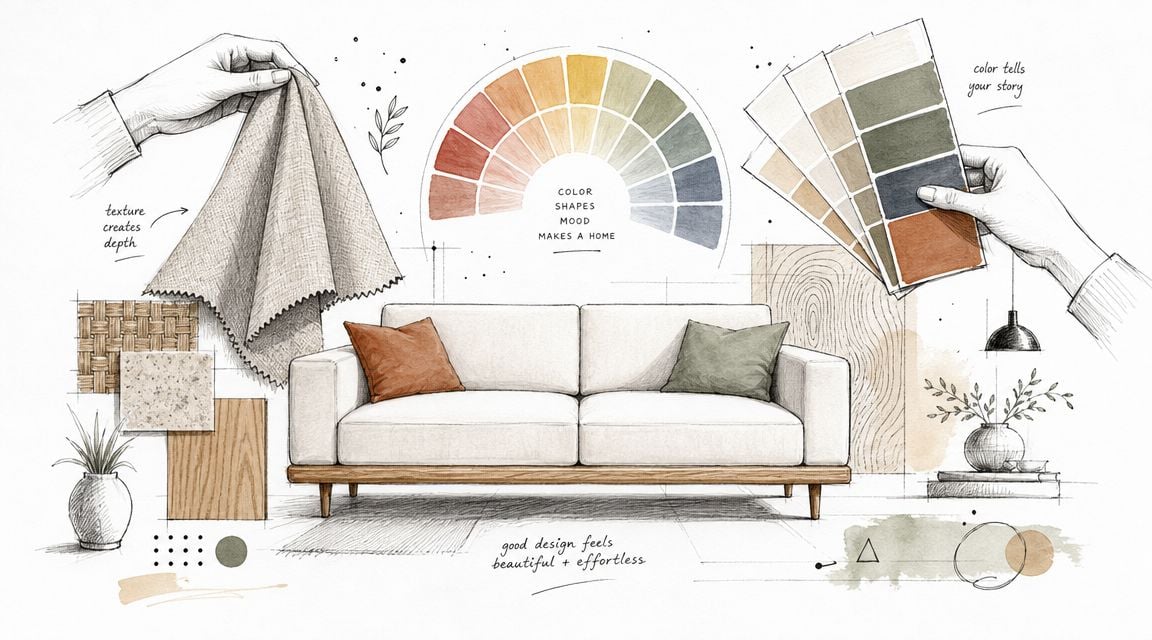
Once the main seating is chosen, the room starts to gain personality. At this stage, living room sets decor transitions from functional to inviting. The goal isn't to make everything match. It's to make everything relate.
Start with one lead element
A room needs one visual guide. That might be the sofa fabric, a rug, a favorite artwork, or even drapery that's already staying. Pull a few colors from that lead element and repeat them in smaller ways around the room.
That process is much easier than trying to invent a palette from scratch.
- Use one dominant base: Often a neutral or quiet tone that keeps the room grounded.
- Add one supporting color: Something that appears in pillows, art, or upholstery accents.
- Finish with a smaller contrast: A deeper or warmer note that keeps the room from feeling flat.
For readers who want examples of how color combinations can feel fresh without becoming chaotic, Inspiring sofa and living room ideas offers useful visual direction.
Mix materials so the room feels finished
Texture does a lot of work that color alone can't do. A room with all smooth surfaces can feel cold, even when the palette is warm. A room with only soft textures can feel blurry and undefined.
A balanced room usually includes a mix like this:
- Soft surfaces: Upholstery, pillows, throws, and window treatments
- Natural elements: Wood, woven fibers, greenery, or linen
- Harder accents: Metal, glass, ceramic, or stone
That's why a sofa should never carry the whole design by itself. The room gets depth from contrast. A structured sofa looks better beside a textured rug. A soft chair gains presence near a cleaner-lined table. A wood tone can warm up painted walls and upholstered seating.
A simple mood board helps prevent expensive missteps. Lay out fabric swatches, paint chips, wood finishes, and a few photos before buying every accessory. That small step catches a lot of color conflicts early.
For more guidance, this expert guide to the perfect color palette helps connect the larger choices to the smaller details. That's often the difference between a room that feels decorated and one that feels settled.
Arranging Your Furniture for Flow and Comfort
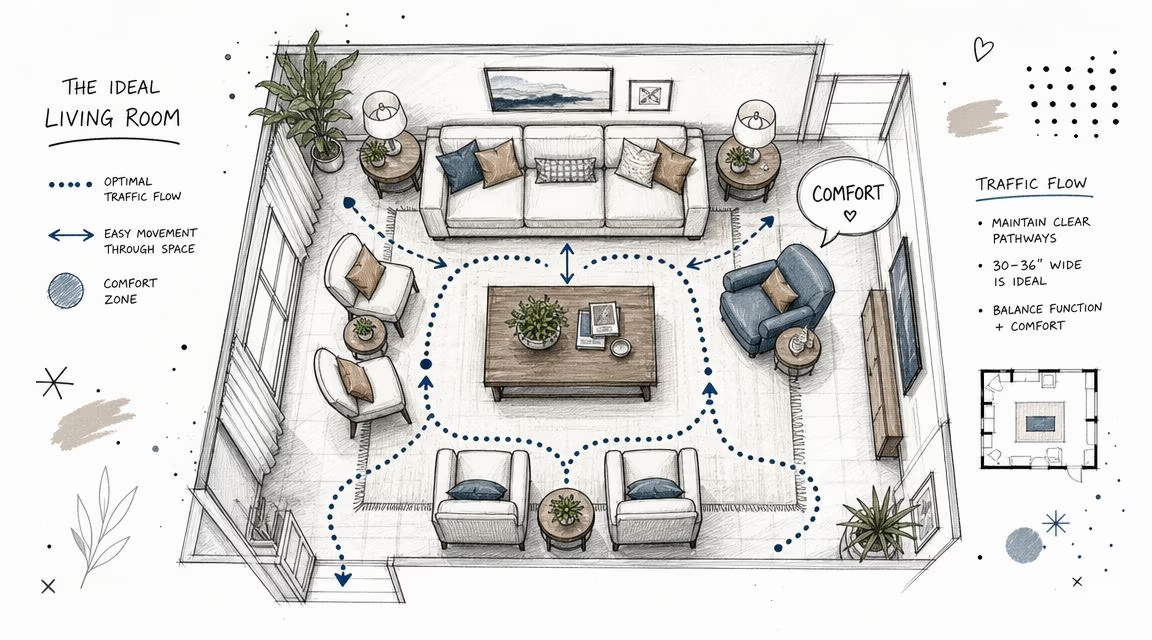
A beautiful room can still feel awkward if the layout is off. Good arrangement makes a room easier to walk through, easier to use, and far more comfortable to sit in. It also helps living room sets decor look intentional instead of crowded.
Use measurements that support real life
Some layout advice is worth following closely because it improves daily use right away. Designers recommend leaving 30 to 36 inches for main walkways, keeping seating no more than 10 feet apart, and placing a coffee table about 18 inches from the sofa's edge, according to these living room layout rules.
Those numbers work because they support ordinary movement. People can walk through the room without twisting sideways. They can reach a drink on the coffee table without stretching. Conversation still feels natural instead of scattered.
Here's how those measurements translate in practice:
- Between major pieces: Leave enough room for a clear walkway, especially on the route people use most.
- Within the seating group: Keep chairs and sofas close enough that conversation doesn't feel forced.
- Around the table: Place it near enough to be useful, but not so close that knees and shins pay the price.
Pulling every piece against the wall usually makes the room feel less connected, not more spacious.
That surprises a lot of homeowners. Floating the main seating group, even a little, can improve the room dramatically. It defines the conversation zone and gives the furniture a purpose beyond lining the perimeter.
What works in awkward or smaller rooms
Small rooms and challenging layouts need discipline more than symmetry. The answer usually isn't squeezing in every piece from a full set. It's choosing fewer pieces with better function.
A practical approach:
- Anchor the room with the main seating first.
- Protect the walking path next.
- Add the rug and table.
- Bring in chairs or accents only if the room still feels open.
Rooms with multiple focal points often benefit from lighter accent seating or pieces that can pivot easily. In compact homes, an open-base chair or smaller-scale table can do more than a bulky matching companion piece.
For readers sorting through layout challenges, living room arrangement ideas can help translate room size into a plan that feels workable.
Layering with Lighting Accessories and Personal Touches

The final layer is what keeps a room from feeling staged. Furniture gives the room structure. Lighting and accessories give it character.
Light the room in layers
Most living rooms need more than one kind of light. Overhead lighting alone often feels flat and harsh. A more comfortable room combines general light with focused light and softer accent glow.
A strong setup often includes:
- Ambient light: The main source that gives overall visibility
- Task light: A floor or table lamp near a reading chair or sofa corner
- Accent light: Smaller lighting that softens the room in the evening
This is especially useful in multi-purpose spaces. A family may want brighter light for games or homework, but softer light for relaxing at night. Layers make that possible without redesigning the room.
For more room-by-room guidance, put your living room in the best light is a helpful resource.
Style without making the room feel busy
Accessories should support the room, not crowd it. Coffee tables, end tables, and bookcases all look better when they hold a few intentional items rather than many small ones.
A useful styling mix might include:
- Something organic: A plant, branch, or bowl with natural texture
- Something personal: Family photos, collected books, or travel objects
- Something sculptural: A candleholder, ceramic piece, or tray
Scent can also shape how welcoming a room feels. For households exploring subtle fragrance as part of the atmosphere, this guide to choosing an essential oil diffuser can help narrow the options.
The most inviting rooms rarely contain the most objects. They contain the right ones.
That's a helpful rule for shelves, mantels, and tabletops. Leave some breathing room. A little empty space helps the meaningful pieces stand out.
Bringing Your Vision to Life with Tanger's
Decorating gets easier when the process matches real life. The primary need isn't more inspiration; it's assistance turning measurements, fabric choices, room challenges, and budget limits into a finished space that works.
Why custom choices make more sense now
Design preferences have shifted away from rigid matched sets. Modern design is moving toward adaptable pieces like modular seating and curved furniture, making custom-order choices more useful for layout-driven homes, as noted in this discussion of awkward living room layouts. That's a practical change, not just a style change.
A room may need a softer silhouette to break up straight architectural lines. Another may need a sectional configured for television viewing now, but flexible enough for conversation later. In those situations, customization solves problems that pre-grouped sets often don't.
That's where design services for furniture planning become valuable. Since the design staff has been serving customers since 1964, the process can include help with room planning, fabric selection, and piece coordination without requiring the customer to figure out every detail alone.
Local help changes the whole process
For local households, practical support matters as much as style support. Delivery, setup, and service after the sale remove a lot of stress from larger purchases. Financing matters too, especially for families furnishing a whole room or pairing furniture plans with other household priorities such as appliances, including Speed Queen laundry, or sleep upgrades from a mattress store Logan County shoppers already trust.
For business owners, the same planning mindset applies in a professional setting. Commercial projects often need durable seating, efficient layouts, and coordinated solutions that support waiting areas, offices, or conference rooms without overcomplicating the buying process.
One local option that handles both residential and professional furnishing needs is Tanger's Furniture. Its services include custom-order support, space-planning help, local delivery, financing options, and in-house service requests. That combination is useful for buyers who want furniture to fit the room instead of forcing the room to fit the furniture.
A warm home also comes from the finishing touches. For readers gathering ideas for atmosphere beyond furniture, Jackpot Candles' cozy home ideas offers simple inspiration for making a space feel softer and more personal.
The most successful rooms usually share the same pattern. They aren't rushed. They aren't overloaded. They're planned around how people live, then built piece by piece with enough flexibility to grow over time.
Visit Tanger's Furniture to see custom options in person or browse collections online to start the journey. Flexible financing is available for projects large and small, the Low Price Promise helps protect value, and local delivery and service handle the heavy lifting from purchase to setup. Have a specific design question? Contact the design staff or join the Love Your Home Club for exclusive offers and practical home tips delivered to your inbox.