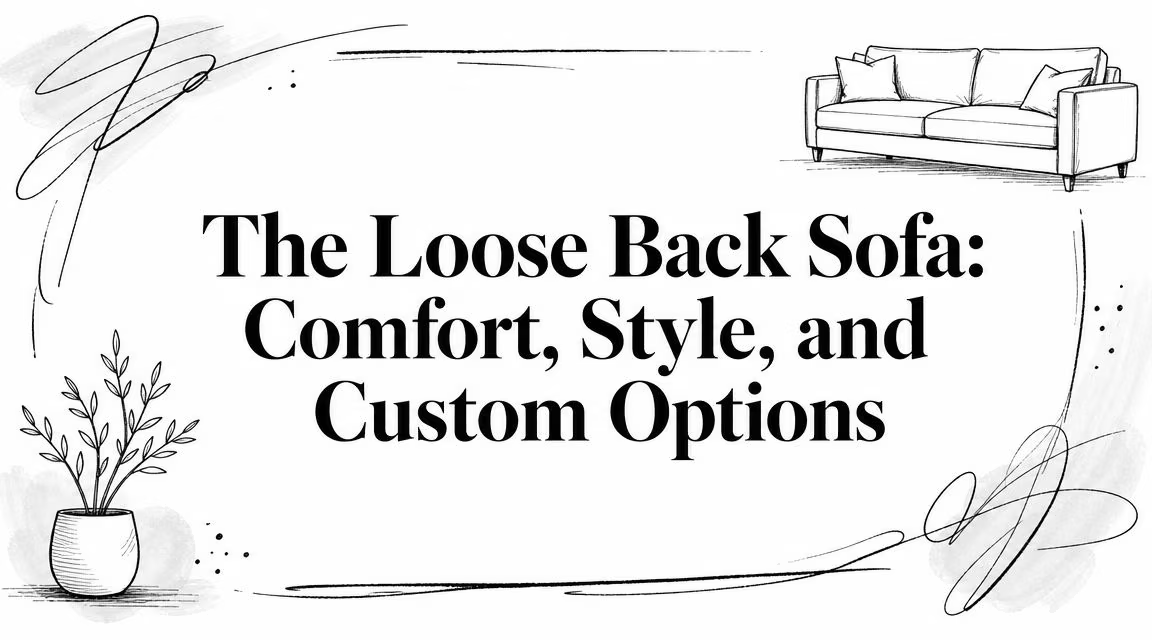
The Loose Back Sofa: Comfort, Style, and Custom Options

A lot of sofa shopping starts the same way. Someone walks into a store, or starts scrolling online, and quickly runs into terms that sound familiar but not fully clear. Seat depth. Tight back. Loose back. Attached cushion. Suddenly a simple goal, finding a comfortable sofa for real life, feels more complicated than expected.
That confusion is normal. A young couple setting up a first home may want something cozy for movie nights. A busy family may care more about easy cleanup after snacks, pets, and everyday traffic. A business owner furnishing a waiting area may need a sofa that still looks neat after constant use. In each case, the words on the tag matter because they point to how the sofa will live over time.
One of the best ways to shop with confidence is to understand the furniture language before making the final decision. That's why many shoppers find it helpful to read through a practical guide to understanding the furniture buying journey from first research to final decision. A little clarity early on can save a lot of second-guessing later.
A loose back sofa is one of those terms that sounds technical, but the idea is simple. It describes a sofa with back cushions that can be removed, adjusted, and reset. That small design choice can affect comfort, cleaning, daily upkeep, and even how the sofa ages in a busy home.
Table of Contents
- Your Sofa Journey Starts Here
- What Is a Loose Back Sofa
- Loose Back vs Attached Back Sofas
- Customizing Your Cushion Fill and Fabric
- Styling and Maintaining Your Sofa for a Lifetime of Comfort
- Find Your Perfect Custom Sofa at Tanger's Furniture
Your Sofa Journey Starts Here
Most households don't start by asking for a loose back sofa. They start with a life problem.
The old sofa may feel worn out in one favorite seat. The back may be too stiff for long evenings. Crumbs may collect in corners that are hard to reach. Or the room may need a softer, more welcoming look because the house has started to feel more like a pass-through than a place to settle in. Those are the moments that send people shopping.
In a town like Bellefontaine, that search usually isn't about chasing a trend. It's about finding something that works through school nights, football weekends, holiday guests, and ordinary Tuesday evenings. People want furniture that looks good, but they also want furniture that makes home feel easier to live in.
A good sofa choice usually comes down to habits, not hype.
That's where the loose back sofa earns a closer look. It often appeals to shoppers who want comfort that feels relaxed instead of rigid, and flexibility that helps the sofa stay useful as routines change. A family with kids may appreciate cushions that can be moved for cleanup. Someone who likes to curl up with a blanket may prefer a softer back feel. A homeowner planning a long-term room update may like the idea of changing fabric or cushion feel in a future custom order.
Real questions shoppers ask
Some of the most common questions sound like this:
- Will it stay looking neat: People often worry that removable cushions will look sloppy. That depends less on the label and more on the cushion design, fill, and daily reset habits.
- Is it harder to maintain: It needs a little more hands-on care, but that same design can also make access and upkeep easier.
- Does it feel softer: In many cases, yes. But softness alone isn't the whole story. Support matters too.
- Is it a good fit for family rooms: Often, yes, especially when comfort and practical cleaning matter more than a formal look.
A shopper who understands those trade-offs usually ends up happier with the final choice.
What Is a Loose Back Sofa
The simple definition
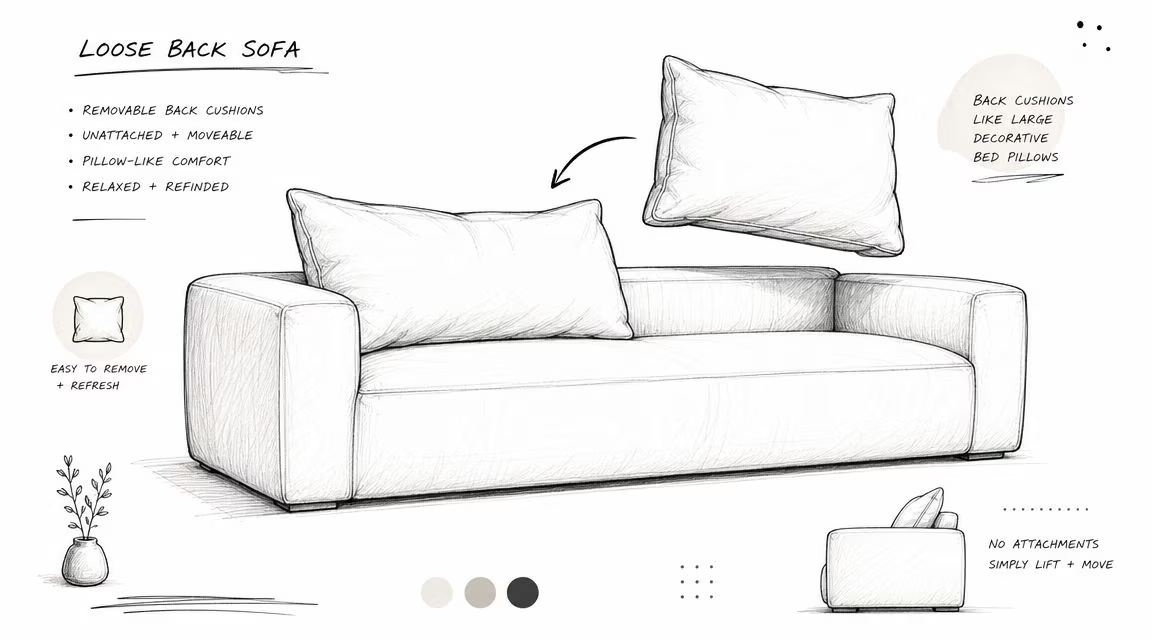
A loose back sofa has back cushions that are removable or detachable from the sofa frame. The easiest way to picture it is to think of the back cushions like the pillows on a well-made bed. They belong there, they shape the comfort, but they can also be lifted, adjusted, and put back in place.
That isn't just casual showroom wording. In furniture terms, a loose back sofa is defined by detachable back cushions that may be fully unattached or semi-attached with zippers, hook-and-loop closures, or similar hardware, and they're intended for easy removal and repositioning, as explained in this overview of tight back and loose back sofa construction.
Some shoppers also run into a middle ground called semi-attached backs. Those cushions may be secured at the top or connected in a way that helps them stay aligned while still allowing some movement. That's helpful for people who want less daily fuss without giving up all flexibility.
A practical next step is learning how this construction fits with seat depth, arm height, and room use. This guide to choosing the best sofa for the home helps connect those details to real buying decisions.
Why this design matters in daily life
The construction changes more than appearance. It affects how the sofa feels to use and how easy it is to live with over the years.
A loose back sofa can be a strong fit when a household wants:
- Better access for cleaning: It's easier to lift cushions and reach the spaces where dust, crumbs, or pet hair settle.
- A softer visual style: Loose backs usually look more relaxed and inviting than a fixed, structured back.
- Flexibility in comfort: Cushions can be shifted and adjusted to suit different sitting positions.
- Serviceability over time: If a cushion cover or insert needs attention, the design is often easier to work with than a fully fixed back.
Practical rule: If a sofa is going in a room that gets daily use, the back style should be judged by how it will behave on an average week, not how it looks in a perfect photo.
People sometimes misunderstand the implications of a loose back sofa. A loose back doesn't automatically mean “better.” It means more flexible, more casual, and more hands-on. For some homes, that's exactly right. For others, a tidier attached back may be the better match.
Loose Back vs Attached Back Sofas
Some shoppers compare these two styles as if one must clearly win. In real homes, both can be good choices. The better question is which one fits the way the room is used.
A quick side by side view
Compared with a tight-back sofa, a loose-back sofa generally feels more comfortable because the back cushion can compress independently of the frame, creating a deeper cradle and a more relaxed lounging posture. The trade-off is support precision, since independent back cushions are usually less structurally supportive than a built-in tight back, as noted in this explanation of tight-back and pillow-back comfort differences.
| Feature | Loose Back Sofa | Attached Back Sofa |
|---|---|---|
| Comfort feel | Softer, more relaxed, often better for lounging | Firmer, more structured, often better for upright sitting |
| Daily appearance | Casual and layered | Tailored and tidy |
| Cushion movement | Can shift and need resetting | Stays in place |
| Cleaning access | Easier to reach behind cushions | Harder to access hidden gaps |
| Support feel | Depends heavily on cushion fill and construction | More consistent frame-backed support |
| Long-term upkeep | More fluffing and reshaping | Less daily maintenance |
The comparison often becomes clear when people think about one ordinary evening at home. A loose back sofa tends to suit someone who leans sideways with a throw blanket, stacks pillows, or changes positions often. An attached back tends to suit someone who wants the sofa to look neat the moment they stand up.
Who each style tends to suit
A loose back sofa often makes sense for:
- Movie-night households: The softer back feel supports a more relaxed posture.
- Families with active rooms: The ability to remove cushions helps with cleanup.
- Shoppers who like a custom feel: Cushion fill and back style can shape the experience more noticeably.
An attached back often makes sense for:
- Formal living rooms: It keeps a cleaner outline.
- People who prefer upright sitting: The built-in back can feel more precise.
- Low-fuss households: There's less need for daily cushion adjustment.
One point matters more than many people expect. The phrase “comfortable sofa” means different things to different users. One person wants sink-in softness. Another wants steady lower-back support while reading or visiting with guests. A shopper who needs more upright support shouldn't judge a loose back sofa by softness alone. Cushion fill, retention method, and overall fit matter just as much.
The best test isn't whether a sofa feels soft for thirty seconds. It's whether the body still feels supported after a full evening in the room.
That's why side-by-side testing helps. Two sofas can look similar from across the showroom and feel completely different after a few minutes of real sitting.
Customizing Your Cushion Fill and Fabric

A loose back sofa isn't defined only by removable cushions. Its long-term comfort depends on what's inside those cushions and what wraps around them.
Comfort starts inside the cushion
Custom sofas often provide Ohio shoppers with the most value. The silhouette may catch the eye first, but the fill determines whether the sofa feels buoyant, plush, supportive, or somewhere in between.
Common fill directions include:
- Down-blend style comfort: Often chosen by people who want a softer, sink-in feel with a relaxed, upscale look.
- Resilient foam support: Often better for households that want a more consistent seat and back feel through daily use.
- Fiber-focused softness: Often appealing for shoppers who want plush comfort with a more budget-conscious approach.
Loose back designs especially benefit from thoughtful cushion construction. Since the cushions work independently from the frame, the fill plays a major role in whether the back feels supportive or too loose for the people using it most often.
A custom conversation should include questions like these:
- Who uses the sofa most often
- Whether the room is for lounging, hosting, or both
- How much daily reshaping feels reasonable
- Whether the household prefers a casual look or a crisp one
Fabric changes the ownership experience
Fabric is where style and practicality meet. A household with children, pets, or frequent guests may want an upholstery choice that's easier to live with day after day. A quieter room may allow more freedom to focus on texture, drape, or a lighter tone.
For anyone who enjoys the craft side of furniture, details like seams and stitch strength matter too. A helpful outside resource on choosing upholstery thread and needles gives useful context for understanding how upholstery materials and construction choices work together.
Shoppers who want to go deeper into fabric performance, texture, and cleanability can also explore this guide to upholstery materials for everyday living.
When customization is available, it helps to think in pairs:
- Soft back plus durable fabric: Good for active family rooms.
- Supportive fill plus refined texture: Good for rooms that need comfort without looking too rumpled.
- Relaxed silhouette plus well-fitted upholstery: Good for people who want warmth and polish at the same time.
Two respected custom upholstery makers often discussed in these conversations are Flexsteel and Smith Brothers of Berne. Both are known for giving shoppers meaningful control over comfort and cover choices, which is especially valuable in a loose back design.
Styling and Maintaining Your Sofa for a Lifetime of Comfort

A loose back sofa usually looks best when it's treated as a living part of the room, not a frozen display piece. That means styling it with warmth, then giving it small, regular care.
Styling for a lived in but pulled together look
Loose back sofas naturally lean casual, which gives them charm. The goal isn't to make them stiff. The goal is to make them look settled and intentional.
A few styling habits help:
- Use throw pillows with purpose: Add one or two shapes that support the lower back or soften the corners without crowding the seating area.
- Drape a blanket where it makes sense: A folded throw over one arm or one end cushion makes the room feel welcoming instead of over-decorated.
- Keep the coffee table distance comfortable: People should be able to sit back and still reach what they need without hunching forward.
- Match the sofa scale to the room: In many Logan County homes, a sofa needs enough presence to anchor the room without overwhelming walkways or nearby pieces.
A looser sofa style also pairs well with layered spaces. Books, soft lighting, wood tones, and textured rugs often help the sofa feel like part of a complete room rather than a standalone object.
A simple care routine that protects comfort
The secret with this style is consistency. The loose back construction allows users to flip or rotate cushions to spread wear more evenly and reduce localized fading or compression set over time, and softer pillow-back versions usually need more routine reshaping because fill can migrate, as described in this discussion of loose back sofa upkeep and cushion rotation.
That sounds more demanding than it is. For most households, the routine is simple.
Neighborly advice: A quick fluff and reset works better than waiting until every cushion looks tired.
A practical maintenance rhythm often looks like this:
- Straighten daily after the main evening use.
- Fluff and reshape weekly so the back cushions keep an even profile.
- Rotate when possible to avoid one favorite spot wearing faster than the others.
- Clean spills promptly based on the upholstery type.
- Check deeper debris areas around and behind cushions during routine room cleaning.
For homes that want extra guidance on spot care and fabric-safe cleaning, this article on how to clean upholstery without guesswork is a practical reference.
The reward for that small effort is real. A well-kept loose back sofa stays inviting longer, feels better to sit in, and continues to look like it belongs in a home that's cared for.
Find Your Perfect Custom Sofa at Tanger's Furniture
A loose back sofa can be a smart choice for households that want comfort, flexibility, and a look that feels welcoming instead of formal. It suits real life well. Family movie nights, easy access for cleanup, and a more personalized sit are all part of its appeal.
Tanger's Furniture has been serving Bellefontaine since 1946, with design experience rooted in 1964, and that local history shows in the way the team helps people shop. There's no pressure to rush into a decision. The focus stays on helping customers Love Their Home with furniture that fits the way they live, whether that means a custom living room piece, a durable solution for a business space, or guidance across the store's broader offerings like Bellefontaine furniture, custom sofas Ohio shoppers can tailor, Speed Queen laundry, and a mattress store Logan County families can rely on.
For shoppers who want more than an out-of-the-box sofa, Tanger's offers custom order options through trusted names such as Flexsteel and Smith Brothers of Berne. The process is designed to make personalization approachable, and this guide on getting started with custom furniture orders is a helpful place to begin. The store also backs value with the Low Price Promise, offers flexible Financing for projects large or small, and provides local Delivery plus in-house Service support after the sale.
Commercial customers aren't left out either. Tanger's Commercial Office team helps businesses furnish professional spaces with practical planning and durable solutions that work hard every day.
Visit Tanger's Furniture showroom in Bellefontaine to see custom options in person or browse the collections online to start the journey. Have a specific design question? Contact the design staff today or join the Love Your Home Club for expert tips, exclusive offers, and helpful ideas delivered to the inbox. Flexible financing is available, the Low Price Promise adds peace of mind, and the local delivery and service team handles the heavy lifting from start to finish.