Furniture Stain Protection a Homeowner’s Guide to 2026


A glass tips toward the arm of a new sofa, and the whole room seems to freeze for a second. Most households know that feeling. It's why furniture stain protection matters long before the first spill, the first movie night, or the first grandchild climbing up with a juice box.
That concern isn't overblown. Sofa stains represent the single most common cause of furniture damage among consumers, according to an Allstate Protection Plans damage survey on sofa stains and furniture fails. For families in Bellefontaine and across Logan County, that lines up with real life. People don't stop living because they bought a nice sofa. They want to enjoy it.
Furniture care also tends to work best when people think about the whole home, not just one piece. The same mindset behind upholstery care applies in the bedroom too, which is why this practical guide on why you need mattress protection is worth a look if long-term protection is the goal.
Keeping Your Furniture Beautiful for Years to Come
A well-made chair or sofa becomes part of daily life fast. It's where guests sit during holidays, where kids pile in after school, and where tired homeowners land to unwind. Good furniture stain protection helps people use their home naturally instead of treating every seat like a museum piece.

Why prevention matters more than panic
Most stain problems don't start with a disaster. They start with everyday habits. A damp glass on a side table. Takeout on the sectional. Dust settling into fabric week after week until the material doesn't clean up the way it used to.
That's why the smartest approach is proactive. By the time a stain has soaked in and set, options narrow quickly.
Practical rule: The best stain cleanup happens before the stain ever has a chance to bond with the fabric.
The local mindset that still works
In Logan County, people tend to take care of what they buy. That old-fashioned habit still makes sense, especially when furnishing a first home, updating a family room, or ordering custom sofas Ohio homeowners expect to keep for years.
Furniture stain protection isn't about fear. It's about confidence. A home should feel lived in, comfortable, and cared for.
Your First Line of Defense Choosing Stain-Resistant Materials
The strongest protection decision usually happens before a piece ever enters the house. Fabric choice matters more than many shoppers realize. If the material starts with better resistance to wear and spills, maintenance gets easier from day one.
Today's upholstery options are far better than the old stiff, overly treated fabrics many people remember. Softness and performance can live in the same piece.

What 35,000+ double-rubs actually means
One practical benchmark is the abrasion rating. High-performance upholstery fabrics designed for furniture stain protection are engineered to withstand 35,000+ double-rub cycles, a durability threshold noted in this guide to custom upholstered chairs and performance fabrics.
“Double-rubs” sounds technical, but the idea is simple. It measures how well a fabric holds up to repeated contact. Sitting down, getting up, vacuuming, spot cleaning, and daily traffic all count as wear.
For busy homes, that matters because worn fibers usually become harder to clean well.
Materials that fit real households
A stain-resistant fabric should match the way a room is used. A formal sitting room can handle different choices than a family room with pets, kids, or frequent guests.
Helpful checkpoints include:
- Traffic level: High-use seating needs performance fabric, not just a pretty swatch.
- Color honesty: Light tones can be beautiful, but they show more and ask more of the household.
- Texture: Some weaves hide daily life better than smooth, flat surfaces.
- Cleanability: A good-looking fabric that causes stress every weekend isn't the right pick.
Professional design guidance often saves people from choosing fabrics that won't hold up well in active homes. That's especially important when ordering custom pieces through brands such as Smith Brothers of Berne and Flexsteel, where comfort, shape, finish, and fabric can all be customized.
Some fabrics sell the look. Better fabrics protect the investment.
Customization should include performance
Customization isn't just about silhouette and color. It should also include stain resistance, cleanability, and wear expectations. That's where many shoppers make a better long-term choice. Instead of buying “out of the box,” they can build around how they live.
For anyone comparing options, this breakdown of upholstery materials and what to know before choosing is a useful place to sort through texture, durability, and maintenance needs.
Custom furniture also requires patience. The manufacturing timeline for custom upholstered furniture typically ranges from 8 to 12 weeks, as noted in this overview of special order furniture timing. That wait often pays off when the final piece fits the room and the lifestyle instead of forcing compromises.
The Truth About Protective Treatments DIY vs Professional
Protective treatment can help, but many homeowners receive incomplete advice regarding it. A spray can from the store may offer a useful layer of help. It just shouldn't be treated like permanent armor.
The problem isn't that DIY products never work. The problem is that people often assume one application solves the issue for the life of the furniture.

Where DIY helps and where it falls short
A useful caution from practical cleaning guidance is this. DIY sprays have a significantly shorter effective lifespan, often 6 to 12 months, compared to professional topical treatments, which can leave homeowners thinking their furniture is still protected long after that barrier has weakened, as discussed in this video on fabric protector lifespan and reapplication.
That changes the cost-benefit conversation quite a bit.
| Option | Best use | Trade-off |
|---|---|---|
| DIY spray | Quick added protection on newer pieces | Needs attention and reapplication sooner |
| Professional treatment | Longer-lasting support and more consistency | Higher upfront commitment |
| Built-in performance fabric | Strongest starting point | Requires the right purchase decision at the beginning |
A smarter way to think about treatment
Protective treatment should be viewed as one layer, not the whole plan. The strongest setup usually looks like this:
- Start with the right fabric: Better materials reduce problems before treatment is even discussed.
- Add a protection layer: Treatment can buy time during spills.
- Maintain expectations: Protection slows absorption. It doesn't make fabric invincible.
- Revisit the schedule: If a product wears off, the household needs to know it.
That same basic logic shows up in other home care decisions too. People often ask whether they should handle a problem alone or call in help. This article on Florida homeowner mold remediation advice is about a different issue, but it makes a useful point. Some jobs are fine for DIY. Others go better when the stakes, materials, and long-term consequences are clearly understood.
For dining spaces, protection should extend beyond upholstery. A quality dining room table protector pad can prevent the sort of daily wear that leaves families wondering why a table aged faster than expected.
The broader industry is also moving this direction. The global fabric and upholstery protector market is projected to reach $2.5 billion in 2025 and grow at a 6% CAGR through 2033, according to fabric and upholstery protector market analysis. That projection reflects a simple shift in customer expectations. People increasingly want furniture that's easier to live with, not just easier to admire.
Building a Simple Routine Maintenance Playbook
Furniture usually lasts longer when care becomes routine instead of reactive. Most households don't need a complicated checklist taped inside a cabinet door. They need a few habits they'll actually keep.
Small actions beat occasional rescue attempts.
The weekly habits that pay off
Dust and dirt may look harmless, but on upholstery they can work against the fabric over time. Regular vacuuming with an upholstery attachment helps remove the grit that settles into fibers and makes cleaning harder later.
A simple home routine can include:
- Vacuum upholstered seating: Focus on seat decks, arms, and creases where debris collects.
- Dust wood surfaces gently: A soft cloth prevents buildup without grinding particles into the finish.
- Use coasters and placemats: Moisture rings and heat marks are easier to prevent than repair.
- Rotate cushions if possible: Even wear usually keeps a piece looking better longer.
Laundry matters too
Throws, washable covers, and nearby textiles also affect how a room ages. Clean companion fabrics help reduce transfer, residue, and general buildup around furniture. For homes that stay busy, dependable laundry equipment matters, and many families looking into Speed Queen laundry are really solving the same problem from a different angle. They want fabrics around the home to stay cleaner, stronger, and easier to manage.
Good maintenance doesn't ask for much. It just asks for consistency.
For seasonal upkeep, this fall furniture maintenance checklist offers a practical way to reset the room before heavy holiday use.
An Emergency Guide to Spot Cleaning Common Stains
Even careful households get surprises. Coffee sloshes. A child misses the edge of the cushion with a snack. Someone sits down in new denim and leaves color behind. Fast response helps, but the method matters just as much as the speed.
Start with the universal rule
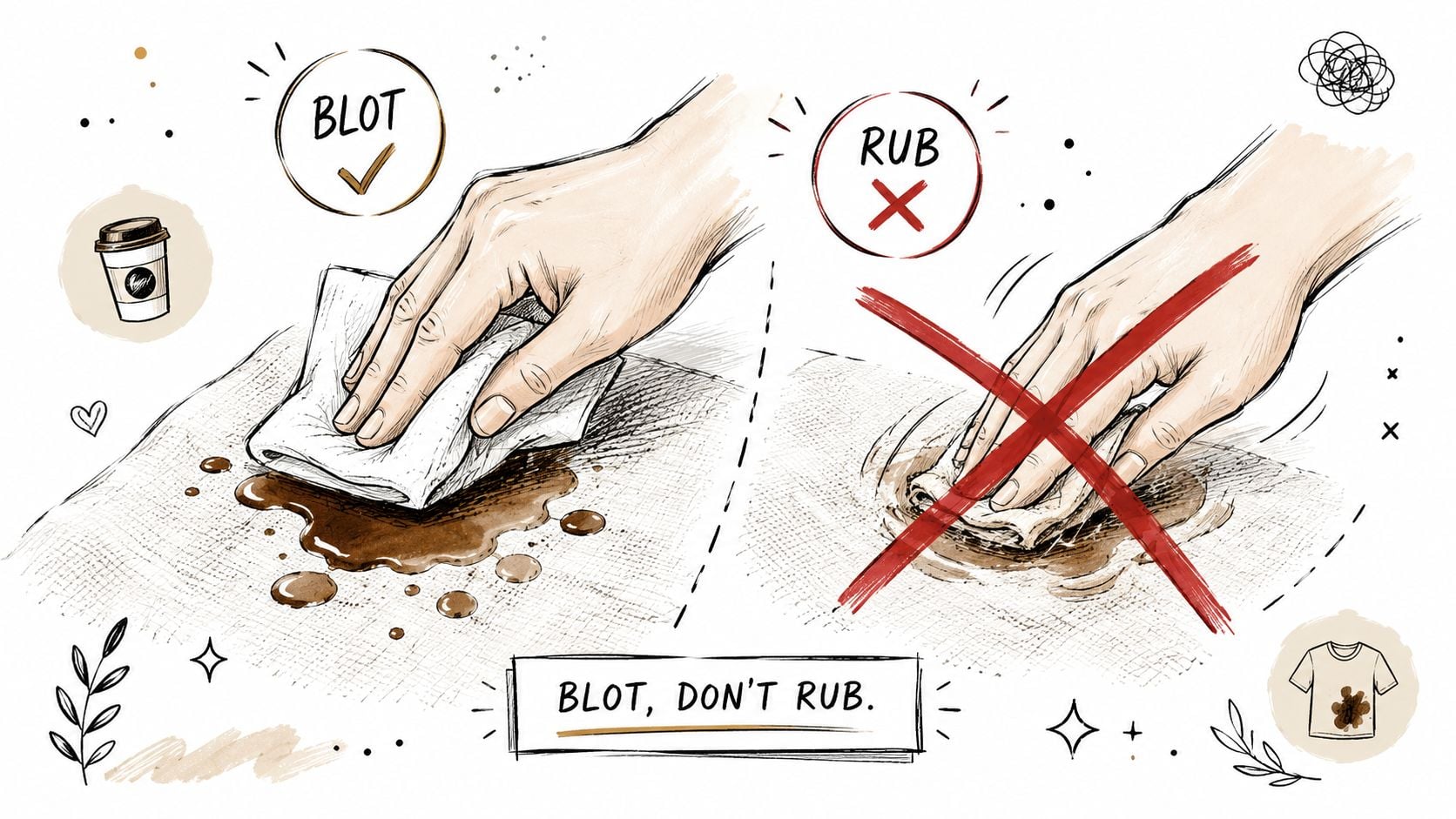
Blot. Don't rub.
Rubbing pushes liquid deeper, spreads the stain outward, and roughs up the surface. A clean white cloth is usually the safest first move because it lets the homeowner see what's lifting without adding dye from the towel itself.
If the cloth is getting the stain out, keep blotting. If the stain is spreading, stop changing variables and reassess.
A material-by-material response
Different surfaces need different handling.
- Upholstery fabrics: Blot first with a dry white cloth. If more cleaning is needed, use a mild soap and water solution only after testing in a hidden spot.
- Leather: Wipe spills promptly and use a cleaner made for leather, not a general fabric cleaner.
- Wood: Dry the area right away. Letting moisture sit invites rings and finish problems.
- Slipcovers or washable accessories: Follow their care instructions instead of guessing.
One overlooked issue in furniture stain protection is that standard sprays don't always address everything people assume they do. Dye transfer from unwashed jeans and mineral rings from tap water are frequently missed in general stain advice, as noted in this article on protecting furniture from stains and hidden risks.
The stains that catch people off guard
Two troublemakers deserve special attention:
Dye transfer
Light upholstery can pick up color from dark new clothing, especially denim. Washing new jeans before regular contact with seating is a simple preventive step.Mineral residue
Tap water can leave marks of its own. Distilled water is often the safer choice when a damp-cleaning step is necessary.
Temperature also matters more than many people realize. Protein-based stains can react badly to heat, which is why this explanation of when hot water sets protein stains is useful background before reaching for very warm water out of habit.
For broader fabric-specific guidance, this article on how to clean upholstery without making a spot worse is worth saving.
When You Need Backup Our Local Promise of Service
Some stains clean up easily. Others leave homeowners staring at the cushion and wondering if one wrong move will make the problem permanent. That's where local service still matters.
For Bellefontaine furniture shoppers, support shouldn't stop at purchase. Reliable follow-through includes delivery, setup, and a clear path to help if something needs attention later. That same practical approach matters to households furnishing a first living room, families shopping a mattress store Logan County residents can rely on, and business owners trying to make waiting rooms or offices hold up under steady traffic.
Commercial spaces need the same common-sense planning as homes, sometimes more. Durable seating, space planning, and materials that won't give up too soon can make a real difference in reception areas, conference rooms, and everyday office use. Businesses exploring Commercial Office solutions often need furniture that looks professional and cleans up well without constant fuss.
Value matters too. The Low Price Promise helps reassure budget-conscious families and business owners that durability and thoughtful design don't have to mean overpaying. Flexible Financing options also make it easier to take on a larger room update or staged furnishing project without sacrificing quality. And when something needs attention after delivery, a local Service Request process keeps help close to home.
Service should feel steady, not complicated. Delivery teams should handle the heavy lifting so customers can focus on enjoying the finished space.
Visit Tanger's Furniture showroom in Bellefontaine to see custom options in person or browse collections online to start the journey. Have a specific design question? Contact the design staff today or join the Love Your Home Club for expert tips and exclusive offers delivered to your inbox.