Custom Upholstered Chairs: A Bellefontaine Buyer’s Guide

A lot of folks around Bellefontaine end up in the same spot. They find a chair online that looks nice enough, then wonder whether it will fit beside the sofa, hold up to kids and pets, or feel comfortable after the first half hour. By the time they walk through a showroom full of look-alike options, “good enough” can start to sound like the only choice.
It doesn't have to be.
A custom upholstered chair gives a room something more personal than an off-the-rack piece ever can. It gives the home a chair shaped around real living. That might mean a swivel that works in an open layout, a firmer seat for easier standing, or a fabric that won't make every spill feel like a crisis. For families who care about comfort and longevity, and for business owners furnishing waiting areas or offices, those details matter.
Since 1946, and with design guidance rooted in service since 1964, a local furniture store in Bellefontaine has had the same basic job. Help neighbors make thoughtful choices they'll be glad they made later. That same mindset applies whether someone is shopping Bellefontaine furniture for a living room refresh, comparing custom sofas Ohio shoppers often ask about, or stopping in for a mattress store Logan County families trust. The goal isn't pressure. The goal is helping people love their home.
Table of Contents
- Your Home Is Not a One-Size-Fits-All Box
- What Exactly Makes a Chair a Custom Chair
- The Anatomy of a Quality Custom Chair
- Designing Your Chair from Style to Function
- The Tangers Custom Order Journey in Bellefontaine
- From Our Showroom to Your Home and Beyond
- Common Questions from Our Logan County Neighbors
Your Home Is Not a One-Size-Fits-All Box
A real home rarely behaves like a furniture catalog. One living room has a narrow walkway to the kitchen. Another has a big picture window that makes bulky seating look even heavier. A family room in Logan County might need to handle game night, naps, and a dog that thinks every chair belongs to him.
That's where shoppers often get stuck. They aren't asking for anything extravagant. They just want a chair that fits the room, fits the people using it, and doesn't feel like a compromise every time they walk past it.
A dream chair that blocks traffic or sits awkwardly beside the sofa stops feeling dreamy pretty fast.
Custom upholstered chairs solve a practical problem before they solve a style problem. They let a shopper pay attention to scale, fabric, comfort, and the way the chair will be used on an ordinary Tuesday. That's a different mindset from grabbing the closest match in a warehouse lineup.
In a small-town setting like Bellefontaine, that process also tends to feel more grounded. People want straight answers. They want to know what's worth paying for, what can be simplified, and what will hold up. They also want somebody to help without turning the whole experience into a sales pitch.
Why local guidance matters
A custom piece asks better questions than a standard one:
- How is the room used: Quiet reading corner, busy family seating, office guest chair, or waiting room?
- What feels comfortable: Upright support, sink-in softness, or something in between?
- What does the room allow: A broad chair with arms, or a lighter silhouette that keeps circulation open?
That kind of guidance is part of why local families still seek out Bellefontaine furniture in person. They're not only buying a chair. They're trying to make a home work better.
What Exactly Makes a Chair a Custom Chair
A custom chair isn't just a chair in a different color.
The easiest way to think about it is clothing. Off-the-rack furniture is like buying a jacket in the closest size available. A custom upholstered chair is closer to tailoring. The shape, feel, finish, and details are selected so the final piece suits the room and the person using it.
That level of customization only makes sense because upholstery itself changed over time. As this history of upholstery explains, upholstery became an integral part of furniture only within the last four hundred years. Before that, seating more often relied on simpler structures with removable cushions. Once structure, padding, and fabric started being treated as one system, modern made-to-order seating became possible.
What “custom” usually includes
A true custom order may involve several choices working together:
- Chair silhouette such as a traditional armchair, a cleaner modern shape, or a swivel profile
- Seat feel from more supportive to more relaxed
- Fabric selection based on appearance, texture, and how the room gets used
- Finish choices on visible wood or legs
- Details such as welt, seams, or other small tailoring decisions
Some shoppers hear “custom” and assume it means complicated. Usually it means the opposite. It narrows the field by helping someone skip what won't work.
Why brand options matter
When a shopper looks at lines such as Flexsteel or Smith Brothers of Berne, the value isn't merely variety. It's the ability to choose from structured options that make the chair more suitable for the home or office where it will live.
Plain truth: A chair can be beautiful in the showroom and wrong for the room at home.
That's why custom upholstered chairs are less about chasing a special-order label and more about building a piece with intention.
The Anatomy of a Quality Custom Chair
A chair may look finished on the outside, but the long-term value lives underneath the fabric. Many shoppers naturally focus on pattern and color first. The better place to start is construction.
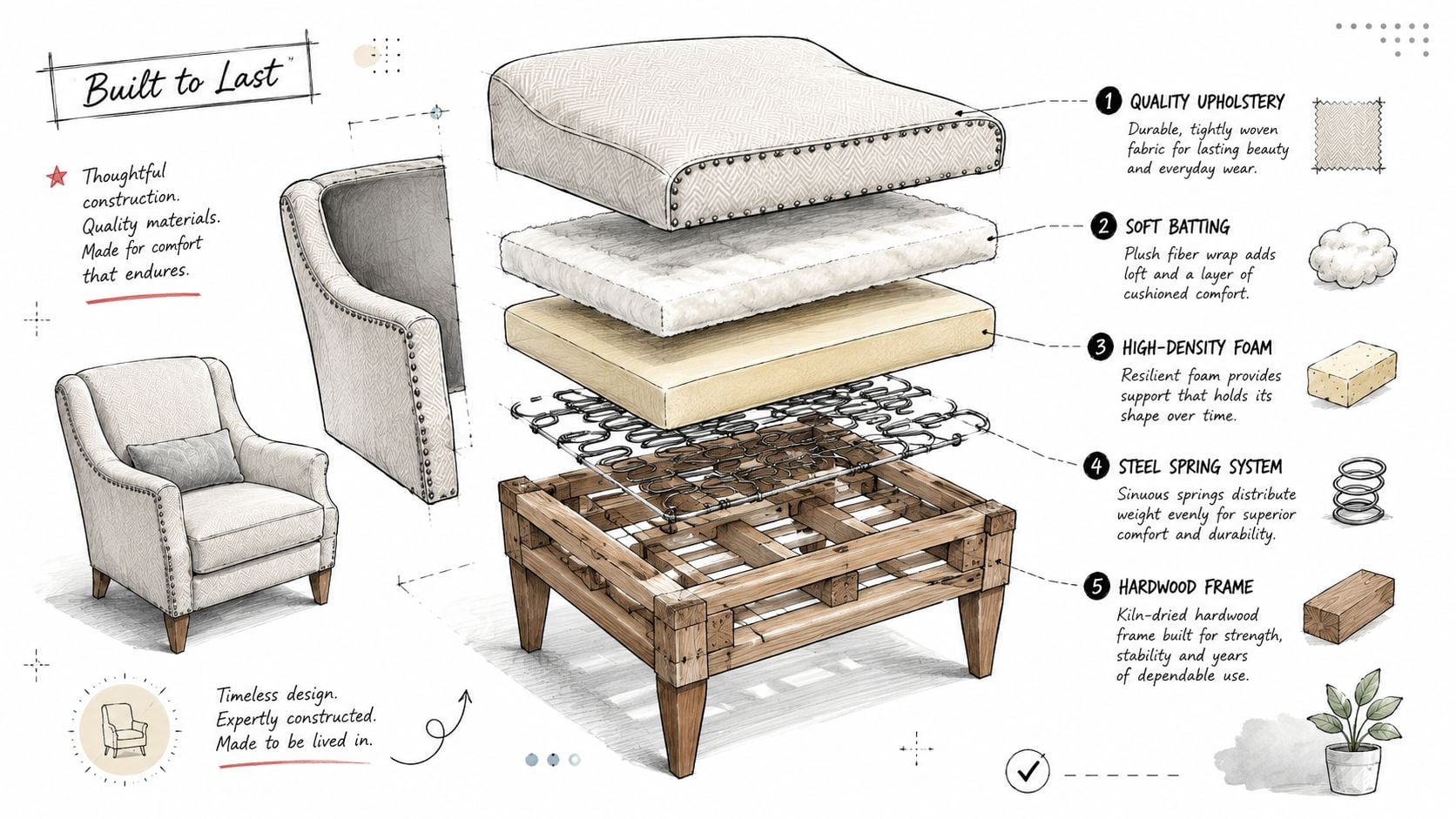
The most important benchmark is the frame. The verified construction standard states that solid hardwood frames with double-doweled joinery are the single most critical benchmark for long-term value, and that this type of construction can withstand over 20,000 cycles in simulated tests while lesser frames often fail before 8,000.
Frame comes first
A quality frame does two jobs. It carries weight day after day, and it keeps the chair from twisting out of shape over time.
What shoppers should look for:
- Solid hardwood: This gives the chair a stronger core than lower-grade alternatives.
- Double-doweled joinery: This helps resist racking, which is the side-to-side stress that can loosen a chair over years of use.
- Consistent build quality: A well-built frame usually feels steady, not hollow or shaky.
For anyone trying to separate a lasting chair from a short-term chair, this is the place to start.
Support underneath the cushion
Many people sit in a chair and notice softness first. Support is what they notice months later.
Suspension and webbing help the seat keep its shape and feel. If that underlying support is sloppy, the fabric and cushion above it can start to look tired sooner than expected. A sturdier support system helps the chair maintain a more even sit and a neater appearance.
Cushions change the daily feel
The cushion determines whether a chair feels crisp and supportive or more relaxed and lounge-like. Neither is automatically right. It depends on the room and the person.
A helpful way to think about cushion choice:
| Need | Better direction |
|---|---|
| Easier getting in and out | A firmer, more supportive seat |
| Relaxed reading or TV time | A softer, deeper-feeling seat |
| Cleaner, tailored appearance | Cushion shapes that hold form well |
| Low-maintenance living | Materials that bounce back with less fuss |
Fabric finishes the job
Fabric isn't just the final layer. It's the working surface people live with every day. In heavier-use settings, performance matters. Verified data notes that high-performance fabrics rated 35,000+ rub cycles are better suited to high-traffic use than standard fabrics rated 10,000 rub cycles.
For shoppers comparing textures and fibers, these expert fabric selection tips offer a useful outside look at how fabric choice affects wear, feel, and maintenance. Tanger's also has a practical guide on upholstery material basics that helps translate swatch-book language into everyday decisions.
What confuses shoppers most: A fabric can feel soft in the hand and still be the wrong choice for the way the chair will actually be used.
Designing Your Chair from Style to Function
A chair should look right, but it also has to behave right in the room. That's where many custom orders either shine or disappoint. The prettiest option in the book can still be too bulky, too low, or too formal for real life.
Start with the role the chair needs to play
A good custom decision begins with the job description.
- Classic armchair: Works well when the room needs a dependable everyday seat with presence.
- Swivel chair: Useful in open layouts where the seat may turn toward conversation, television, or a view.
- Armless chair: Often helps tighter spaces feel lighter and less crowded.
- Reclining chair: Better when comfort and extended sitting matter more than a formal look.
- Accent chair: Adds personality, but still needs to respect the room's scale.
Someone furnishing a reading corner may want a deeper, cozier sit. Someone planning seating near a walkway may need a shape that stays visually lighter.
Match the chair to the room, not just the mood board
One practical rule from an interior design source is to keep adjacent seat heights within 4 inches for better visual harmony and conversation flow, as noted in this seat-height and layout guidance. The same guidance recommends lighter silhouettes or swivel chairs for open spaces, since they look better from multiple angles and help preserve circulation.
That advice becomes especially useful in real rooms:
- A heavy chair beside a chaise sectional can make one side of the room feel crowded.
- A swivel chair can solve the “where should it face” problem in an open plan.
- An armless profile can give a small room breathing room without giving up seating.
For readers who like thinking through functional display and traffic flow from another design angle, this piece on understanding custom art display stands is surprisingly helpful. It shows how dimensions, visibility, and movement all shape whether an object works in a space.
Performance matters in homes and businesses
Fabric and fill should match the level of wear.
In family rooms, that may mean choosing a fabric that handles frequent use more gracefully. In a business setting, those same decisions matter even more. A waiting room or office lounge chair gets used by many people with different habits, which is why commercial projects often need tougher materials and more durable specifications. For shoppers comparing options for home or office, this guide on how to choose upholstery fabric helps connect style preferences to practical use.
A custom chair earns its keep when it serves both the room and the routine.
The Tangers Custom Order Journey in Bellefontaine
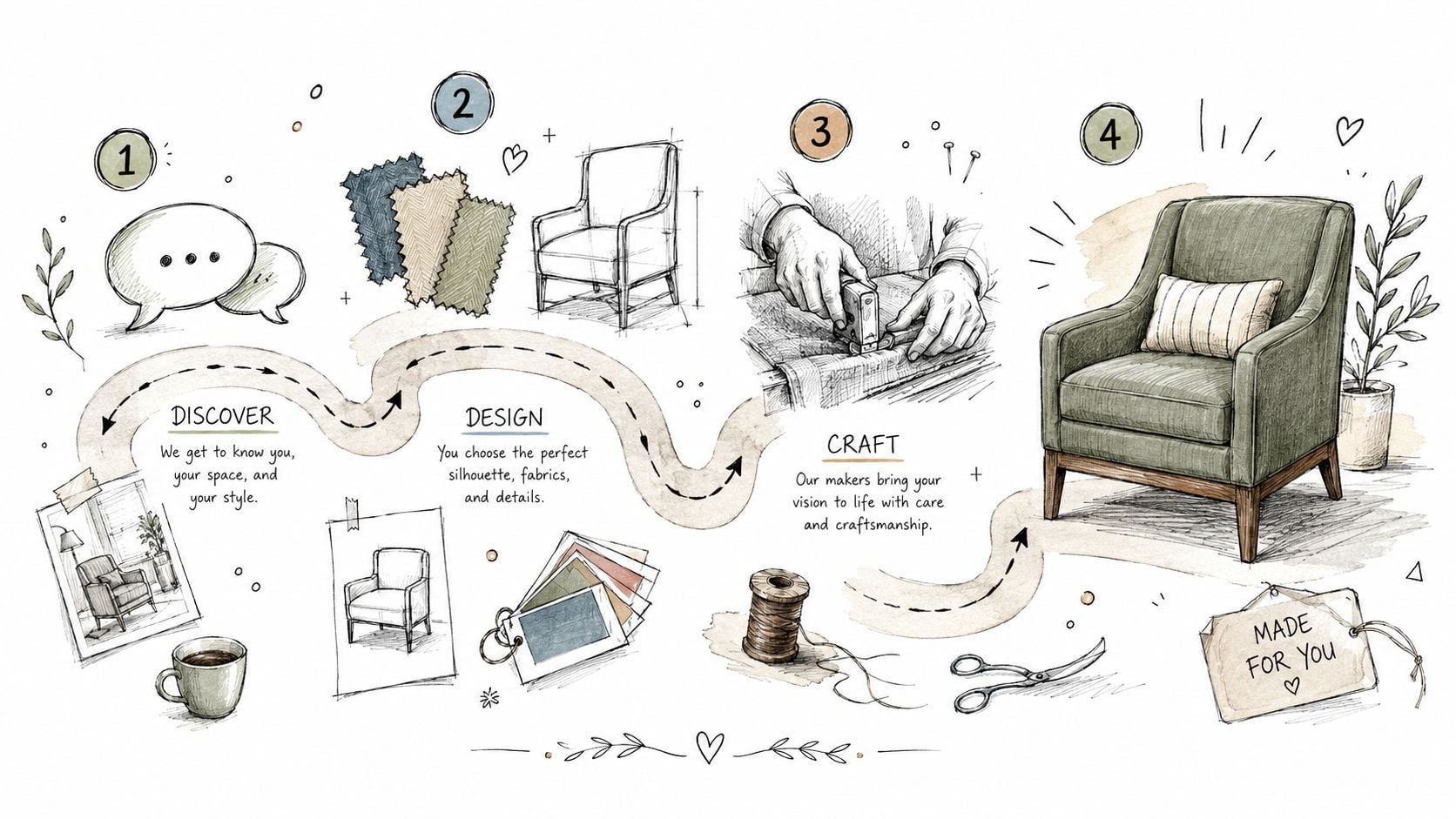
For many shoppers, custom sounds like a maze of decisions. In practice, the process is usually calmer than people expect when it starts with sitting, touching, and narrowing choices in person.
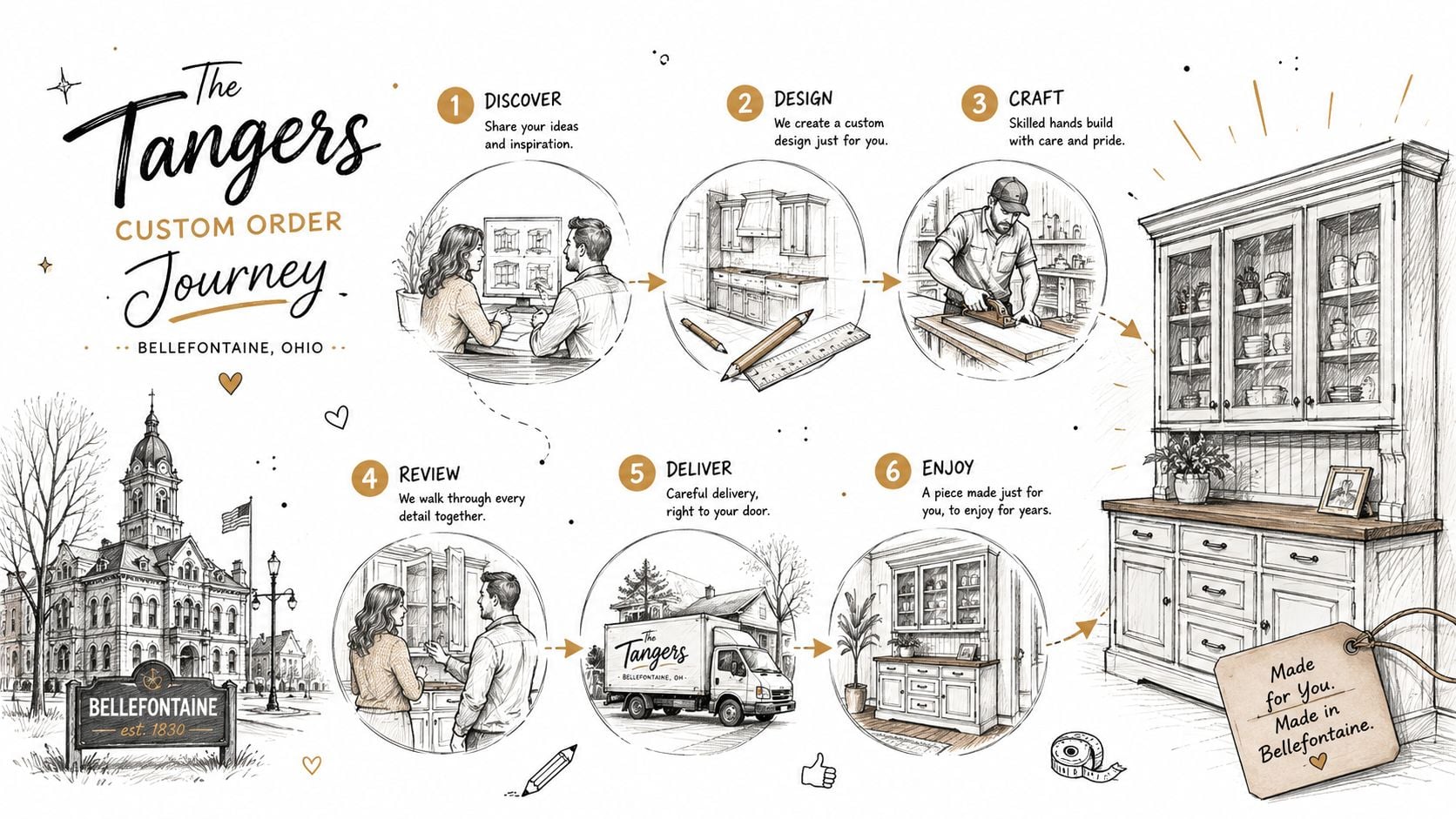
A simple way to begin
The starting point may be online browsing or a showroom visit. Some pieces are marked with a customizable icon, and verified data notes that this can mean over 100 fabric options and 50+ finishes on select pieces from brands such as Flexsteel. It can also include high-performance fabrics rated 35,000+ rub cycles for more demanding use.
That gives the shopper a manageable path:
- Sit in a few styles and notice what feels right.
- Compare silhouettes against the room's size and traffic flow.
- Review fabrics and finishes that fit both the look and the lifestyle.
- Confirm the order details before the piece is built.
For anyone who wants to see how that process begins before stepping into the store, this custom order starting guide lays out the basics clearly.
Where value and flexibility come in
Custom doesn't mean throwing the budget out the window. It means putting money where it counts. Some shoppers may choose a simpler fabric and invest more in construction. Others may care most about a specific look for a room they use every day.
That's also where the Low Price Promise and flexible financing matter. A well-chosen chair is easier to plan for when payment options can spread out the project without forcing a family to settle for something that isn't right. For budget-conscious households, that same practical thinking often carries over to other parts of the home as well, whether they're shopping custom seating, custom sofas Ohio families ask about, or dependable appliances like Speed Queen laundry.
The calmest custom orders usually happen when a shopper knows the room, the routine, and the spending range before picking the fabric.
From Our Showroom to Your Home and Beyond
The purchase isn't finished when the order is written up. With a custom piece, the last steps matter just as much as the first ones.
Delivery is part of the purchase
A quality chair still has to arrive safely, fit through the door, and land in the right spot in the room. That's where local delivery earns its value. Instead of leaving a household to wrestle with packaging, placement, and setup, a professional team handles the heavy lifting and helps reduce the chance of damage on day one.
For shoppers who want the practical details, local furniture delivery service information explains how that part of the process works.
Service should still be there later
Furniture lives a real life after delivery. A question may come up. A service issue may need attention. A customer may want the reassurance that somebody local is still available after the sale.
That ongoing support is one of the clearest differences between local full-service shopping and a distant transaction. It saves time, reduces frustration, and gives people a place to turn if something needs follow-up. In a community like Logan County, that reliability still matters.
Common Questions from Our Logan County Neighbors
The last questions are usually the most honest ones. They're less about trend and more about whether the chair will make sense for real people, real budgets, and real homes.
Is custom always out of budget
Not necessarily. A custom chair can cost more than a basic in-stock option, but the comparison should include construction, fit, and expected use. A cheaper chair that feels wrong in the room or wears out quickly often isn't the better value.
Flexible financing can help families spread out a project. The Low Price Promise also gives shoppers some reassurance that they're still buying with value in mind, not just chasing upgrades.
What if someone has no idea where to start
That's common. Not everyone is a trained designer, and they don't need to be.
A good starting point is simple:
- Bring room measurements
- Take a few photos
- Know who will use the chair most
- Think about comfort before fabric color
This is also where material questions come up. Some buyers now want performance features that go beyond stain resistance. As this custom upholstery discussion notes, reticulated or open-cell foam is designed to let moisture dissipate quickly, which shows how upholstery can be engineered for daily life, not just appearance.
Can one store help with more than living room seating
Often, yes. A shopper who comes in for a chair may also be thinking about a bedroom update, a better mattress, a home office, or even appliance needs. That broad help can make planning easier, especially for busy households.
In Logan County, that might mean pairing seating plans with a bedroom purchase from a mattress store Logan County residents already rely on, or asking about laundry appliances such as Speed Queen laundry while finishing a larger home project. For anyone starting the search, custom furniture near home is a useful place to begin.
Visit Tanger's Furniture to see custom options in person in Bellefontaine or browse collections online to start the process. Have a specific design question, a commercial office project, or a room that just isn't coming together yet? Contact the design staff for guidance, ask about financing and delivery, and join the Love Your Home Club for exclusive offers and practical home tips.