Bed Solutions for Guests: Comfortable Options for Every Home


A dedicated guest room is out of reach for most households. A 2026 U.S. survey found that 72% of Americans don't have one, leaving visitors to sleep most often on a living room couch or an air mattress. The same survey found that 40% of hosts feel embarrassed by the sleeping setup, while 33% have avoided inviting someone overnight because of it.
That problem isn't a sign that a home is too small or poorly furnished. It means the room has to work harder. The office still needs to function on Monday morning, the living room still needs comfortable seating, and the den may need to remain open for hobbies, storage, or family time. The right bed solutions for guests make that daily flexibility feel intentional rather than improvised.
Why Most Homes Need Flexible Guest Sleeping
A guest bed usually shares a room with another job. The same space may hold a desk, television, bookshelves, exercise equipment, or children's belongings. Choose the bed around that daily use. A large mattress that blocks the room for weeks or months creates more problems than it solves.
Guest comfort also deserves a practical test. Some hosts spent the past year upgrading guest accommodations, and some Americans have tested their own guest setup by sleeping on it. Among those testers, some couldn't make it through the full night (Amerisleep's guest-bed report). A guest bed is successful only when it works for the sleeper and the household using the room between visits.
The daily-use room comes first
Start with the room's main function. A sofa bed fits a living room that needs seating every day. A Murphy bed suits an office that must become a bedroom only when visitors arrive. A daybed works in a den or child's room where a reading spot matters and the floor should remain visually open.
The right choice preserves the room's normal routine. Measure the clearance needed to open the bed, walk around it, and return the space to its daytime arrangement. If the bed requires moving half the furniture, it will be used less often and create more frustration.
Explore multifunctional living room furniture when the room must support seating, work, storage, and overnight sleeping. The useful question is, “Which piece adds a sleeping function without weakening the room's first purpose?”
Hospitality offers a useful perspective
Guest capacity matters in travel settings, too. The European Union estimated 28.9 million available bed places across more than 620,000 tourist accommodation establishments in 2022, and those properties recorded almost 2.8 billion guest nights that year. (Eurostat's tourism accommodation data)
A homeowner needs a smaller version of the same plan. In a Bellefontaine home, the goal may be accommodating one visiting relative rather than many travelers. The bed still needs to fit the room, support the sleeper, and stay practical between visits. Match the solution to the space first, then judge its appearance and features.
Comparing the Main Guest Bed Options
Every category solves a different room problem. The strongest choice depends on whether the room needs daily seating, open floor space, occasional sleeping capacity, or a compact piece that can disappear into storage.
Sofa beds
A sofa bed offers the most balanced combination of everyday function and overnight use. It provides seating during the day, then opens into a sleeping surface when needed. That makes it the natural choice for a living room, den, or office that regularly hosts conversation or television viewing.
Comfort varies widely, so the frame and mattress deserve more attention than the upholstery alone. A thin mattress or awkward opening mechanism can turn a handsome sofa into a poor guest experience. A well-built sleeper with supportive cushions, a smooth mechanism, and upholstery selected for the room's traffic level is a much safer investment. Readers comparing configurations can browse living room sets with sleeper sofas before deciding how much seating the room needs.
Daybeds and trundle beds
A daybed works especially well in a studio, den, or child's room. Its back and side rails make it feel more like a lounge than a spare mattress, and it can serve as a reading nook during the day. A trundle adds a second sleeping surface beneath the main bed, although the lower mattress may be less convenient for guests who have difficulty getting close to the floor.
Murphy beds
A Murphy bed gives an office or hobby room the clearest transformation. The sleeping surface folds into a wall cabinet, preserving floor space when closed. The trade-offs are substantial: installation requires careful wall planning, the mechanism must be mounted correctly, and the budget is typically higher than for simpler solutions.
Sleeper chairs and convertible futons
A sleeper chair suits a small room or a single overnight guest. It's compact and easy to reposition, but the narrow sleeping surface won't suit every adult. A convertible futon can be affordable and versatile, though the frame, cushion construction, and upholstery strongly affect comfort. It's a reasonable occasional option, not automatically a good nightly bed.
Air mattresses
An air mattress stores easily and works when sleeping capacity is needed only rarely. It's the least integrated solution, since it takes setup time and can feel temporary. A supportive topper, proper bedding, and a nearby lamp can make it more welcoming, but frequent hosts should consider furniture that serves a purpose every day.
| Bed Type | Best For | Daily Function | Comfort Level | Budget Range |
|---|---|---|---|---|
| Sofa bed | Living rooms and dens | Full-time seating | Moderate to high, depending on construction | Varies |
| Daybed | Studios, offices, and reading areas | Lounge seating | Moderate to high | Varies |
| Murphy bed | Offices and compact rooms | Cabinet, shelving, or desk area | High when properly specified | Higher |
| Trundle bed | Flexible bedrooms and basements | Single bed or daybed | Moderate | Varies |
| Sleeper chair | Small rooms and solo guests | Accent chair | Moderate | Varies |
| Air mattress | Rare overnight use | Storage between visits | Low to moderate with added layers | Lower |
| Convertible futon | Casual rooms and tight budgets | Sofa or lounge seating | Moderate | Lower to moderate |
Owners planning several sleeping areas can also use a practical start a bed and breakfast guide to think through guest flow, room function, and hospitality details. For a typical home, though, the winning decision usually comes down to one question: which daily use must remain effortless?
Measuring Your Room for a Guest Bed
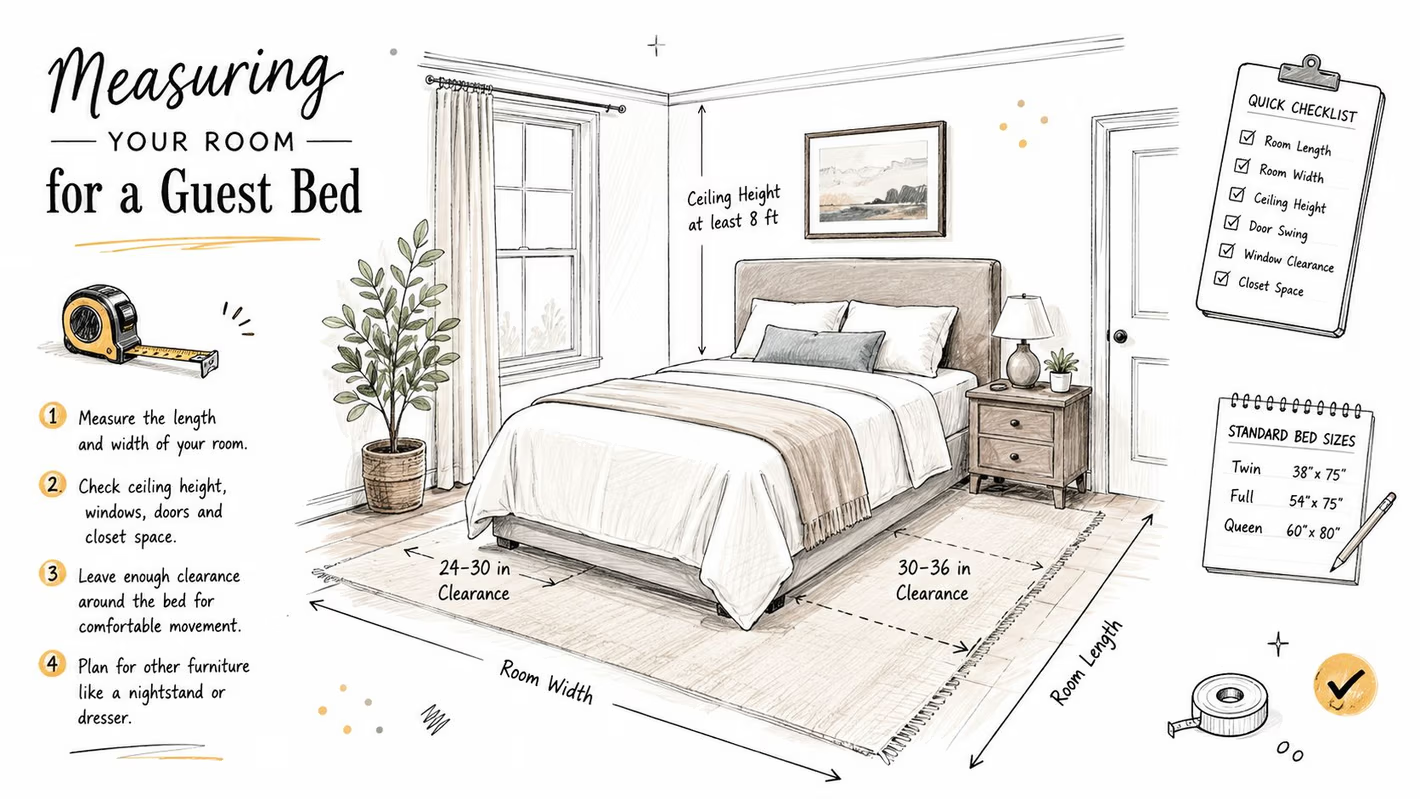
A guest bed needs two footprints. The closed footprint shows how the room works during the day, while the open sleeping footprint shows whether visitors can use the bed safely and comfortably at night. Measuring only the furniture's showroom dimensions is how many rooms end up with blocked doors, crowded walkways, or a mechanism that can't fully open.
Start with the room itself
Measure wall lengths, ceiling height, door openings, window locations, and the position of outlets. Mark the direction each door swings. A fold-down bed placed behind a door or beneath a low window may look possible on paper but become frustrating in everyday use.
Then measure the proposed furniture when closed. Include arms, back cushions, cabinet trim, side tables, and any space needed to walk around it. If the piece has drawers, reclining sections, or storage compartments, those openings count as part of the usable footprint.
Map the bed in its sleeping position
For pull-out and fold-down designs, leave at least 50–60 cm of clear floor space in front of the mechanism. That clearance allows the bed to open fully and gives someone room to stand beside it while making the bed.
Standard mattress widths help make the plan concrete:
- Small single: 75 cm wide
- Single: 90 cm wide
- Small double: 120 cm wide
- Standard double: 135 cm wide
- King: 200 cm long, with width determined by the selected mattress standard
Use painter's tape on the floor to mark the open bed. Walk the route from the doorway, stand beside the taped mattress, and check whether another person could pass without brushing against furniture. For families comparing raised sleeping designs, a 2026 bunk bed buyer's guide offers another useful way to think about ladder access, headroom, and safety around sleeping furniture.
A careful furniture measurement process also protects the rest of the purchase. Tanger's guide to measuring furniture can help households document room dimensions before visiting a showroom or requesting a layout.
What Makes a Guest Bed Actually Comfortable
A guest bed succeeds when it supports the body like a bed, not when it merely unfolds into a flat shape. Mattress thickness, sitting height, edge stability, and room conditions work together. Ignoring one of them can undermine the rest.
Expert guidance for sleeper sofas recommends a mattress thickness of about 12 cm at minimum, with 14–18 cm preferred for stronger spinal support and less contact with the frame. Thinner mattresses make it more likely that sleepers will feel bars or hard transition areas beneath them, which can create pressure points and interrupt sleep.
Evaluate the complete sleep surface
A good test begins with the mattress, but it shouldn't end there. Guests need to sit down, stand up, turn over, and move around the edge without fighting the furniture.
Look for:
- Appropriate height: A seat-to-sleep height near 17–19 inches supports easier sitting and standing.
- Stable edges: Firm perimeter support helps prevent rolling and gives guests a secure place to sit.
- Smooth transitions: The sleeping surface shouldn't have obvious bars, gaps, or raised seams.
- Reliable operation: The mechanism should open without jerking, binding, or requiring excessive force.
Technical comfort guidance also recommends a 24–30 inch circulation path around mixed-use guest furniture. Room temperature, glare, and humidity matter, too. Comfort frameworks connect sleep quality with controlled temperature, low glare, and humidity between 30–60%.
Practical rule: If the host wouldn't choose the surface for a full night, guests shouldn't be expected to accept it.
The simplest self-test is revealing. Sleep on the setup before visitors arrive. A few minutes of sitting on a showroom model can identify awkward height, but only a longer rest reveals pressure points and movement issues. A mattress specialist at a Logan County mattress store can also help match the sleeper's preferred firmness and support needs to the room's available space. Tanger's mattress collection is relevant for households that need to choose a mattress with the rest of the sleep setup in mind.
Why Custom Order Furniture Outperforms Big Box Options
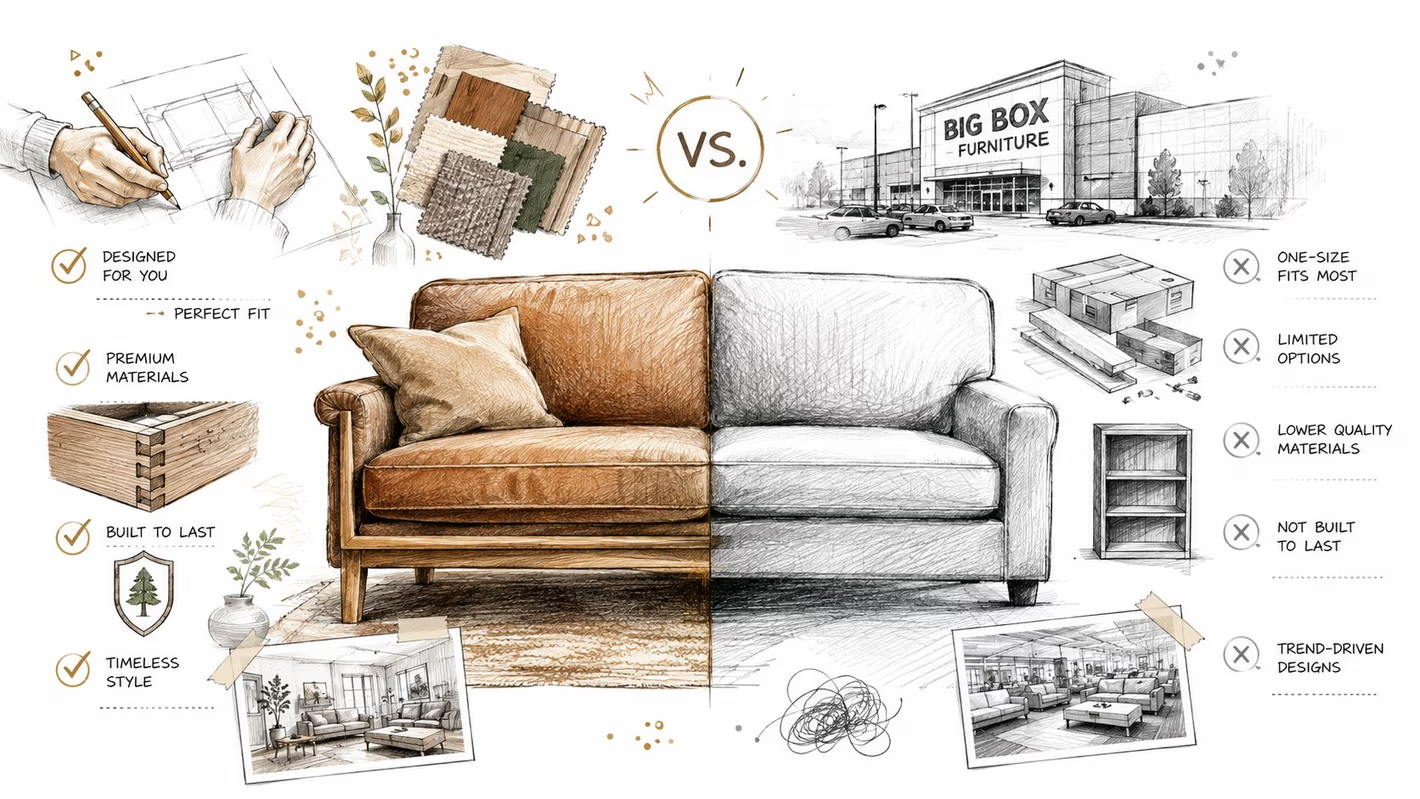
Mass-produced furniture can solve a space problem quickly, but guest rooms often need a closer fit. A custom-order piece can be selected around the room's dimensions, existing colors, preferred seat feel, and expected frequency of use. That matters when the same furniture must look like a finished living room piece during the day and perform like a proper bed at night.
Smith Brothers of Berne and Flexsteel are useful examples of brands to examine when construction and customization matter. Their available configurations can be evaluated alongside fabric, finish, and comfort choices rather than treated as a single fixed package. Readers can explore the Flexsteel and Smith Brothers of Berne brand resources before working with a design specialist on a room-specific solution.
Customization changes the decision
Customization can affect:
- Fabric selection: The upholstery can coordinate with existing seating, rugs, and window treatments.
- Configuration: Arm style, mattress format, and sectional orientation can be matched to the room.
- Finish details: Wood tones and accents can keep a multifunctional piece from looking temporary.
- Comfort preferences: Cushion firmness and mattress support can be discussed before ordering.
That process also helps the furniture look deliberate. A sleeper sofa with the right proportions and fabric reads as part of the room, not as emergency equipment that appears only when company arrives.
The showroom test still matters
Online photos can't show cushion density, mechanism resistance, fabric texture, or the actual scale of a piece. A local showroom lets shoppers sit, lie down, open the sleeper, and compare swatches under real lighting. That tactile step often prevents a costly mismatch.
Tanger's Furniture has served the Bellefontaine community with furniture and mattress solutions for nearly 80 years, with design experience dating to 1964 and family-owned roots reaching back to 1946. Its custom-order process allows shoppers to work with trained specialists on fabrics, finishes, and configurations, while local delivery and setup remove much of the physical work. Details about the process are available through getting started with custom order furniture.
Room by Room Guest Bed Recommendations
The right bed solution changes with the room's job. A piece that works beautifully in a den may be awkward in a narrow office, while a compact studio needs a different balance of seating, storage, and sleeping space.
Home office
A Murphy bed with an integrated desk is the strongest choice when the office must look professional every day. The desk can remain ready for work while the bed stays folded away, and the room can shift into guest use without moving a large sofa.
The important checks are wall structure, cabinet depth, lighting, and access to outlets. A work chair should have somewhere to go when the bed opens, and the desk surface shouldn't become a pile of items that has to be relocated before every visit.
Living room
A high-quality sleeper sofa suits a living room because it preserves the room's primary purpose, comfortable seating. Custom upholstery helps the sofa coordinate with the rest of the furnishings, while a supportive mattress makes overnight use feel less like an afterthought.
The arms, seat depth, and back angle matter during the day. A sofa that sleeps well but feels stiff for conversation isn't a complete solution. Households should test both modes before ordering.
Studio apartment
A daybed works well when one room must handle lounging, reading, dining, and sleeping. It can sit against a wall, function as a comfortable reading nook, and maintain a more open visual field than a full sofa.
A trundle adds capacity when needed, but it also requires clear floor space and storage for bedding. In a studio, the open footprint should be marked before purchase because every inch affects circulation.
Finished basement
A trundle bed or daybed can suit a finished basement where there's more room for a dedicated sleeping zone. The basement still needs careful attention to moisture control, ventilation, lighting, and ceiling height. A low ceiling may make a raised option uncomfortable, while a damp environment can damage bedding and upholstery.
For homes in Bellefontaine and Logan County, local delivery and in-house service requests are practical advantages when a large piece must be maneuvered through stairs, doorways, and finished surfaces. Professional installation also helps confirm that the furniture opens, closes, and sits level from the first night.
Commercial buyers face a similar planning challenge. A business may need a comfortable waiting area that can support occasional overnight accommodations, or a flexible training room that changes use. Tanger's Commercial Office division provides space planning, furniture layouts, and CAD drawings for professional environments, helping teams place desks, storage, seating, and circulation according to the room's actual demands.
Your Guest Bed Buying Checklist and Next Steps
A well-chosen guest bed must work on ordinary days, not only during visits. Use this checklist before ordering:
- Define the room's main job: Identify whether it serves mainly as an office, living room, studio, den, or bedroom. Choose a bed that supports that daily use.
- Measure both footprints: Record the closed size, fully open sleeping size, and clearance needed for walking, drawers, doors, and bed-making.
- Set a practical budget: Include the furniture, mattress, bedding, delivery, setup, and installation. The frame price alone does not show the full cost.
- Test the mechanism: Open and close it in person. Movement should be smooth, with enough access to make the bed without shifting other furniture.
- Assess the sleep surface: Check mattress thickness, edge support, height, seams, and pressure points.
- Review durability: Ask about the frame, mechanism coverage, upholstery care, and routine maintenance.
- Match the style: Select fabrics and finishes that suit the room every day, whether the bed is closed or in use.
- Plan delivery: Confirm doorway access, stair turns, placement, setup, and future service support before purchase.
A budget-conscious household can still choose a piece built for regular use. Tanger's Low Price Promise supports value-conscious shopping, and flexible financing options are available for any project, from a single sleeper sofa to a complete living room or commercial furnishing plan.
Delivery matters when a guest bed must pass through tight halls, stairs, or finished rooms. Tanger's professional delivery team brings purchases into the home and sets them up correctly. Its online service request process also gives customers a direct way to report issues or request maintenance later.
Choose the solution according to the room's constraint. An office needs clear working space, a living area needs comfortable daily seating, and a studio needs compact circulation. Confirm those priorities before choosing upholstery, mattress support, or a larger frame.
For ongoing ideas and exclusive offers, readers can join the Love Your Home Club. It suits homeowners furnishing a first house, families updating a guest area, and anyone seeking practical design guidance without pressure.
Visit the Tanger's Furniture showroom in Bellefontaine to see custom guest-bed options in person, or browse collections online through Tanger's Furniture to start the journey. Contact the design staff with a specific question, or join the Love Your Home Club for expert tips and exclusive offers delivered to the inbox.