
Custom Made Dining Room Tables: A Step-by-Step Guide

A couple stands in a furniture aisle with a tape measure stretched across a tabletop. The table looks right at first, but it's two inches too wide for the breakfast nook, the chairs crowd the walkway, and the finish doesn't quite belong with the rest of the room. That familiar frustration is exactly where custom made dining room tables earn their place.
A custom table isn't about adding luxury for its own sake. It's about getting the size, shape, materials, finish, and construction right for the people who'll use it every day. For families in Bellefontaine and Logan County, the process can feel straightforward when a local design team handles the details without pressure.
Why Your Dining Room Deserves a Custom Table
The family in that furniture aisle might settle for the too-wide table, move a chair whenever someone walks through, and learn to live with a finish that never feels quite right. That compromise seems small until every meal includes bumped knees, blocked traffic, or a tabletop that doesn't suit the room.
Custom made dining room tables solve those daily irritations at the source. The buyer chooses proportions that respect the room, a shape that supports the household's routines, and details that fit the home's existing character. A smaller rectangular top might work better in a narrow dining area, while a round or square design can make conversation easier in a more compact setting.
Custom changes the daily experience
A stock table asks the room to adjust. A custom table asks the design to respond to the room.
That difference matters for a homeowner who needs comfortable space for weekday meals but wants flexibility when family visits. It also matters for a renter planning carefully around a small dining area, or for a household replacing furniture with the intention of keeping it for years. The right table should feel natural when people sit down, stand up, serve food, and move through the room.
Tanger's Furniture has served the Bellefontaine community for nearly 80 years, with design staff serving the area since 1964. That heritage supports a practical showroom experience. Customers can ask questions, compare finishes, and reconsider a detail without being pushed toward a decision.
A useful standard: If the table fits the room but makes everyday movement awkward, it doesn't fit the household.
The market still favors hands-on guidance
Wood remained the dominant dining table material with a 39.45% share in 2025, rectangular tables led with 44.20% of revenue, and the premium tier is projected to grow at a 7.01% CAGR, according to dining table market data. Specialty furniture stores accounted for 34.55% of sales in 2025, which helps explain why in-person, design-guided shopping remains valuable.
The showroom conversation should cover more than color. Customers should leave with a clear understanding of measurements, materials, finish behavior, ordering stages, and delivery expectations. Tanger's guide to designing a dining room can help households begin organizing those decisions before a showroom visit.
The rest of the decision is practical. First, buyers need to weigh custom construction against mass-produced alternatives. Then they should measure carefully, choose materials that suit their routines, approve every build detail, and plan for professional delivery and long-term care.
Custom Versus Mass-Produced Tables and What It Means for Value
Custom is worth considering when fit and serviceability matter more than the lowest initial price. A mass-produced table can be a sensible choice for a temporary space, a quick furnishing need, or a room with forgiving dimensions. Lower-cost options can reduce upfront spending, but they may also limit repair options, material choices, and the ability to solve an awkward layout.
Veneered and MDF-core tables can offer attractive finishes and consistent shapes. They aren't automatically poor choices. The important question is whether the construction matches the household's expectations for wear, maintenance, and future repair.
The real comparison happens after purchase
A custom table earns its value through several decisions made before construction:
- Sizing precision: The top can be planned around walls, walkways, chairs, and the room's actual proportions.
- Material selection: Buyers can choose a wood character and finish that suit the home rather than accepting whatever a stock collection offers.
- Repairability: A thoughtfully constructed piece may offer more practical options for refinishing or addressing wear than a lower-cost table with limited serviceability.
- Long-term fit: The table can support the household's routines instead of forcing the household to work around it.
Independent furniture guidance explains that custom tables address sizing and fit problems, while lower-cost alternatives often trade away durability and serviceability. The same guidance also points out that buyers need to judge lifetime value and material tradeoffs, not just generic price ranges. A helpful solid wood and engineered wood comparison can make that conversation easier.
When custom makes practical sense
Custom is usually the stronger recommendation when a room has unusual proportions, when a household needs a specific extension arrangement, or when the table is expected to remain useful through changing routines. It's also a good fit when the buyer cares about maintaining and repairing the piece rather than replacing it when the first visible wear appears.
Custom isn't automatically the right answer. A buyer should pause if the room may change soon, the table will see only occasional use, or the design choices feel driven by trend rather than function. In those situations, a well-selected stock table may deliver better value.
Tanger's Low Price Promise belongs in this conversation because value should be evaluated across comparable quality and service, not assumed from the word “custom.” Flexible financing options are also available for larger projects, allowing budget-conscious families to plan responsibly without abandoning durability or fit.
The simplest test is direct: if a stock table fits the room, supports the household, and offers acceptable care and repair options, it may be enough. If it forces repeated compromises, custom construction can be the more sensible long-term decision.
Measuring Your Space and Planning the Right Table Size
Measurement should happen before finish samples and before a favorite leg style takes over the conversation. A beautiful table that blocks a walkway is still the wrong table.
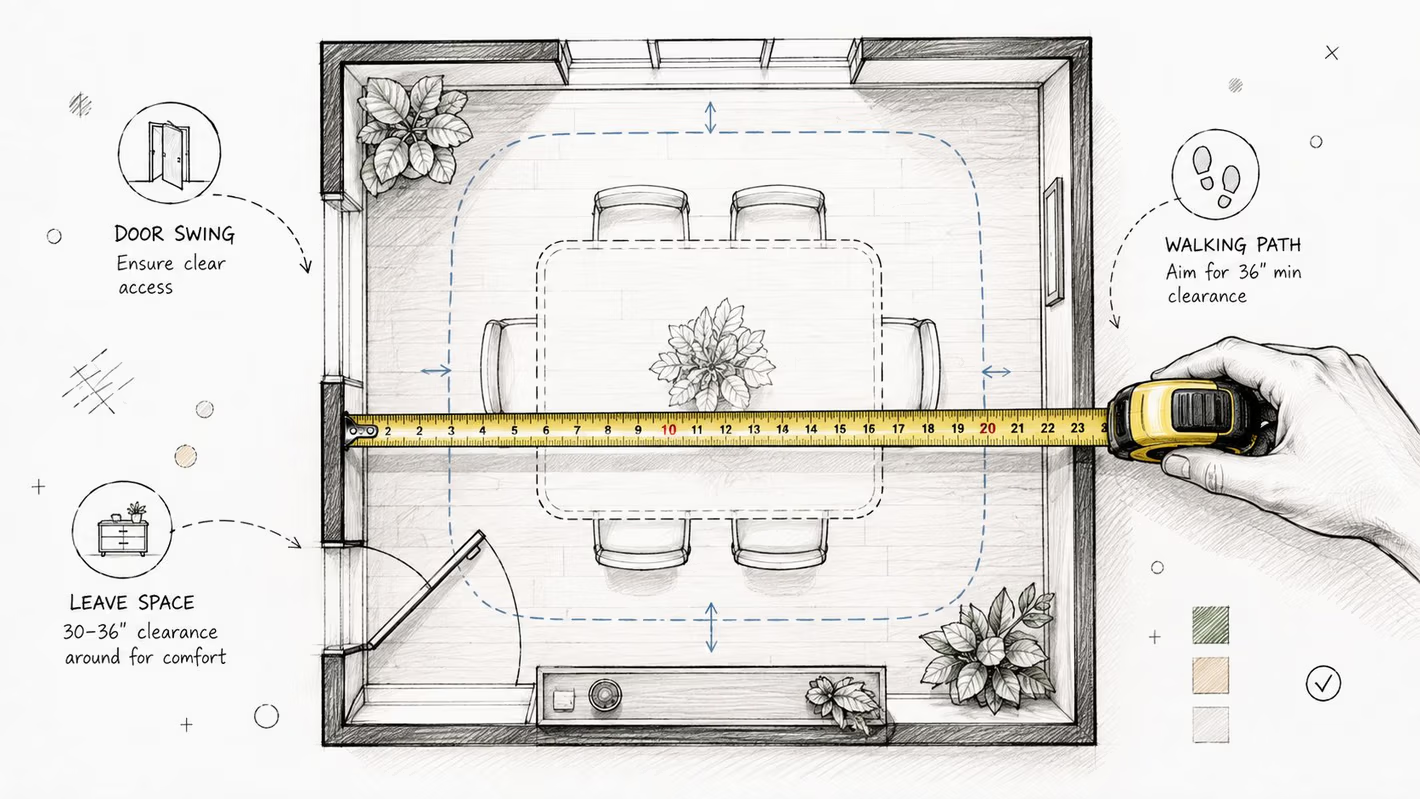
Start with the room's usable dimensions, not just the wall-to-wall measurement. Record door swings, openings into nearby rooms, windows, radiators, cabinets, and any path people use while carrying food or moving between rooms.
Build a measurement sheet
A practical sheet should include:
- Room dimensions: Measure the length and width of the dining area.
- Fixed features: Note doors, trim, heating elements, built-ins, and architectural interruptions.
- Traffic paths: Mark the routes people use around the table, especially the path between the kitchen and dining area.
- Chair movement: Account for the space needed to pull chairs out and sit comfortably.
- Table height: Identify whether the household needs standard dining height, counter height, or bar height.
- Extension needs: Decide whether the table must remain compact most days and expand for holiday gatherings.
- Shape preference: Compare rectangle, round, and square options against the room's traffic flow.
- Visual balance: Photograph the room from several angles so the design staff can see how the table will relate to nearby furniture.
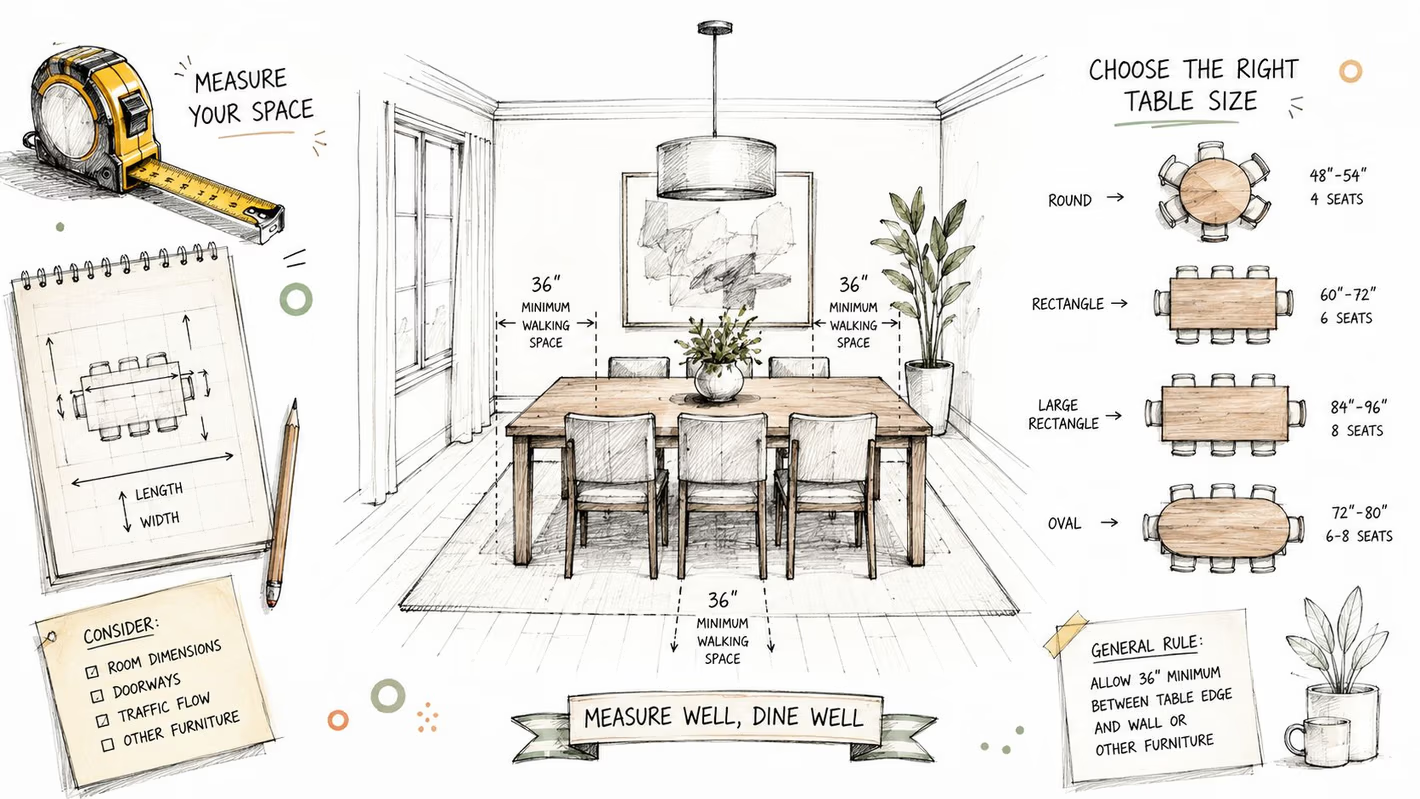
The exact seating capacity depends on the final dimensions, chair width, leg placement, and whether extensions are used. Rather than guessing from a catalog label, households should bring their measurements and preferred seating routine to the showroom.
Shape affects movement
Rectangular tables often work well in longer rooms and can align with the room's main axis. Round tables remove sharp corners and can improve conversation, but their footprint should be checked carefully against walkways. Square tables can suit balanced rooms, though they may feel imposing when the surrounding circulation is tight.
The same discipline applies to professional environments. Commercial office projects often use space planning and CAD drawings to translate wall dimensions, furniture footprints, electrical and data locations, HVAC elements, and room labels into a buildable layout, as shown in commercial office space planning guidance.
That matters for conference rooms, break rooms, and hospitality areas. A commercial table must support movement, seating, technology, and service access, not just fill an empty rectangle.
Before visiting a design team, the buyer should bring the measurement sheet, room photographs, an approximate chair count, and a clear answer about extensions. Tanger's dining table size guide can help organize the conversation, but the room's own measurements should make the final decision.
Choosing Wood Species, Finishes, and Shapes That Last
Material choices should reflect how the household uses the table. A busy Logan County family may need a finish that handles regular meals, homework, and quick cleanup. A formal dining room may place greater value on visible grain and a refined appearance. Decide based on daily routines first, then match the style.
Hardwoods usually provide a strong foundation for frequent use. Softer species offer a lighter character but may show marks sooner. Solid wood creates a different ownership experience from veneer or engineered construction. The right choice depends on expectations for appearance, maintenance, and future repair. For a closer look at species and durability, read Tanger's guide to choosing the right hardwood for longevity and style.
Finish decisions shape maintenance
Stain emphasizes the wood's natural character while keeping the grain visible. Painted finishes create a more uniform appearance and can coordinate closely with cabinetry or trim. Specialty finishes may require additional preparation, so judge them from a physical sample rather than a screen image.
View samples in both natural and artificial light at home. Surrounding floors, wall paint, window exposure, and upholstery can make the same color appear warmer, cooler, lighter, or deeper. A sample beside the room's existing finishes gives a more reliable answer than a showroom display.
Smith Brothers of Berne and Flexsteel pieces with a customizable icon allow shoppers to tailor fabrics, finishes, and configurations with trained specialists. That flexibility can help coordinate a dining table with nearby living room furniture without making every piece identical.
Wood movement is part of the design
Furniture-grade lumber still responds to indoor humidity. Industry woodworking guidance commonly targets about 6% to 9% moisture content for interior furniture and warns that assembling wood above roughly 9% can increase the risk of later movement, warping, or twisting as the material equilibrates to its environment. The same guidance notes that tangential movement can exceed radial movement by roughly 2:1 and recommends designing around an intermediate equilibrium close to 8% EMC. Those benchmarks are explained in wood moisture guidance for interior furniture.
Experienced makers work with that movement. They condition lumber, verify moisture readings, use suitable joinery, and design wide tabletops with room for seasonal change.
Match the table to the home
- Farmhouse warmth: Choose visible grain, substantial proportions, and traditional details such as trestle or breadboard-style character.
- Transitional rooms: Use a restrained base, medium wood tone, and finish that connects older and newer furnishings.
- Clean contemporary spaces: A simple silhouette, slim edge, and consistent finish can keep the room feeling open.
- Active family dining: Prioritize easy cleaning and construction suited to frequent use.
The strongest selection still looks right on an ordinary Tuesday, not only on delivery day. Tanger's specialists can place samples beside existing colors and help the customer make a clear decision without turning the process into a sales contest.
How the Tanger Custom Order Process Works From Start to Finish
A custom order should feel like a series of clear approvals, not a leap of faith. The process begins with a showroom visit, where customers can handle finish samples, review configurable pieces, discuss dimensions, and explain how the table will be used.
The design team then turns those preferences into a workable configuration. Customers may submit a digital request form or continue the conversation in person, depending on how much guidance the project needs.
The approval points matter
Before the build receives final approval, the buyer should confirm:
- Overall dimensions: The written size must match the measurement sheet and intended seating arrangement.
- Shape and base: Leg placement affects both appearance and chair clearance.
- Extension details: The order should state whether the table includes extensions and how the expanded arrangement will be used.
- Wood and finish: The selected species and finish should be tied to an approved sample.
- Grain orientation: Wide surfaces need deliberate planning, especially when the direction of the grain affects the visual result.
- Delivery access: Doorways, stairways, elevators, and room placement should be discussed before fabrication ends.
A single missed measurement or color mismatch can create the type of post-sale disappointment buyers want to avoid. The approval stage is the right time to ask direct questions, request clarification, and slow down before signing off.
Lead times require honest planning
Custom furniture is measured in weeks, not days. One industry source places typical custom furniture lead times at about 6 to 10 weeks, while other projects may run closer to 8 to 18 weeks depending on complexity, materials, and production location. The timeline includes design approval, material procurement, fabrication, finishing, curing, quality checks, and delivery scheduling, as detailed in custom furniture lead-time guidance.
| Project Type | Typical Lead Time | What Affects the Timeline |
|---|---|---|
| Standard custom table | 6 to 10 weeks | Material availability, approvals, fabrication, finishing, delivery |
| More complex custom project | 8 to 18 weeks | Special materials, detailed construction, finish work, curing, scheduling |
Families planning around holidays or major gatherings should build in scheduling room rather than ordering at the last possible moment. Customers can use Tanger's custom order starting guide to prepare questions before meeting the design staff.
Flexible financing options are available for any project, and the process remains consultative. The buyer should understand the selections, timeline, and payment arrangement before approving the order.
Delivery, Care, and Loving Your Table for Years to Come
The final stage should feel like a continuation of the design service, not a box left at the curb. Professional white-glove delivery commonly includes placement inside the home, assembly in the room of choice, unpacking, and removal of packaging materials, turning delivery into a setup service rather than a drop-off. That kind of handling matters for a large, heavy tabletop and for floors, walls, and doorways.
Local delivery also gives Bellefontaine and Logan County customers a practical point of contact. Tanger's Furniture offers local delivery, in-house service requests, and a family-owned approach that keeps support personal after the table is installed.
Protect the finish from ordinary wear
Wood furniture benefits from simple habits:
- Clean spills promptly: Use a soft cloth and avoid leaving moisture on the surface.
- Use protection under hot or damp items: Trivets, coasters, and placemats reduce unnecessary stress on the finish.
- Avoid harsh cleaners: Follow the care guidance supplied with the table instead of experimenting with household chemicals.
- Manage seasonal conditions: Ohio's humid summers and dry winters can affect wood, so stable indoor conditions and sensible placement help.
- Lift instead of dragging: Moving chairs and décor carefully protects both the table and the floor.
For additional guidance before delivery, families can review this resource on scratch-free hardwood floor advice. The same care mindset applies to dining furniture, flooring, and the paths between them.
Service keeps ownership simple
A custom table is a long-term household piece, so support should remain available after setup. An online Service Request portal gives customers a direct way to report an issue or request maintenance instead of searching for an old receipt or repeating the entire story.
The Love Your Home Club adds another practical connection, with exclusive offers and expert tips delivered to members' inboxes. The Low Price Promise and flexible financing options also help families evaluate the complete purchase, including quality, delivery, service, and long-term usefulness.
For professional buyers, the same local support extends to commercial office projects that need durable conference, break-room, or waiting-area furniture. For households, the broader showroom can also support related needs, from custom sofas in Ohio to a Speed Queen laundry purchase or a dependable mattress store in Logan County.
Visit the Bellefontaine showroom to see custom options in person or browse collections online to start the journey toward a dining table that fits the room and the household. Have a specific design question? Contact the design staff today, or join the Love Your Home Club for expert tips delivered to the inbox, and explore Tanger's Furniture for custom dining tables, local delivery, service, financing, and more.