Home Design Services Near Me: A Bellefontaine Guide


A lot of local homeowners start the same way. They stand in the living room, look at the sofa that never quite fit, the rug that felt right in the store, and the corner that still looks unfinished, then type home design services near me into a search bar. They usually aren't asking for a mansion makeover. They're asking for help making good decisions.
That confusion is normal in Logan County. One room might need a better layout. Another might need a custom sectional that fits the wall. A business owner might need a front office that feels organized and welcoming. In each case, the core need isn't fancy language or a dramatic reveal. It's practical guidance from someone who can help turn a rough idea into a room that works.
For a long-standing local furniture store with roots in Bellefontaine since 1946 and design experience dating to 1964, home design isn't a luxury add-on. It's a partnership. The process can be simple, approachable, and tied directly to the furniture and layout choices a household or business already needs to make.
Table of Contents
- From Vision to Reality Your Home Design Journey
- What Do Home Design Services Actually Include
- The Tangers Approach Customization and Professional Planning
- How to Choose a Local Design Partner in Logan County
- Understanding Pricing and Making Your Project Affordable
- Getting Started Your Next Steps to Love Your Home
From Vision to Reality Your Home Design Journey
A common local scenario looks like this. A family buys a home, keeps the old sofa because it still has life in it, adds a chair later, then tries a new lamp and rug when the room still feels off. Months pass, and the space is full of decent pieces that don't work together.
That's where home design services can help. Not as a high-pressure luxury. As a way to sort out what stays, what changes, and what the room needs before more money gets spent.

A design service is often just guided decision-making
Many people hear "designer" and think of a full renovation with endless meetings. In real life, the first step is often much simpler.
It might be:
- Room layout help so traffic flows better
- Furniture sizing advice so a sectional doesn't overpower the room
- Finish guidance so wood tones and fabrics feel connected
- A shopping plan so purchases happen in the right order
For new construction or major remodeling, it also helps to understand how the broader building process works. A helpful overview like the CJMC Build custom home process gives homeowners a good picture of how design decisions connect to the overall project timeline.
Practical rule: most design frustration starts before the buying stage. It starts when a room has no clear plan.
A local store-based design partnership tends to feel less intimidating because the conversation stays grounded. People can bring photos, measurements, and a list of what isn't working. They can also learn more about the first step through this guide on how to start the interior design process for a room.
What a clearer path looks like
When homeowners understand the process, the project usually gets easier fast. Instead of asking, "What color sofa should go here?" they start asking better questions.
Questions like:
- How is the room used every day
- What size pieces fit
- Which items need to last for years
- What can be customized instead of settled for
That shift is the heart of good home design. It moves a household from guessing to planning, and from planning to a home they can enjoy.
What Do Home Design Services Actually Include
The phrase sounds broad because it is broad. Some people only need help choosing the right scale for a sofa and chairs. Others need space planning, finish selections, and a furniture roadmap for several rooms. Business owners may need a layout that supports staff, storage, and customer flow.
The easiest way to understand home design services is to think of them in levels.
The basic level of help
At the entry level, design help is focused and practical. It usually includes advice that prevents common mistakes before furniture is ordered.
Examples include:
- Space planning: deciding where major pieces should go so the room feels balanced
- Furniture selection: narrowing choices by size, function, and style
- Color and material coordination: connecting upholstery, case goods, flooring, and paint
- Single-room problem solving: fixing one stubborn space instead of redesigning the entire house
For many Bellefontaine furniture shoppers, this is enough. They don't need a full-service design firm. They need a smart second set of eyes.
When technical planning matters
Some projects need more than conversation and swatches. They need exact dimensions, scaled layouts, and visual planning tools.
That includes:
- Floor plans for rooms with awkward shapes
- Detailed layouts for custom sofas Ohio homeowners want to fit correctly
- 3D renderings or CAD drawings for more complex spaces
- Office planning for workstations, conference areas, and reception spaces
One internal resource that helps explain this step is what space planning means in practice.
In more technical projects, CAD has become a standard tool. Verified data states that 78% of professional design firms now utilize CAD for space planning, resulting in a 30% reduction in project timeline compared to manual sketching methods. That fact matters because it shows why precise planning tools are valuable when a room has little margin for error, especially with custom pieces and workplace layouts.
A homeowner can think of CAD as the difference between "that should fit" and "this is planned to fit."
Good planning makes later buying decisions calmer. The measurements, layout, and sightlines are worked out before a family commits to upholstery, tables, or storage pieces.
Residential and commercial needs aren't the same
A home project usually centers on comfort, traffic flow, and personal taste. A commercial project leans harder on durability, efficiency, and how the room supports daily tasks.
A simple comparison helps:
| Setting | Common focus |
|---|---|
| Living room | seating, scale, comfort, conversation flow |
| Bedroom | bed size, storage, calm finishes, mattress support |
| Laundry area | durable appliances, utility layout, ease of use |
| Office or waiting area | workstation planning, guest seating, circulation |
That wider view matters for a local business that serves both homes and workplaces. Someone shopping for a custom sectional may also be furnishing a clinic waiting room, replacing breakroom seating, or planning a small office update. The planning method changes, but the need for guidance stays the same.
The Tangers Approach Customization and Professional Planning
A lot of people hear "home design services" and picture a costly, stand-alone design firm with a long process before a single piece is chosen. In a local furniture store setting, the partnership works differently. Planning and furnishing happen side by side, so a family can solve the room and choose the furniture in one coordinated process.
That practical model matters. It keeps decisions grounded in real life, real room sizes, and real budgets.
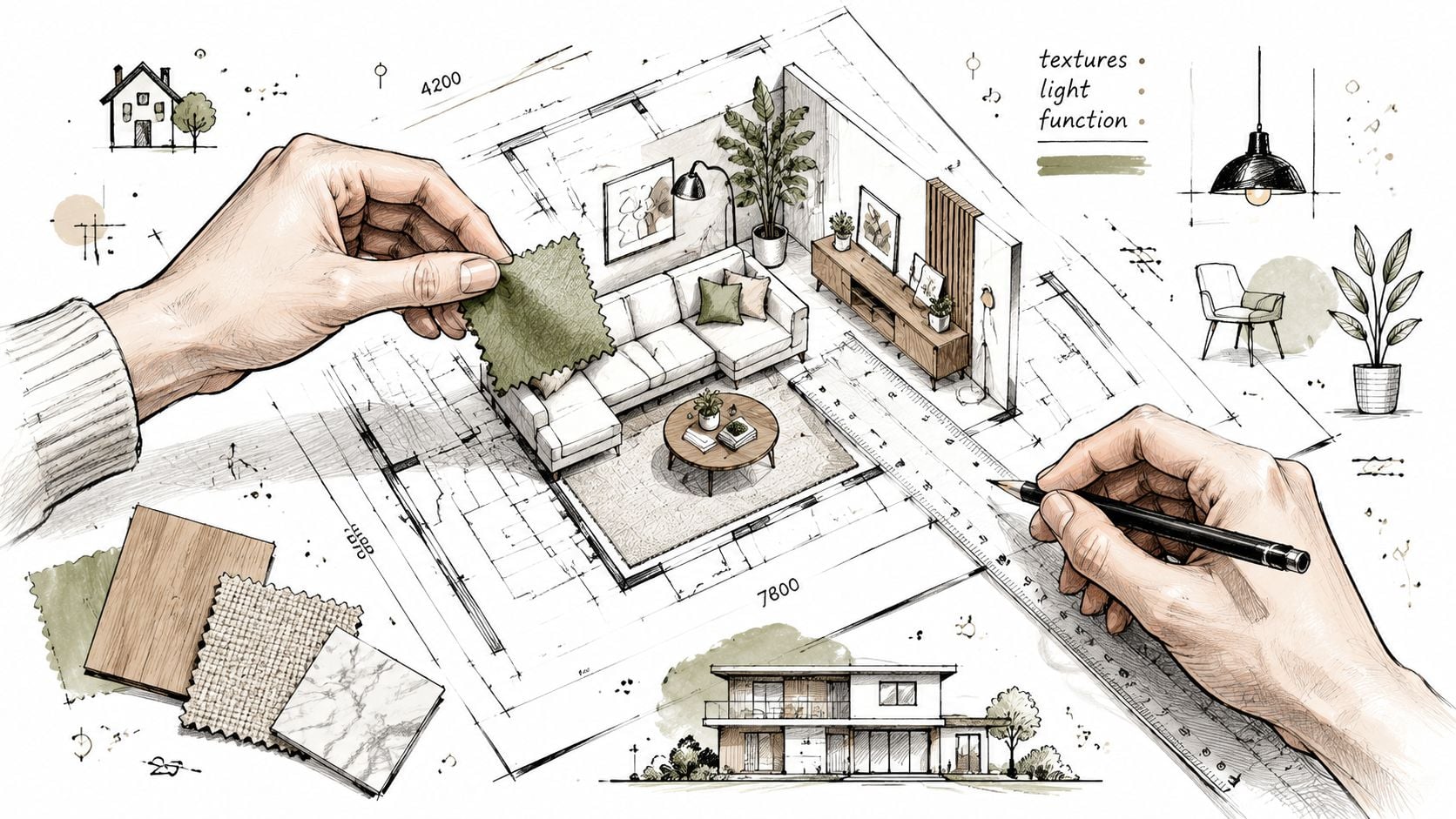
For many households, customization is the point where a room starts to feel personal. A sofa choice goes well beyond color. It includes the length that fits the wall, the cushion feel that suits daily use, the arm style that matches the room, and the fabric that can handle kids, guests, or pets without becoming a constant worry.
Customization starts with fit
The easiest way to understand custom furniture is to picture building a meal in the right order. You do not start with garnish. You start with the main dish, then choose the sides, then make small adjustments. Furniture planning works much the same way.
A strong custom order process usually follows this sequence:
- Configuration first: sectional, sofa, loveseat, chair, sleeper, or another room-friendly layout
- Function next: heavy family use, formal seating, reclining comfort, or everyday lounging
- Materials after that: fabric, leather, wood finish, leg style, and trim details
- Final check: measurements, traffic flow, and how the piece works with the rest of the room
That order helps shoppers avoid a common mistake. They fall in love with a fabric or silhouette before confirming whether the piece fits the space and the way they live. A store-based design team can slow that process down in a helpful way. Tanger's custom furniture process made simple shows how those decisions come together before anyone places an order.
Trusted manufacturing partners known for configurable options support this kind of planning because one size rarely fits every home. The goal is not to make a room look fancy on paper. The goal is to help a piece feel right once it is in daily use.
A room feels finished when scale, comfort, and materials work together.
Planning before ordering also reduces expensive frustration. If a sectional blocks a walkway or a chair looks undersized next to the sofa, the problem is usually not style. It is fit. Professional planning helps catch those issues before a family commits to a size, shape, or layout that will be hard to live with later.
Planning matters in homes and offices
The same partnership model helps on the commercial side, too. A business owner may need reception seating, desks, storage, conference furniture, and a layout that supports how staff and visitors move through the space. In that setting, a local store with planning support can serve as both guide and supplier, which keeps the process more practical than hiring one party to plan and another to furnish.
Tanger's Furniture can help with residential furnishing guidance and commercial office planning tied to furniture decisions. That means the conversation stays connected to what will be ordered, how it will fit, and how the space will function day to day.
For local shoppers, that creates a useful kind of continuity under one roof. Someone may come in to update a living room, ask questions about a guest bedroom, and later return for office seating or utility-area planning. The value is simple. People get a familiar partner who understands their spaces, their priorities, and the difference between a beautiful idea and a room that works.
How to Choose a Local Design Partner in Logan County
Searching for home design services near me brings up many kinds of providers. Some focus on decorating only. Some handle construction-level planning. Some mainly sell products. The challenge is figuring out who will help, who will communicate clearly, and who will still be available after delivery day.
That choice matters because design is a real profession, not a casual side service. In the United States, interior designers had a median annual wage of $63,490 in May 2024, and employment is projected to grow 3% from 2024 to 2034, with about 7,800 openings per year on average, according to the U.S. Bureau of Labor Statistics interior designer profile. That tells shoppers something useful. The field is established, and experience has value.
Questions worth asking
A homeowner or business owner doesn't need design training to evaluate a provider. A short checklist goes a long way.
- Ask how they start: do they begin with measurements, photos, and room use, or jump straight to product suggestions?
- Ask what level of help they offer: single-room guidance is different from full planning.
- Ask who handles delivery and follow-up: a beautiful plan doesn't help much if problems are handed off elsewhere.
- Ask whether they can support both standard and custom orders: that matters when off-the-floor pieces don't fit the room.
A related local resource is this page on what a furniture store with design services can offer.
Why local follow-through matters
Local service isn't just about convenience. It's about accountability.
If a chair arrives and the scale feels wrong, a nearby team can usually respond more directly. If a custom order needs a service request later, the customer knows where to start. If delivery involves stairs, narrow doorways, or timing around family schedules, local staff tend to understand the practical details better than a distant order system.
For Logan County households, that often means looking beyond style boards and asking about support after the sale.
A strong local design partner should be able to explain:
| What to check | Why it matters |
|---|---|
| Process | keeps the project organized |
| Customization options | helps the room fit real needs |
| Delivery setup | reduces stress on installation day |
| Service requests | protects the purchase over time |
The best local design help usually feels calm, clear, and easy to ask questions of. If the process feels rushed early, it often stays rushed later.
Understanding Pricing and Making Your Project Affordable
Cost is usually the first unspoken question. It also causes the most confusion because "design services" can mean a brief consultation, a detailed floor plan, or a larger managed project. Without clear scope, shoppers can't tell what they're paying for.
That lack of transparency is common in the market. Many providers describe their process well but leave pricing less defined, which makes it harder for families to compare a small one-room need with a more involved service model.
Common ways design help is priced
Most local shoppers will run into three broad pricing approaches.
- Hourly help: useful when a household needs advice, revisions, or a smaller planning session
- Flat-fee planning: often tied to a room, a layout package, or a defined deliverable
- Bundled support with furniture purchases: practical for buyers who want guidance and furnishings to move together
Verified pricing data helps explain the range. One U.S. cost guide reports that homeowners spend about $760 to $11,418 on interior designing services, with hourly rates often ranging from $50 to $200, according to this interior design cost guide.
Those numbers don't mean every project should cost that much. They show how wide the category is. A simple room refresh sits in a very different place than full-room planning with technical drawings and lots of selections.
How families keep the project manageable
The smartest budget move is usually matching the service to the actual problem.
A family might only need:
- A room plan before buying anything
- Help choosing a better-fitting sofa and accent chairs
- A staged approach, where the major pieces come first and smaller items later
Another household may prefer a bundled model that ties planning to furniture decisions so fewer dollars go toward stand-alone consulting time.
For budget-conscious shoppers, affordability also depends on the payment path. Flexible payment options can help households spread out a larger purchase instead of waiting until every item can be paid for at once. The store's interior design consultation cost page is one helpful place to understand how planning costs can relate to the broader project.
A value-focused local store should also be able to explain two practical protections clearly:
- The Low Price Promise: reassurance that shoppers are receiving strong value for the pieces they choose
- Financing options: flexible payments that make a larger room project more manageable
That combination matters because a family shouldn't have to choose between getting useful guidance and staying on budget.
Getting Started Your Next Steps to Love Your Home
A dramatic reinvention isn't always necessary. What's needed is a better first step. When the room has a plan, furniture shopping gets easier, custom options make more sense, and the final result usually feels calmer and more pulled together.
That practical partnership model is what makes local home design help appealing. Instead of hiring one party to advise, another to sell furniture, and someone else to deliver and set up, a household can often simplify the entire process by working with one coordinated team.
A simple way to begin
The easiest starting point is usually a short list.
- Measure the room
- Take a few photos
- Write down what isn't working
- Decide what matters most, such as seating more people, improving storage, or updating style
That gives the design conversation something concrete to work from. It also helps shoppers separate wants from needs before they invest in larger pieces.
What happens after the plan is made
A good local process doesn't stop at selecting furniture. It continues through ordering, delivery, setup, and service if something needs attention later.
That follow-through matters in everyday life. The heavy lifting is handled. The setup is handled. If a question comes up after delivery, the customer isn't left trying to solve it alone.
For families updating a living room, replacing a bedroom set, considering a mattress store Logan County purchase, or planning utility spaces around Speed Queen laundry, that kind of support makes the project feel doable instead of overwhelming.
The larger message is simple. Home design services near me don't have to mean a high-end, all-or-nothing commitment. They can mean accessible planning, customization, dependable delivery, and flexible financing that help a household or business move from uncertainty to a space that feels right.
Visit the showroom in Bellefontaine to see custom options in person or browse the collections online to start the journey with Tanger's Furniture. For a specific design question, contact the design staff or join the Love Your Home Club for expert tips, exclusive offers, and helpful ideas delivered with the same no-pressure approach customers expect in the store.