5 Piece Sectional Guide: Plan Your Perfect Living Room


A living room usually tells the truth fast. If the family ends up dragging in dining chairs for movie night, if guests stand because the sofa fills up too quickly, or if one corner of the room feels awkward no matter how often you move things around, the seating plan isn’t doing its job.
That’s where a 5 piece sectional earns its place. Not because it’s bigger for the sake of being bigger, but because it works more like a furniture system than a single sofa. For many homes, and for some office lounges and waiting areas too, that flexibility is the difference between a room that looks fine and a room that lives well.
Welcome to the World of 5-Piece Sectionals
A family buys a sofa for the room they have today. A smart buyer chooses a 5 piece sectional for the way life tends to change over the next ten or fifteen years.
That distinction matters. A 5 piece sectional is not just one large seat. It is a group of coordinated pieces that work together as a system. Depending on the model, those components may include left-arm and right-arm seats, armless chairs, a corner unit, a chaise, or a recliner. In a well-made design, those parts give you options without making the room feel pieced together.
In the store, I often explain that this type of sectional solves two problems at once. It brings more people into one comfortable seating area, and it gives you more control over how the room functions. That is useful in a busy family room, but it also carries over nicely to office lounges, reception areas, and other shared spaces where flexibility matters.
Why people choose them over a sofa and loveseat
A sofa and loveseat set can work well in the right room. It is still a good choice for formal spaces or smaller footprints. But a 5 piece sectional tends to do a better job when the room needs to serve more than one purpose.
It often helps because it can:
- Make better use of corners instead of leaving them awkward or empty
- Create one connected seating zone for conversation, TV viewing, or casual gathering
- Adjust over time if you move, remodel, or repurpose the room
- Support everyday living with a layout that feels easy to use, not overly formal
The long-term value is what many shoppers miss at first. With the right frame, cushion build, and fabric, a sectional like this can be reworked, recovered, and lived with for years in a way a fixed sofa often cannot. That is one reason quality modular programs from established manufacturers, including brands like Flexsteel, continue to earn trust. They are built to handle real use, not just look good on a showroom floor.
A good sectional should give you room to adapt. That is what makes it furniture you live with, not furniture you work around.
If you’re early in the process, this practical guide on what to know before buying a sectional is a smart next step.
Will a 5-Piece Sectional Fit Your Space and Lifestyle
A 5 piece sectional usually looks manageable on a sales floor. Then it arrives home, and suddenly the chaise clips the walkway, the corner blocks a lamp, or the room feels tighter than it did on paper. Good fit comes down to daily use, not just outside dimensions.
Start with the footprint, not the fabric
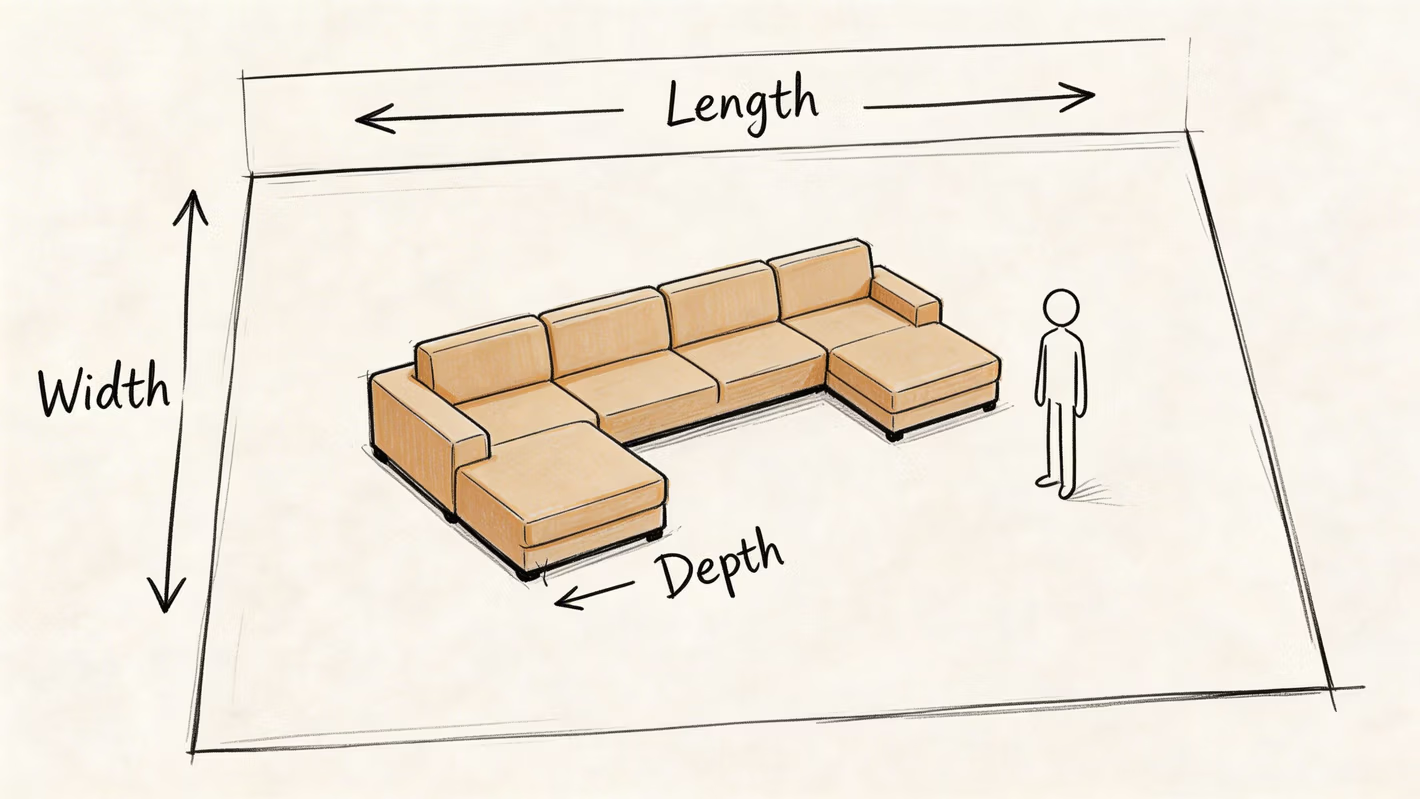
Measure the room first. Then mark the sectional on the floor before you choose a cover, arm, or cushion style.
Painter’s tape works well. Cardboard works too. I also like using moving blankets folded to the size of each seat because they show depth better than a tape outline alone. Once the shape is down, walk your normal paths, sit where the corner would be, and check whether end tables, recliners, and doors still have enough room to function.
Many 5 piece sectionals fall into a broad planning range that works in medium to larger rooms, but key differences come from seat depth, arm thickness, and whether the layout turns with a wedge, chaise, or square corner. Two sectionals with similar outside measurements can live very differently in the same room.
For a more accurate setup, use this room-planning guide on how to measure furniture.
The three fit questions that matter most
A sectional can fit on paper and still be wrong for the room. I tell shoppers to answer three practical questions before they order.
Can people move through the room easily
Traffic flow decides whether the room feels calm or crowded.
Look at how people cross the space now. The main path might run from the front hall to the kitchen, from the stairs to the TV, or from a bedroom hallway to the patio door. If the sectional cuts across that route, everyone will keep squeezing around one corner, and the piece will feel oversized even if the measurements are technically right.
Check these points:
- Walking lanes between doors, openings, and major furniture
- Coffee table clearance for legs, knees, and foot traffic
- Access to outlets, lamps, and side tables
- Sight lines to the TV, fireplace, windows, or conversation area
Will it support how the room gets used now, and later
A 5 piece sectional works best here as a furniture system, not a one-time purchase.
A young family may need one large seating zone today. A few years later, that same room may need better separation between movie watching, homework, and conversation. In an apartment, the sectional may have to tuck neatly into a corner. In a commercial lounge or reception space, the priority may shift to cleaner circulation, easier maintenance, and a layout that looks organized from every angle.
Modular construction gives you options. If you move, remodel, or change the purpose of the room, individual pieces can often be rearranged or replaced instead of starting over with a completely new seating plan. That long-term flexibility is part of the value.
Does the scale match the feel of the room
Measurements tell you whether it fits. Scale tells you whether it belongs.
A low-profile sectional can keep a room open and relaxed. A taller, bulkier model adds support, but it can also crowd a room with low ceilings or limited natural light. Deep seats are great for lounging, though they are not always the best choice for shorter sitters, older family members, or office guests who prefer upright support.
Use the room itself as a guide:
| Room feature | Better sectional direction |
|---|---|
| Low ceilings | Lower profile arms and backs |
| Narrow room | Cleaner shape, less bulk |
| Open-concept space | Layout that helps define one area |
| Busy family room | Deep seating and easier-care upholstery |
Residential and commercial spaces need different answers
At home, comfort usually leads the decision. Families want a sectional that can handle pets, kids, overnight guests, and long evenings in the same room. Soft edges, durable fabrics, and forgiving cushion construction matter more than many people expect.
Commercial spaces ask more from the same basic format. Waiting rooms, model homes, office lounges, and reception areas need a sectional that looks polished, wears evenly, and holds its shape under heavier turnover. In those settings, modular seating helps because it can be planned around entrances, service paths, and cleaning access with fewer compromises.
What tends to cause regret
A few mistakes come up over and over in homes and shared spaces:
- Buying for seat count only instead of room balance and traffic flow
- Ignoring delivery access through doors, stairwells, elevators, and tight turns
- Forgetting nearby pieces such as consoles, ottomans, side tables, and accent chairs
- Choosing extra-deep seating for a room that needs upright, everyday sitting
- Treating the sectional like a fixed sofa instead of planning it as a system you may want to rework later
The right 5 piece sectional should make the room easier to live in now and easier to adapt later. That is the difference between a large sofa and a long-term seating plan.
Designing Your Perfect Layout with Modular Pieces
Saturday night changes shape fast. One week the room needs to seat family for a movie. The next week it needs an open path for guests, a reading corner by the window, or a waiting area that feels polished instead of stiff. A 5 piece sectional works best when you plan it as a furniture system, not a one-time layout.

Know what the pieces do
Modular sectionals get much easier to plan once you know what each piece contributes to the room.
- Left-arm facing piece has the arm on your left as you face the sectional.
- Right-arm facing piece has the arm on your right as you face the sectional.
- Armless chair adds seating width or length without making the whole arrangement feel heavy.
- Corner wedge or corner unit changes direction and helps establish the layout.
- Ottoman or chaise element shifts the sectional from upright sitting toward lounging and flexible foot support.
That mix is what gives a 5 piece sectional its long-term value. You are not stuck with one fixed footprint if your room, business, or daily routine changes.
Match the layout to the job
Good layout planning starts with how the space needs to function on an ordinary day. In a home, that may mean clear sight lines to the TV and enough openness for kids and pets to move through. In a reception area or office lounge, it may mean better traffic flow, easier cleaning access, and seating that still looks orderly by midafternoon.
L-shape for practical daily use
The L-shape earns its popularity. It uses a corner well, keeps one side of the room more open, and usually gives the cleanest traffic path.
It tends to work best for:
- Smaller living rooms where every foot matters
- Open-concept spaces that need one side to stay visually lighter
- Media rooms where several seats need a comfortable view
- Office lounges that need structure without boxing people in
U-shape for conversation and group seating
A U-shape asks more from the room, but it gives more back when the space is wide enough. It creates a stronger seating zone and helps people face one another more naturally.
That matters in large family rooms, shared gathering spaces, model homes, and hospitality-style settings where the furniture needs to encourage conversation instead of sending everyone to the edges of the room.
Split arrangements for rooms that change often
Modular design proves its worth over a standard sectional in scenarios like this. Some 5 piece sets can be separated for short-term needs or for a full room reset later.
An armless chair can move to a corner with a lamp. An ottoman can shift from cocktail table duty to extra seating. In a commercial setting, one section may move to open up a path near an entry or create more personal space in a lounge.
I always tell shoppers to ask one simple question before ordering: will these pieces still be useful if the room gets reassigned? That is a much smarter question than asking only how it will look on delivery day.
Reconfiguring without the wobble
Flexibility has a trade-off. Some modular sectionals rework beautifully. Others feel loose once you break the original setup.
The difference usually comes down to weight, connector design, floor surface, and whether each module was built to stand confidently on its own. Lightweight pieces can look fine in a showroom photo and still shift on a rug at home. Commercial spaces bring a second issue. Frequent use exposes weak connections faster.
What usually works well:
- Substantial modules that sit firmly and do not skate across the floor
- Layouts with a clear anchor piece, often a corner unit
- Connectors that hold alignment when people sit down and stand up repeatedly
- A floor plan worked out in advance so the sectional supports more than one realistic arrangement
What causes frustration:
- Assuming every module is interchangeable
- Breaking apart pieces that were meant to stay together
- Ignoring rugs, uneven floors, or wide plank flooring gaps
- Choosing from a photo only, without asking how the sectional behaves after rearranging
If you want visual examples before you commit, this gallery of sectional sofa design ideas is a helpful place to compare arrangements that look settled and intentional.
Plan the room around real use
A strong modular layout leaves space for the rest of the room to do its job. Side tables need reachable landing spots. Walkways need to stay open. In commercial rooms, staff still need room to clean around the sectional and guests need easy entry and exit.
Fabric also affects layout decisions more than people expect. Homes with kids and pets often need upholstery that forgives daily wear in the most-used seat positions. In quieter rooms, texture and hand can carry more weight. For anyone comparing natural fiber options while planning custom pieces, The Ultimate Guide to Buying Cotton Fabric by the Yard offers a useful overview of cotton fabric characteristics.
The best 5 piece sectional layouts age well because they can be adjusted instead of replaced. This is a significant advantage of buying a modular system from the start.
Choosing Quality Construction and Custom Fabrics
A 5 piece sectional earns its keep after the honeymoon period. Six months in, you find out whether the seats still hold their shape, whether the corners stay square, and whether the fabric still looks settled instead of rumpled. That matters even more with modular furniture, because each piece has to work as a stand-alone unit and as part of a larger system.

What to look for under the upholstery
The frame, support, and cushion core decide how a sectional ages. A showroom floor can hide a lot. Good tailoring and soft top cushions may feel inviting at first sit, but long-term comfort usually comes from the structure underneath.
A few details are worth checking before you order:
- Reinforced hardwood or engineered frames that feel steady and well-joined
- Corner blocking or added joint support in high-stress areas
- High-resiliency foam or well-built cushion cores that recover their shape after use
- Support systems that spread weight evenly, such as sinuous wire or platform-style construction
- Fully upholstered sides and backs on pieces that may be exposed after future rearranging
In a family-owned store, we see the same pattern year after year. The sectionals that hold up best are usually the ones built a little heavier, with cleaner tailoring and fewer shortcuts where the customer cannot see them.
Why build quality matters more with a modular system
A modular sectional has more connection points, more edges, and more opportunities for wear than a fixed sofa. That flexibility is a real advantage, but it asks more from the construction.
If one unit settles faster than the others, you feel it. If connectors loosen, the layout stops feeling intentional. If the fabric is delicate in a room that gets hard daily use, the weak spot shows up early at the most-used seat, the corner, or the outside arm. For homes that grow and change, and for waiting rooms, offices, and lounges that get steady traffic, a 5 piece sectional should be chosen as a long-term furniture system, not a one-season style purchase.
That is one reason better-made lines stay in the conversation. Brands such as Flexsteel and Smith Brothers of Berne tend to appeal to people who care about repeatable comfort, serviceable construction, and options that can still make sense years from now.
Fabric choice shapes daily ownership
The fabric can make a well-built sectional easy to live with, or tiring to own.
Start with the room’s real conditions. Kids sprawl across seats differently than adults in a formal sitting room. Pets test weave, color, and cleanability fast. In commercial spaces, the fabric has to keep its appearance under frequent use and routine cleaning, while still looking appropriate for the business.
Here is a practical way to match fabric to use:
| Room type | Better fabric direction |
|---|---|
| Family room | Performance-minded, easier-care upholstery |
| Pet-friendly home | Tighter weave, less snag-prone surface |
| Formal sitting area | More texture, pattern, or refined hand |
| Office lounge | Durable fabric with a polished appearance |
Natural fibers still have a place, especially when comfort and hand matter most, but they need to be chosen with open eyes. Cotton can feel inviting and breathable, yet the blend, weave, and finish make a big difference in wear. If you’re comparing natural fibers and blends, The Ultimate Guide to Buying Cotton Fabric by the Yard gives a helpful foundation on how cotton behaves, what to look for, and why construction matters as much as appearance.
For shoppers sorting through swatches and wondering what will work in daily life, this guide on how to choose upholstery fabric is a practical next read.
Custom works best when it solves real problems
Custom does not have to mean bold. In many homes, the smartest custom choice is the quiet one.
A slightly tighter weave may save you years of frustration with pet hair. A firmer seat may fit the way your household sits and gets up. A fully finished end piece may let the sectional move to a new house or a reworked office without looking incomplete. Those are the decisions that make a 5 piece sectional feel less like a single purchase and more like a system you can keep adapting.
Our Simple Custom Order and White-Glove Delivery
A custom 5 piece sectional order usually starts the same way. Someone walks in with room photos, a few rough measurements, and one problem they have been living around for too long. The doorway is tight. The old sofa blocks the traffic path. The office lounge needs to look polished on Monday and still handle daily use by Friday.
That is the right place to begin, because a 5 piece sectional works best as a system, not a single sofa. The order process should help you plan for the room you have now and the changes that may come later, whether that means a move, a remodel, or a new use for the space.
What a clear custom process should look like
Good custom ordering is straightforward when the steps are handled in the right order.
Start with the room
Measure the wall lengths, note windows and vents, and mark the traffic paths people use. Delivery access matters too. Stair turns, elevators, narrow halls, and entry doors can change which pieces make sense.Build the layout piece by piece
Modular design earns its keep here. You can set up a corner arrangement for family use, create a cleaner line for a reception area, or choose end pieces that let the sectional stand on its own if the layout changes later.Dial in comfort and function
Seat depth, back height, arm style, and cushion feel affect daily use more than many shoppers expect. A room used for evening lounging needs something different than a waiting area or a formal sitting room.Choose fabric with the setting in mind
Homes with pets, busy family rooms, and commercial spaces all ask different things of upholstery. If long-term maintenance is part of the conversation, it helps to know what professional upholstery cleaning can and cannot realistically restore.Review the whole plan before anything is ordered
This checkpoint saves headaches. Confirm the orientation, finished sides, fabric selection, scale, and access into the home or building before the paperwork is finalized.
I have found that the smoothest orders happen when the conversation stays practical. A beautiful sectional that cannot clear the stair landing or adapt to the next space is not a smart custom choice.
White-glove delivery should finish the job properly
Delivery is part of the purchase, especially with modular furniture.
A good team does more than bring in boxes. They carry each piece in carefully, place the sectional according to the plan, connect the modules correctly, check that everything sits level, and leave the room ready to use. That matters in homes, and it matters just as much in offices, lounges, and other shared spaces where a poorly set piece gets stressed faster.
If you want a clearer picture of what that support includes, our local furniture delivery service explains the practical details.
Value shows up over time
The main question is not just what the sectional costs on order day. It is whether the plan reduces compromise for the next several years.
A well-ordered 5 piece sectional can move from one room to another, handle changes in layout, and keep working as your needs shift. That is why local guidance, flexible ordering, and careful setup matter. They help you choose a sectional system that fits now and still makes sense later.
Caring for Your Sectional for a Lifetime of Comfort
A lot of people buy a sectional as if the job ends on delivery day. It doesn’t. A 5 piece sectional is a large, hardworking piece of furniture, and the way you care for it affects how it feels and how it looks over time.

Durability starts before the first spill
Long-term wear is a concern with modular furniture. Consumer Reports testing indicated that some modular 5-piece sectionals experienced frame or joint failures, which is why construction quality and stronger upholstery choices matter so much in the buying stage.
That number doesn’t mean every modular sectional is risky. It means you shouldn’t assume all sectionals age the same way. Better-built frames, stronger joints, and more durable fabrics give you a better starting point.
The maintenance habits that help
You don’t need an elaborate routine. You need a consistent one.
- Rotate and fluff cushions so the same seat doesn’t take all the wear.
- Clean spills quickly according to the fabric’s care guidance.
- Check seams and corners now and then, especially in the most-used spots.
- Keep pieces level so one module isn’t carrying stress awkwardly.
- Use removable covers wisely if your sectional offers them.
If your home includes washable covers or fabric components, a dependable laundry setup helps. That’s one place Speed Queen laundry earns its reputation in busy households. It’s not a sectional feature, of course, but it can make fabric care much easier when removable covers are part of the plan.
Know when routine care isn’t enough
Some fabrics need deeper attention than a household spot-clean can provide. For readers comparing professional methods, this overview of upholstery cleaning gives a useful look at what deeper cleaning services typically handle.
At the same time, regular service support matters just as much as cleaning. If a cushion settles unevenly, a seam raises concern, or a module needs adjustment, having access to an in-house service request process makes ownership much less stressful.
That kind of aftercare is one of the clearest differences between a short-term furniture transaction and a long-term home decision. The same is true across the store, whether someone is shopping for a sectional, comparing custom sofas Ohio families can live with for years, or even visiting a mattress store Logan County shoppers trust for long-use essentials.
Start Your Journey to a Home You Love
A 5 piece sectional works best when you think of it as a system. The right one fits the room, supports the way you live, and keeps working when life changes around it. That’s why layout, construction, fabric, delivery, and long-term care all matter.
For some households, the best answer is a simple L-shape in a practical fabric. For others, it’s a more customized modular setup that can adapt over time. In a professional lounge or waiting room, durability and planning may lead the decision. Different rooms ask different things.
What stays the same is the goal. You want seating that helps people gather, relax, and feel at home without constant second-guessing. When a sectional does that well, it stops being just another furniture purchase.
Visit Tanger's Furniture to see custom options in person at the Bellefontaine showroom or browse collections online to start your journey. If you have a specific design question, contact the design staff for guidance, ask about flexible financing and the Low Price Promise, and remember that local delivery and in-house service help with the heavy lifting long after the order is placed. You can also join the Love Your Home Club for exclusive offers and helpful home inspiration delivered to your inbox.