How to Make a Small Living Room Feel Bigger


A small living room rarely feels small for just one reason. Usually it is a mix of a sofa that runs a little too deep, a walkway that pinches near the doorway, a lamp that leaves one corner dim, and a layout that never quite settled into place.
That is common in Bellefontaine and across Logan County, especially in older homes where the living room is not a neat rectangle. Alcoves, offset windows, short walls, radiators, and angled entries all change what will work. Good design starts when you stop forcing a standard furniture plan into a room that was never standard to begin with.
Families have been turning to local furniture advice here since 1946, and our design team has been helping shape rooms since 1964. That history matters because small-space problems are rarely solved by one magic trick. They are solved by careful measuring, scaled furniture, better light, and storage that earns its footprint.
If you are trying to figure out how to make a small living room feel bigger, start with confidence, not guesswork. A tape measure, a sketch, and a realistic look at how you live in the room will take you much farther than chasing random decorating tips.
That 'Boxed In' Feeling? Let's Open Up Your Space
A cramped room can make everyday life feel harder than it should. You notice it when people have to turn sideways to pass the coffee table, when the sofa blocks part of the window, or when the whole room feels heavy even after you tidy up.
The fix is not always “buy smaller furniture.” In many Logan County homes, that move backfires. Tiny pieces can make a room feel disconnected and underplanned, especially when the architecture already has odd corners or broken wall lines.
What works better is getting the basics right first.
Start with the room, not the furniture
Before you browse a single sectional or accent chair, answer three simple questions:
- Where does natural light come in?
- How do people move through the room?
- Which wall needs to stay visually open?
Those answers shape every later decision. They also help you avoid the most common mistake in small rooms, which is filling the room before you understand it.
A first-time homebuyer often feels pressure to “finish” the room fast. Slow down. A small room punishes rushed choices more than a large one does.
Tip: If a room feels boxed in, measure first and shop second. Most expensive layout mistakes happen in the order, not the style.
The goal is comfort with breathing room
A living room should feel settled, not stuffed. That usually means fewer pieces, better scale, and a layout that leaves clear sightlines from the entry to the brightest part of the room.
If you want a simple primer before sketching anything, Tanger’s has a helpful overview of space planning basics that explains how layout decisions affect flow. It is the same mindset designers use before recommending any sofa, table, or storage piece.
Before You Buy a Thing Measure and Map Your Room
Buying for a small room without measuring is how people end up with a sofa that fits the wall but not the doorway, or a chair that technically works but blocks the only easy path across the room.
In a compact space, inches matter. In an older Bellefontaine home with a bump-out, angled corner, or off-center fireplace, they matter even more.
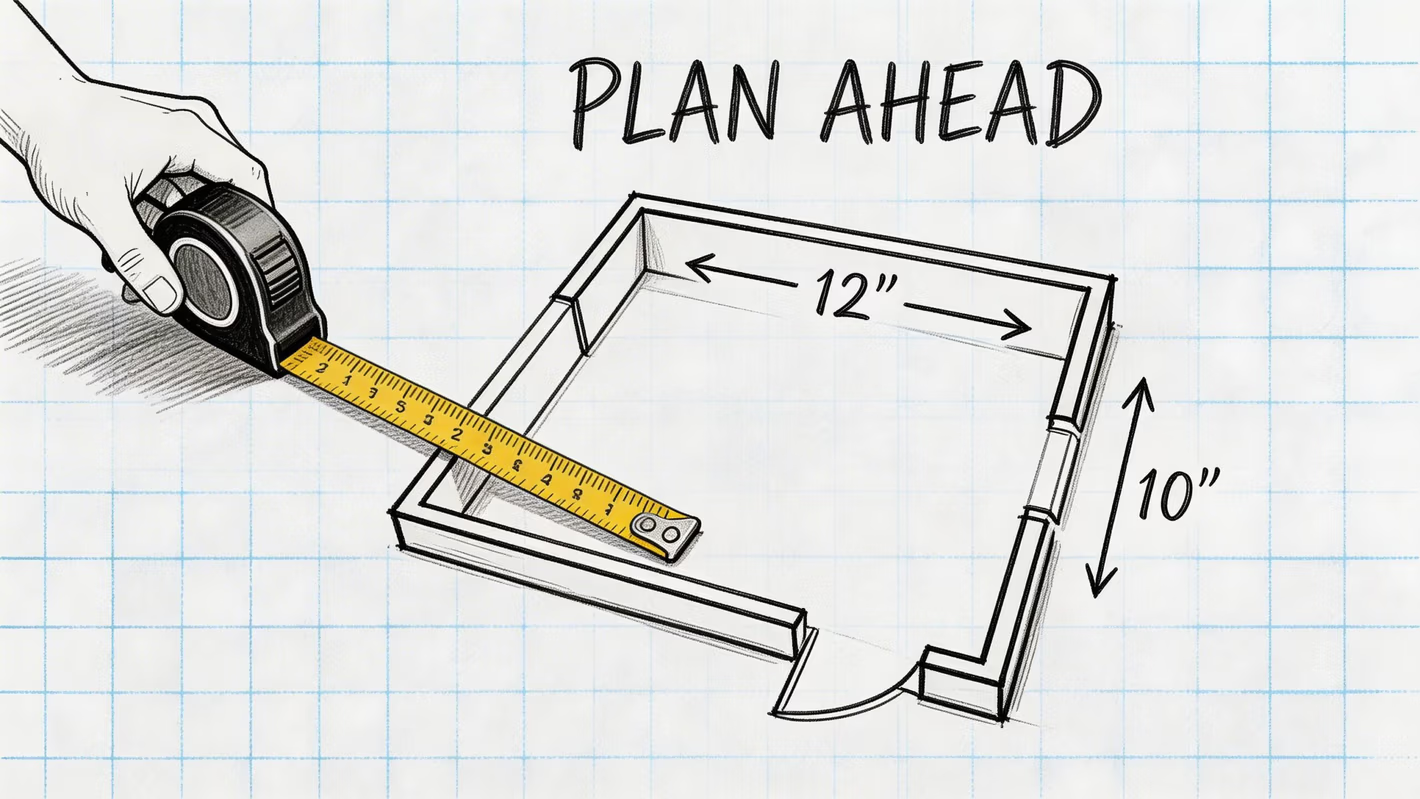
What to measure before you shop
Do not stop at wall length. A room plan needs the details that affect use.
Wall-to-wall dimensions
Measure every wall, even short return walls and odd jogs. If the room is L-shaped, sketch both sections separately and label them.Openings and swing space
Note door widths and which way each door swings. A pretty chair is not useful if a door edge clips it every day.Windows and trim
Measure window width, height, sill height, and how far trim projects. This helps with sofa placement and determines whether a low-back piece belongs under a window.Fixed features
Mark vents, radiators, outlets, floor registers, fireplaces, and built-ins. These are the things people forget, then work around badly later.Pass-through zones
Walk the room the way you really use it. Entry to sofa. Sofa to hallway. Sofa to TV. Mark those paths on paper.
How to sketch a useful floor plan
Your sketch does not need to look polished. It just needs to tell the truth.
Use graph paper or a notes app with a simple rectangle tool. Draw the room shape first, then add openings and fixed features. After that, draw your “no-block” zones, which are the paths and features that must stay clear.
Then list what the room needs to do. A room used for TV at night has different priorities than one that doubles as a reading room, kid zone, or guest sleep spot.
A basic plan should answer:
| Room question | What to mark |
|---|---|
| Where do people enter? | Main doorway and first walking path |
| Where do they sit? | Primary seating wall or focal point |
| What must stay open? | Windows, vents, outlets, traffic lanes |
| What does the room need to hold? | Seating, storage, tables, lamps, media |
Why this matters more in awkward rooms
Custom is often treated like a luxury choice. In small, irregular rooms, it is usually a practical one.
When a room has a clipped corner or an off-center opening, stock pieces can leave dead zones, force bad walkways, or make the room look choppy. A scaled piece can solve that without adding clutter.
For anyone mapping doorways and delivery paths too, this guide on how to measure furniture is worth keeping open while you plan. It helps catch the fit problems that floor plans alone do not show.
Key takeaway: A small room feels larger when every piece has a reason to be there and enough clearance to work.
When to ask for help
Some layouts look easy until you try to furnish them. The common trouble spots are bay windows, narrow rectangles with a fireplace on the long wall, and rooms that connect directly to stair halls or dining areas.
That is where CAD planning and scaled layouts help. It is also where commercial-style thinking applies at home. The same logic used in office space planning works in living rooms too. Traffic, reach, sightlines, and function all matter.
The Right Fit Choosing Furniture That Creates Space
The fastest way to make a small living room feel smaller is to put bulky furniture in every available spot. The second-fastest way is to buy pieces that are too tiny and scattered to create a clear layout.
The right answer sits in the middle. You want furniture with enough presence to anchor the room, but not so much mass that it crowds the walls and blocks the eye.
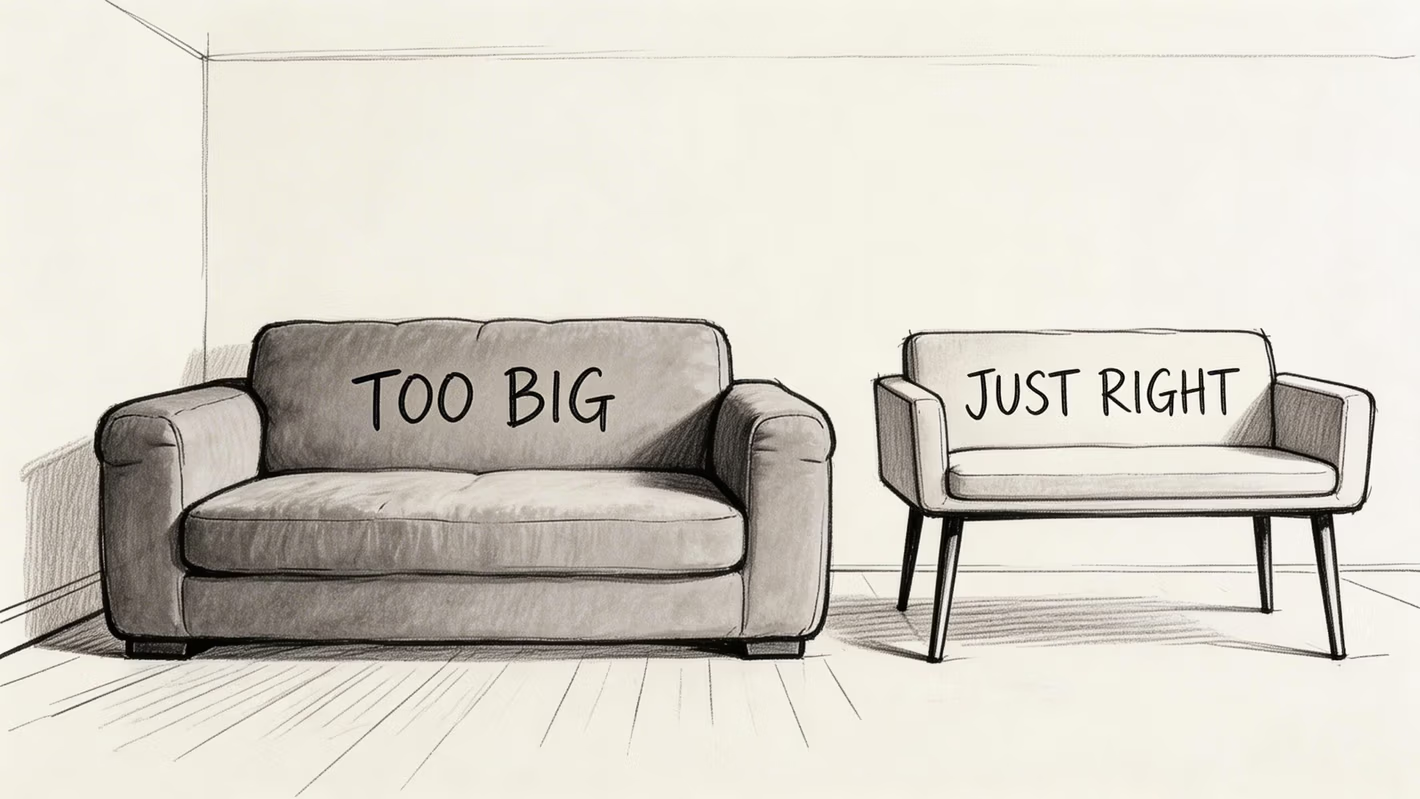
Scale matters more than size labels
A loveseat is not automatically the right answer. A sectional is not automatically wrong. What matters is proportion.
Look closely at these features when comparing pieces:
Arm width
Thick rolled arms take up more visual and physical space than slimmer arms.Back height
Lower profiles usually feel lighter in a compact room, especially under windows.Leg clearance
Pieces with visible legs expose more floor, which helps the room feel less crowded.Seat depth
A shallower seat can improve circulation in a tight room without making the sofa uncomfortable.
Why custom-fit pieces matter in Bellefontaine homes
Awkward rooms separate generic advice from useful advice. A 2025 Houzz report found that 42% of homeowners in small spaces have non-standard living room geometries, where off-the-shelf furniture fails. Custom-scaled pieces from brands like Flexsteel can increase perceived roominess by up to 30%. That is exactly why custom dimensions, arm styles, and sectional configurations matter in older homes.
A room with an offset doorway may need a shorter return on one side of a sectional. A narrow bungalow living room may need a sofa with a cleaner silhouette and more visible floor beneath it. In those cases, standard inventory can be the wrong tool for the room.
What usually works well
Here is the furniture profile I reach for most often in smaller rooms:
Sofas on legs
The exposed floor under a sofa helps the room read lighter. Flexsteel pieces with visible leg clearance are often useful for this reason.One proper anchor piece
A well-scaled sofa does more for the room than a sofa plus two oversized recliners plus a bulky console.Nesting or open-base tables
Heavy block coffee tables can stop movement cold. Open frames keep sightlines moving.Fewer, better-shaped seats
Two compact swivel chairs often work better than one oversized accent chair because they move visually and physically with the room.
Practical rule: If you have to squeeze sideways between the coffee table and sofa every day, the layout is not finished. Something is too deep, too wide, or in the wrong place.
What often fails
Some pieces look good in a showroom and disappoint at home.
- Overstuffed arms and pillow backs make a room feel full before anyone even sits down.
- Matching sets can add too much bulk all at once.
- Tall media units on the wrong wall can visually shorten a room.
- Multiple small tables create stop-and-start clutter.
For more examples of shapes that work in compact rooms, this roundup of furniture for small spaces is a useful starting point.
Making custom feel realistic
Custom does not need to mean out of reach. It can mean choosing the right arm, leg, fabric, or configuration so a room functions the first time. Brands such as Flexsteel and Smith Brothers of Berne are worth looking at when scale matters.
One local option is Tanger’s Furniture, where custom-order pieces, financing options, and a Low Price Promise can make a custom fit more approachable for families trying to solve a real layout problem instead of starting a major renovation.
Let There Be Light Painting and Illuminating for Openness
Some small living rooms are crowded by furniture. Others are crowded by shadow.
A room can have the right layout and still feel tight if light stops at the window, corners go dim by late afternoon, or wall color absorbs more brightness than it returns. Openness is partly physical, but it is also visual.
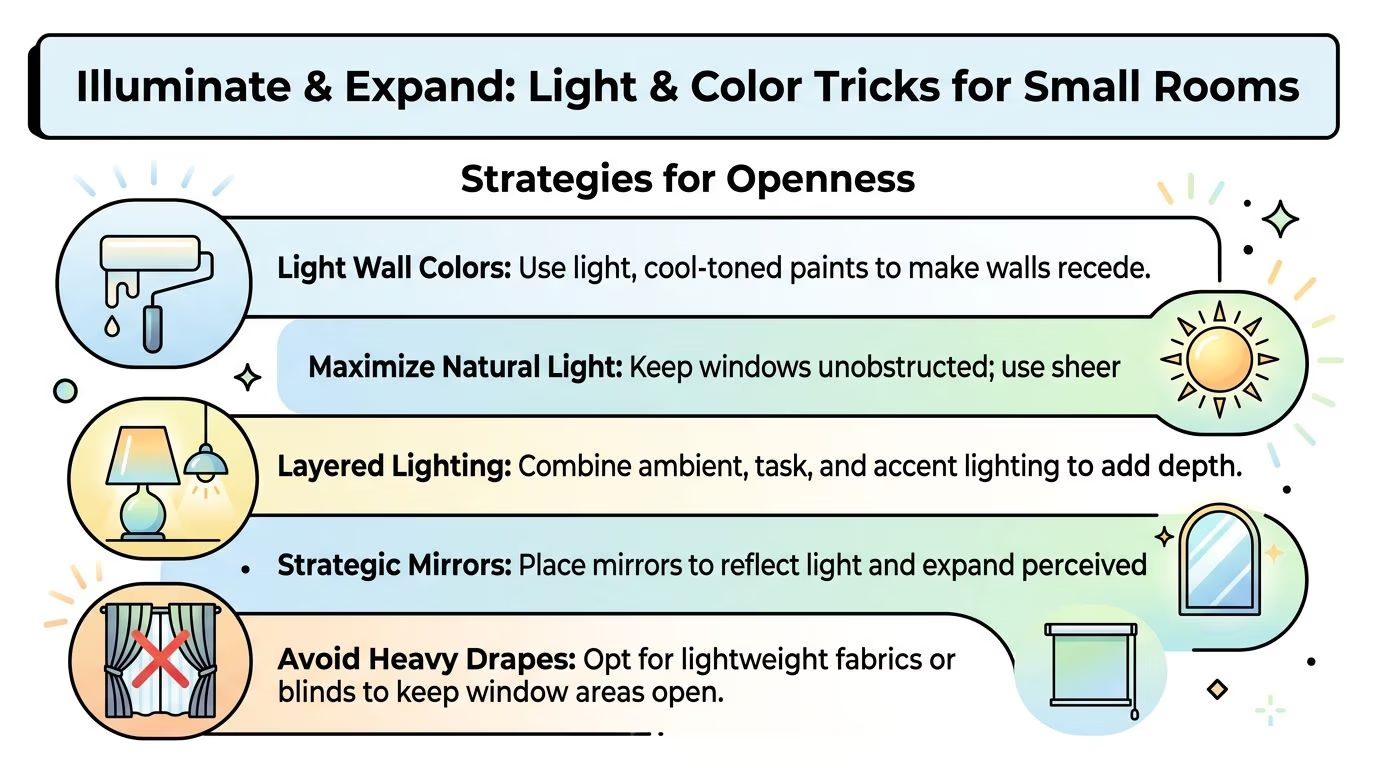
Use paint to support the light you have
Light, cool-toned wall colors usually help walls feel farther away. They also make trim lines cleaner and let daylight travel farther across the room.
That does not mean every small living room has to be stark white. Soft neutrals and pale warm shades can still feel open. The key is avoiding a finish and tone combination that makes the walls feel heavy.
Window treatment matters just as much. If your drapery blocks the brightest part of the room, the wall color cannot do its job. Sheers, simple blinds, or panels mounted to keep glass exposed can make a noticeable difference.
Put mirrors where they help
This is one of the few small-room tricks that consistently works when people do it correctly. Expert designers report an 85-90% success rate in making rooms under 200 sq. ft. feel bigger by positioning a large mirror opposite the main light source, and this can increase perceived volume by up to 40%.
The method matters:
Identify the main light source
Usually this is the largest window. In some rooms it is a lamp grouping.Use one larger mirror, not several tiny ones
The same source notes that multiple small mirrors create visual noise and can reduce perceived openness.Go tall when possible
Larger mirrors strengthen vertical lines and help the eye travel upward.Check for glare before final placement
A mirror that bounces harsh light into a seating area is working against you.
Tip: Mirrors should extend the room’s best feature, usually light or height. If they only reflect clutter, they double the problem.
Layer the lighting
One overhead fixture rarely handles a small room well. You need enough light to erase dark corners and enough variation to make the room feel dimensional.
A simple lighting mix might include:
- Ambient light from a ceiling fixture
- Task light from a reading lamp near a chair
- Accent light from a table lamp that warms a side wall or console
If your current ceiling fixture feels oversized or too dim, a guide to choosing a small ceiling fan with light can help you think through size and function without overloading the room visually.
For more room-by-room ideas on brightening layouts, Tanger’s also shares practical advice on putting your living room in the best light.
Smart Storage and Multifunctional Masterpieces
Clutter shrinks a room faster than dark paint or the wrong rug ever will. Even a good layout starts to feel cramped when blankets stack on the arm of the sofa, remotes crowd the coffee table, and kid gear drifts into every corner.
The fix is not hiding everything in one giant cabinet. In a small living room, storage works best when it is spread through the room and built into pieces you would want anyway.
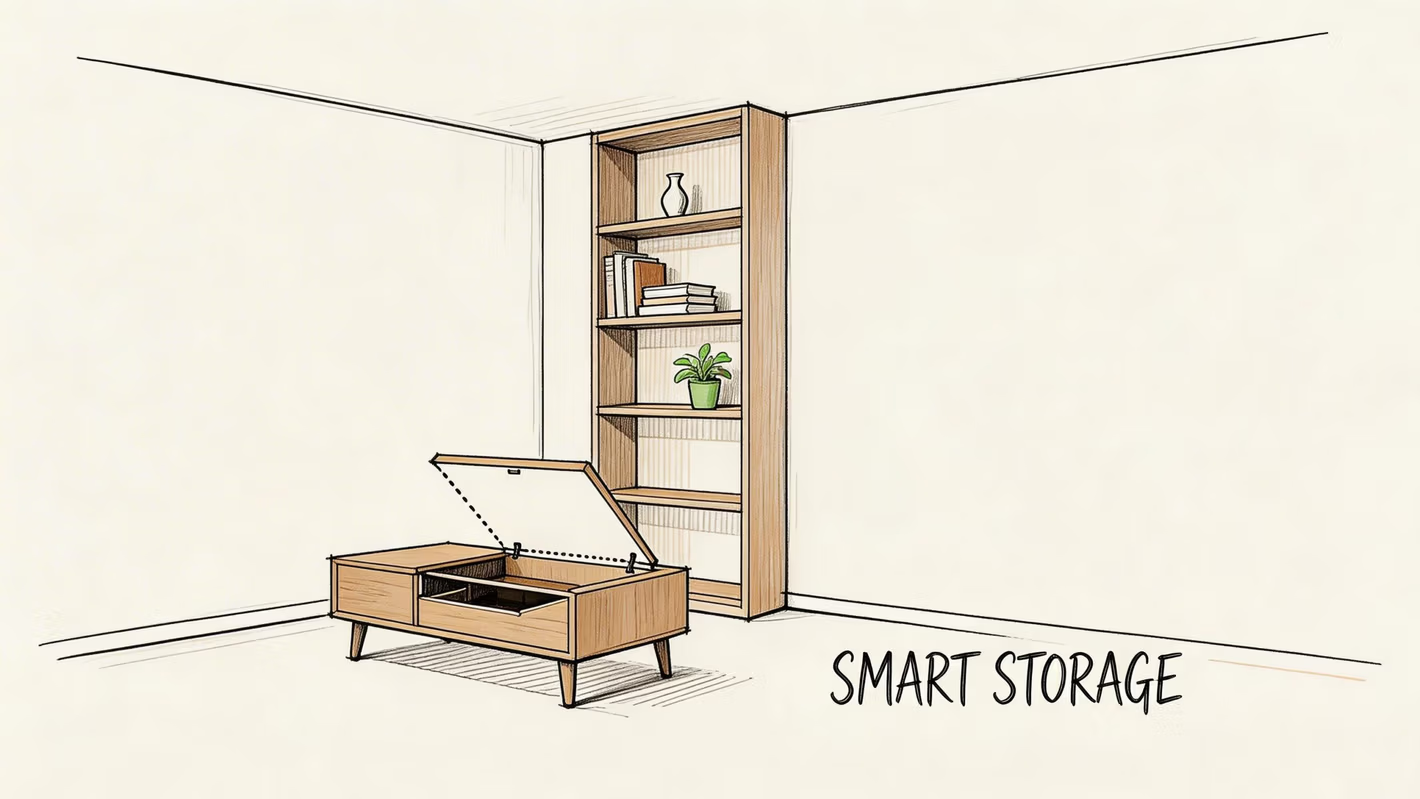
Let storage climb, not sprawl
When floor area is tight, think vertically.
Tall, narrow bookcases usually do more for a room than short, wide units because they draw the eye upward and preserve walking space. Wall shelves can help too, but only when they are edited. A shelf packed edge-to-edge still reads as clutter.
Choose pieces that do two jobs
The strongest small-room furniture usually earns its footprint in more than one way.
- Storage ottomans hide throws, games, and extra pillows.
- Lift-top coffee tables can hold the daily mess and give you a temporary work surface.
- Console tables with drawers catch keys, chargers, and paper clutter near the edge of the room.
- Sleeper sofas let a living room become guest space without dedicating a separate room year-round.
That same whole-home mindset shows up in other categories too. Families who are trying to free up square footage often ask about more efficient laundry setups, which is one reason searches around Speed Queen laundry come up alongside living room planning. The same goes for sleeper comfort, where mattress knowledge matters. If you have ever shopped a mattress store in Logan County, you already know comfort and compact function can live in the same piece when it is chosen carefully.
Keep surfaces working, not collecting
A small room needs a little visual emptiness. Not sterile. Just intentional.
Try this filter for every horizontal surface:
| Surface | Keep on it | Move off it |
|---|---|---|
| Coffee table | One tray, one useful item, one decorative element | Paper piles, spare cords, scattered remotes |
| Side table | Lamp, coaster, one book | Decor that blocks daily use |
| Bookcase | Edited mix of books and closed storage | Small unrelated items with no grouping |
A helpful outside read on small living room storage ideas can give you more organizing concepts if you need a few practical examples.
Key takeaway: Storage should quiet the room, not turn every wall into a holding zone.
For additional ideas that pair furniture with organization, Tanger’s has a useful article on how to solve clutter issues once and for all.
Reliable delivery matters here too. Storage beds, sleeper sofas, and lift-top tables can be awkward and heavy, so professional setup is one of those services people appreciate most after the purchase is made.
Your Game Plan for a Bigger, Brighter Living Room
A small room feels bigger when it becomes easier to use. That is the thread running through every good decision. Better flow, better light, better scale, less clutter.
If you want a simple checklist, use this one.
Your small-room checklist
Measure your room
Include windows, door swings, vents, outlets, and awkward corners.Map the paths first
Keep everyday walkways clear before placing a sofa or table.Choose furniture by proportion
Look at arm width, depth, back height, and leg clearance.Favor fit over quantity
One well-scaled sofa can do more than several pieces competing for floor space.Support the room with light
Keep windows open visually, layer lamps, and avoid dead corners.Use storage that earns its footprint
Ottomans, lift-top tables, and vertical shelving work harder than purely decorative pieces.
When a room still will not cooperate
That usually means one of two things. Either the furniture is not scaled properly, or the layout is fighting the architecture.
Older homes often need a custom-minded solution, especially when the room shape is irregular. Business owners face a similar challenge in waiting rooms, offices, and reception areas, where every square foot has to work. That is why space planning is not just a residential skill. It matters in professional settings too.
If you want more arrangement inspiration before moving pieces around, these living room arrangement ideas can help you compare layouts and spot what your own room might be missing.
A bigger-feeling room does not always require a renovation. Often it takes a better plan, fewer compromises, and furniture that respects the room you have.
Visit our showroom in Bellefontaine to see custom options in person or browse the collections online at Tanger’s Furniture to start your journey. If you have a specific design question, contact the design staff for guidance, ask about flexible financing for your project, and remember that delivery and service can handle the heavy lifting after you choose. You can also join the Love Your Home Club for exclusive offers and practical home tips that help you love your home a little more every day.