Your Guide to the C Shaped End Table


You know the moment. You sit down on the sofa with a cup of coffee, your phone, maybe a laptop, and there's nowhere nearby to set any of it. The coffee table is too far. The arm of the couch is too narrow. Your drink ends up balanced in a spot that makes everybody nervous.
That's where a c shaped end table earns its place.
It's one of those pieces that seems simple until you live with one. Then you start using it every day. It slides in close, holds what you need, and takes up less room than a standard side table. For apartments, family rooms, reading corners, and even office waiting areas, it solves a very common problem without making the room feel crowded.
At a family-owned furniture store, we've seen plenty of trends come and go since 1946. The reason this one has staying power is easy to understand. It's useful. It makes daily life smoother. And if you choose the right one, it can also look right at home beside a well-designed sofa, a favorite recliner, or even a guest bed in a small room.
The Smartest Little Table in Your Home
A c shaped end table usually enters the story when someone gets tired of reaching.
You're watching a game, helping a child with homework from the couch, or answering one last email before dinner. You need a surface close enough to be comfortable, but not so bulky that it blocks traffic in the room. A regular end table can work, but it often sits beside the seat instead of over it. A c-table changes that.
The shape is the whole trick. Its base tucks under the sofa or chair, and the top hovers where your hand naturally wants to go. It feels less like an extra table and more like a helping hand.
That practical design also fits the way many people live now. The mid-century modern revival has pushed c shaped tables back into the spotlight, and projections point to 4% to 6% annual unit sales growth through 2035 as younger buyers continue choosing retro-inspired pieces for compact spaces, according to IndexBox market analysis.
Why people keep one once they try it
A c-table works because it answers small frustrations you notice every day:
- Closer reach: Your drink, tablet, or book stays right beside you.
- Smaller footprint: It fits where a chunkier table may feel clumsy.
- Flexible use: It can move from sofa to chair to bedside without much effort.
- Cleaner look: Many designs have a lean profile that doesn't crowd the room.
Practical rule: If a room feels short on surface space but full on floor space, a c-table is often the first piece worth trying.
For homeowners shopping living room furniture and accents, this is often the table that bridges comfort and function without asking for a full room redo.
What Exactly is a C Shaped End Table
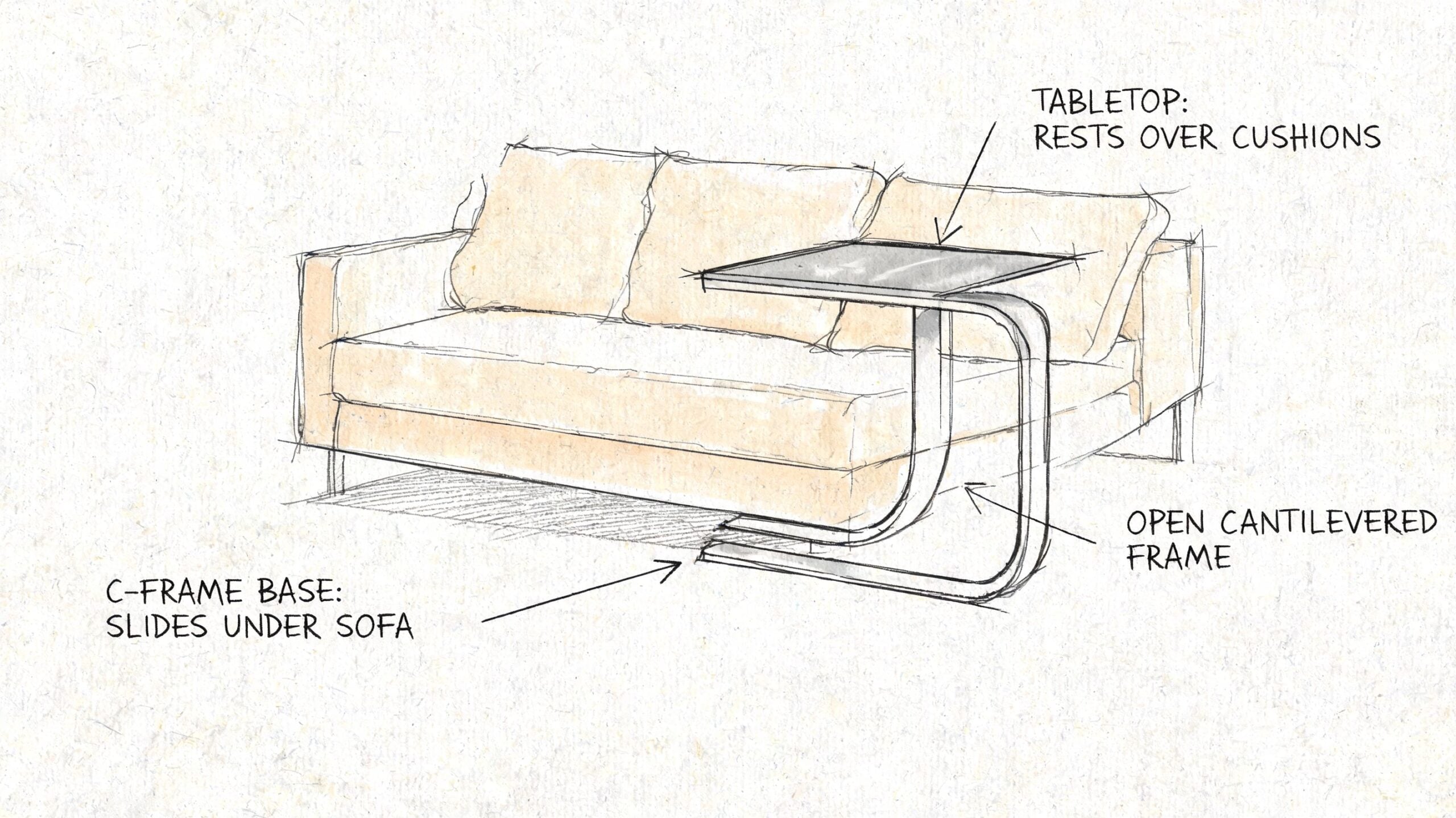
A c shaped end table is a small table built with an open base that forms a sideways “C.” The bottom portion slides under a sofa, chair, or bed, while the top surface sits above the seat edge or cushion line.
That shape is what separates it from a standard end table. A regular end table stands beside the furniture. A c-table overlaps the furniture's footprint so the usable surface comes to you.
How the shape works in real life
This is a tray table that has matured. It doesn't need to unfold. It doesn't wobble if it's well made. And it can stay in the room all the time without looking temporary.
They are commonly used for:
- Coffee or a water glass while sitting on the couch
- A laptop during a quick work session
- A book and reading glasses beside a recliner
- A phone charger in a room where outlets never seem to be in the right spot
Some newer models go a step further. Charging-ready versions with integrated AC outlets and USB ports became popular after 2020, and some designs can save up to 40% more floor space than traditional end tables while still giving you a practical place to charge devices, as noted in this Apartment Therapy review of a VASAGLE C-shaped side table.
What size should you look for
A lot of online listings show similar proportions, and 27 inches high is a common height for many ready-made options. But that doesn't mean every table will fit your sofa or chair the same way.
Before buying, measure three things:
Seat height or arm height
You usually want the tabletop to land at a comfortable reach beside your hand.Clearance under the furniture
Measure from the floor to the bottom edge of the sofa, chair, or bed frame to make sure the base can slide under.Reach depth
Measure how far you want the top to extend over the cushion or seat edge.
If the table looks right online but the base is too tall or too deep for your sofa, it won't feel convenient once it arrives.
That's one reason it helps to browse actual end table options with dimensions in mind instead of shopping by style photo alone.
Common material choices
Different materials change both the look and the feel:
- Wood: warmer, more classic, and easy to blend with many living rooms
- Metal: slimmer-looking and often a good fit for industrial or modern spaces
- Glass accents: lighter visually, though they show fingerprints more easily
- Mixed materials: a wood top with metal frame is a common middle ground
A wood c-table next to a traditional sofa feels familiar. A metal-and-marble-look piece can sharpen up a room with cleaner lines. Neither is automatically right. The better choice is the one that fits how you live and what else is already in the room.
Practical Uses and Placement Ideas
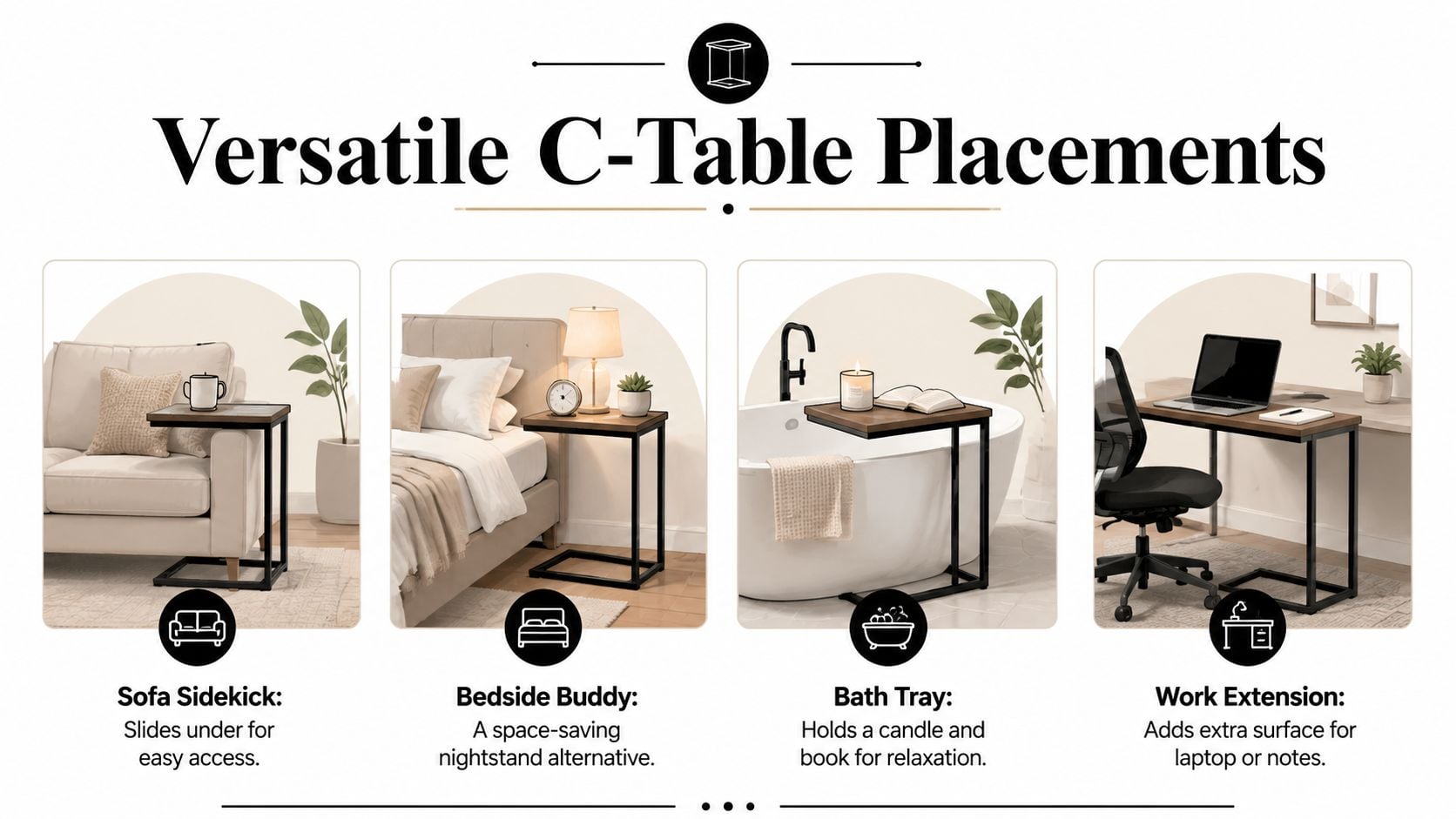
The handiest thing about a c shaped end table is that it rarely stays in just one role. Families move it around. Renters use it in two or three rooms over the course of a year. Business owners even use the same idea in lounges, reception spaces, and offices because it helps people set down devices and drinks without adding bulky furniture.
Around the living room
This is the most obvious spot, but there's more than one way to use it.
- By the main sofa: Keep a drink, remote, and reading lamp close without needing a wide end table.
- Beside a recliner: A c-table can reach over the arm area better than a square table can.
- At the sectional corner: In tighter layouts, it can serve one seat without blocking a walkway.
- For movie night: Set snacks on it instead of balancing bowls on the cushions.
In bedrooms and guest rooms
A c-table can do the work of a nightstand when space is tight.
Some beds leave very little room beside the mattress, especially in guest rooms or small apartments. A slim c-table can slide in where a full nightstand would feel heavy. It also works well next to a reading chair in the bedroom.
A good small-space piece doesn't just fit the room. It makes the room easier to use every day.
For work, hobbies, and everyday overflow
A lot of households now need furniture to switch jobs during the day. The side table that held coffee in the morning may hold a laptop by afternoon.
Try one in these situations:
- Laptop perch: Useful when you need a temporary work surface beside a sofa or accent chair
- Homework helper: Gives kids or grandkids a place for worksheets, tablets, or pencils
- Craft support: Holds supplies beside your main chair without taking over the room
- Plant stand near a sunny window: Handy for a small plant if the top is stable and the finish suits occasional watering
If you enjoy ideas for transforming tables and multi-functional decor, that broader category helps explain why c-tables work so well in homes that ask one room to do several jobs.
Small-space placement tips
In tighter homes, placement matters as much as the table itself. A few simple habits help:
- Leave walk paths open: Don't let the top project into the main traffic lane.
- Check furniture legs: Make sure the base can slide in without hitting supports underneath.
- Use it where you sit longest: Start with the chair or sofa seat you use most often.
- Think about outlet access: Charging models are most helpful when cords won't stretch awkwardly across the room.
Shoppers looking for ideas on furniture for small spaces usually find that a c-table works best when it solves one specific daily irritation first. After that, the extra uses come naturally.
Styling Your C-Table for a Perfect Look
A c shaped end table is practical, but it shouldn't look accidental. When styled well, it feels like part of the room instead of a temporary fix.
The easiest mistake is overloading it. Because the surface is small, every item stands out more. A little editing goes a long way.
Keep the top simple
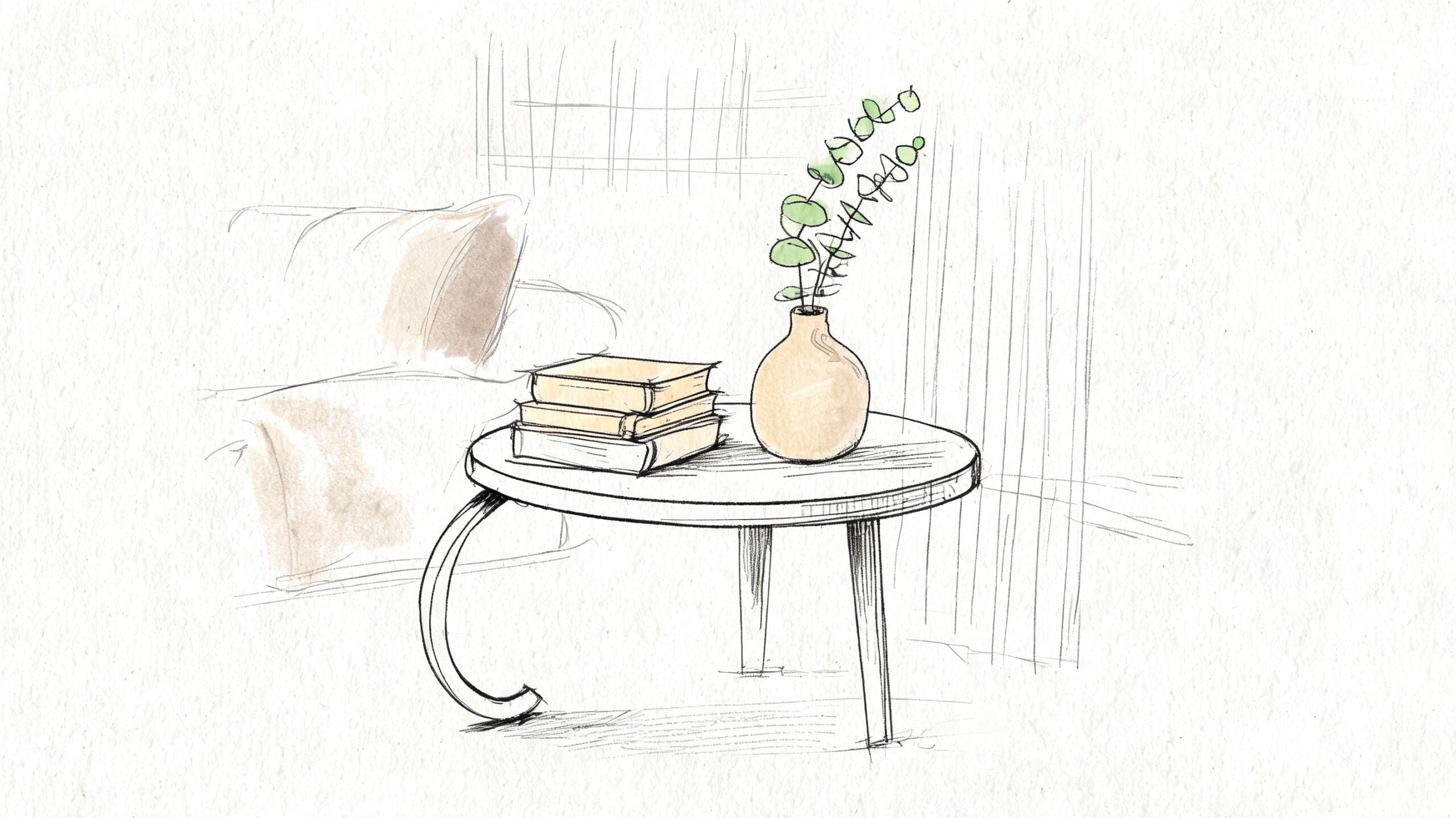
Start with one anchor item and one supporting item.
That might be a small lamp and a coaster. Or a short stack of books and a bud vase. If you add too many objects, the table loses the airy look that makes it appealing in the first place.
A few combinations that work well:
- Lamp plus tray: The tray keeps remotes or glasses from looking scattered.
- Books plus vase: A classic choice for a living room or bedroom corner.
- Candle plus small bowl: Good for a quiet reading nook, as long as the scale stays modest.
- Single sculptural object: Often enough if the table itself has a striking finish.
Match the room, not just the trend
A c-table doesn't need to match every other wood tone exactly. It does need to feel related to the room.
If your sofa has a refined, traditional design, a chunky rustic c-table may feel out of step. If your space has metal accents and clean lines, a sleek frame can connect better with the rest of the furnishings. Homeowners shopping custom sofas Ohio buyers often prefer can use the c-table as a bridge piece that ties upholstery, wood finish, and accent decor together.
Style note: The smaller the table, the more its finish matters. On a compact piece, texture and color do a lot of the design work.
For more arrangement ideas, this guide on how to decorate a coffee table with balance and personality offers principles that also work beautifully on smaller tabletops.
Add a local, lived-in touch
Rooms feel warmer when they include something personal.
A small vase with fresh flowers from a Logan County market, a favorite local pottery piece, or a framed photo can make a c-table feel less staged and more like home. That matters. The goal isn't to copy an online listing. It's to build a room that feels comfortable when real life is happening in it.
Choosing the Right C-Table A Buyer's Guide
A c shaped end table may be small, but buying the right one takes more thought than many people expect. The biggest difference usually isn't the shape. It's the mix of fit, material, and construction quality.
A cheap table that wobbles or scratches easily becomes annoying fast. A well-built one tends to disappear into your routine in the best possible way. It works well.
Start with fit before finish
Shoppers often prioritize color first. In the showroom, we usually do the opposite.
Measure your space before you fall in love with a finish. The table has to clear the sofa base, sit at a comfortable height, and slide in far enough to be useful without pressing awkwardly against the seat. That sizing guidance is one of the biggest gaps in online shopping, especially when shoppers need to account for sofa arm height, seat depth, or mattress placement.
If you're not sure where to start, a careful room check with this guide on how to measure furniture for your home can save a lot of frustration later.
Compare materials with your lifestyle in mind
Some shoppers want warmth. Others want easy care. Neither answer is wrong.
| Material | Pros | Cons | Best For |
|---|---|---|---|
| Wood | Warm look, timeless feel, easy to pair with many sofas and bedrooms | Can show dents or water marks if the finish is delicate | Traditional rooms, mid-century looks, long-term home use |
| Metal | Slim profile, clean lines, often feels lighter visually | Can feel colder or more industrial depending on the design | Modern rooms, offices, compact spaces |
| Glass | Opens up the look of a tight room, reflects light nicely | Shows fingerprints and smudges, needs more frequent cleaning | Light, airy spaces with a decorative focus |
| Mixed materials | Balances warmth and structure, often versatile across styles | Quality varies a lot from piece to piece | Homes that mix modern and classic elements |
For readers who enjoy unusual material inspiration, pieces like this natural history gallery home decor accent table can be useful as a reference point for how stone or statement surfaces change a room's mood, even if you end up choosing a more practical everyday c-table.
Why construction matters more than many listings admit
In this context, quality separates itself.
For a wood c-table, wood dowel joinery is a strong sign that the builder cared about alignment and long-term stability. In quality construction, 3/8-inch dowels used with wood glue can produce joints with over 2000 psi shear resistance, support loads up to 50 lbs, and allow for natural wood movement without failure, as shown in this woodworking build reference.
That may sound technical, but the practical benefit is simple:
- The table feels square and solid
- Joints stay cleaner-looking
- You don't see as many obvious fasteners
- The piece is better able to handle ordinary daily use
Look at the underside and the joints. A small table tells on itself quickly. If the construction looks rushed, it probably is.
Good value isn't always the lowest ticket
Budget-conscious families in Bellefontaine and Logan County already know this from shopping for appliances, mattresses, and upholstery. The cheapest option on day one isn't always the one you're happiest with later.
That's true whether you're comparing accent tables, a recliner, or even Speed Queen laundry for the utility room. Initial price matters, of course. But so do serviceability, sturdiness, finish quality, and how well the piece fits your actual home. The same thinking applies if you're also browsing a mattress store Logan County shoppers trust. Value comes from comfort and durability, not just from a quick discount.
A simple checklist before you buy
- Measure under the sofa or chair
- Check the top height against your seated reach
- Decide if you need charging features
- Look closely at joints and finish quality
- Choose a material that fits your daily habits
- Ask who handles delivery and service if something isn't right
One practical option in this category is Tanger's Furniture, which offers c-shaped end tables for home and office settings and also handles related furniture planning for residential and commercial spaces.
The Tanger's Advantage Custom and Commercial Solutions
A c shaped end table is a small piece, but it often exposes a bigger truth about furniture shopping. People don't just need a table. They need a table that fits their sofa, their room, and the way they live.
That's where local design help matters. A major gap in the market is sizing guidance for specific furniture setups, including sofa arm height and mattress depth. Retailers with planning support can step into that gap with personalized consultation, much like the technical planning already used in commercial office projects, as noted in this Target product research context.
For homeowners who want a better fit
Customization changes the conversation.
If you've already spent time choosing upholstery, wood tones, or room layout, a generic accent table may feel like the weak link. A made-to-fit approach can help the c-table relate better to a custom seating piece from brands such as Flexsteel or Smith Brothers of Berne, whether you want a cleaner modern look or something warmer and more traditional.
That matters for:
- Residential spaces: where longevity and finish matching matter
- Budget-conscious households: where the Low Price Promise and flexible financing help spread out a smarter purchase
- Growing families: who need practical surfaces that can hold up to daily use
For offices, waiting rooms, and shared spaces
This style of table also makes sense outside the house.
In a professional setting, a c-table can serve as a laptop perch in a private office, a compact drink surface in a waiting area, or an extra work point in a collaborative room. Because the shape tucks in tightly, it helps smaller business spaces stay comfortable without feeling cluttered.
Commercial buyers often care about a different set of questions:
- Will it fit beside lounge seating without blocking traffic?
- Is the finish durable enough for repeated public use?
- Can several pieces work together without looking mismatched?
- Who helps with layout if the room has to do more than one job?
That's where commercial office planning becomes useful. The same eye for scale that helps in a living room helps in a reception area too.
Local service still matters
Online listings can show dimensions. They usually can't help much when the piece arrives and the room still isn't working.
Local delivery, in-house service requests, and real design conversation make a difference, especially for shoppers who want no-pressure guidance. That includes families piecing together a room over time, first-time homeowners comparing options, and business owners who need coordinated solutions instead of one-off purchases.
Financing also matters more than people sometimes admit. Flexible payment options can make it easier to choose a better-built piece without overextending the monthly budget. That's true whether you're finishing a family room, outfitting an office, or pairing a c-table with larger furniture plans.
Visit Tanger's Furniture to see our custom options in person or browse our collections online to start your journey. Have a specific design question? Contact our design staff today or join our Love Your Home Club for expert tips, exclusive offers, and helpful ideas delivered to your inbox. We also offer flexible financing, local delivery, and in-house service support, so we can handle the heavy lifting while you focus on creating a home you love.