Your Round Coffee Table Leather Guide


You may be staring at a room that is almost finished. The sofa is in place. The chairs work. The rug feels right. But the center still looks unresolved, like the room has furniture without having a real gathering place.
That is where a round coffee table leather design can make a big difference. It softens the room, gives people an easy place to set a drink or book, and adds a material that feels warm instead of cold. In a family room, it can make the whole layout feel more welcoming. In an office lounge, it can make the space look settled and intentional.
A lot of folks in Bellefontaine and Logan County run into the same issue. They do not need more furniture. They need the right anchor piece.
Finding the Perfect Centerpiece for Your Living Room
One of the most common living room stories goes like this. A homeowner picks a sofa first, then a pair of chairs, then a lamp table or two. Months later, the middle of the room still feels empty, or worse, cluttered with a temporary piece that never belonged there.
A round leather coffee table solves that problem in a simple way. The shape helps people move around the room more easily. The leather adds texture, which matters when a space already has a lot of wood, fabric, or painted surfaces. And because it sits in the visual center, it often becomes the piece that ties everything together.
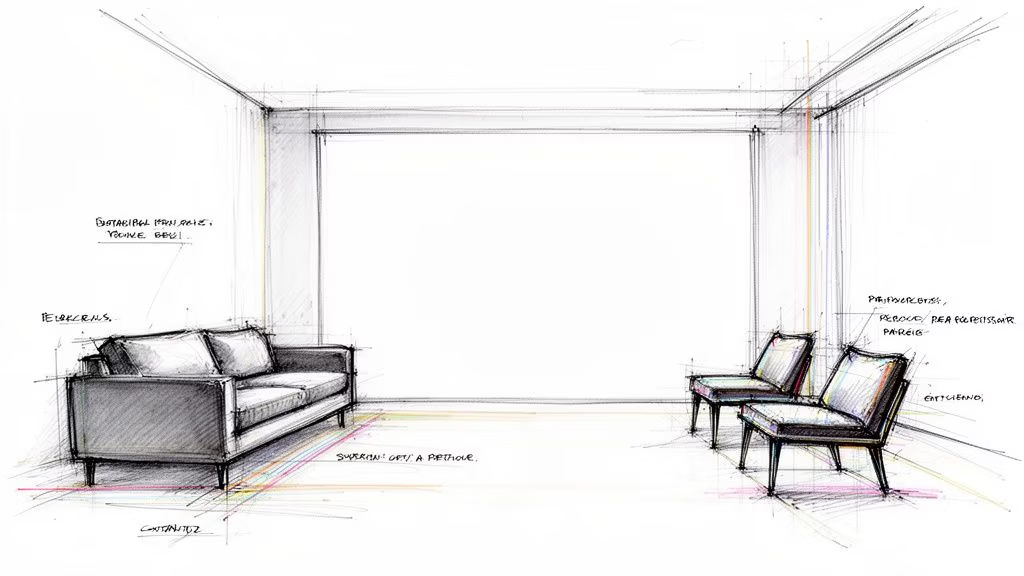
If your room feels stiff or boxy, round is usually a smart move. A circle breaks up all the straight lines from sofas, media consoles, and area rugs. That is one reason these tables have stayed popular for so long.
Their roots go back much farther than most shoppers realize. The leather round coffee table traces its roots to 17th-century European tea tables, which were predominantly round or oval. The move to lower forms at 14 to 18 inches came later, influenced by Anglo-Japanese low styles in Britain during the 1870s and 1880s and Ottoman tea garden tables, with leather upholstery gaining traction in the Victorian era, as noted in this history of the coffee table.
That history still shows up in today’s rooms. A round leather piece feels traditional enough for older homes and clean enough for newer ones. It can bridge styles instead of forcing you into one look.
If you are still working out seating and traffic flow, these living room arrangement ideas help clarify where a round table fits best.
A good coffee table does more than fill a gap. It gives the room a center of gravity.
Choosing Your Foundation Ottoman vs Framed Tables
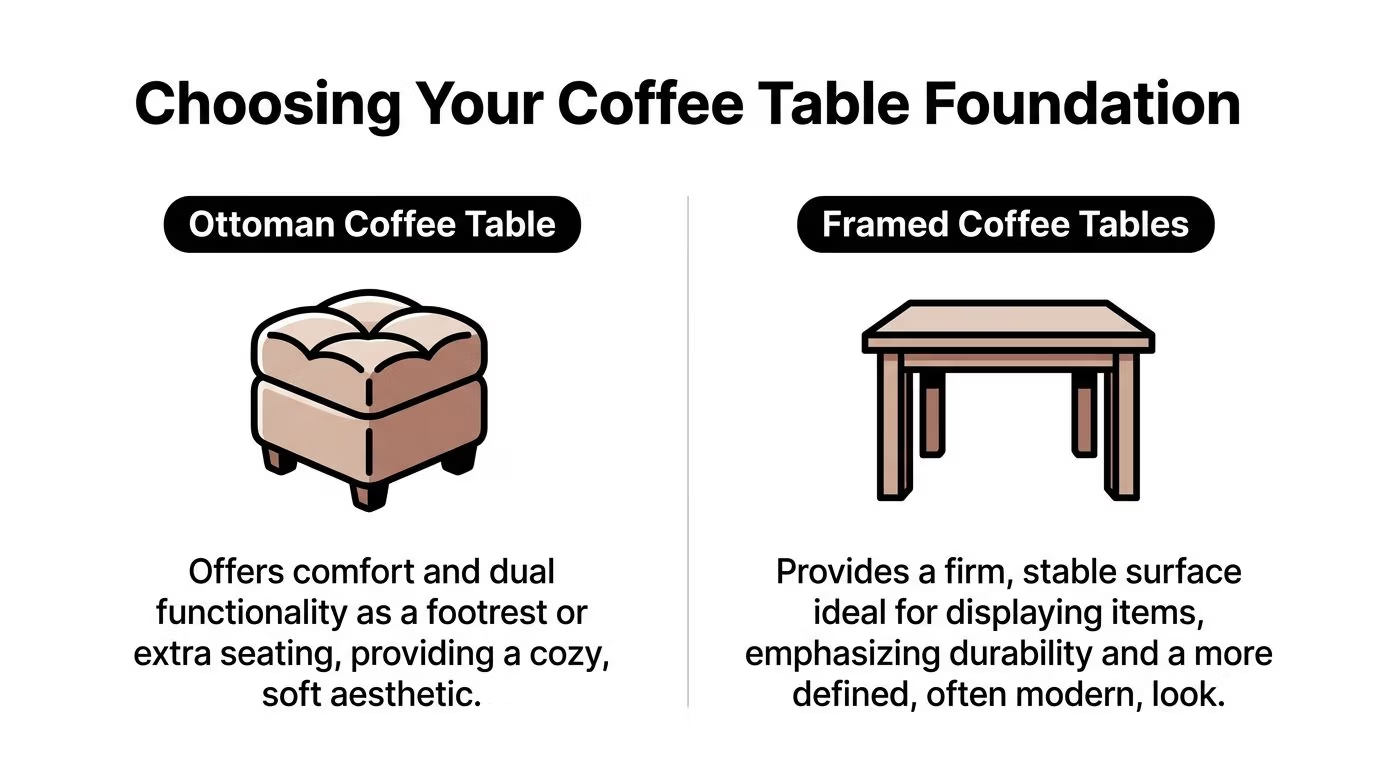
Before color, finish, or stitching, start with structure. Most round coffee table leather styles fall into two camps. You are either choosing an ottoman-style table or a framed table with a leather top.
That first choice affects how the room works every day.
Why ottoman styles feel more relaxed
An ottoman coffee table gives you a softer landing, both physically and visually. Families often like them because there are no hard corners, and the top can double as a footrest or extra seating.
Some shoppers worry that “soft” means less sturdy. That is not always true. In designs like the modern round ottoman, a sturdy metal frame paired with a leatherette top can achieve a 300 lb weight capacity, and the round geometry reduces torsional forces by up to 25% compared to rectangular frames, supporting stable everyday use, according to the ShipItFurniture product details.
Ottoman styles are often a good fit when you want:
- A family-friendly center piece that feels forgiving around kids
- A casual room where people put their feet up and gather informally
- Extra flexibility if you sometimes need another place to sit
- A softer look to balance a structured sofa or angular chairs
If you want ideas specific to this format, this guide to a round leather ottoman is useful.
Why framed tables feel more defined
A framed table usually has a wood or metal base with a leather inset or upholstered top. This option gives you more of a “table” feeling than an ottoman feeling.
That matters if your household uses the coffee table as a true surface for drinks, trays, books, puzzles, or decor. Framed styles often have a more refined appearance. They can also lean more formal, depending on the base.
They tend to suit:
- Entertaining spaces where you want a firmer, level surface
- Modern or transitional rooms with cleaner lines
- Office waiting areas that need structure and polish
- Homes with a layered design plan where the coffee table echoes nearby wood finishes or metal accents
How to decide between the two
The easiest test is to think about what happens in your room most often.
If the room is for lounging, movie nights, and everyday family use, ottoman styles usually win. If the room is for hosting, displaying, or keeping a tidier surface, framed tables often make more sense.
A lot of people assume this is just a style choice. It is really a lifestyle choice first.
Understanding Leather Grades and Finishes
Leather terminology can make even confident shoppers pause. People hear words like top-grain, bonded, aniline, or protected finish and wonder if they are comparing real differences or just fancy labels.
Some of those terms matter a great deal. Others matter less than how you plan to use the piece.
Start with the grade
Here is the plain-language version. Think of leather grade like lumber selection. You can build with several types, but the better raw material usually gives you a better surface, better wear, and fewer surprises over time.
The most useful benchmark in this category is top-grain leather. Top-grain leather achieves over 100,000 double rubs on Wyzenbeek abrasion tests, compared to less than 20,000 for PU synthetics. Because the full-thickness hide retains natural collagen fibers that flex without cracking, top-grain pieces can retain up to 85% of their resale value after five years, according to the Chapin Furniture Clair leather coffee table details.
That does not mean every home needs the highest leather grade available. It does mean that if you want a piece to age gracefully, the material matters.
Leather Type Comparison
| Leather Type | Durability | Feel & Appearance | Best For |
|---|---|---|---|
| Top-grain leather | High. Built for repeated use and better long-term wear | Smooth, rich, natural character with a refined look | Homeowners who want longevity, offices, and high-use rooms |
| Full-grain leather | Very durable in general terms | More natural markings and a more organic look | Shoppers who love visible character and patina |
| Bonded leather | Lower than higher-grade real leather | More uniform, often less depth in look and feel | Budget-focused spaces with lighter use |
| PU or leatherette | Lower than top-grain based on the abrasion comparison above | Uniform appearance, easier entry price | Temporary solutions or style-first, lower-investment rooms |
Then look at the finish
Finish changes how leather behaves in daily life. Many shoppers find this aspect confusing.
Aniline leather usually shows more natural grain and variation. It feels warmer and more natural, but it can ask more of the owner.
Semi-aniline leather gives you some of that natural beauty with a bit more protection. For many households, it is the practical middle ground.
More heavily protected finishes tend to be easier to live with if you have pets, kids, or a busy commercial setting. They may not have the same softness or depth as a more natural finish, but they often remove some stress from daily use.
What this means in real homes and offices
For a living room, ask yourself whether you want the leather to look untouched for longer or to develop character as it ages. Neither answer is wrong.
For a business setting, durability usually leads the conversation. Waiting areas, private offices, and reception zones need materials that can handle repeated contact without constant babysitting.
If you want to learn the broader upholstery language before shopping, this overview of upholstery materials is a good starting point.
If a table will be used often, shop the material first and the color second. A beautiful finish on the wrong grade can disappoint quickly.
Getting the Size and Scale Just Right
A round table can be beautifully made and still feel wrong in the room. Usually that comes down to scale.
This is happening more often in smaller homes, apartments, and compact sitting rooms. In major US markets, 55% of urban renters have living rooms under 200 sq ft, which can make standard 36 to 48 inch tables feel oversized. That demand shows up online too, where 40% of Pinterest searches for round leather tables seek custom-size options, according to this market summary for leather top round coffee tables.
A simple way to measure your room
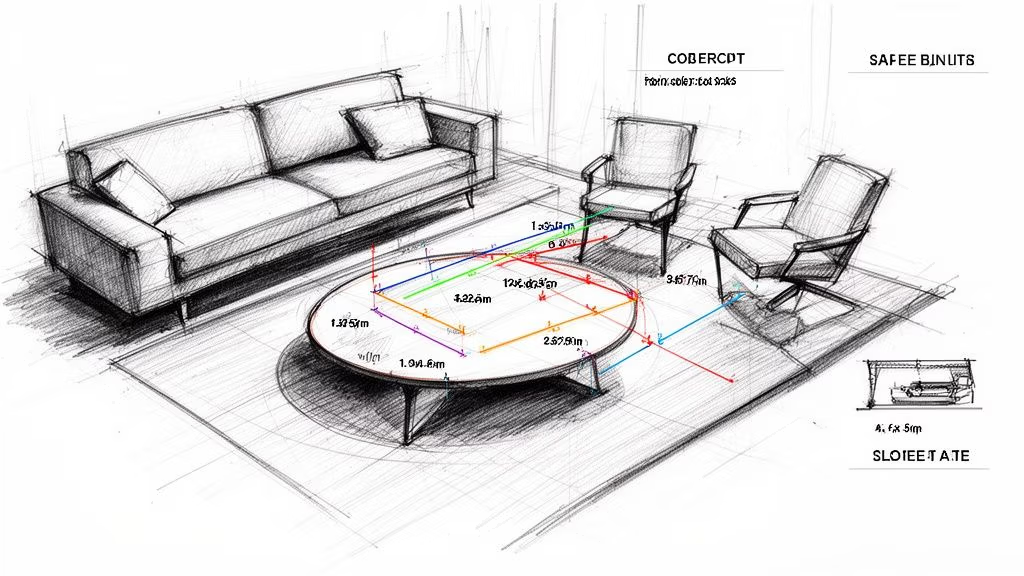
You do not need drafting software to make a smart choice. Start with three measurements:
- Measure the open floor area in front of the sofa.
- Measure the seat height of the sofa or chairs nearby.
- Mark a test circle on the floor with painter’s tape or even newspaper.
That last step helps more than people expect. A table may sound right on paper but feel oversized once you see its footprint.
Where shoppers get confused
The biggest mistake is buying for looks in isolation. A photo online can make a table seem airy, but your room feels its actual scale, not the photo scale.
A few practical checks help:
- Height check. A coffee table should feel easy to reach from the sofa, not noticeably higher or lower.
- Walkway check. You should be able to move around it without feeling like you are squeezing past.
- Reach check. People should be able to set down a drink from the main seats without leaning too far.
Why custom sizing matters
A round coffee table leather piece is often chosen precisely because the room needs softer circulation. If the diameter is too large, you lose that benefit. If it is too small, the table looks like it drifted into the room by accident.
That is where custom planning becomes valuable, especially in unusual layouts and business spaces. For residential rooms, custom sizing can help a table fit a compact seating group. For professional settings, CAD layouts and room planning can keep reception or lounge areas functional without wasting floor space. One local option that offers custom-order support, CAD planning for some projects, and custom sizing help is Tanger's Furniture through its measuring and planning resources.
Styling Your Round Leather Table for Any Room
A round leather coffee table already brings texture and shape to the room. Styling should support that, not bury it.
The easiest mistake is crowding the whole top. Leather looks good when some of it stays visible. Let the material do part of the decorating work for you.
A simple styling formula
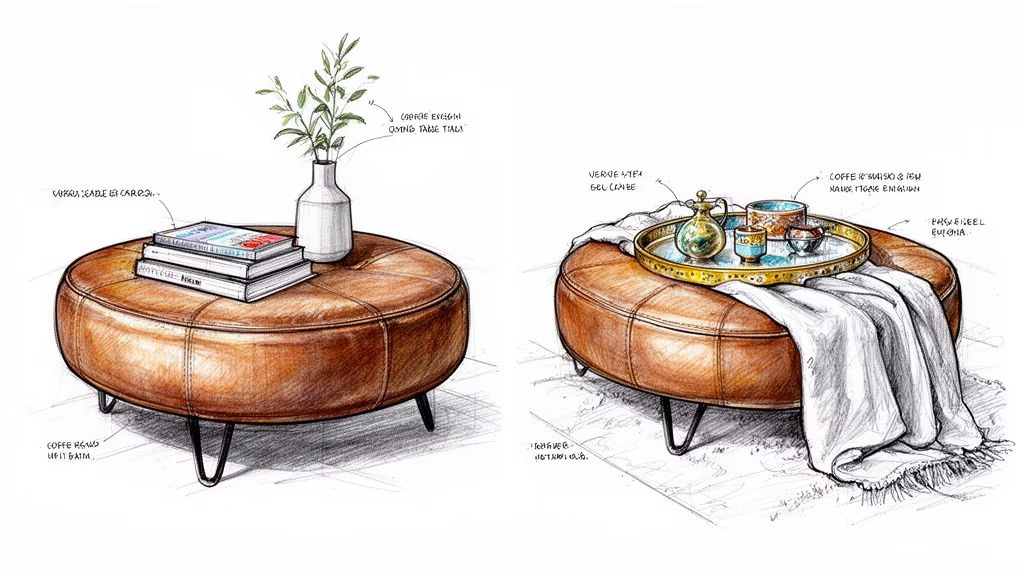
Try a loose mix of three categories:
- Something practical like a tray or coaster set
- Something low and stackable such as books
- Something organic like greenery, branches, or a bowl with natural texture
That combination gives the table purpose without turning it into a display case.
Styling by room mood
If your space leans modern, keep the top restrained. A dark tray, one or two books, and a sculptural object are often enough.
If your room feels farmhouse or casual, leather pairs well with softer textures. A woven tray, a small plant, and a few worn-in books can make the table feel lived in.
If your style is transitional, blend cleaner lines with one warmer accent. Leather already bridges classic and current, so it works beautifully with neutral upholstery, wood tones, and metal finishes.
Pairing with surrounding furniture
Round leather tables do especially well with:
- Custom sofas Ohio shoppers often choose in neutral fabrics, because the leather adds contrast without fighting the seating
- Accent chairs in wood or metal, which echo the table’s grounded look
- Area rugs with subtle pattern, which keep the center of the room interesting without competing
- Storage pieces nearby, so the coffee table does not have to hold every remote and device
A good styling setup should still leave room for real life. If there is nowhere to set a mug, the table has been overdecorated.
A quick test for balance
Stand at the room entrance and ask one question. Does the table look inviting or untouchable?
If it looks too precious, remove one item. If it looks flat, add one item with height or texture. Small edits usually solve the problem faster than a full restyle.
For more arrangement ideas, this guide to the perfectly styled coffee table is helpful.
The best-styled coffee table still looks ready for someone to use it.
Care and Maintenance for a Lifetime of Use
Leather lasts well when owners keep up with simple care. Trouble usually starts when people either ignore it completely or use the wrong cleaner.
That confusion is common enough to show up in search behavior. Google Trends data from 2025 shows “leather coffee table cleaning” searches spiking 35% in US markets. Real leather can last 15 to 20 years, and it requires weekly conditioning with pH-neutral products, a detail often missing from major retail listings, as noted in this round leather coffee table maintenance overview.
A practical weekly routine
You do not need a complicated kit. Keep the routine simple.
- Dust first with a soft, dry cloth so grit does not rub into the surface.
- Condition lightly using a pH-neutral leather product on the schedule recommended for your specific finish.
- Wipe spills promptly so moisture and staining agents do not sit on the leather.
- Check sun exposure if the table sits near bright windows.
What to avoid
A few habits can shorten the life of the top:
- Harsh household cleaners can strip or dry the finish
- Soaking the surface can create problems instead of solving them
- Ignoring pet contact lets small scratches build up
- Leaving heat or sunlight unchecked can stress the material over time
What to do with kids and pets in the house
Do not assume leather is too delicate for family life. Good leather handles use well, but it likes consistency.
Use trays for snacks and drinks. Keep pet nails trimmed. If a spill happens, blot rather than scrub. If you are unsure about a product, test it in an inconspicuous area first or ask the retailer for care guidance tied to that exact finish.
For long-term ownership, service matters almost as much as the material itself. Local stores with delivery teams and service-request support can be easier to work with if questions come up after the piece is in your home.
Your Partner in Building a Home You Love
A round leather coffee table works best when it fits your life, not just your Pinterest board. The right choice depends on structure, leather quality, room scale, and how you use the space.
That is why so many furniture decisions feel easier in person. You can compare a soft ottoman to a framed style, touch the leather, judge the scale, and think through care before the table ever comes home. For homeowners, that means fewer regrets. For business owners, it means a cleaner fit for waiting rooms, lounges, and offices.
Family-owned stores with deep local roots often make that process feel less intimidating. In Bellefontaine, that includes design guidance shaped by decades of experience, local delivery, in-house service support, flexible financing for projects large or small, and a Low Price Promise that helps value-minded shoppers buy with confidence. Whether you are shopping for living room furniture, commercial office pieces, custom sofas, a Speed Queen laundry setup, or even comparing options at a mattress store Logan County families trust, the goal is the same. Help you love your home.
Visit Tanger's Furniture showroom in Bellefontaine to see custom options in person or browse collections online to start your journey. Have a specific design question? Contact the design staff today or join the Love Your Home Club for expert tips and exclusive offers delivered to your inbox.