Full Grain Leather Ottoman: A Buyer’s Guide to Lasting Style

You’re probably in one of two spots right now. Your living room is almost there, but it still feels like it needs one piece to pull everything together. Or you’re replacing an ottoman that looked good at first and didn’t hold up the way you hoped.
That’s usually when leather terms start getting thrown around. Full grain. Top grain. Genuine leather. Suddenly a simple furniture decision feels more technical than it should.
A full grain leather ottoman can be a smart, lasting choice, but only if you know what you’re looking at. The good news is that the basics are easy to understand once someone explains them in plain language. Think of this as a conversation you’d have in a local showroom, where the goal isn’t to pressure you, but to help you choose a piece that fits your home, your routine, and your budget.
Your Living Room's Next Centerpiece
A good ottoman earns its spot fast. It gives you a place to kick up your feet and relax, holds a tray for coffee or remotes, and steps in as extra seating when family drops by. In a busy home, that kind of flexibility matters.
The challenge is that ottomans aren’t all built the same. Some are meant to be soft and casual. Some are built more like coffee tables with cushioning. Some leather options age beautifully. Others stay more uniform but give up some of that natural character.
That’s where a full grain leather ottoman stands out. It appeals to people who want furniture that feels substantial, looks better with time, and doesn’t seem temporary. If you’re furnishing a first home, refreshing a family room, or finishing a professional waiting area, it helps to know what makes this material different before you buy.
A well-chosen ottoman doesn’t just fill empty floor space. It changes how a room works.
Around Bellefontaine and Logan County, many shoppers want the same balance. They want style, but they also want furniture that can handle real life. The same person shopping for a leather ottoman may also be comparing Bellefontaine furniture options for a sofa, looking at custom sofas Ohio families can tailor to fit a room, replacing appliances like Speed Queen laundry, or stopping by a mattress store Logan County residents trust for long-term value. In all those cases, the question is similar. Buy once and buy well, or buy twice.
Understanding Full Grain Leather The Mark of True Quality
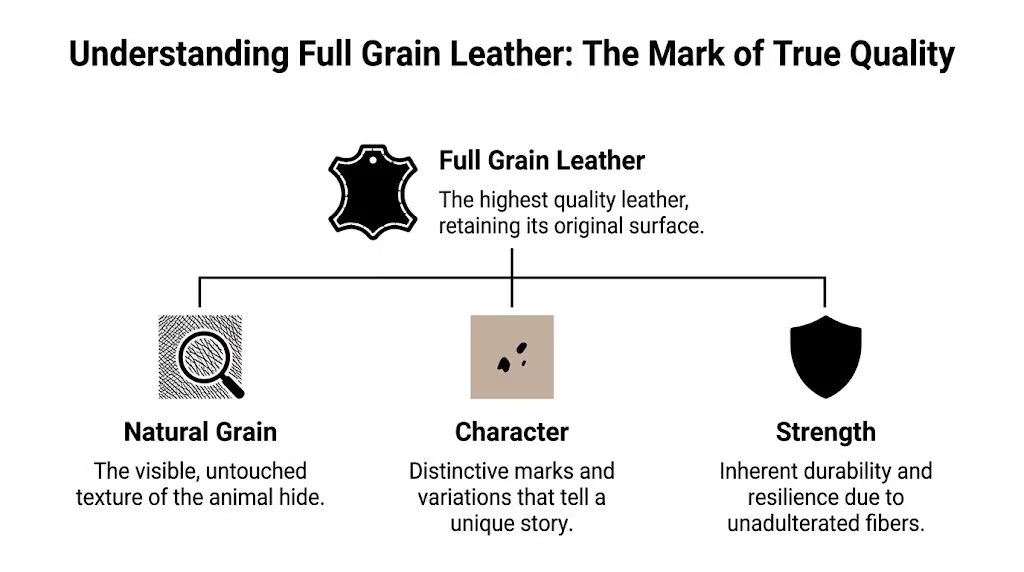
When people hear “full grain,” they sometimes assume it’s just marketing language. It isn’t. It describes how much of the hide’s original surface remains intact.
Full grain leather is the top layer of the hide with the natural grain left in place. It hasn’t been sanded down to make it look more uniform. That means you may see natural markings, shade variation, and texture that feel more like real material and less like a factory-made pattern.
What full grain actually means
A simple way to think about it is wood. If you sand a board smooth and cover it heavily, you can make it look more even. But you also lose some of the original surface character. Leather works in a similar way.
With full grain leather, you keep three things people usually want in a premium ottoman:
- Natural grain that shows real hide texture instead of an overly corrected surface
- Character from the hide’s original markings and variation
- Strength because the outermost layer stays intact
If you enjoy materials that feel honest and age with use, full grain tends to make sense.
How it compares with top grain
Top-grain leather is still real leather, and it has its place. But it’s processed differently. The surface is sanded and buffed to create a more even appearance, then finished for consistency and easier day-to-day cleanup.
That sanding changes the structure. From a technical standpoint, removing the hide's surface through sanding to create top-grain leather eliminates the densest collagen-rich layer, reducing the material's natural tensile strength by approximately 15-25% compared to full grain equivalents, according to this upholstery comparison from Craftmaster furniture details.
That doesn’t mean top grain is “bad.” It means the trade-off is different.
| Leather type | Look | Feel over time | Practical trade-off |
|---|---|---|---|
| Full grain | More natural variation | Develops richer character | Needs thoughtful care |
| Top grain | More uniform surface | Stays more consistent | Gives up some natural strength |
Practical rule: If you want the leather to tell more of a story over time, full grain usually fits. If you want a more even appearance from day one, top grain may fit better.
If you enjoy learning how leather is made and finished, it can also be helpful to explore vegetable-tanned leather products to see how tanning choices affect look and feel in smaller goods. For furniture shoppers who want a broader upholstery primer, our guide to upholstery materials and how they differ gives useful context.
Why a Full Grain Ottoman is a Lifelong Investment
A full grain leather ottoman isn’t the kind of piece you buy because it’s trendy this season. You buy it because you want something that can stay with your home for a long time and still feel right.
One reason is how it ages. Full grain leather develops a patina, which is the soft deepening of color and character that comes with use. Instead of looking worn out, it often looks more settled in. For many homeowners, that’s the whole appeal.
A piece with real history
The ottoman itself has a long furniture history. The piece traces its origins to the Ottoman Empire and entered Europe in the late 18th century as a versatile upholstered form. Full grain leather, valued for resilience and its ability to develop patina, became a natural match for that style, as noted in this history of the ottoman.
That history matters because it explains why the ottoman has lasted as a furniture form. It’s useful. It adapts. It works in formal rooms, family rooms, reading corners, and offices.
Why buyers keep coming back to leather
People often compare a leather ottoman to lower-cost alternatives by asking one basic question. Will it still look good after years of everyday use?
With full grain, the answer often comes down to expectations. You’re not buying a perfectly static surface. You’re buying a material that changes, softens visually, and becomes more individual to your home.
- For homeowners it can become a room anchor that works with changing paint colors, rugs, and sofas.
- For families it offers a sturdy piece that handles regular use without feeling disposable.
- For design-minded buyers it adds texture and depth that many synthetic-looking surfaces never quite achieve.
If you’re weighing long-term value, our article on how long furniture should last can help frame the decision in a practical way.
A good ottoman also supports the bigger goal associated with furnishing a room. They want a home that feels finished, comfortable, and dependable. That’s why a quality piece often ends up costing less frustration over time than replacing a cheaper one every few years. The same thinking applies whether you’re shopping for living room pieces, planning custom sofas Ohio shoppers can tailor to fit a home, or making larger updates across the house.
Your Practical Guide to Choosing the Perfect Ottoman
You get the sofa into place, hang the TV, set down a rug, and the room still feels unfinished. That missing piece is often the ottoman. It can tie the seating together, give your feet a place to land, and add function right in the middle of daily life.
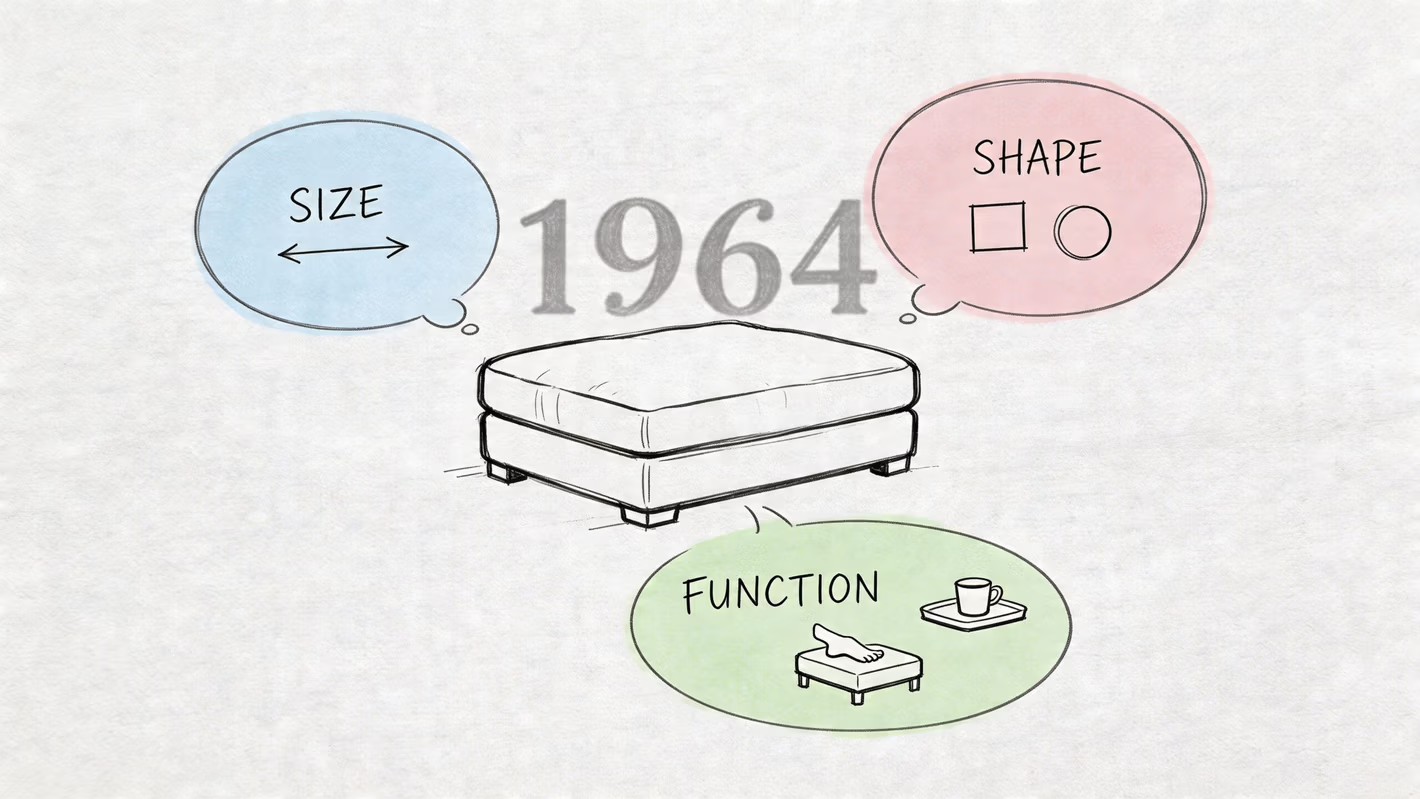
Choosing well starts with a simple question. What job will this ottoman handle in your home in Bellefontaine or around Logan County? A footrest needs different features than a tray-top coffee table. A family room piece used every night needs different proportions than an ottoman for a quiet reading corner.
Start with size and scale
Size is usually where a good decision begins or goes sideways.
An ottoman should fit the seating around it the same way a coffee table should fit a sofa. Too large, and walkways get tight. Too small, and it looks disconnected from the room. For many homes, the sweet spot is an ottoman that sits close to the seat height of your sofa or chair and leaves enough space to move comfortably around it.
A quick way to judge fit:
- Keep the height close to your seat cushions so it feels natural as a footrest
- Leave clear walking room so people are not squeezing past corners
- Check arm's reach if you plan to set down a tray, book, or remote
- Measure the room before shopping because showroom scale can fool the eye
This matters even more in older homes, condos, and tighter living rooms where every inch counts. In our store, we often help local customers tape out the footprint on their floor at home first. Painter's tape can save you from buying a piece that feels right in the store but crowded in your own room.
Choose a shape that helps the room
Shape changes traffic flow and changes how the room feels.
- Round ottomans soften a room full of straight lines and reduce sharp corners in tighter paths
- Square ottomans create a centered, balanced look between chairs or around a sectional
- Rectangular ottomans give longer sofas better visual coverage and more usable top surface
If your seating area feels boxy, a round shape often brings relief. If your room already has curves, a square or rectangle can add structure. If you want help comparing options, our guide to a round leather ottoman for different room layouts shows where that silhouette tends to work best.
Look under the leather
Good leather gets attention first. The build underneath decides how the ottoman will feel a few years from now.
Check the frame, the padding, and the base. A solid frame helps the piece stay steady when someone sits on it or slides it slightly across the floor. Even padding keeps the top from developing obvious high and low spots. A stable base matters if children use it as extra seating or if you plan to move it often while cleaning.
This is one area where seeing the piece in person helps. At Tanger's Furniture, we walk customers through construction details, not just color swatches, because the inside of the ottoman affects everyday satisfaction just as much as the leather on top.
Decide how you will use the top
The top style should match real life.
A soft, cushioned top is comfortable when the ottoman is mainly for putting your feet up after a long day. A firmer top works better if you plan to use a tray for drinks, puzzles, or snacks during movie night. A storage ottoman helps in rooms that need a place for throws, remotes, or toys, but the lid should feel easy to lift and secure when closed.
One practical rule helps clear up indecision fast. Shop for the ottoman's job, not just its appearance.
That approach usually leads to a piece you will still be happy with years from now. If you need a size or layout that is hard to find off the floor, that is often where custom ordering becomes the smarter path.
Designing Your Ottoman Your Way with Custom Orders
A custom order usually starts after a homeowner has walked the room a few times and realized the usual options keep missing in one specific way. The width is close, but the height feels off with the sofa. The leather color is attractive, but it fights the floor. The shape works, but the top is wrong for how the family uses it.
Custom ordering solves those real-life mismatches by letting the ottoman fit the room, instead of asking the room to adjust to the ottoman.
What custom changes for homeowners
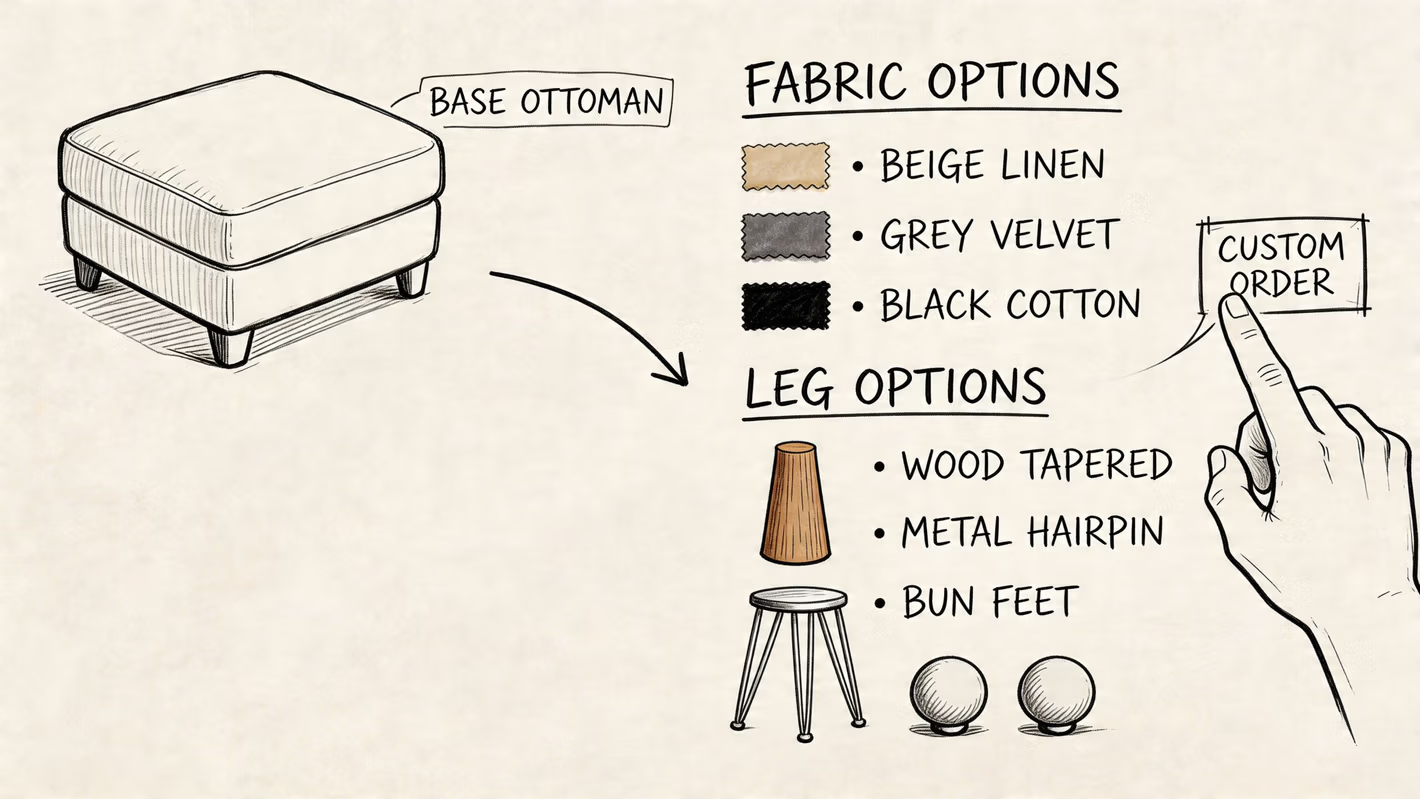
The best custom choices are usually the ones you feel every day, not just the ones you notice in a showroom. Size affects whether knees have enough clearance and whether the room feels open. The top changes how the ottoman works on a quiet evening or a busy Saturday with guests. Leather color and leg finish help the piece belong with the furniture you already own.
A full grain leather ottoman can often be customized in a few practical areas:
- Dimensions that suit your seating layout and walking space
- Leather color that works with flooring, paint, and nearby upholstery
- Leg style and finish that match a traditional, modern, or mixed room
- Top design for lounging, tray use, tufting, or hidden storage
That matters in Logan County homes because rooms are rarely as predictable as catalog photos. One family needs an ottoman narrow enough to keep a traffic path clear. Another wants a larger square piece that can anchor a sectional and still feel balanced. A custom order gives you a better chance of getting those details right the first time.
Why local guidance makes custom easier
Custom furniture can feel complicated until someone walks you through it step by step. It works a lot like building a good pair of work boots. The material matters, but so do the measurements, the purpose, and the finishing details.
At Tanger's Furniture, we help customers sort through those decisions in plain language. If you are unsure where to begin, our custom order process for furniture and leather options lays out how sizing, style, and finish choices come together. We also handle the practical side after the sale, including local delivery and service, which matters when you are buying a piece intended to stay in the home for many years.
Good custom choices start with honest questions
Before ordering, ask yourself a few simple questions. Will the ottoman mostly hold feet, serve drinks on a tray, offer storage, or provide extra seating when company comes over? Does the room need a softer look with rounded corners, or a cleaner shape with straight lines? Will this piece sit in a formal room, a family room, or an office where wear and traffic are different?
Those answers usually point you toward the right build much faster than browsing colors alone.
For shoppers comparing maker options, Flexsteel and Smith Brothers of Berne are two brand partners often associated with customization choices across upholstery categories. If you are also planning for long-term upkeep, this guide on the best way to clean a leather sofa gives a helpful preview of the kind of routine leather responds well to.
A well-planned custom ottoman often fixes a room issue that has been bothering you for years. For Bellefontaine and Logan County residents, that can mean a piece sized for a tight family room, matched to existing furniture, and backed by a local team that can help from design through delivery.
Simple Care for a Lifetime of Beauty
Leather care worries a lot of people off before they’ve even brought the ottoman home. Most of the time, the routine is simpler than they expect.
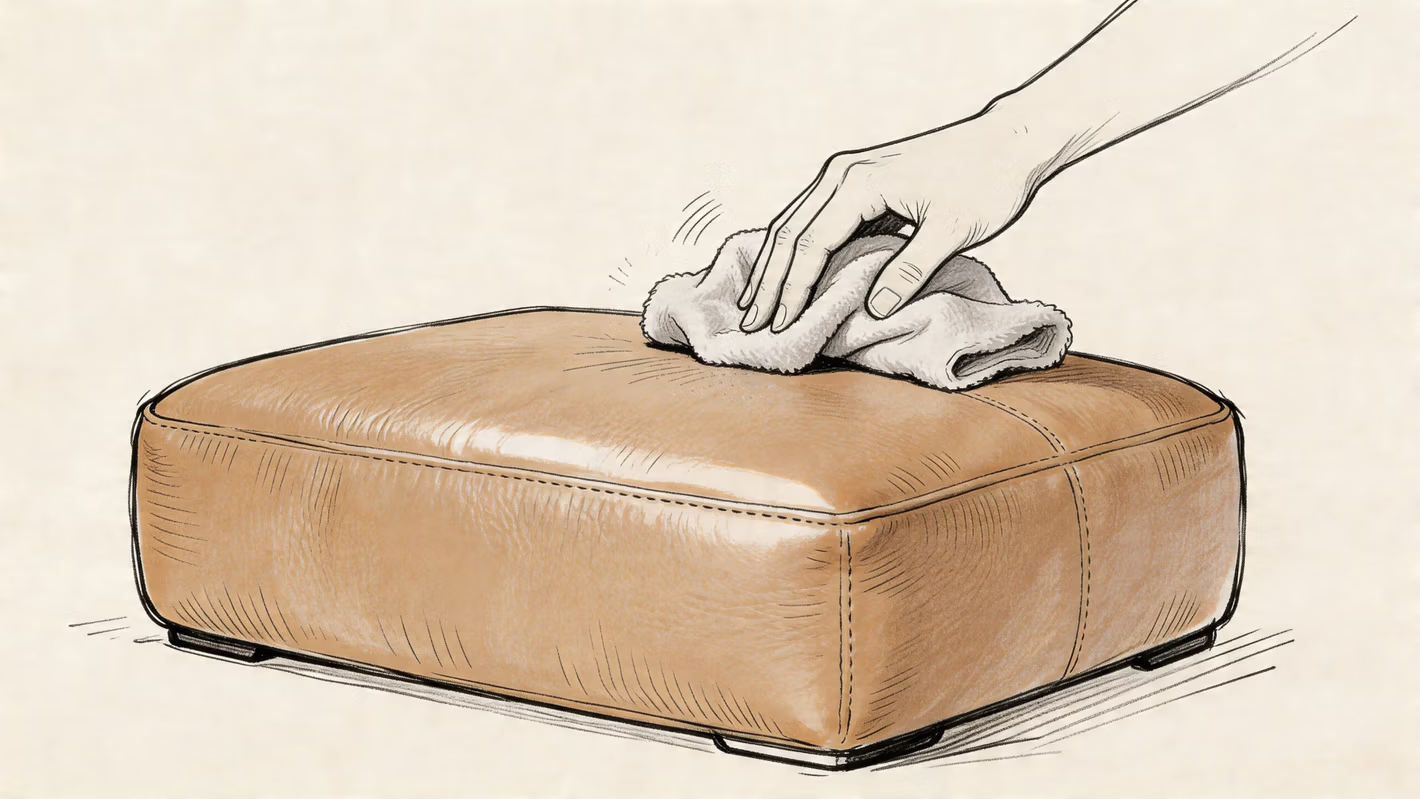
Daily care is basic. Dust with a soft dry cloth. If there’s a spill, blot it promptly with a clean cloth instead of rubbing it in. Harsh cleaners are where people usually get into trouble.
What to do regularly
Full grain leather responds well to gentle, consistent care.
A simple maintenance rhythm looks like this:
- Dust lightly to keep dirt from grinding into the surface
- Blot spills quickly with a clean absorbent cloth
- Use leather-safe products made for the finish on your piece
- Condition periodically to help the leather stay supple
For a broader upholstery cleanup overview, our guide on how to clean upholstery at home is a helpful reference. If you want extra reading focused specifically on leather seating, this article on the best way to clean a leather sofa offers practical reminders that also apply to ottomans.
The honest part about puddling
There’s one characteristic worth understanding before you buy. Full aniline-finished full grain leather is prone to puddling, a natural condition where the leather stretches and creates pooled areas over time, especially on horizontal surfaces, as described in this leather footstool care explanation.
That can sound alarming until you know what it means in real life. It doesn’t automatically mean the ottoman is failing. It means authentic leather can relax and shift with use, particularly on plain-top designs that get concentrated pressure in the same spot.
Some changes in full grain leather are signs of authenticity, not defects.
That’s also why placement and use matter. If you plan to sit on the same corner daily, or use the ottoman as a catch-all surface, it helps to choose the construction and top style with that in mind. Good guidance at the start saves disappointment later.
Frequently Asked Questions About Leather Ottomans
These are the questions people tend to ask once they get serious about buying.
Is full grain leather a good fit for kids and pets
It can be, as long as you go in with clear expectations. Full grain leather keeps its natural surface, so scratches and marks may show more than they would on a heavily corrected leather. Some families love that because the piece develops a lived-in look. Others want a more uniform surface and decide on a different finish.
Customer concern in this area is real. Industry data shows 40% of leather furniture returns stem from unaddressed maintenance, and Google Trends data cited in the same source shows a 25% rise in searches for "pet-safe leather furniture" in the last year, highlighting a gap between what shoppers worry about and what many listings explain in this leather ottoman retail trend reference.
Will a leather ottoman work with my current style
Usually, yes. Leather is one of the more adaptable materials in a room. Dark brown or black can anchor a space. Lighter tones can warm up painted interiors. The shape and leg style do as much design work as the color.
What if I want quality but need manageable payments
That’s common, especially when you’re furnishing more than one room at once. Financing can make a long-term purchase easier to handle without dropping down to a piece you don’t really want. It’s the same logic many families use when shopping for larger home needs, whether that’s living room furniture, appliances like Speed Queen laundry, or a better mattress from a mattress store Logan County shoppers rely on for comfort that lasts.
Start Your Journey to the Perfect Ottoman Today
A full grain leather ottoman makes sense when you want a piece that works hard, ages with character, and fits your home in a thoughtful way. The right one isn’t just attractive on day one. It stays useful, feels better understood, and becomes part of the room instead of a placeholder in it.
If you want to compare leather by feel, look at custom options, or ask practical questions about sizing, care, financing, delivery, or service, it helps to do that with real guidance instead of guessing from product photos. Visit our showroom in Bellefontaine to see our custom options in person or browse our collections online to start your journey. Have a specific design question? Contact our design staff today or join our Love Your Home Club for expert tips delivered to your inbox.
For thoughtful help with living room furniture, custom orders, local delivery, in-house service support, financing, and the Low Price Promise, visit Tanger's Furniture. If you're ready to choose a full grain leather ottoman that fits your home or office, their Bellefontaine team can help you sort through options without pressure and help you Love Your Home.