Bedroom Furniture Quality How to Spot Lasting Value


A Bellefontaine homeowner can scroll past two dressers online and see nearly identical photos, finishes, and drawer counts. In the showroom, though, one may glide and sit firmly while the other wobbles, flexes, or feels rough at every contact point. That difference is bedroom furniture quality, and it affects daily comfort, safety, maintenance, and how long the piece remains useful.
Appearance still matters. A bedroom should feel calm, personal, and welcoming. Yet a beautiful finish can't compensate for weak joints, poor drawer construction, unstable storage, or materials that weren't prepared for indoor use. Quality furniture earns its place in a home through the details that aren't always visible in a product photo.
Tanger's Furniture has served the community since 1946, with design history reaching back to 1964. That local perspective supports a simple, no-pressure approach. Families in Bellefontaine and Logan County deserve time to compare materials, test construction, ask practical questions, and choose pieces that help them Love Their Home longer.
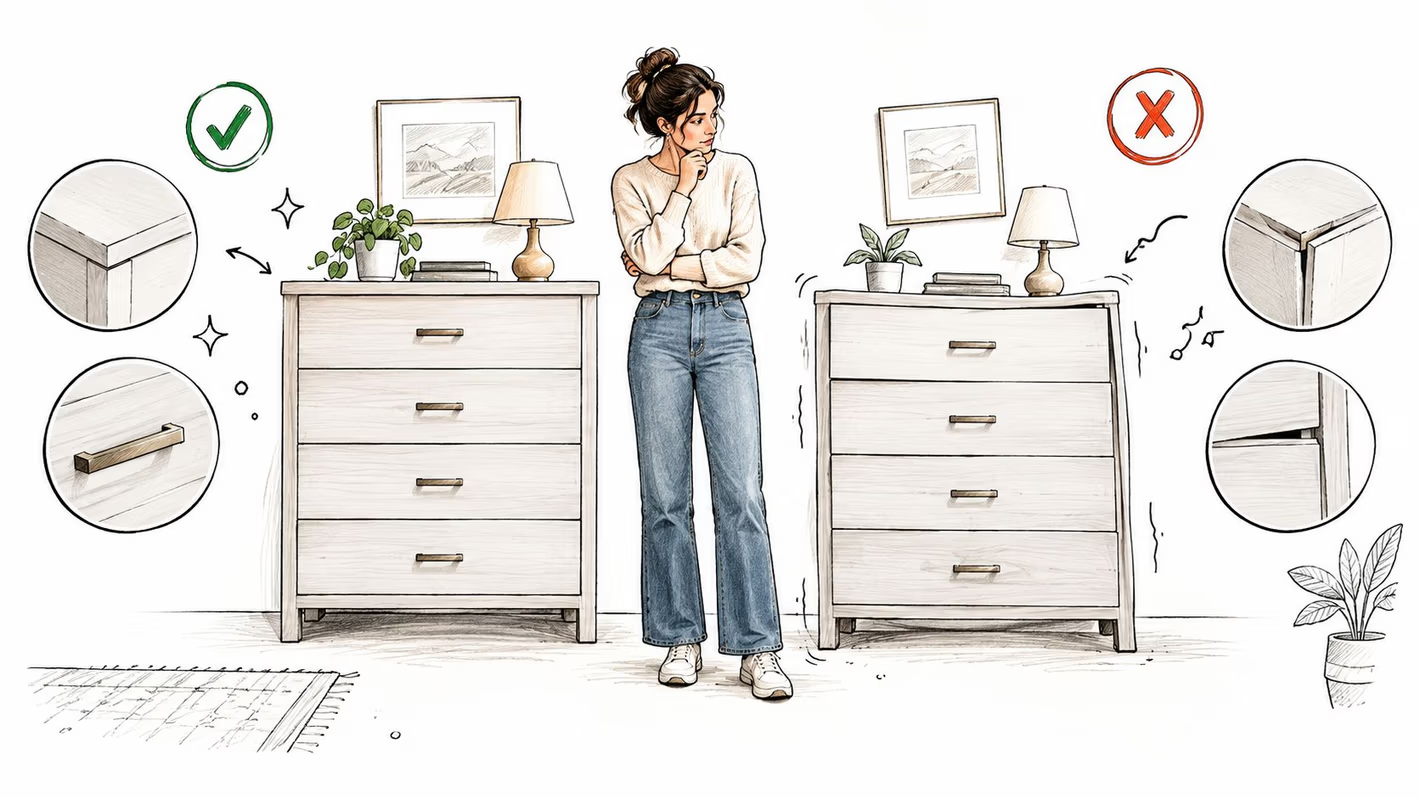
A dresser tells a story through touch
A shopper doesn't need to be a cabinetmaker to notice meaningful differences. Pull each drawer all the way out, inspect the corners, place a hand on the top, and gently test whether the case shifts. These small actions reveal more than a label that says “wood.”
The same principle applies to beds, nightstands, upholstered benches, and storage cabinets. A piece that feels solid and works smoothly is easier to live with, but buyers should still ask what creates that stability and whether the manufacturer provides meaningful service support.
For more guidance before visiting a showroom, the guide to finding quality furniture offers another practical starting point. After reading, a shopper should be able to distinguish surface style from structural value, understand the questions that matter, and inspect bedroom furniture with greater confidence.
What Quality Really Means for Bedroom Furniture
Quality is measurable. Standards organizations evaluate furniture through criteria such as durability, strength, safety, and stability, rather than treating appearance as the final test. The European furniture framework described by the DIN overview of timber and furniture standards connects furniture quality with relevant standards, while wood standards such as EN 335 and EN 350 classify resistance to biological degradation across use classes and durability grades.
A useful comparison is a house. Paint color can make a home inviting, but the foundation, framing, and weather protection determine whether it remains dependable. Bedroom furniture works the same way. A finish attracts attention, while joints, panels, fasteners, supports, and stability carry the daily load.
Four questions define a quality piece
A careful buyer can begin with four questions:
- Will it stay strong? Bed rails, drawer cases, and storage panels must tolerate repeated use without loosening prematurely.
- Will it remain stable? Dressers and chests need appropriate anti-tip protection, especially in homes with children.
- Will it remain safe? Stability hardware and sound construction reduce avoidable risks.
- Will it last in the intended room? Material preparation, moisture control, and finish protection all influence service life.
In the United States, the STURDY Act made ASTM F2057 tip-over stability requirements mandatory for clothing-storage units such as dressers and chests. That rule reflects a serious quality lesson: bedroom storage isn't merely decorative. Its structure can affect household safety.
Moisture control is part of craftsmanship
Wood responds to its environment. Interior furniture guidance commonly targets moisture content of 6–8% or 8–10% in climate-controlled environments, as documented in the European furniture technical report. The exact target depends on the environment and manufacturing process, but the larger point is straightforward. Proper acclimatization and precise production matter because poorly prepared material can move, split, or create joint stress.
Industry guidance commonly places solid hardwood bedroom pieces in the 20–30+ year range, while engineered wood products are often closer to 5–10 years, depending on construction and use, as noted in the DIN timber and furniture reference above. Those ranges aren't promises for every product. They show why material choice, engineering, and care should be considered together.
Practical rule: A quality bedroom piece should be judged like a small structure, not like a wall decoration.
The high-quality furniture brands guide can help shoppers organize those questions before comparing specific bedroom collections. A family working within a budget doesn't need to reject every engineered panel. The better approach is to evaluate the complete construction.
Materials That Determine How Long Your Bedroom Set Lasts
Material labels can clarify a piece, but they shouldn't end the conversation. Solid hardwood, veneer, MDF, particleboard, and plywood each serve different purposes, and performance depends on how the manufacturer combines the material with joinery, reinforcement, sealing, and hardware.
Solid hardwood offers a substantial feel and can be repairable or refinished in some designs. Veneer uses a real wood surface over a core, allowing a stable, carefully selected appearance without making every component from one solid board. Plywood uses layered wood construction, while MDF and particleboard rely on wood fibers or particles bonded into panels.
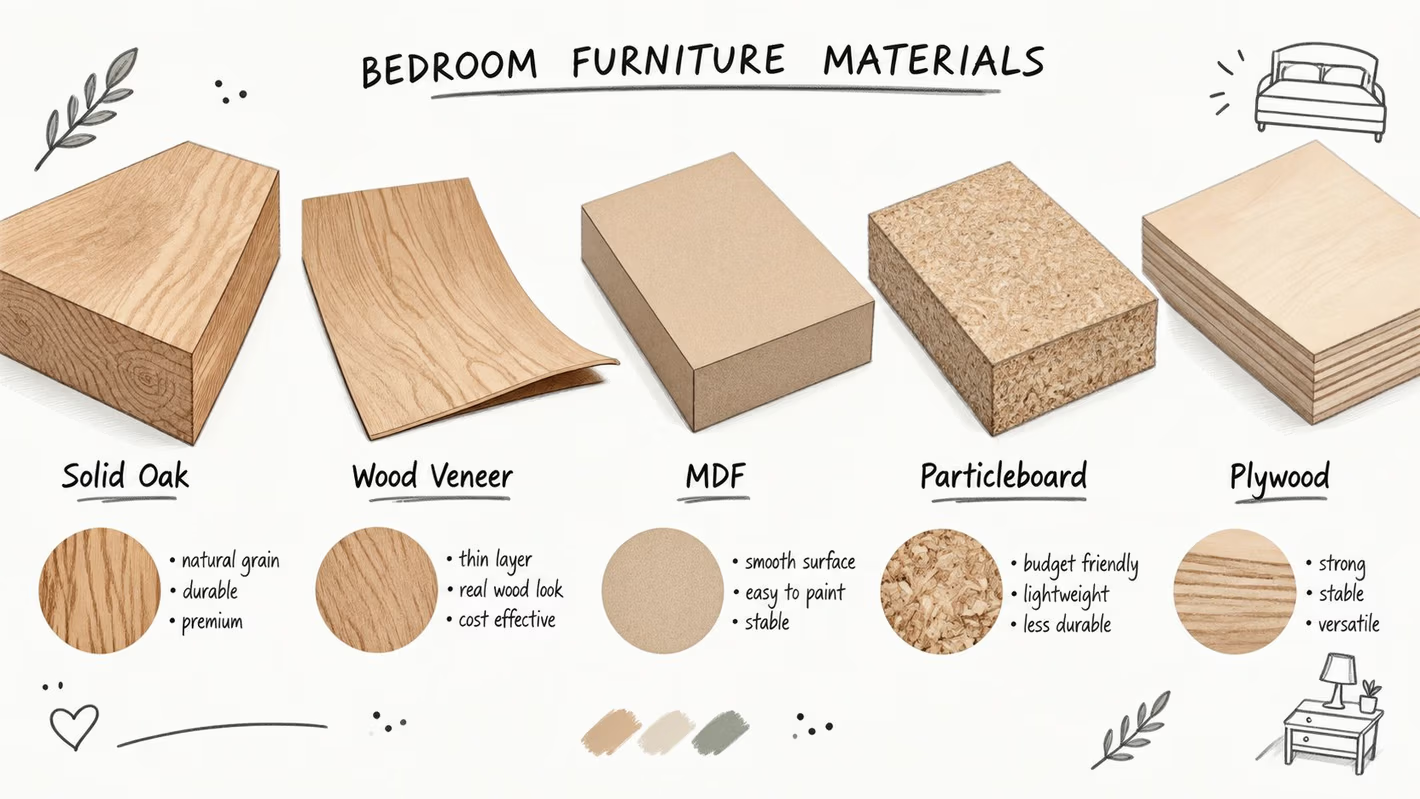
Look beyond the surface
A well-designed engineered panel can perform acceptably in value furniture when the maker protects exposed edges, selects suitable fasteners, reinforces stress points, and controls moisture. A poorly built solid-wood piece can still develop problems if its joints are weak or its fastening system is inadequate.
That is why a shopper should ask what sits beneath the visible veneer or finish. A drawer front might be hardwood while the drawer box uses another material. Neither arrangement automatically defines quality. The important questions concern fit, support, sealing, and intended use.
A useful comparison of the common choices appears in the solid wood and particleboard guide. It helps clarify why “solid wood” can be a helpful detail without being a complete quality verdict.
Indoor air quality belongs on the checklist
Composite wood panels can release formaldehyde, so federal and California rules establish maximum emission limits. The limits are 0.05 ppm for hardwood plywood, 0.09 ppm for particleboard, 0.11 ppm for medium-density fiberboard, and 0.13 ppm for thin MDF, according to the EPA composite wood emissions standards. Finished goods containing these panels must also be labeled compliant and certified by an approved third-party certifier.
An enclosed bedroom makes this question especially practical. A dresser, bed component, or storage cabinet may remain in the room for years, so a buyer should ask about compliance instead of relying only on smell. Odor isn't a dependable substitute for certification.
Questions to ask in the showroom
- Ask about the core: Find out whether the piece uses hardwood, plywood, MDF, particleboard, veneer, or a combination.
- Inspect exposed edges: Look for complete sealing around areas that may encounter humidity or repeated contact.
- Request compliance information: Ask whether composite panels and finished goods meet applicable emissions requirements.
- Match material to use: Choose construction suited to drawer loads, bed movement, storage needs, and the room environment.
- Read the care instructions: A durable surface still needs appropriate cleaning and moisture control.
Joinery and Construction Techniques That Reveal True Craftsmanship
A joint is where furniture proves its strength. A dresser may have an attractive hardwood face, but the drawer corners, case connections, bed rails, and support blocks determine how the piece behaves after repeated use.
Dovetail joints interlock drawer sides and fronts, creating mechanical resistance against pulling forces. Mortise-and-tenon joints place one shaped section inside another, making them useful for structural frames. Dowels align and reinforce connected parts, while cam-lock fasteners allow efficient assembly and can perform well when the panels, hardware, and reinforcement are properly designed.
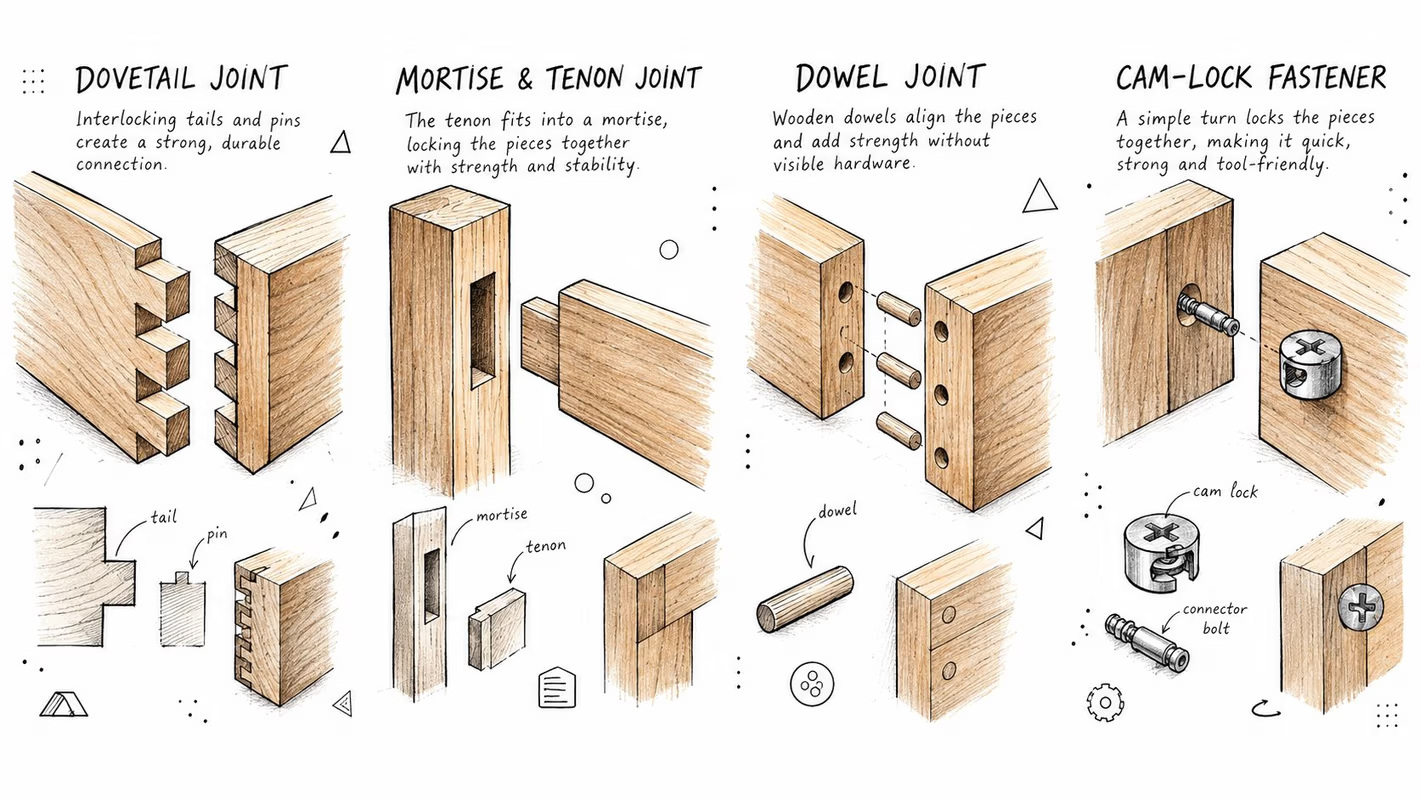
Compare the joint, not just the label
ASTM D7469 evaluates the structural capacity and integrity of end-joints in wood products, as described by the ASTM D7469 standard listing. For beds, NF EN 1725 includes a vertical static load test on the bed edge. In plain language, these testing approaches ask whether a joint or frame can carry force without losing its integrity.
A shopper won't reproduce a laboratory test in a showroom, but the underlying principle is easy to use. Look for tight fits, supported corners, properly seated hardware, and a frame that doesn't rack when gently tested. The most revealing places are often underneath and inside.
Joinery and Construction Quality at a Glance
| Joint Type | Typical Use | Durability Signal | What to Check in Showroom |
|---|---|---|---|
| Dovetail | Drawer corners | Interlocking resistance | Even spacing, tight corners, clean alignment |
| Mortise and tenon | Structural frames | Deep mechanical connection | No visible gaps or movement at the joint |
| Dowel | Case and frame connections | Reinforced alignment | Panels meet squarely and don't shift |
| Cam-lock | Knock-down or modular construction | Secure hardware connection | Firm fasteners, supported panels, no looseness |
A practical furniture inspection also benefits from thinking about transport and storage. Guidance on moving and storing furniture safely explains why handling conditions matter after purchase. Even strong construction needs careful delivery, stable placement, and protection from unsuitable storage environments.
A hands-on inspection
- Open the drawer: Pull it fully forward and check whether it remains level.
- Study the corners: Look for gaps, staples that do all the work, or thin bottoms that flex under light pressure.
- Test the case: Place both hands on opposite sides and gently apply pressure. Excessive rocking deserves a question.
- Inspect the bed rails: Check how rails connect to the headboard, footboard, and center supports.
- Look underneath: Search for reinforcement blocks, support rails, and cleanly finished panels.
This process challenges a common myth. Properly engineered MDF can outlast poorly joined solid wood because construction determines how stress travels through the piece.
Finish Durability Hardware and Everyday Wear Tests You Can Do
Finish quality shows up in daily contact. Hands, clothing, cleaners, sunlight, and spills all test the surface, so color alone tells you little. Look for an even sheen, sealed edges, and a smooth feel without a fragile or overly slick coating. You can also compare available wood finish options with the room's light, cleaning routine, and expected use.
Start at the areas people handle most. Run a clean hand across the top, front edge, drawer face, and handle area. The texture should remain consistent. Rough transitions, bubbling, or pooled finish around corners suggest uneven application or weak preparation.
Test moving parts under real conditions
A showroom test can expose hidden engineering problems. Open every drawer fully, then close it gently. It should travel without binding, stay level, and finish without a hard impact. Check that hinges sit squarely, handles feel firm, and slides keep the drawer aligned from front to back.
- Use the full range: Test every drawer, not only the upper one.
- Check alignment: Compare the gaps around each drawer front.
- Apply light pressure: Press the drawer face gently and watch for flexing or movement in the case.
- Feel the hardware: Handles and pulls should not twist or rattle.
- Inspect safety fittings: Ask about anti-tip hardware and whether it attaches to the wall or furniture.
- Review care needs: Confirm which cleaners, cloths, and moisture levels the finish can tolerate.
These checks help separate a durable finish from one that only looks good under showroom lighting. They also reveal whether the hardware is fitted to support repeated use, rather than just completing the appearance.
Upholstered beds need technical checks too
For upholstered headboards, benches, and bedroom seating, inspect the frame, foam, fabric, and safety performance together. Recognized standards such as EN 12520 for domestic seating and EN 16121 for non-domestic storage furniture address strength, durability, and safety requirements, as summarized in the furniture standards document.
Fabric abrasion is commonly described through Wyzenbeek double rubs and Martindale cycles. Residential sofa fabrics often start around 15,000 double rubs, while commercial-grade fabrics typically begin at 30,000 double rubs or more, according to upholstery frame and fabric guidance. A separate residential checklist places everyday-use fabric at roughly 25,000 or more Martindale rubs, with foam density around 30–35 kg/m³ for daily seating, as outlined in this upholstered furniture guide.
Use those figures as reference points, then ask how the piece will function. A decorative bench, reading chair, and frequently used upholstered bed can need different specifications.
Mattress Pairing Customization and Lifecycle Quality at Tangers
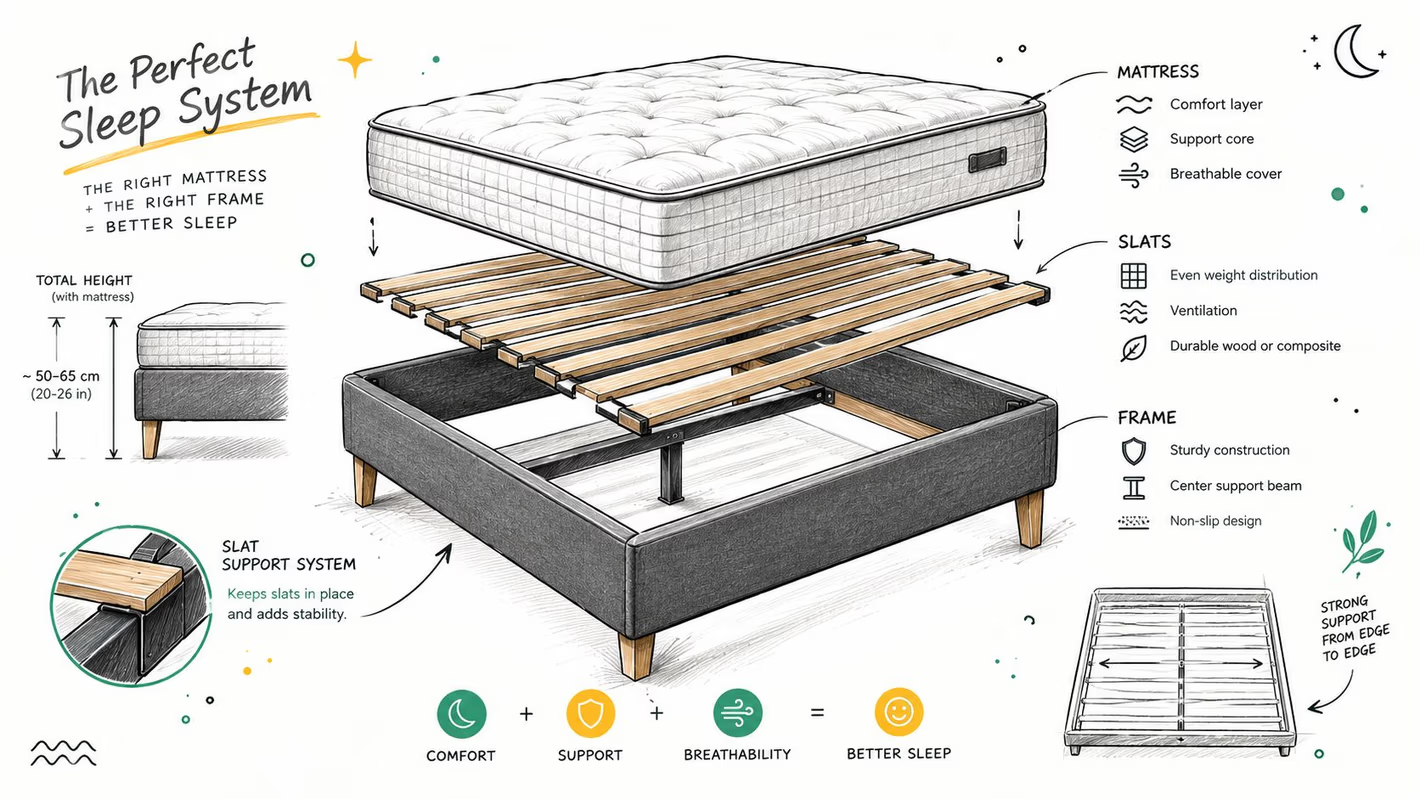
A bed frame and mattress function as one sleep system. The frame must provide dependable support, the slats must suit the mattress requirements, and the height should make getting in and out comfortable. A frame can look sturdy yet perform poorly if its support layout doesn't match the mattress manufacturer's requirements.
Pair support with the way the room is used
A shopper should bring the mattress specifications when comparing a frame. Questions about slat spacing, center support, foundation requirements, clearance, and access to under-bed storage can prevent an attractive purchase from becoming an uncomfortable one.
The mattress selection guide can help organize the comfort and support discussion. This same care applies to a Logan County shopper comparing mattress options at a local mattress store. The frame, mattress, bedding, and room layout should work together rather than being selected as unrelated pieces.
Customization creates practical value
A bedroom isn't always a standard rectangle with standard needs. Tanger's custom-order experience includes options from Smith Brothers of Berne and Flexsteel, with selected pieces offering choices in fabric, finish, configuration, and other details. A shopper can bring room dimensions, photographs, storage concerns, and existing finishes to the design conversation.
Small details can make a room feel finished. Someone interested in a coordinated textile accent might appreciate this bed runner sewing guide as a hands-on reference for adding a personal touch. Customization isn't limited to appearance. It can help a piece fit the room, the household, and the way the furniture will be used.
Quality continues after delivery
Lifecycle quality includes more than the frame. Buyers should review warranties, maintenance instructions, replacement-part policies, delivery handling, and service procedures. Local delivery and in-house service requests can reduce the burden when a question or issue appears after setup.
Tanger's Furniture also works with professional buyers through its Commercial Office division. Business owners can receive space-planning support that translates headcount, work styles, circulation paths, and growth projections into a layout, using tools such as AutoCAD for two-dimensional drafting and CET Designer for commercial furniture specification and planning, as described in commercial space-planning guidance. That same planning mindset applies at home: quality includes whether the furniture fits the space and continues to serve it.
Flexible payment options are available for projects, and the Low Price Promise helps budget-conscious families compare value without treating the lowest initial price as the only measure. The Love Your Home Club provides another way to receive exclusive offers and practical home guidance.
Your Next Steps to Confidently Choose Bedroom Furniture in Bellefontaine
A confident furniture decision doesn't require specialized training. It requires a repeatable inspection habit and enough time to ask clear questions. The following sequence works for a first-time homebuyer, a growing family, or a homeowner replacing a single worn dresser.
Use the five-check showroom routine
- Start with service life and standards. Ask what durability, strength, safety, and stability requirements apply to the piece.
- Identify the materials. Find out what forms the visible surface, core, drawer box, back, and support panels.
- Inspect the joints. Look inside drawers, under the case, and at bed rail connections.
- Test wear points. Operate hardware, feel the finish, check alignment, and gently test for wobble.
- Confirm ownership support. Review warranty terms, care instructions, delivery procedures, and service options.
This approach helps separate genuine value from surface appeal. A family can choose solid hardwood, veneer, plywood, MDF, or particleboard with greater confidence because the decision rests on construction and intended use, not a single label.
Build the room around real life
A bedroom set should fit the room's circulation, storage needs, mattress height, lighting, and daily routines. A nightstand needs usable surface space, a dresser needs stable drawers, and a bed needs support that suits the mattress. Mixing finishes can work well when scale, color, and construction quality remain intentional.
Tanger's Furniture serves Bellefontaine and Logan County with local delivery and service support, handling the heavy lifting figuratively. Families can also explore flexible financing, the Low Price Promise, and coordinated collections beyond the bedroom, including Living Room furniture, Commercial Office solutions, and Financing options. Customers researching dependable home appliances can also ask about Speed Queen laundry as part of a broader home plan.
The showroom experience is designed for questions, not pressure. A shopper can sit, open drawers, compare finishes, discuss custom sofas Ohio households may need in another room, and leave with a clearer decision even if the purchase isn't made that day.
Visit the Tanger's Furniture showroom in Bellefontaine to see custom options in person or browse collections online to start the journey. For a specific design question, contact the design staff or join the Love Your Home Club for expert tips and exclusive offers delivered to the inbox.
Tanger's Furniture offers bedroom furniture, mattresses, custom-order options, local delivery, and service support for homes and professional spaces. Visit Tanger's Furniture to compare construction in person, discuss a room that needs to fit real life, and choose quality with a clear, no-pressure plan.