How to Choose a Modular Sectional with Chaise


A homeowner in Bellefontaine can spend an entire Saturday admiring a modular sectional with chaise online, then discover that the chaise blocks the hallway, the dog's bed has nowhere to go, and the recliner can't open. That hesitation is useful. A sectional is too large and too important to choose from a screen alone.
The right piece should fit the room's measurements, the household's habits, and the wear it will receive every day. A family with children and pets needs a different answer from a quiet couple, a frequent host, or a renter expecting to move. Modular furniture earns its keep when it can adapt without becoming loose, uncomfortable, or difficult to maintain.
Tanger's Furniture has served the Bellefontaine community since 1946, with design experience reaching back to 1964. That history supports a simple approach: help people create a home they can Love Their Home, without pressure and without treating every room like a showroom display.
Picture the Room Before You Picture the Sofa
A homeowner stands in the middle of the living room on a Saturday morning, measuring tape in one hand and a phone in the other. The wall looks generous until the homeowner marks the sofa's full length, then adds the chaise projection. Suddenly, the question isn't whether the sectional looks comfortable online. It's whether the dog bed can stay near the window, whether the recliner can open, and whether guests can still reach the kitchen.
That moment catches many families. Online images show a beautiful arrangement, but they rarely show the room's traffic patterns, children playing on the floor, or the partner who claims the chaise for afternoon naps. A living room works as part of a household, not as a staged photograph.
Start with the people
Three questions should be answered before anyone chooses fabric or chaise direction:
- Who uses the room daily? A kid-heavy household may need open floor space, durable upholstery, and seats that tolerate climbing and lounging. A couple may care more about deep relaxation and a clear view toward the television or fireplace.
- What activities anchor the space? Movie nights, homework, holiday entertaining, reading, and casual conversation each demand a different balance between seating capacity and circulation.
- Which sightlines matter? A sectional should support views from the kitchen, entry, windows, and main focal point rather than cutting the room into awkward pieces.
A chaise can become the favorite seat in the house, but it can also act like a barrier if it reaches across a doorway or interrupts the route between rooms. That's why the best layout starts with daily rhythm, not a Pinterest render.
A useful living room layout guide can help households think through placement before visiting a showroom. Once the room's real work is clear, measuring, configuration, and custom-order choices become much easier.
Measure the Space the Right Way
A reliable measurement plan prevents the most expensive mistake, choosing a sectional that technically fits one wall but ruins the rest of the room. The overall footprint matters more than the number of pieces, and modular furniture still needs room for people, doors, and delivery access.
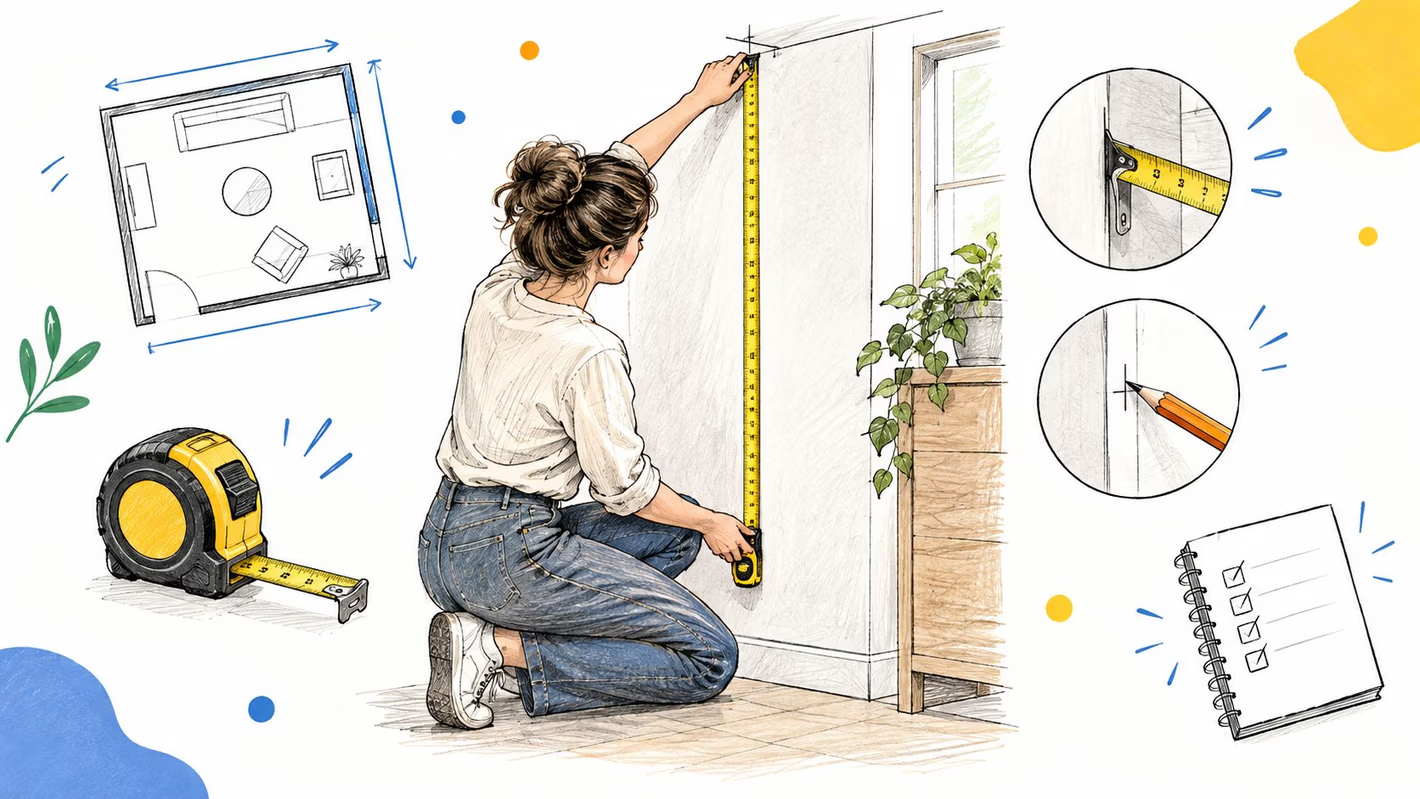
Five steps that work
Draw the room first. Use graph paper or a free floor-plan app. Mark windows, doors, outlets, radiators, vents, fireplaces, and any built-in shelving. These details show where a sofa can't go, even when a wall appears long enough.
Measure every wall segment. Record the full wall length, but also measure sections interrupted by doors, openings, or windows. Measure doorway widths, hallway clearances, stair turns, and the diagonal from the front entry to the farthest corner. A delivery team needs to move separate modules through the home without damaging walls or trim.
Reserve walking space. A practical sectional layout usually needs 24 to 36 inches of clear walking path, according to common furniture-layout guidance from Chairish. Many layouts use 30 to 36 inches for primary walkways and at least 18 inches between the sofa edge and an opposing surface for comfortable legroom. Keep the main path open instead of squeezing every inch around the sectional.
Mark coffee-table distance. Leave roughly 14 to 18 inches between the sectional and coffee table. This gives people enough room to stand, sit, and reach forward without making the table feel disconnected.
Trace the chaise projection. A chaise often projects 60 to 72 inches into the room. Mark that full depth on the floor, then leave roughly 3 to 4 inches between modules and the wall where the design allows. That small gap supports cushion expansion, cleaning, and later reconfiguration.
A furniture measuring guide can help households organize the details. Photos from several corners are just as useful as the sketch. A designer can compare the measurements, images, and preferred configuration before an order is placed.
Choosing a Modular Configuration That Fits How You Live
A modular sectional should be selected as a seating system, not just an L-shaped silhouette. Separate units can include corner seats, armless seats, ottomans, and a chaise, allowing the arrangement to change as a room or household changes. A true modular piece is finished on all sides and can stand independently, while some sectionals only look modular because their pieces work in one fixed arrangement.
| Configuration | Best Room Size | Best For | Chaise Placement |
|---|---|---|---|
| L-shape with chaise | Standard rectangular living room | Families wanting an anchored lounge zone | Right-facing or left-facing, usually against a wall |
| U-shape or four-piece modular | Large open-concept room or movie room | Frequent entertainers and larger households | Floating on a single-arm end or integrated into the U |
| Two-piece chaise and loveseat split | Smaller living room or apartment | Quiet couples, renters, and compact spaces | Right-facing or left-facing, depending on the open path |
| Armless middle-module layout | Flexible medium or large room | Growing families and owners who expect changes | Floating between end pieces or used as a separate lounge seat |
Match the shape to the household
The L-shape is the sensible starting point for most rectangular rooms. It creates a defined corner without consuming every wall and works well when the chaise can rest against a wall. Direction should be determined while standing in front of the sofa. If the chaise is on the viewer's left, it's left-facing. If it's on the viewer's right, it's right-facing.
The U-shape provides more conversation seating, but it needs generous circulation around the outside and inside of the arrangement. It suits open rooms, dedicated movie spaces, and households that regularly host extended family.
The two-piece chaise-and-loveseat split gives smaller homes a place to stretch out without the visual weight of a deep, multi-piece sectional. Armless middle modules offer the most growth potential, since seats can be added, removed, or rearranged when the household moves or finishes a basement.
For readers considering how chaise seating can work alongside sleeping or guest functions, the discussion of sofa beds and chaise longue arrangements at The Sofa Cover Crafter offers useful design context. A five-piece sectional can also be evaluated as a modular starting point, but the first arrangement should already suit the room. Reversibility is valuable. Avoiding an impractical starting layout is better.
What Makes a Modular Sectional Worth Keeping
A sectional's cover gets attention first, but the frame, support system, cushions, and connectors determine whether the piece remains comfortable. Buyers should inspect those areas before falling in love with a color.
Four quality signals
Frame construction comes first. Kiln-dried hardwood is a stronger choice than softwood or particleboard for the main frame because controlled drying reduces the risk of excessive movement. A limited lifetime frame warranty also signals that the manufacturer expects the structure to remain serviceable over time.
Joinery and support deserve a hands-on check. Sinuous springs generally provide a more substantial seating base than basic webbing, especially when the frame and spring attachment are properly built. Modular pieces should use steel connectors, locking brackets, or another secure mechanism that keeps the sections aligned rather than allowing gaps to develop during ordinary use.
Cushion fill controls the daily feel. High-resilience foam in the range of 1.8 to 2.5 pounds per cubic foot is a practical benchmark for seat cushions, but density alone doesn't determine comfort. The cushion should support the body without feeling hard, and the seat should return to shape after someone rises.
Fabric performance matters most on the chaise because that area receives repeated lounging, turning, and concentrated body contact. Upholstery specifications often call for 75,000 to 150,000 double rubs for seating fabrics, with some projects specifying 100,000 double rubs for seats and 50,000 for backs. Those benchmarks appear in institutional furnishing specifications from the University of Texas at Dallas.
| Component | Minimum Standard | Better Standard | Why It Matters |
|---|---|---|---|
| Frame | Solid hardwood in key structural areas | Kiln-dried hardwood with limited lifetime warranty | Reduces movement and supports long-term ownership |
| Support | Properly attached sinuous springs | Reinforced spring system with strong corner blocking | Carries repeated loads across seats and corners |
| Cushions | High-resilience foam around 1.8 pounds per cubic foot | High-resilience foam approaching 2.5 pounds per cubic foot, matched to comfort needs | Helps cushions resist premature collapse |
| Seams | Secure upholstery stitching | Double-needle stitched seams in high-stress areas | Helps control seam separation and fabric stress |
| Fabric | At least 30,000 double rubs for busy homes | Higher abrasion performance with cleaning compatibility | Protects the chaise and primary seats from visible wear |
| Connectors | Stable clip or bracket system | Steel connectors or locking brackets that can be released and reset | Keeps modules aligned while preserving flexibility |
Showroom test: Sit on the chaise, shift position, and push gently against the connection point. Wobble, drifting modules, or uneven seat depths deserve attention before an order is placed.
The EN 1728 seating standard focuses on strength and durability testing for seating structures, regardless of material or construction. A shopper should ask for documented structural testing rather than judging quality by upholstery alone. A premium-looking cover can't compensate for weak corner blocks, a poor chaise attachment, or an unstable modular interface.
That's also why established custom sources such as Smith Brothers of Berne and Flexsteel deserve attention when a household is prioritizing construction and serviceability. A trend-driven cover can be changed. A weak frame is the part that makes an entire sectional disappointing.
Designing Your Sectional Through the Custom Order Experience
Custom ordering works best as a design conversation, not a hurried checkout. A household can bring its rough floor plan, room photos, and lifestyle priorities to a showroom, then work through the decisions in an order that prevents expensive surprises.
Begin with what hands can verify
The first stop should be the swatch wall. Comparing performance fabrics, leathers, textures, and cushion feels in person reveals details that a screen can't show. A family with pets may favor a tightly woven, cleanable textile, while a formal sitting room may justify a more decorative option with lighter daily use.
Next, the designer can sketch the desired configuration over the household's floor plan. That discussion should confirm the total width, depth, seat count, chaise direction, walkway clearance, and whether individual modules can stand alone. It should also address how the piece will enter the home, especially when the room sits upstairs or beyond a tight hallway.
Tanger's custom-order program works with Smith Brothers and Flexsteel on selected customizable pieces. The design staff can confirm dimensions, handedness, fabric placement, and configuration details before production. The custom-order starting guide helps shoppers understand how to prepare for that conversation.

Keep the order transparent
Typical custom-order lead times may run six to ten weeks, so the design consultant should explain the expected schedule, production updates, deposit requirements, and delivery coordination before the order is finalized. The warehouse team then inspects and pads each piece for transport, while the local delivery crew handles the physical work of bringing the sectional into the home.
Flexible payment options are available for projects of different sizes. Furniture financing matters because almost one-third of consumers used financing when purchasing furniture, and a modular sectional can represent a meaningful household investment. Tanger's Low Price Promise adds a value check, while local service requests provide a direct path if an issue appears after delivery.
Care, Cleaning, and Long-Term Flexibility
A modular sectional with chaise should be cared for according to the household that owns it. A family with two children and a golden retriever doesn't need the same routine as a couple that changes the living room arrangement with the seasons.
Three homes, three routines
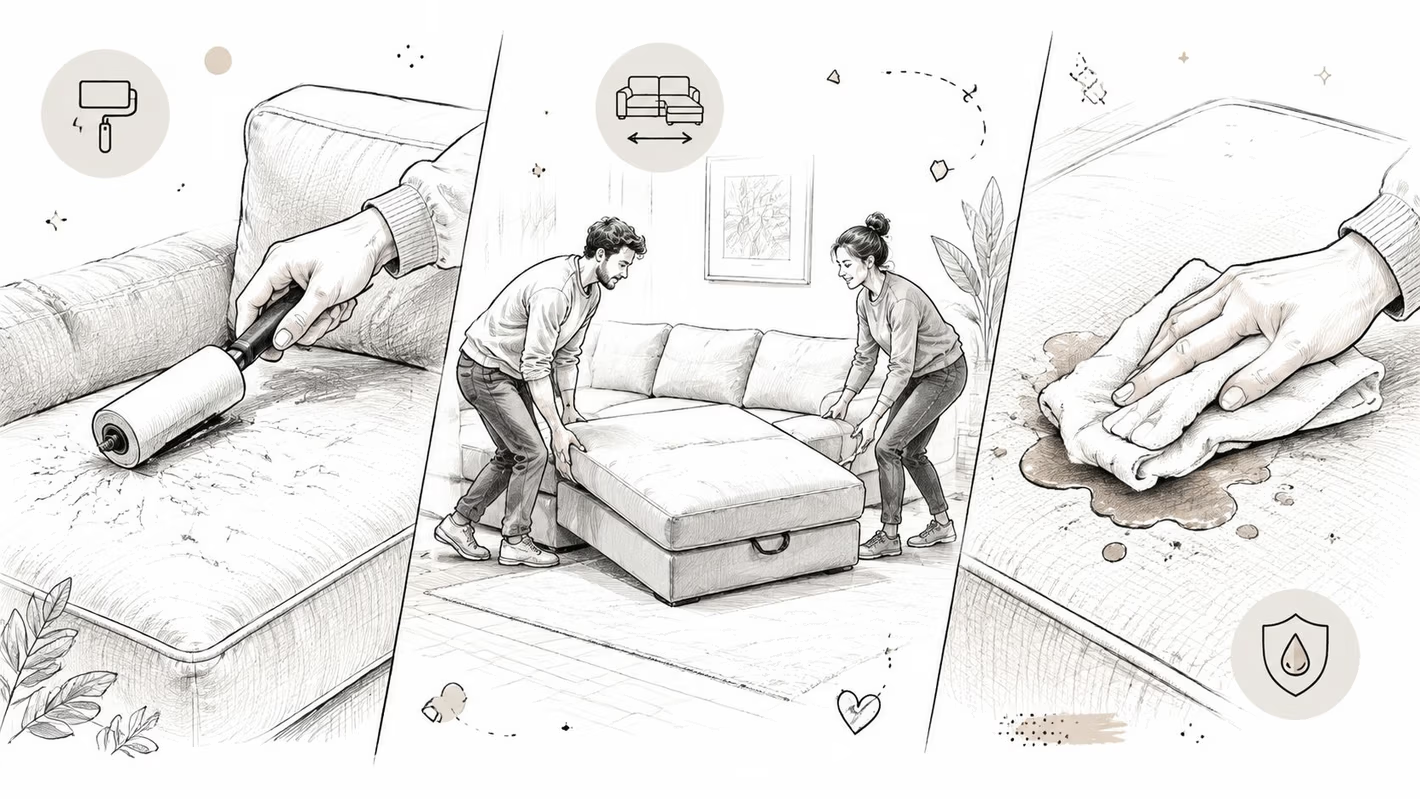
The family with children and a dog should vacuum seams weekly with an upholstery brush. Pet hair and crumbs collect where modules meet, and regular cleaning keeps that debris from working deeper into the upholstery. Reversible cushions should be rotated every three months when the design allows it, with the chaise cushion receiving particular attention because it usually gets the most lounging.
A couple that rearranges furniture seasonally should label or photograph the original module positions before moving anything. The connectors should be released and reset carefully, rather than dragging connected pieces across the floor. That small habit protects both the hardware and the flooring.
A homeowner who hosts out-of-town guests monthly should keep a fabric-safe spot-cleaning solution ready. Spills should be addressed within 15 minutes, following the upholstery manufacturer's instructions and confirming that the cleaning chemistry is compatible with the textile. The upholstery cleaning guide offers a useful reference before a problem occurs.
The best long-term advantage comes when owners use the modular function instead of treating it as a sales label. A family may separate an ottoman for floor play, remove a seat when moving, or add a module after finishing a basement. A renter may change the chaise orientation after moving to a room with a different door placement.
A modular sectional only provides lasting value when the household feels comfortable changing the arrangement.
Tanger's service approach leaves room for that ongoing conversation. Customers can bring a new sketch or floor plan back to the showroom when the home changes, rather than assuming the original layout must remain permanent.
Bringing It All Together at Tanger's
The right modular sectional with chaise isn't necessarily the deepest, largest, or most fashionable piece in the showroom. It's the one that respects the room's measurements, leaves the main paths open, gives the household comfortable seating, and uses materials suited to the expected wear.
A practical visit begins with preparation:
- Bring the room evidence: Include wall measurements, doorway widths, a quick sketch, and photos from several angles.
- Test configurations: Review L-shapes, split chaise-and-loveseat arrangements, and larger modular layouts side by side.
- Check chaise direction: Confirm whether the chaise is right-facing, left-facing, floating, reversible, or able to stand alone.
- Compare materials: Take performance fabric swatches home and view them beside the flooring, walls, natural light, and existing furniture.
- Inspect construction: Ask about frame materials, cushion support, seam construction, connectors, warranties, and documented structural testing.
- Plan ownership: Discuss cleaning, cushion rotation, future module changes, service requests, delivery scheduling, and room-of-choice placement.
Tanger's Custom Order program provides a route to tailor selected Smith Brothers and Flexsteel pieces instead of accepting an out-of-the-box arrangement. That same consultative process can support broader residential projects, from living room furniture to a mattress store Logan County shoppers can rely on, as well as practical needs such as Speed Queen laundry.
Professional clients can also use Tanger's Commercial Office division for space planning and durable office solutions. Businesses furnishing a new location, remodeling an existing one, or creating a waiting area can receive help with layouts, furnishings, and delivery coordination. The process is designed for small-to-medium professional projects that need personal attention rather than a one-size-fits-all package.
Local delivery handles the heavy lifting, both physically and in service. In-house service requests make it easier to address concerns after setup, and family-owned roots keep the process connected to Bellefontaine and Logan County. Financing options can help spread payments over manageable terms, while the Low Price Promise reinforces the focus on value.
Visit Tanger's Furniture in Bellefontaine to see modular sectional options, custom fabrics, and chaise configurations in person, or browse the collections online to begin planning. Have a specific design question? Contact the design staff or join the Love Your Home Club for exclusive offers and practical ideas delivered to the inbox.